This review of The Story of Tudor Art: A History of Tudor England Through its Art and Objects by Christina J. Faraday appears in the January 2026 issue of Apollo. Preview and subscribe here.
In the cold month of February in the year 1638, a wizened antiquary named Robert Reyce of Preston Hall, Suffolk, made his final will. After making provision for his soul and for his aged body, he set out a future for his worldly goods, including, quite remarkably, his ‘boxes of Painting Colours’. These were bequeathed to the painter and glazier William Mills of the nearby town of Lavenham. The will went on to stipulate that these were to be used by Mills to maintain the ‘tables’ (i.e. painted panels) that Reyce had commissioned from him for the church of Preston St Mary. Echoing Royal proclamations of 1560 and 1614, Reyce’s intention was to keep the word of God front of mind for parishioners who, at the beginning of the Tudor period, would have venerated images as part of their devotion, rather than the words that came to replace them.
Mills must have done as requested, for one of these ‘tables’ survives in the parish church of Preston St Mary. It depicts the Royal coat of arms and, on its verso, scriptural texts denouncing the use of religious images. It is a Tudor object through and through. The exterior of the folding panel, the arched top of which has the profile of a shaped gable, has all the gilding, strapwork, heraldry and polychromy you would hope to find in an object from this period. The inclusion of the initials SPQR on the coat of arms (a far-fetched attempt to tie Elizabeth I’s England to ancient Rome) completes the fusion of the classical and medieval that gives this period its unique personality.
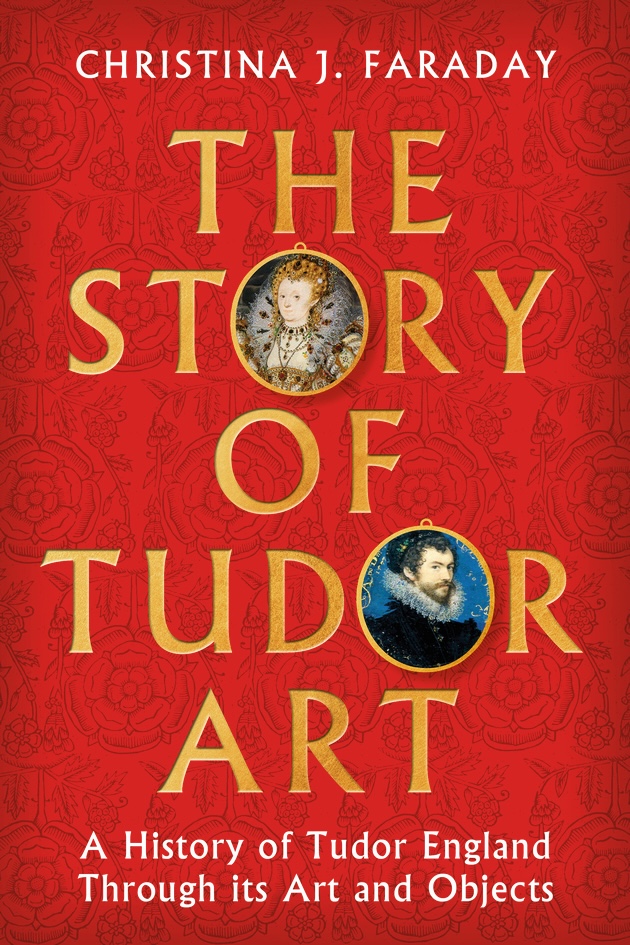
This rare survival is one of the constellation of artworks and anecdotes brought together in Christina Faraday’s lively telling of the Tudor period through its art and objects. This was a period in which attitudes towards art were upended: nobody prior to the battle of Bosworth was recorded bequeathing boxes of pigments, let alone anticipating the precarity of the preservation of paint on a panel. But by the time Elizabeth I’s reign ended, the artist, the architect and the skilled craftsperson had attained a status in society that would have been difficult to imagine when the queen’s grandfather Henry VII took the throne in 1485. Individuals of Reyce’s social standing would have been familiar with the Italian concept of disegno and would have received encouragement to pursue their own forms of artmaking as an acceptable gentlemanly activity.
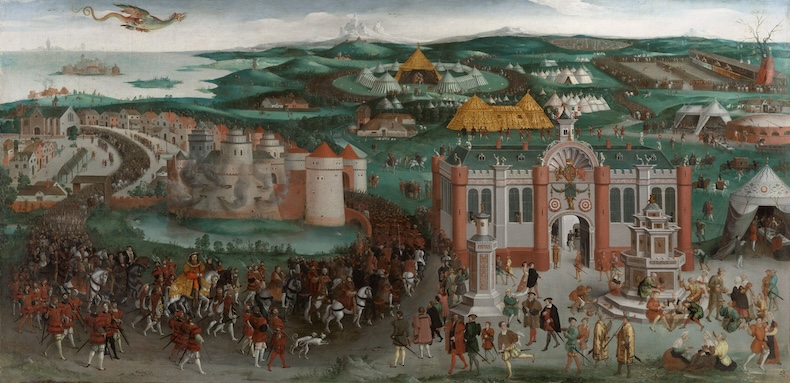
As someone born in the reign of Mary I, who lived through the entirety of the Elizabethan age and well into that of her Stuart successors, Robert Reyce could attest to the violent back and forth of religious policy that had rocked England, smashed its medieval inheritance and shaped its artistic culture, described by Faraday as ‘a distinctive and sometimes quite alien visual conundrum’. The author addresses this conundrum by moving chronologically through the period, giving extra coverage to the reign of Henry VII, which, as Faraday points out, is too often overlooked in the art historical literature. By encompassing the whole dynastic period and cutting across media, the text moves at pace through a series of examples, some known, such as the grand panoramic view of The Field of the Cloth of Gold in the Royal Collection, some less so, such as the Ming dynasty porcelain ewer with silver gilt mounts at the Met. Faraday never gets bogged down in difficult questions of attribution but lingers long enough to give a good sense of the significance of the object and its place within the story.

A top-down account of history naturally privileges its central actors, so while several foreign-born artists and artisans are mentioned, the broader patterns of migration from mainland Europe do not come into view. It is difficult to over-emphasise the effect of the successive waves of migrants who arrived on England’s shores having fled the wars of religion in France and the Netherlands. In short order, the skills and new ways of working introduced by these talented foreigners percolated throughout the country, shaping the course of art for generations to come.
Faraday is, however, a compelling and capable guide, with a nuanced understanding of the intellectual and spiritual world of the Tudors, cycling through a thrilling set of objects with deftness and delight. While many relics from the period have come down to us today, there are very few places that summon the spirit of the age in such a vivid manner and it takes something like this book, or the opening spaces of the British Galleries of the Victoria & Albert Museum, to evoke the atmosphere of the period convincingly. Unlike a gallery, however, the design of this book cannot contain many examples and the reproductions do look to have been chosen after the fact. For example, an image of William Mills’s ‘tablet’ from Preston St Mary is missing, despite being described in a way that anticipates a reproduction. As it happens, this object was included in the National Maritime Museum’s ‘Elizabeth’ exhibition of 2003, where it was illustrated in the accompanying catalogue, but there is no breadcrumb for the reader in the notes that would lead you to this source. And, unfortunately, several images are out of date: three important paintings are shown prior to recent conservation treatment (two of which are given full spreads), while Stephen Farthing’s Bling! Henry (2007) is awkwardly cropped; the latter included in an epilogue that considers Tudor imagery in contemporary art. A more careful editorial eye would have caught minor misspellings (‘au-6thority’) and mistakes (Reyce’s Suffolk neighbour Sir Nathaniel Bacon (1585–1627) appears as ‘Sir Nicholas’, his father’s name).
Yet the book remains an ambitious new appraisal of Tudor art that leads the curious through many of its key objects, arriving at a new narrative that is more capacious and better balanced than previous surveys of the period.
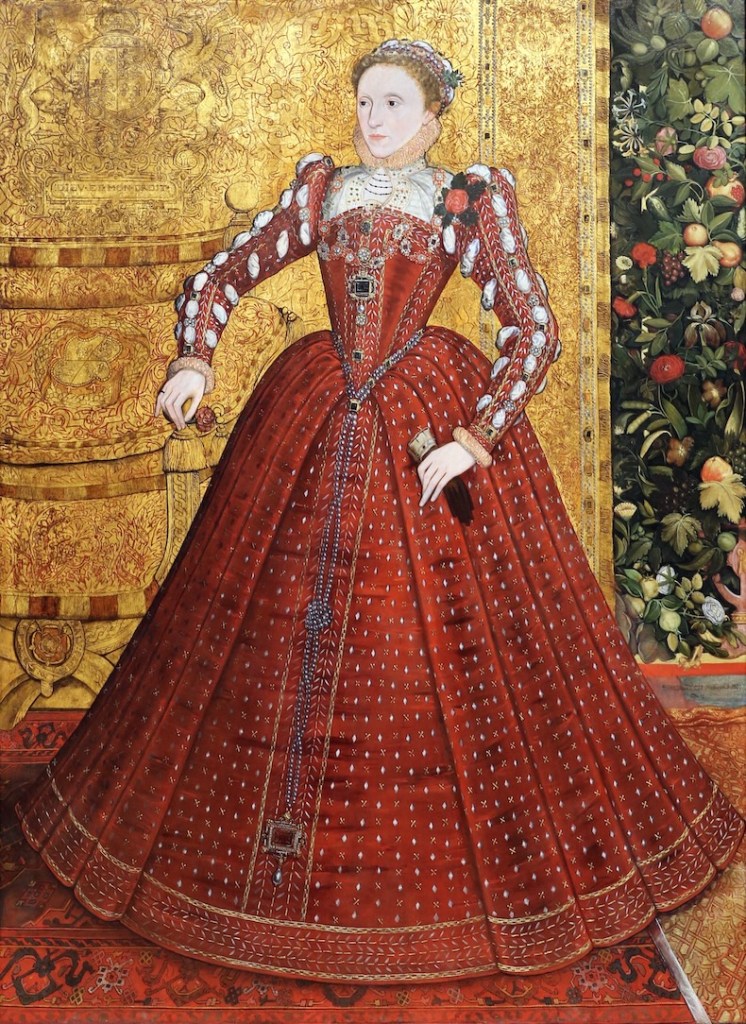
The Story of Tudor Art: A History of Tudor England Through its Art and Objects by Christina J. Faraday is published by Head of Zeus.
From the January 2026 issue of Apollo. Preview and subscribe here.