
It can be grating to hear people proudly declaring they’ve never heard of an artist, as if ignorance proves that person’s irrelevance. It is especially annoying when – as with Alma Allen, who was announced in November as a surprise pick to represent the United States at the Venice Biennale – it is someone you’ve been following for years.
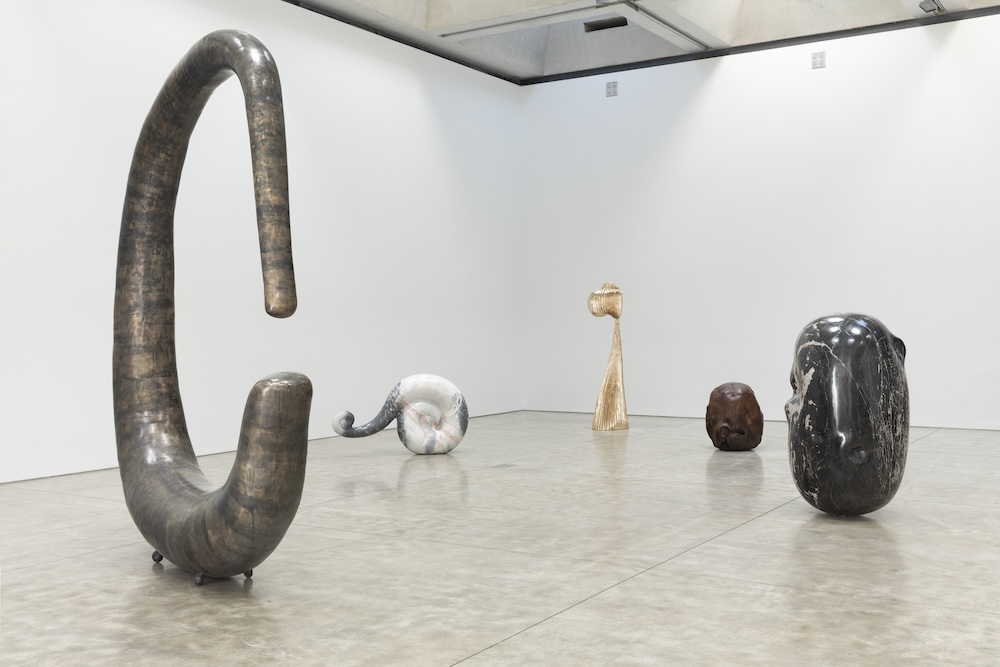
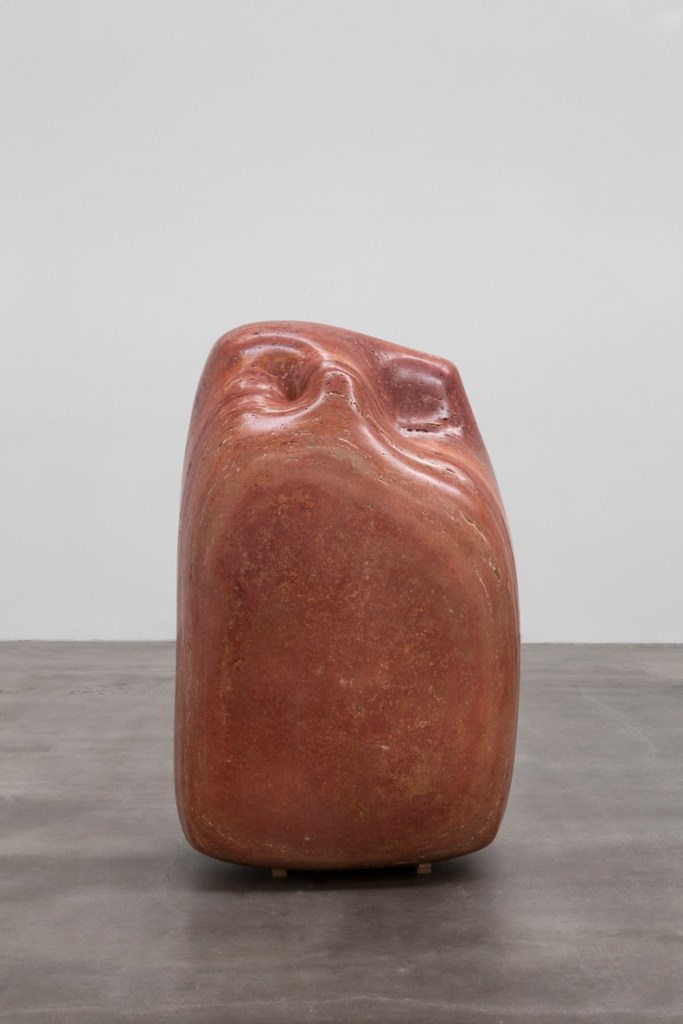
I first met Allen in his Joshua Tree studio in 2015. In his debut exhibition at Blum and Poe that year, I was amazed by his carved and polished abstract sculptures, in rich Claro walnut, black bronze or white Yule marble, which felt both organic and also glitchily digital. Allen’s sculptures can seem as if they have been poured out of one material and into another: a tall white stone ring that looks like it was formed palm-sized in playdough, or a hunk of wood shaped like a glob of cast metal, with the lugs still attached. Sometimes the vibe is cartoonish, hilariously so – as if Disney ears or noses or cactus paddles are sprouting from rocks.
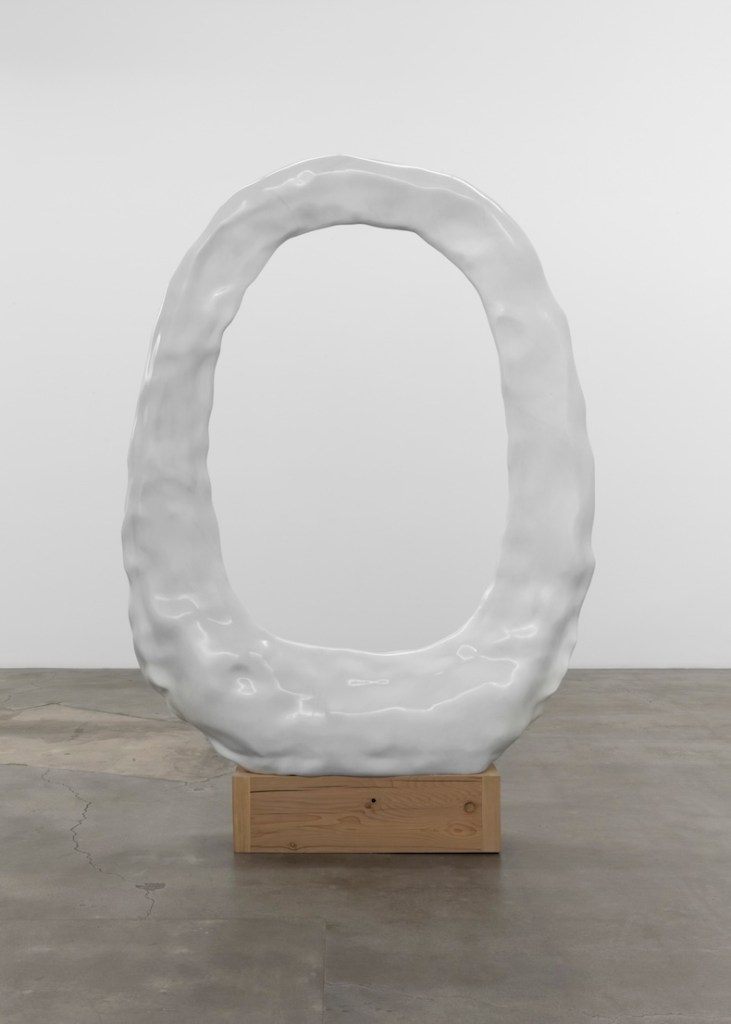
As a younger artist, Allen was a compulsive whittler and carver – habits that left him with debilitating form of carpal tunnel syndrome. As a workaround, he bought a giant robotic arm, once used in an automotive factory, and learnt to transform small, scanned maquettes into large, digitally routed objects, which he finished by hand. To me, this process is less about the tension between traditional craft and digital fabrication and more about intimacy and lightness of touch, and how technology could preserve those qualities at scale.
Last year I curated an exhibition, with the artist Liam Everett, of abstract work made between 1961 and the present day, to which Allen contributed three pieces: a carved onyx lump, a wall-mounted black bronze tablet and a spiky polished bronze excrescence, placed directly on the floor. (All of Allen’s works are Not Yet titled; to my knowledge, none ever are.) These heart-skippingly weird objects affirmed a belief that Liam and I share: that it is in intuitive, process-based abstraction that truly new and unfamiliar forms can take root – forms beyond language and beyond conventional understanding, which might jolt us out of our rutted tracks of ascribing familiar meaning.
My heart sank when, a few weeks into the most recent US government shutdown, the art adviser Josh Baer published a rumour that Allen was slated to represent the United States at the 2026 Venice Biennial. Many commentators were already wondering what artist in their right mind could consent to be the public face of Trump 2.0’s vision of anti-woke American art, against a background of funding cuts for institutions, a blitzkrieg on DEI projects, cancellations of museum exhibitions and a general assault on the rights and protections of many of the most vulnerable people in society. The Venice proposal was backed by a hastily convened non-profit called the American Arts Conservancy, seemingly stuffed with Trump allies and art-world outsiders.
Now that the news is official, and I’ve heard a little of Allen’s own assessment of this dubious honour, I have come around. I’m not only glad he’s been chosen, I also suspect that he may be uniquely able to bear the weight of this burden without being crushed. But I’m also scared.
I’m scared because, in many respects, Allen is a vulnerable person too. He was a teenage runaway from his conservative Mormon family in Utah, who eventually made ends meet by selling small carved objects on the streets of Manhattan. Art world tastemakers took a shine to his work and – I’m still not quite sure how – he established a thriving practice on the margins of applied and contemporary art. In 2013, he was selling his stuff at craft fairs; in 2014 he was in the Whitney Biennial.
Allen is a quietly spoken and gentle man, and so it makes sense that he has chosen to live in locations off the beaten path: in Joshua Tree (which was much cheaper and less popular in the early 2010s than it is today) and, since 2017, in Tepotzlán, near Mexico City. I doubt he will relish being charged with meeting people’s expectations of what art should be or do ‘at a time like this’, as people like to say. In one waspish early opinion piece, Alex Greenberger of ARTnews wrote, ‘the work has nothing to say about the state of our country at the moment’.
But why should it? It is a grossly simplistic assumption that art is obliged to do any such thing, especially in the way Greenberger seems to expect it. For some, the US Pavilion comes with particular responsibilities and obligations, but these are not inscribed in the pavilion’s constitution, merely a trend that has prevailed in the past few editions. I am for an art (to paraphrase Claes Oldenburg) that does not claim to solve problems or aspire to change anyone’s mind on debates that are rehearsed every day in online discourse. I am for an art that creates new spaces for thought and experience, rather than fulfilling already designated functions.
Nevertheless, I worry that abstraction, which I believe to be the site of so much liberatory potential, will become aligned in people’s minds with political conservatism. (Its resurgence in the market doesn’t help.) I hate that a press release from the American Arts Conservancy notes approvingly that Yule marble, used in some of Allen’s sculptures, is ‘the same marble used for the Lincoln Memorial and the Tomb of the Unknown Soldier’, as if that has anything to do with Allen’s intentions for his art. Let’s put such loaded language aside, as Allen’s work asks us to, and take this art on its own terms. As with the best art, I believe it will outlast this cursed moment.