‘Four things to see’ is sponsored by Bloomberg Connects, a free arts and culture platform that provides access to museums, galleries and cultural spaces around the world on demand. Explore now.
Each week we bring you four of the most interesting objects from the world’s museums, galleries and art institutions, hand-picked to mark significant moments in the calendar.
Hotel lobbies without guests. Bars set for a drink that will never be poured. Chairs pushed neatly under tables, waiting for someone who never arrives. Patrick Caulfield, born in London on 29 January 1936 – 90 years ago this week – made a career out of painting rooms that feel staged, expectant or sometimes faintly haunted. Using flat, unmodulated colour and heavy black outlines, he transformed ordinary interiors into graphic, almost theatrical sets, where human presence is implied but rarely seen. His work turns domestic settings into enigmatic, psychologically charged spaces.
Given that interiors are positioned somewhere between public display and private sanctuary, they have made for fascinating subjects throughout art history. From Dutch ‘Golden Age’ paintings documenting bourgeois prosperity to Matisse’s colour-saturated rooms, these enclosed spaces allow artists to explore light, geometry and human presence. Yet the genre’s conventions – domestic comfort, narrative detail, the use of certain kinds of perspective – have proved irresistible targets for artistic subversion. Artists have flattened spatial depth into decorative pattern, revealed the psychological charge of empty rooms and thresholds, and shown how the objects we choose to display are cultural documents of identity and memory whether we know it or not. This week we examine four works that have challenged how interior spaces might be depicted and understood.
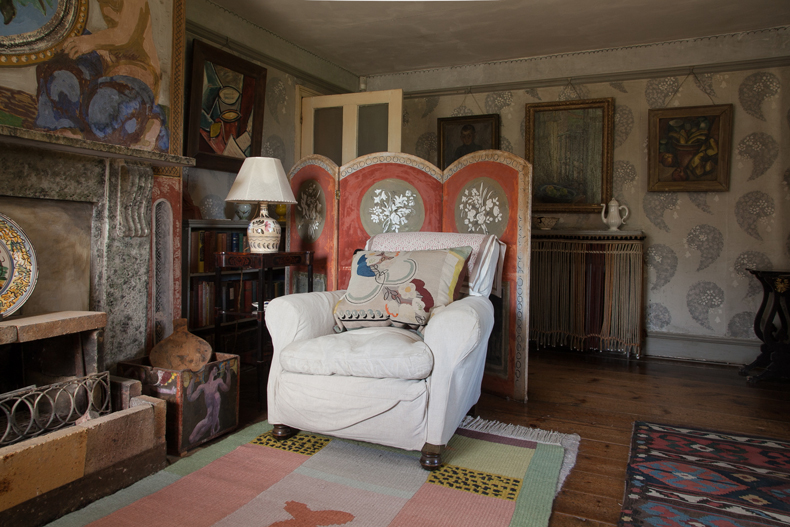
The Garden Room
Charleston, Firle
Every surface in Charleston’s Garden Room refuses to behave: patterns sprawl all over hand-painted furniture, murals climb the walls, even the doors become canvases. Vanessa Bell and Duncan Grant treated their Sussex farmhouse as one continuous artwork, giving a cupboard door the same creative energy as a painting on canvas. The result, featuring artworks by Bell, Grant and Bell’s son Quentin, demolishes the boundary between living and making art, suggesting that domestic life itself could be a masterpiece of sorts. Click here to find out more.
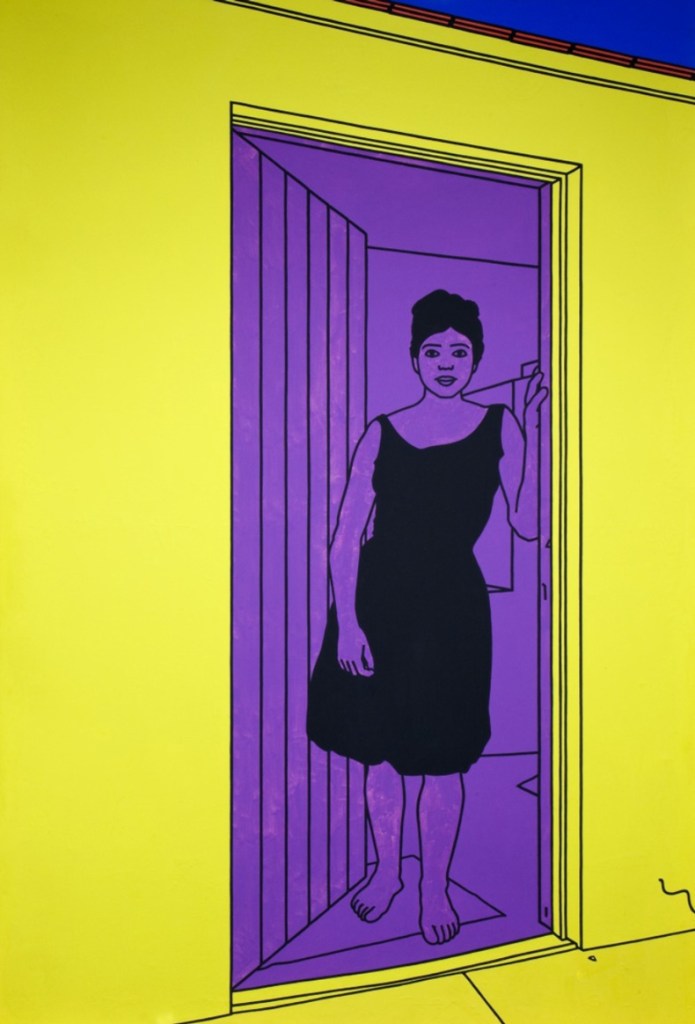
Girl in a Doorway (1969), Patrick Caulfield
Ulster Museum, Belfast
A solitary figure hovers in a threshold, reduced to Caulfield’s signature vocabulary of flat colour planes and crisp black outlines. The doorway frames her without offering passage into the interior – we’re held at the boundary, neither invited in nor definitively excluded. Painted during Caulfield’s late 1960s period, when figures began appearing consistently in his work, the painting reimagines the interior as something perpetually out of reach, using a deliberately impersonal, almost commercial graphic style to create emotional distance and quiet tension. Click here to read more.
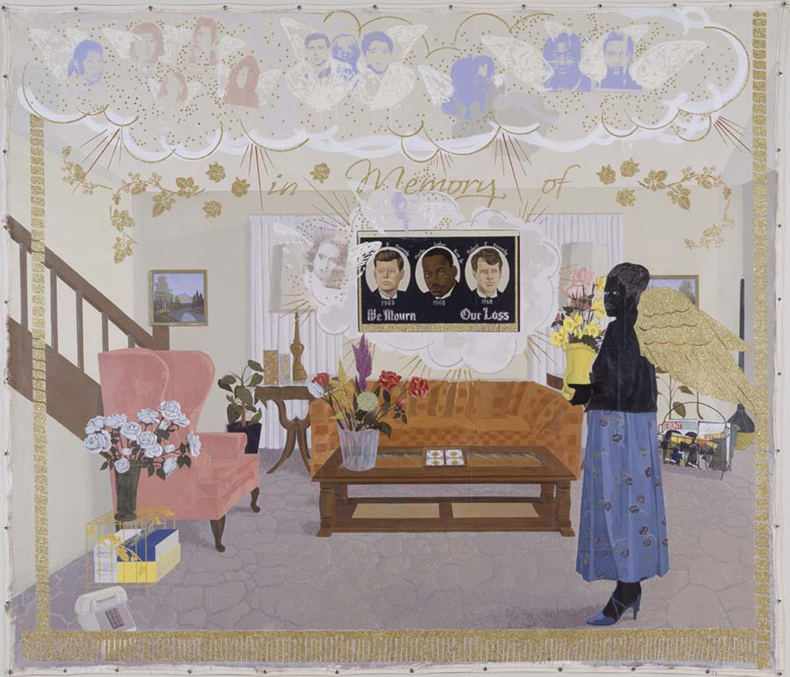
Souvenir II (1997), Kerry James Marshall
Addison Gallery of American Art, Phillips Academy, Andover, MA
A woman stands in her living room, presiding over a domestic altar to the civil rights movement: iconic portraits of JFK, RFK and MLK, which held pride of place in countless African American homes in the late 1960s and ’70s, hang on the wall. Marshall attends to this working-class interior with painterly sophistication. By rendering a modest domestic scene with the scale and formal complexity historically reserved for aristocratic European interiors, Marshall insists that Black American living rooms deserve recognition as sites of historical and spiritual significance. Click here to learn more.
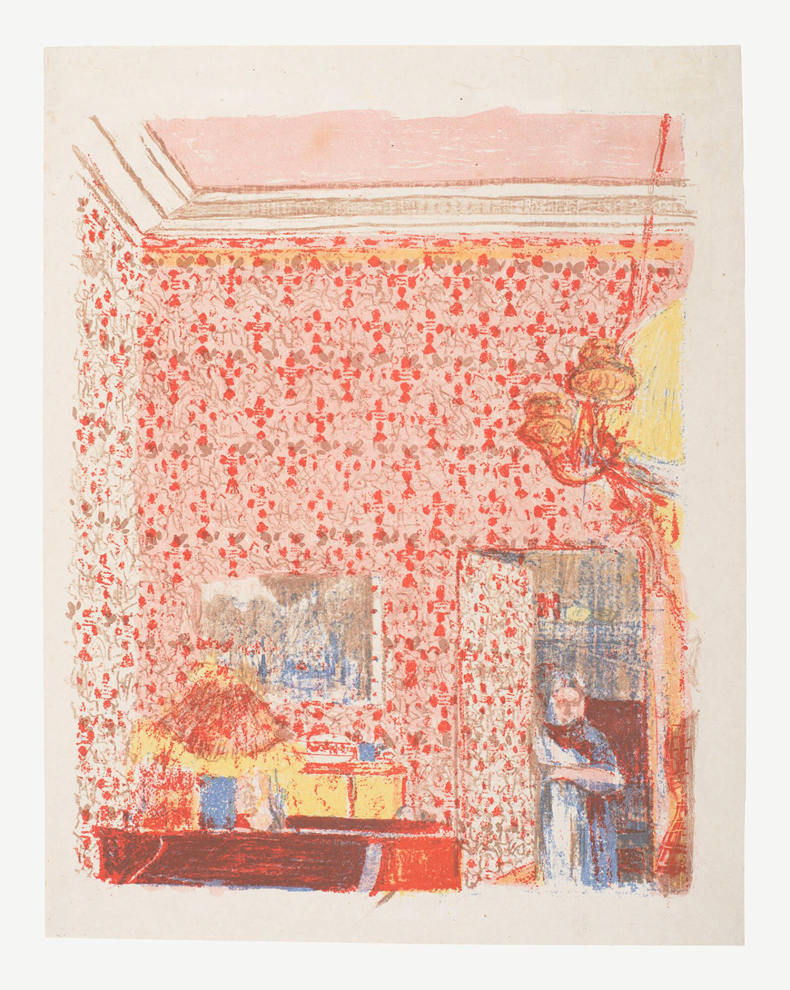
Interior with Pink Wallpaper I (1899), Édouard Vuillard
Toledo Museum of Art, Ohio
Vuillard dissolves the apartment he shared with his mother, a dressmaker and textile designer, into a glorious confusion of pink wallpaper, patterned textiles and upholstered surfaces that refuse to stay in their proper places. Inspired by Japanese prints, he flattens the room into pure decoration, making it nearly impossible to tell where one surface ends and another begins. Part of his ambitious Landscapes and Interiors portfolio, the lithograph treats domestic space less as architecture than as enveloping fabric. Click here to discover more.

‘Four things to see’ is sponsored by Bloomberg Connects, a free arts and culture platform that provides access to museums, galleries and cultural spaces around the world on demand. Explore now.