After receiving the Nobel Prize for Literature last year, the novelist and screenwriter László Krasznahorkai observed that Béla Tarr – the Hungarian film-maker who died earlier this month and worked mostly in black and white – created colours by removing them. Krasznahorkai’s books and scripts were the fertile substrate for the five films on which Tarr’s legacy rests: Damnation (1988), Sátántangó (1994), Werckmeister Harmonies (2000), The Man from London (2007) and The Turin Horse (2011). These films bear the director’s signature marks of long takes, black and white cinematography, mono sound and a relatively claustrophobic 1.66:1 aspect ratio – all contaminated by an almost deliriously miserabilist sensibility. One gets the sense that even if these films were in colour, they would still feel, with their rain, mud and relentlessly oppressive moods, as if they were in black and white.
Tarr’s roots were in the Budapest-based Balázs Béla Stúdió – named after the man who wrote the libretto to Bluebeard’s Castle for yet another Béla, Mr Bartók. Known mostly for facilitating documentaries and social realist features, such as Tarr’s housing drama Family Nest (1979), the studio also fostered more experimental work by directors including Zoltán Huszárik, Gábor Bódy and Miklós Erdély. Adjacent to the state system yet accepted by it, the studio was a vital breeding ground for film-makers that would have struggled to secure state funding before the more liberal environment of the ‘90s.
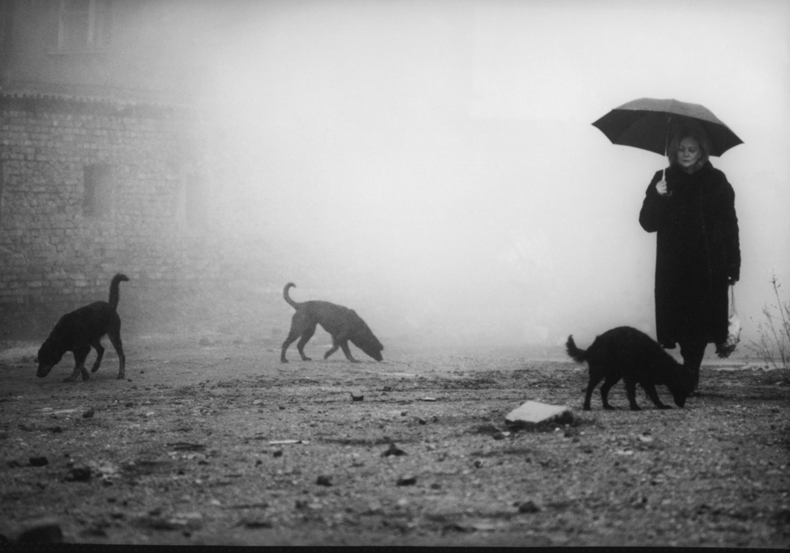
After making five films that varied stylistically and chromatically, Tarr’s remaining four features coincided with what might be the most optimal conditions for film financing in European history. Having paid his dues under the Communist regime, Tarr was greeted, after the toppling of the Berlin Wall in 1989, with a much more liberal approach to the arts in Hungary – a system unfettered by either state-aligned ideology or the market forces endured by most film-makers in the West. As indisputable as Tarr’s genius was, and notwithstanding his other financing partners elsewhere in Europe, the system in Hungary that buoyed his increasingly uncompromising vision was all-accommodating. It’s hard to imagine those films being greenlit in the Hungary of 2026 – or in Britain at any point in time.
This is especially true of Tarr’s best-known work, Sátántangó, a seven-hour film in which a charismatic figure named Irimiás (played by the film’s composer, Mihály Víg) manipulates the residents of a godforsaken Hungarian village overrun with poverty, desperation and alcoholism. The film is divided into 12 chapters, a structure that reflects the moves of a tango, taking six steps forward and six steps back. (The structure is more explicit in Krasznahorkai’s novel, with chapters one to six followed by six to one.) It is, like all Tarr’s best work, an existential, experiential, gloomy foray into mankind’s doom, never less than ravishingly rendered.
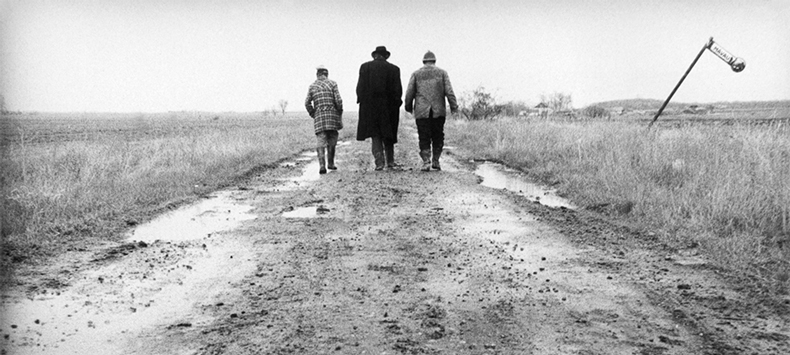
Towards the end of 2010, around the time Tarr finished shooting what he knew would be his final film, The Turin Horse, the Hungarian funding body Magyar Mozgókép Közalapítvány (MMKA) collapsed, bringing a two-decade golden age of near-unquestioning support to a close. Although the system was bloated, with jaw-dropping budgets allocated to some of the least popcorn-friendly fare in film history, it also spawned original and visually striking work by a legion of directors including Zoltán Kamondi (who played the irascible barman in Sátántangó), Péter Gothár, Attila Janisch and György Fehér, who was very much Tarr’s kindred spirit. Fehér’s incorrigibly brooding film Twilight (1990) could easily fool the casual viewer into thinking it is by the master himself.
Tarr was sometimes a divisive figure in Hungary, even for those who shared his artistic and left-leaning political beliefs. A few of his collaborators didn’t always speak fondly of him, but any film-maker of such fortitude will inevitably test a crew’s goodwill on occasion. Tarr, however, was not an auteur in the traditional sense: when one considers his legacy, it’s as part of a trio, along with Krasznahorkai and, just as importantly, Ágnes Hranitzky, whose editing (and, in Tarr’s later films, co-directing) are fundamental to the work.
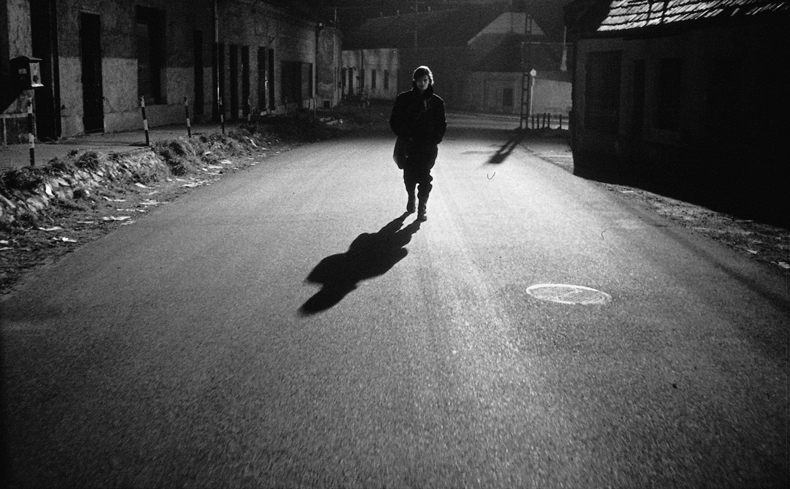
Tarr is often compared with Andrei Tarkovsky but although their films share a meditative dimension, Tarr’s work is bereft of Tarkovsky’s ecclesiastical leanings. In Tarr’s world, church bells might ring, but God doesn’t want to know. Narcissists and demagogues have taken God’s place, and this, beyond the textural and structural thrills that continue to wow audiences, is what roots Tarr’s work in the real world.
The Hungary in Tarr’s films is, on the surface, rooted in the past. Even in the more remote outposts of the country, the bars – which in Sátántangó and Werckmeister Harmonies take on a mythic status akin to saloons in a western – are now increasingly hard to come by, either closed down or modernised to look like something out of one of Ulrich Seidl’s more garish films. The clothes, vehicles and lodgings in Tarr’s world are so alluringly unclassifiable as to seem almost iconographic, but the deceit, betrayal and belief in a false saviour are what bring us down in the dirt. Sátántangó, with its Machiavellian ringleader telling the desperate villagers what they want to hear, reflects the drastic political changes that Hungary had undergone, while the manner in which he preys on their confusion and desperation seems all too prescient. Thus the film holds the dubious honour of looking both backward and forward, as the world again regresses into authoritarianism and autocracy. Just like the tango; forward and backward.
Peter Strickland is a film-maker whose feature films include Berberian Sound Studio (2012), The Duke of Burgundy (2015), In Fabric (2019) and Flux Gourmet (2022).