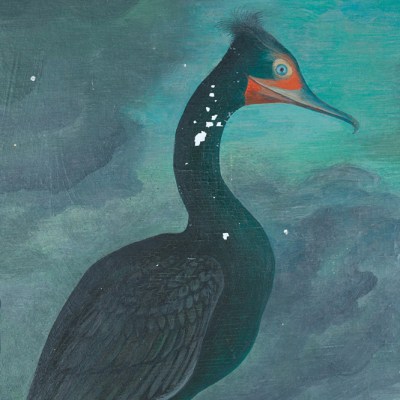
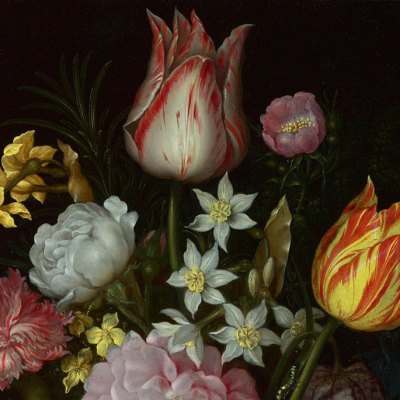
Roman Standard (2005), Tracey Emin. Pallant House Gallery, Chichester. Photo: Christopher Ison; courtesy Tracey Emin Studio; © the artist

‘Four things to see’ is sponsored by Bloomberg Connects, a free arts and culture platform that provides access to museums, galleries and cultural spaces around the world on demand. Explore now.
Each week we bring you four of the most interesting objects from the world’s museums, galleries and art institutions, hand-picked to mark significant moments in the calendar.
On 19 February 1876, 150 years ago this week, Constantin Brâncuși was born in Romania, in a village near the Carpathian mountains. He went on to devote his life to radically rethinking the possibilities of sculpture. Polished bronze birds that seem to slice through the air; marble creations reduced to forms that hover between object and idea – Brâncuși’s avian works abandon feathers, beaks and anatomy in pursuit of something more elusive. They seem less interested in depicting birds than in giving form to flight itself. In freeing sculpture from literal imitation of nature, Brâncuși sought what he called the ‘essence of things’: a state in which physical form and spiritual meaning converge.
In ancient Egypt, the human soul took avian form; in Christian iconography, doves signify the Holy Spirit; in much East Asian art, cranes promise longevity and good fortune. Beyond specific cultural meanings, birds embody universal themes of freedom, transcendence and the possibility of escaping earthly constraints. Their capacity for flight has made them natural metaphors for the ascent of the soul after death, for creative inspiration taking wing, for the dynamic energy that animates all living things. Artists have responded to this symbolic richness in ways that range from meticulous ornithological observation to pure abstraction. This week we examine four works that explore avian imagery, each revealing different aspects of humanity’s enduring fascination with our feathered companions.
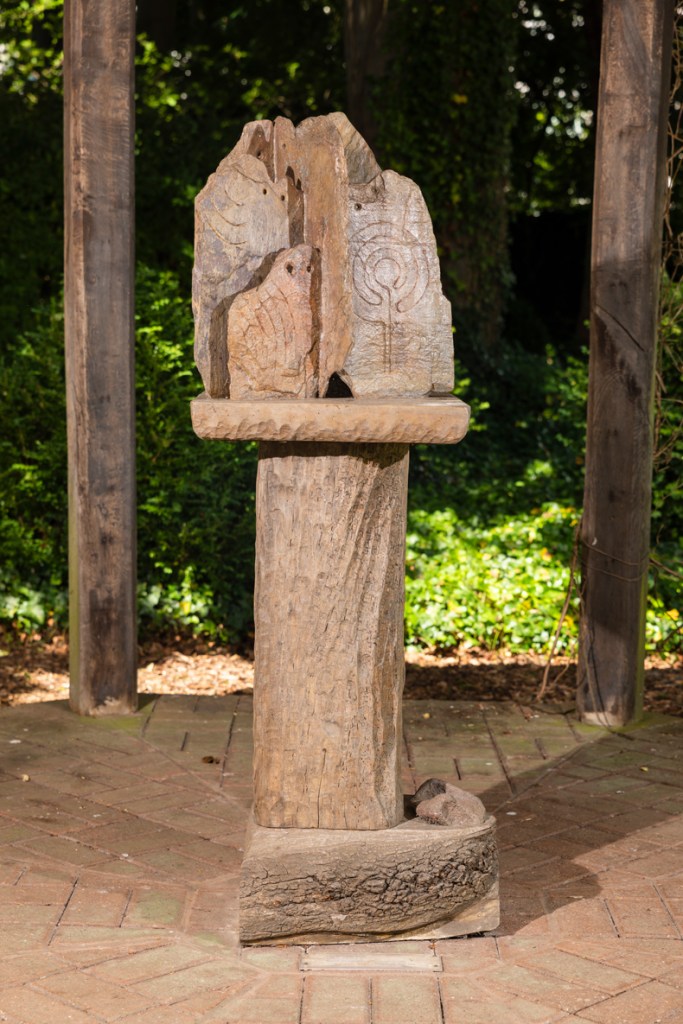
Gathering of Owls IV (1989), Christine Fox
The Women’s Art Collection, Cambridge
Christine Fox’s slate sculpture inhabits Charles Darwin’s former aviary at Murray Edwards College, where painted and engraved owls emerge from dark stone set into afrormosia wood. The Yorkshire-born artist built her forms to echo natural growth patterns and ancient mythology, using slate’s layered geology to suggest the accumulation of time and meaning. In Darwin’s aviary, the work links these watchful birds to observation and knowledge – the owl as a symbol of wisdom amid a wider reminder of the scientist’s careful attention to the natural world. Click here to find out more.
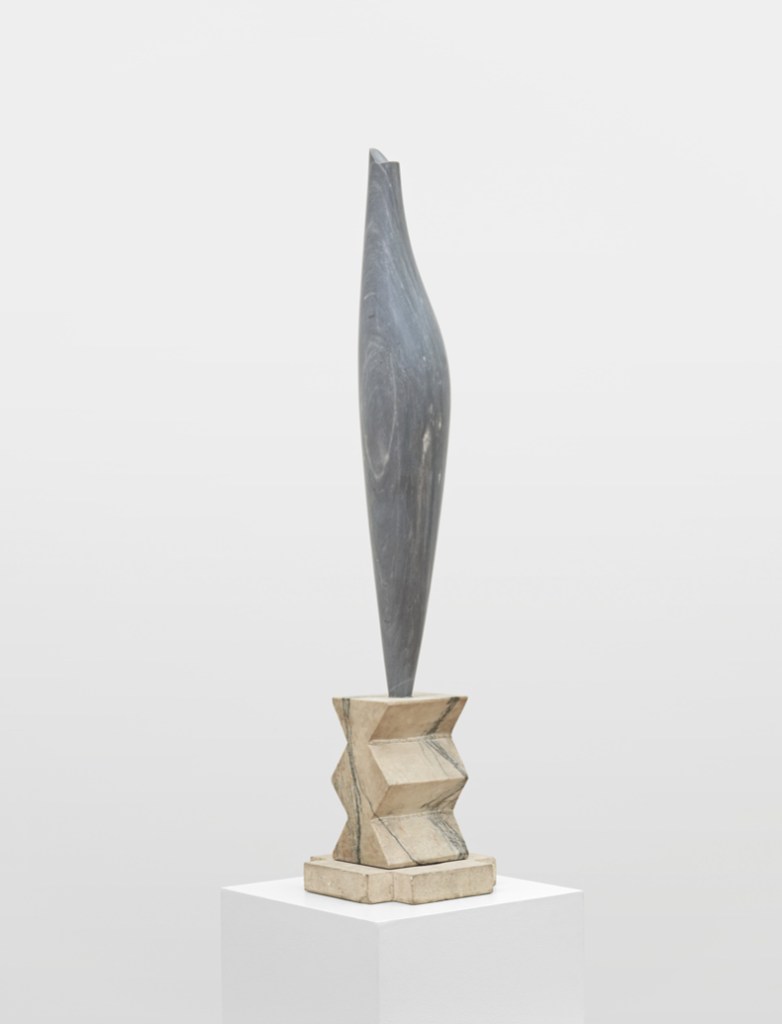
L’oiseau (1923/1947), Constantin Brâncuși
Fondation Beyeler, Riehen
Brâncuși laboured over this pale grey marble bird for more than two decades, beginning the work in 1923 but not finalising its form until 1947. The sculpture abandons all literal details in pursuit of something more fundamental: the essence of flight and upward motion. Even the base plays its part, with a pivoting mechanism that allows the marble to rotate, giving dynamism to static stone. Click here to discover more.
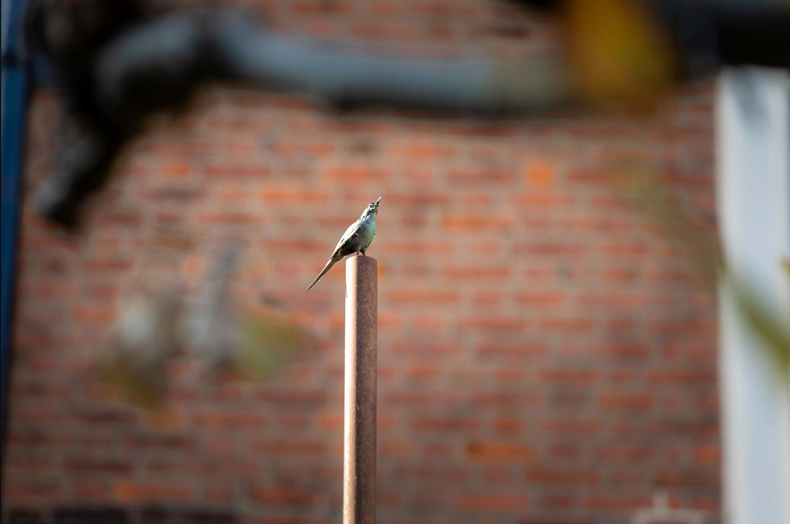
Roman Standard (2005), Tracey Emin
Pallant House Gallery, Chichester
A small bronze songbird perches atop a pole in the gallery’s courtyard – Tracey Emin’s subversive reimagining of ancient Roman military standards that used eagles to identify legions. Where those standards symbolised imperial power and dominance, Emin offers something modest and tender – a songbird so lifelike that visitors often mistake it for a living creature. The artist describes her sculpture as a work designed to appear and disappear rather than dominate, challenging what she considers to be the oppressive monumentality of most public sculpture. Click here to learn more.
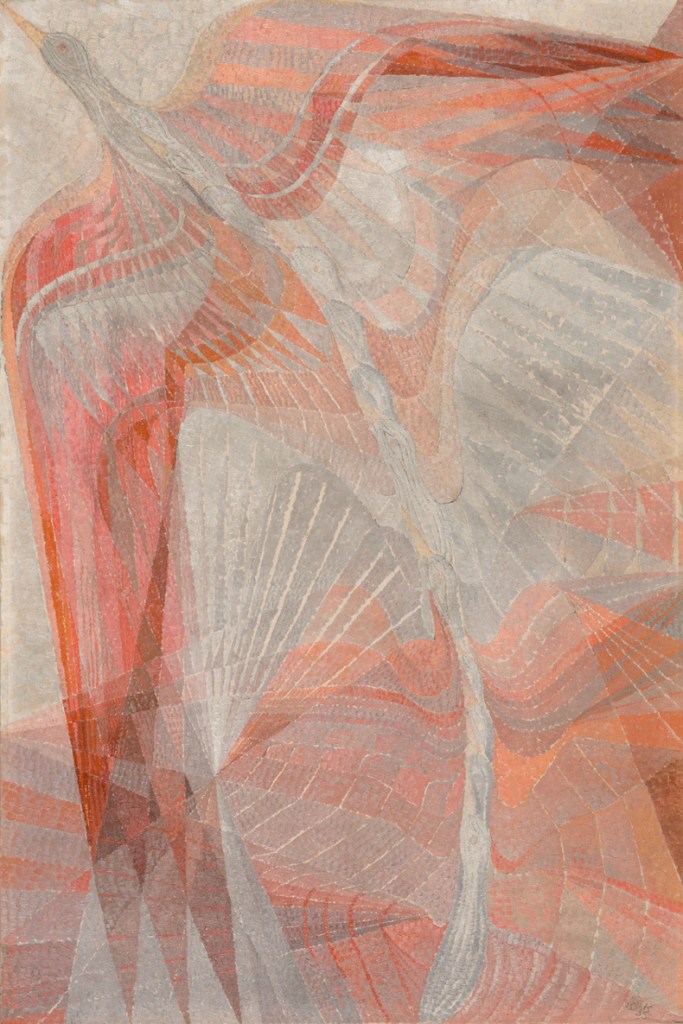
Rhythm of Bird Flight (1935), Erika Giovanna Klien
Art Institute of Chicago
Erika Giovanna Klien abstracts a bird’s movement into flowing patterns of subtle colour and harmonious rhythm, transforming feathers and flight into pure kinetic energy. A leading figure in Viennese kineticism – an avant-garde movement that depicted familiar objects in motion – the artist shifted her attention from mechanical to organic subjects. Here the bird’s flight becomes serene rather than industrial, its vibrancy captured through gentle abstraction rather than literal representation. Click here to read more.

‘Four things to see’ is sponsored by Bloomberg Connects, a free arts and culture platform that provides access to museums, galleries and cultural spaces around the world on demand. Explore now.