Städel Museum, Frankfurt
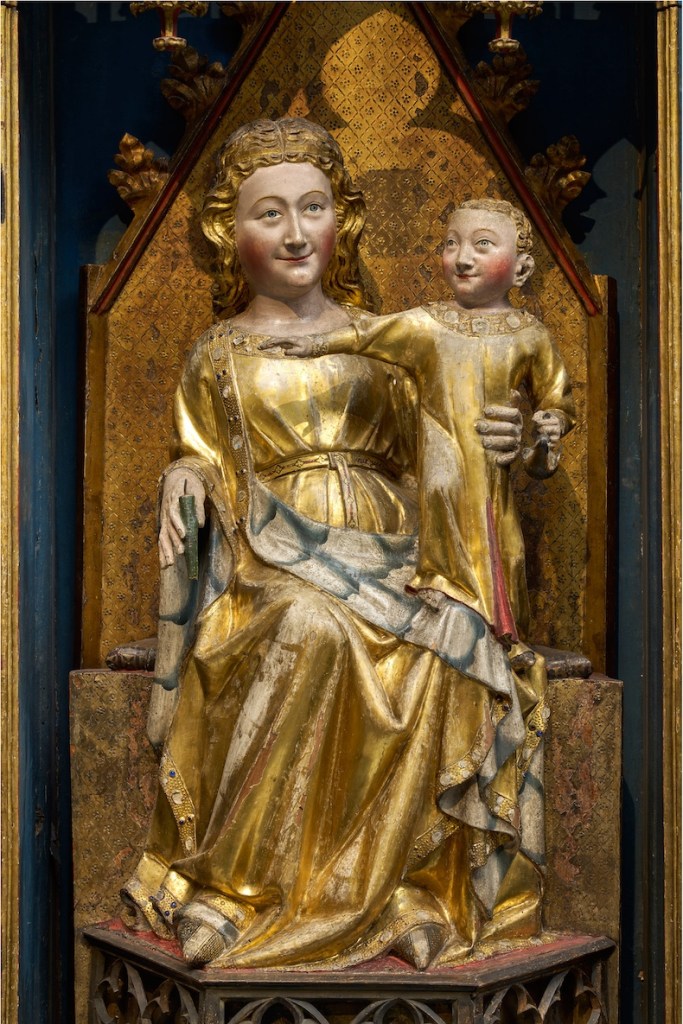
Altenberg Madonna (c. 1320–30), Cologne
The Altenberg Altar, a shrine produced for the abbey church in Altenberg, Hesse in the early 14th century, is one of the earliest surviving examples of the ‘convertible’ altarpieces that gained popularity in the late 13th century. The painted wings of the altar were acquired by the Städel in 1925 and remain the oldest examples of German painting in the museum. The original shrine is also held in the museum, on permanent loan from the Braunfels Castle museum, but the centrepiece, an exceptionally well-preserved painted wood Madonna and Child Enthroned that was produced in Cologne in c. 1320–30, has been in private hands. The Städel’s recent purchase of this masterpiece of gothic sculpture – listed as cultural property of national significance, which bars it from export from Germany – allows the whole altarpiece to be displayed as it was in the medieval period and has been described by the Städel as one of the most important sculpture acquisitions in the history of the museum.
Dulwich Picture Gallery, London
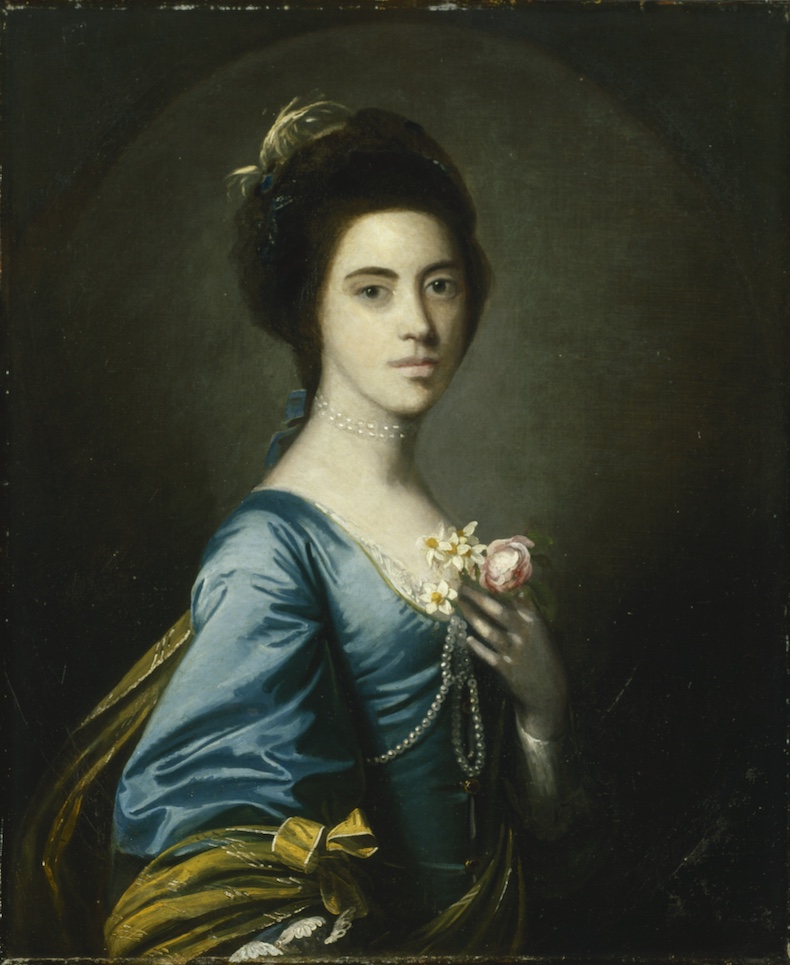
Margaret Morris, later Mrs Desenfans (1757), Joshua Reynolds
Britain’s first purpose-built public art gallery owes its existence in large part to King Stanisław Augustus of Poland. In 1790 the king commissioned the collectors and dealer Noel Desenfans and Francis Bourgeois to gather a royal art collection but, when the king was forced to abdicate five years later, he had no money to pay for the works the pair had acquired. After Desenfans’s death in 1807, Bourgeois decided to gift this remarkable collection to Dulwich College, believing the British Museum, the other potential home, to be too ‘aristocratic’. A key figure in all this was Desenfans’s wife, Margaret Morris, whose family were wealthy copper traders and provided a dowry that allowed Desenfans and Bourgeois to start collecting in the first place. Morris also contributed financially to the building of the new museum, which opened to the public in 1817, and donated significant pieces of furniture. Morris was painted by Joshua Reynolds in 1757, two decades before she married Desenfans, and the museum has long owned a copy of the work by Moussa Ayoub produced in 1930. The original Reynolds, which had been in a private collection since the 1930s, went on long-term loan to the museum in the early 2000s but has now been acquired permanently.
Bodleian Libraries, Oxford/Christ Church, Oxford
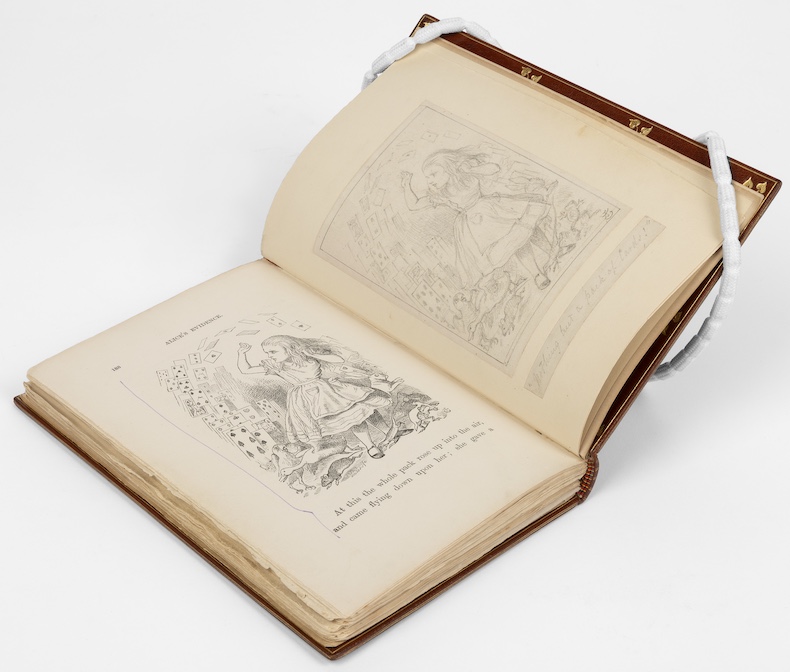
First edition of Alice’s Adventures in Wonderland (1865)
In 1865 Oxford University Press published the first edition of Alice’s Adventures in Wonderland. Written by the then unknown Lewis Carroll, the book contained original illustrations by John Tenniel, who, unhappy with the poor printing quality, instructed the publisher to recall the books. Twenty-two of these copies remain, one of which has now been acquired jointly by the Bodleian Libraries and Christ Church, Oxford, the college where Carroll studied and then worked for much of his life. The book, which was acquired from the American collector and philanthropist Ellen A. Michelson, contains handwritten notes by Lewis Carroll, as well as 10 original drawings by Tenniel. The acquisition follows the donation in 2025 to Christ Church of a trove of letters, photographs and other ephemera relating to the author. Visitors to Oxford can see the copy in an exhibition at Christ Church about Lewis Carroll and his illustrators (until 26 March) and then at the show ‘Pets and their People’ (11 March–27 September) at the Weston Library.
Musee d’Art Moderne, Paris
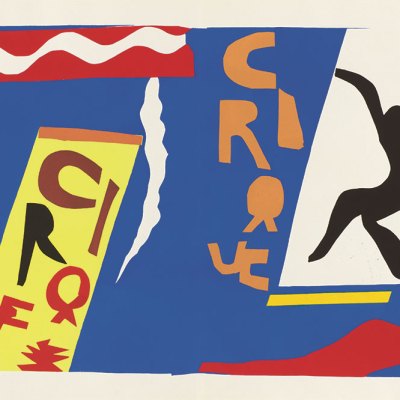
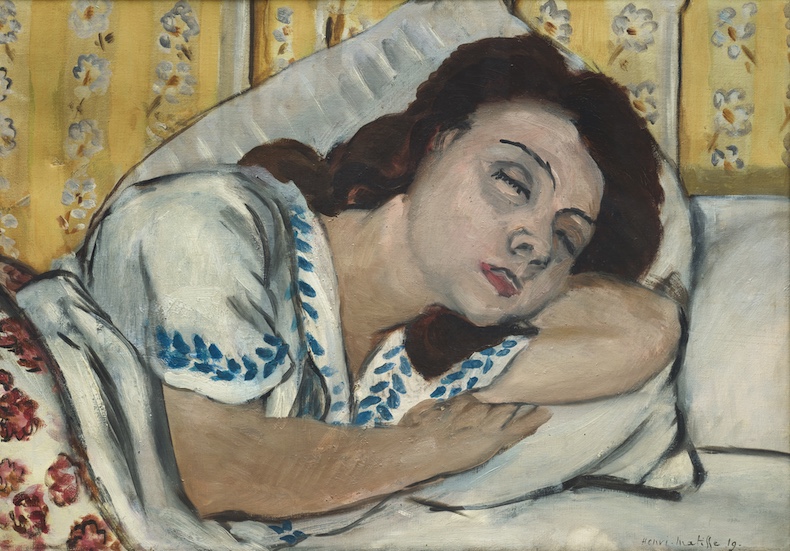
61 works by Henri Matisse
Barbara Dauphin Duthuit, the wife of Matisse’s grandson, has donated 61 works by the artist to the Musée d’Art Moderne in Paris. The gift comprises paintings, drawings, etchings and a sculpture, many of which depict Matisse’s eldest daughter, Marguerite; some of these were exhibited at the museum last year in ‘Matisse and Marguerite: Through Her Father’s Eyes’. Among the donated works are depictions of Marguerite as a child, a tender painting of her sleeping (1920), several sketches produced in the 1940s and a bronze of Marguerite’s profile made in the early 1900s, when she was just a few years old. The museum already owns 20 works by Matisse, including two versions of perhaps his most famous work, The Dance (1930–33).
Fitzwilliam Museum, Cambridge
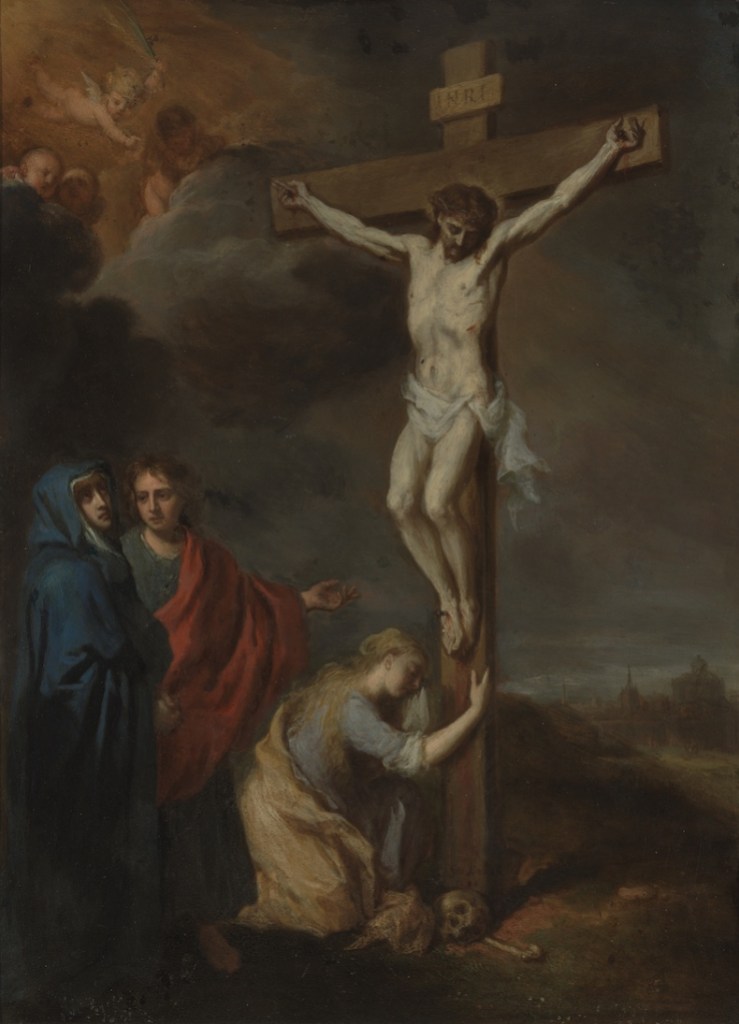
The Crucifixion, with the Virgin Mary, Mary Magdalen and St John (1686), Godfrey Kneller; Winter landscape on a wide frozen river in the late afternoon (1655), Aert van der Neer
The Fitzwilliam has announced its acquisitions of two 17th-century works through the acceptance in lieu scheme. One is by the German-born painter Godfrey Kneller, who moved to London in his thirties and spent some 40 years as leading court painter under William III and George I and was knighted in 1692. Kneller is best-known today for his royal portraits and his ‘Kit-cat Club’ paintings – a group of 43 portraits of high-profile Whigs such as Spencer Compton, Joseph Addison and John Vanbrugh. This Crucifixion of 1686, painted on copper, is one of only four religious works he is known to have produced. The museum has also acquired a winter landscape by the Dutch painter Aert van der Neer, showing people gathering and skating on a frozen lake.
National Portrait Gallery, London
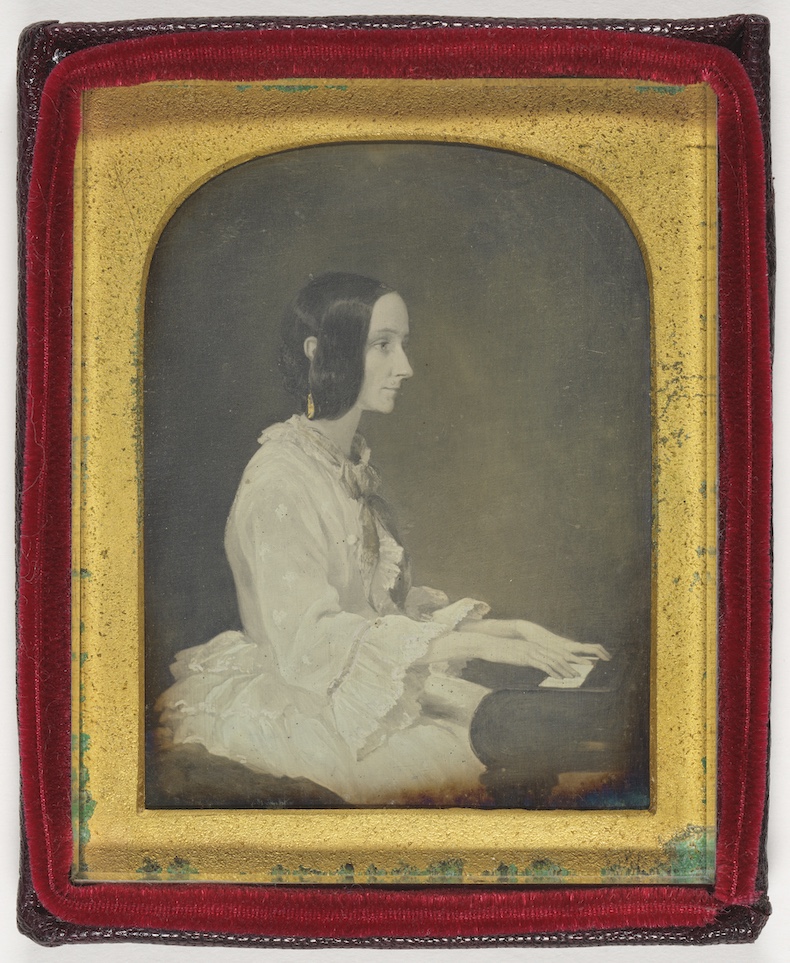
Three photographs of Ada Lovelace
The National Portrait Gallery has acquired three daguerreotypes of Ada Lovelace – the only known extant photographs of the writer, mathematician and early computer pioneer. Two of the photos were taken in 1843 by Antoine Claudet, a French photographer who had been a student of Louis Daguerre himself in the 1830s; the other, a daguerreotype copy of a portrait of Lovelace that was painted by Henry Wyndham Phillips, dates to around 1852, the year of her death from cancer at the age of 36, and shows her sitting at a piano. The photos had been going up for auction at Bonhams but were withdrawn and sold to the NPG in a private sale.