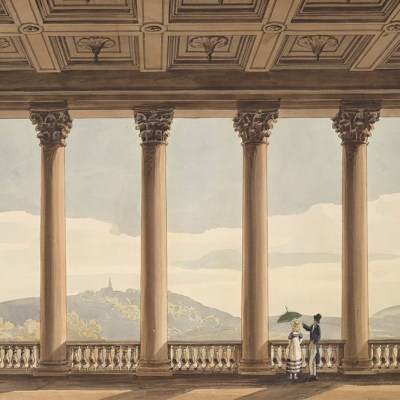
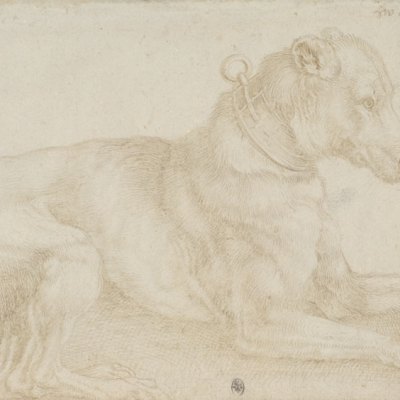
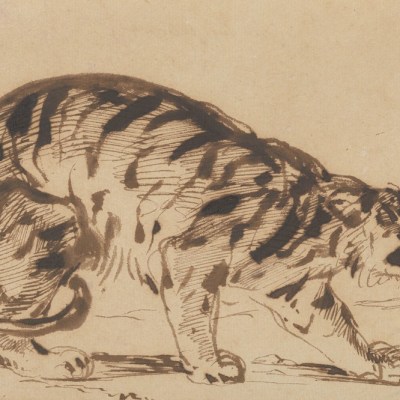
From the March 2026 issue of Apollo. Preview and subscribe here.
Held every year since 1991, Salon du Dessin is Paris’s pre-eminent fair dedicated to drawings. While the format does not change much from year to year, the market does, and often for the better. ‘The enthusiasm of contemporary artists for drawing is attracting a new audience,’ says the dealer Hervé Aaron, who co-chairs the fair, while sketches and studies have become, in many cases, more sought-after than finished works. Alongside the Old Masters that are the fair’s bread and butter, look out for an abstract painting by Pierre Soulages and some atmospheric ink drawings by the Chinese-French artist Zao Wou-Ki, offered by Galerie Jean-François Cazeau.
Salon du Dessin takes place at the Palais Brongniart, Paris, from 25–30 March.
Apollo’s highlights
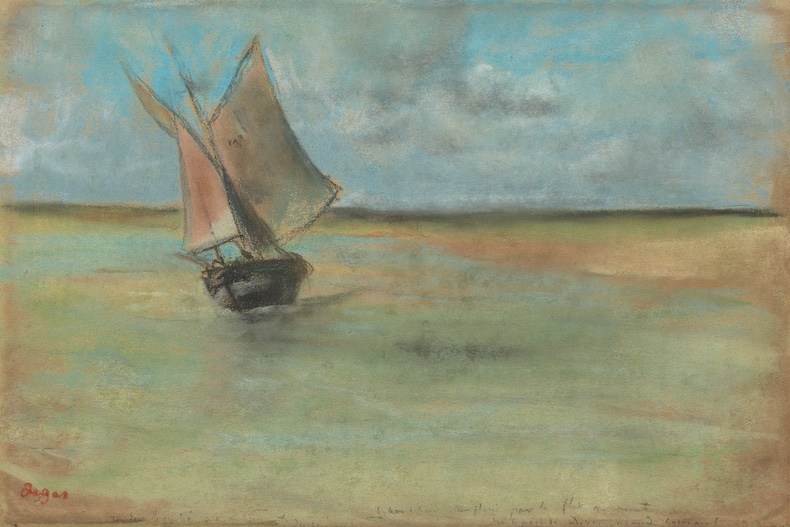
Fishing Boat at the Entrance to the Port of Dives-sur-Mer, 1869, Edgar Degas. Stephen Ongpin Fine Art, London
By the 1890s, probably because of his faltering eyesight, Degas’s output consisted almost entirely of pastel drawings. This serene sea view, however, was produced earlier in his career, around the time that he first began experimenting with the medium. One of more than 40 sheets he produced during his summer spent on the Normandy coast, the work was probably done en plein air.
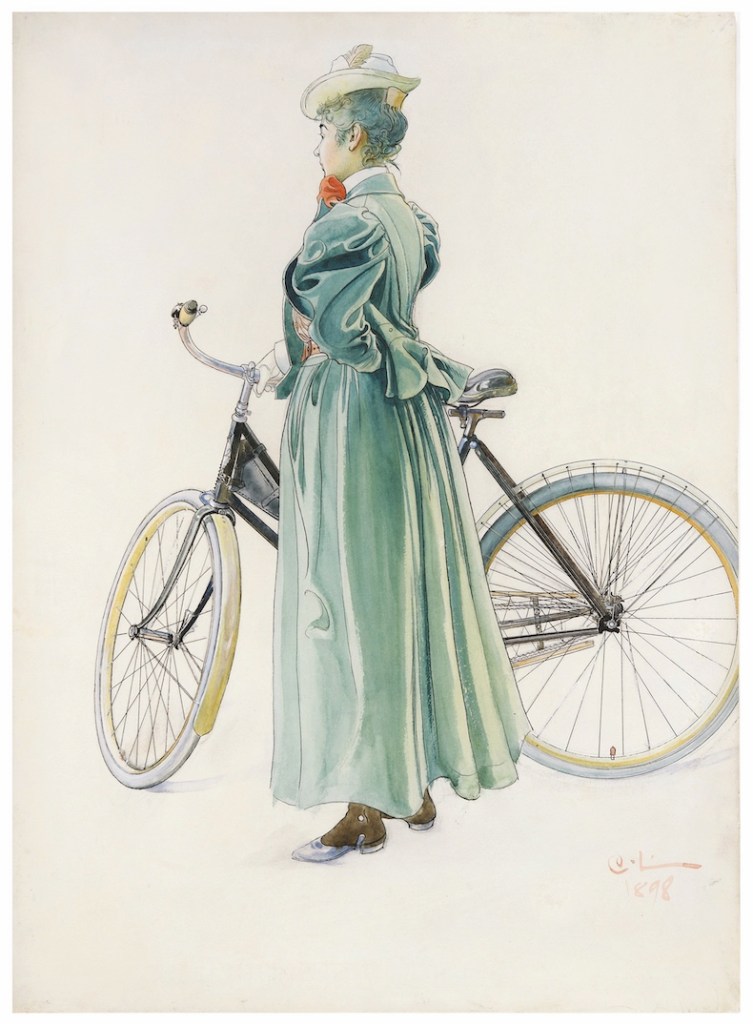
Mrs Eriksson Holding Her Bicycle, 1898, Carl Larsson. Benjamin Perronet, Paris
In the 1880s Larsson moved to an artists’ colony near Paris, where, uninterested in the Impressionist movement taking off nearby, he produced serene watercolours. Works such as this are typical of his elegant style and show why he is something of a Swedish national treasure.
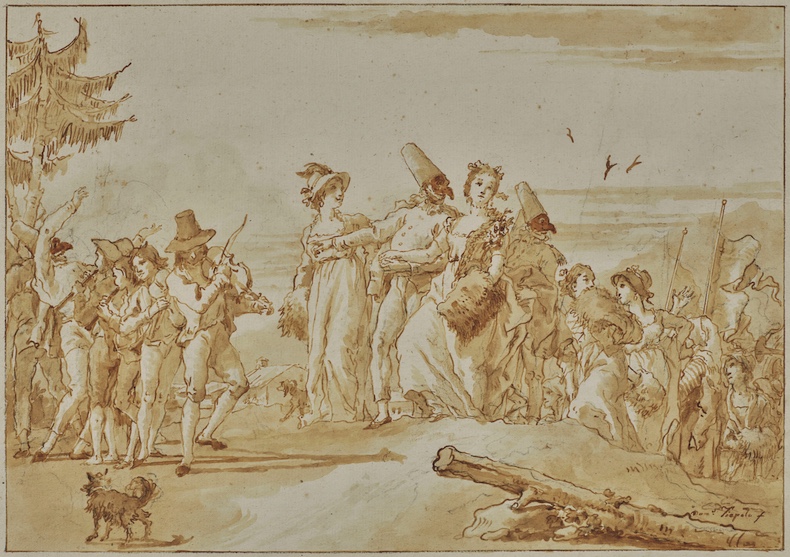
Punchinello’s wedding procession, c. 1780–90, Giandomenico Tiepolo. Galerie Eric Coatalem, Paris
In later life Giandomenico Tiepolo embarked on a series of drawings of episodes from the life and death of the Commedia dell’Arte character Punchinello. The whole set of 104 works was kept together until 1921, when it was exhibited in Paris, before slowly being sold off by the antiquarian Richard Owen. This sheet depicts Punchinello’s wedding as a boisterous affair.
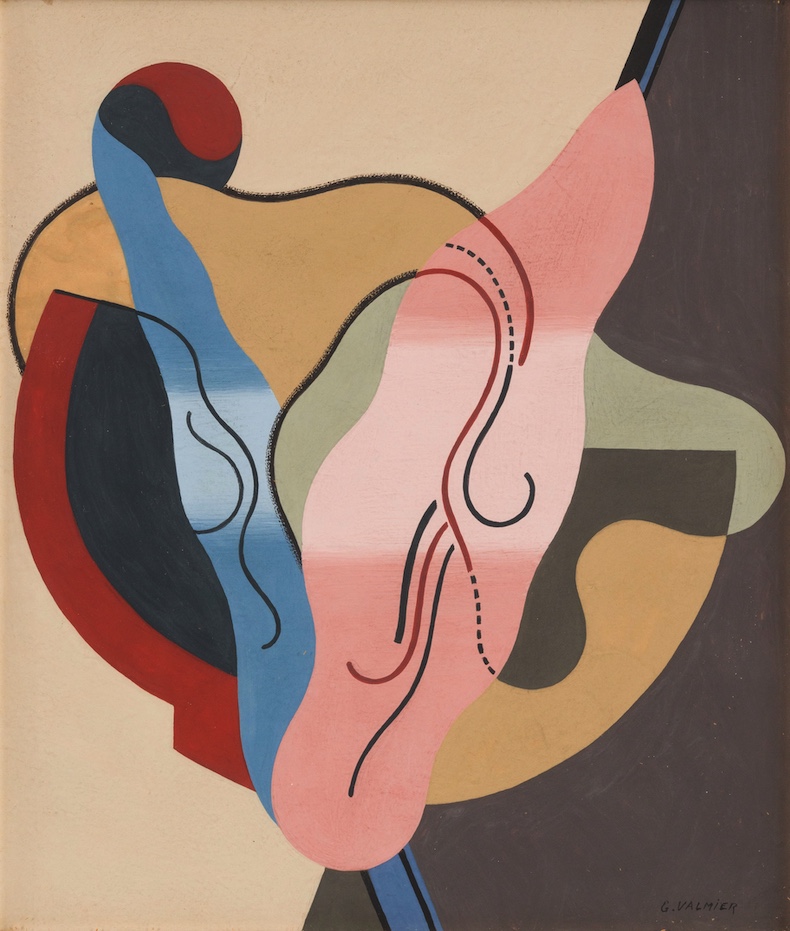
Composition abstraite, c. 1930, Georges Valmier. Stern Pissarro Gallery, London
Inspired early on in his career by Cézanne, Valmier’s work took a turn in the 1900s, when he was seduced by Braque, Picasso and co. This gouache was painted in the last decade of his life, around the time that he began moving from the rigorous cubist style for which he had become known to the total abstraction that defined his late style.
International gallery highlights
Gordon Parks: We Shall Not Be Moved
5 March–11 April
Alison Jacques, London
Born into poverty and segregation in 1912, the self-taught photographer Gordon Parks became one of the foremost chroniclers of the Civil Rights Movement in the United States. This exhibition marking 20 years since Parks’s death is curated by the founder of the Equal Justice Initiative, Bryan Stevenson; his selection of photographs from 1942–1967 ranges from a portrait of Malcom X to a photo of a Black man’s hand clutching a cigarette through the bars of a prison cell.
Cinga Samson: Ukuphuthelwa
6 March–18 April
White Cube, New York
The South African artist’s oeuvre mostly consists of portraits of Black figures with pupil-less eyes, often in ambiguous or mysterious settings, that are artfully balanced between tenderness and horror. This exhibition of recent work – his second show with White Cube – is made up of a selection of enigmatic group scenes in dark palettes, in which flashes of white – trainers, shirts, eyes – provide a stark counterpoint to the surrounding gloom.
Keith Vaughan: States of Tension
4 March–2 April
Osborne Samuel, London
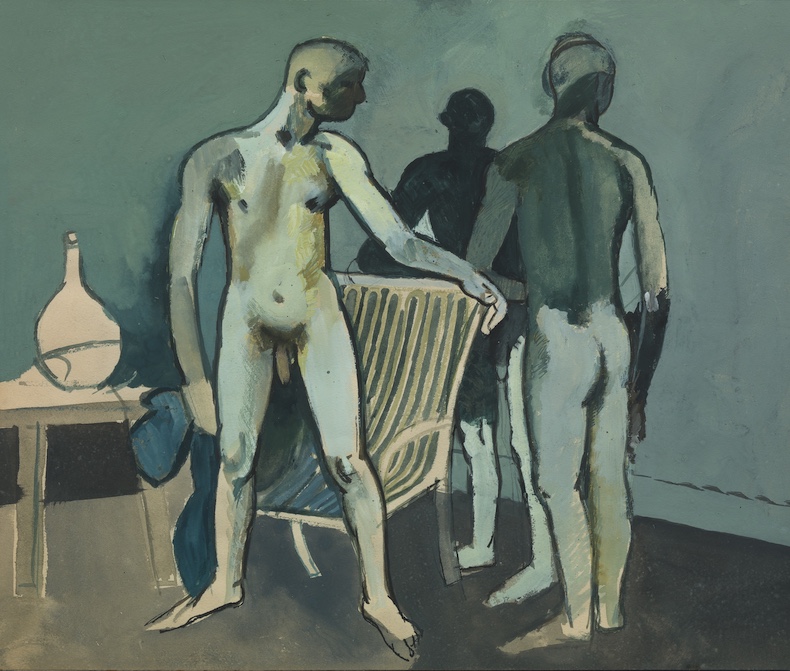
Vaughan is often grouped alongside English Neo-Romantics such as Paul Nash and John Piper, but from the 1950s onwards increasingly began to focus on the male figure in his oil paintings and watercolours. There are 28 works on display here dating from 1935 to 1975, the year before his death, including exemplary examples of his gouache technique (pictured) as well as more abstract works, including a jagged oil painting he made while staying in Iowa in 1959.
Fairs in focus
Maastricht Antiquarian Book and Print Fair
13–15 March
Sint Janskerk, Maastricht
TEFAF is, of course, the main event in Maastricht this month, but those wishing to look at beautiful objects away from the crowds (and for free) should consider heading over the river to MABP. The 18th edition of the fair brings together 24 dealers from around Europe. Look out for a finely preserved copper engraving map of South America and the Pacific, produced by Hendrick de Leth in 1730, offered by local dealer Paul Bremmers Antiquariaat.
Paris Print Fair
26–29 March
Réfectoire du Couvent des Cordeliers, Paris
The Paris Print Fair, which runs concurrently to Salon du Dessin, celebrates its fifth anniversary this year. With 25 galleries in attendance, more than half of which are from outside France, this edition features a variety of prints from the Renaissance to the present, including woodcuts by Dürer brought by August Laube and a riotous lithograph by Niki de Saint Phalle on show at Le Coin des Arts.
From the March 2026 issue of Apollo.