
The Italian culture minister, Alessandro Giuli, has had a lot to feel exercised about recently. Just after commissioning an investigation into an unorthodox piece of restoration in the Basilica of San Lorenzo in Lucina in Rome, he has another ‘absurd act of barbarity’ to condemn in the same month. While the earlier infraction – of putting the face of Italian prime minister Georgia Meloni on an angel – was clearly the work of man, specifically an 83-year-old painter called Bruno Valentinetti, there is a good chance that the second is just an act of God.
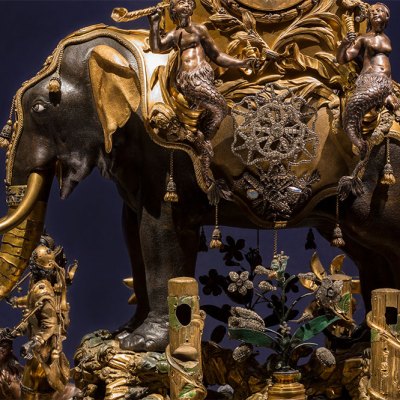
Like Giuli, your roving correspondent was also horrified by the news this week that the wonderfully expressive elephant designed by Gian Lorenzo Bernini for Rome’s Piazza della Minerva is missing part of its left tusk. Thankfully, to the relief of Rakewell and anyone who loves baroque sculpture or just Rome, Reuters quickly revised its first report that it was the trunk that had been snapped off. The tip of this tusk has, of course, been detached before – in an act of vandalism in November 2016 – and it may actually date from a 1977 restoration. Italian police are said to be watching CCTV to find out what or who caused the damage. The broken marble fragment was found at the base of the monument, so perhaps this will be third time lucky for the delicate extremity.
Bernini’s baroque masterpiece was commissioned by Pope Alexander VII to bear a recently discovered Egyptian obelisk. But who knows what the elephant whose remains have been discovered in an archaeological site near Cordoba might have borne? You can read a thorough analysis of the bone that has been found in the Journal of Archaeological Science: Reports, but the more sensational element of the find is the possibility, however faint, that the elephant in question might have been part of Hannibal’s invading forces in the Second Punic War.
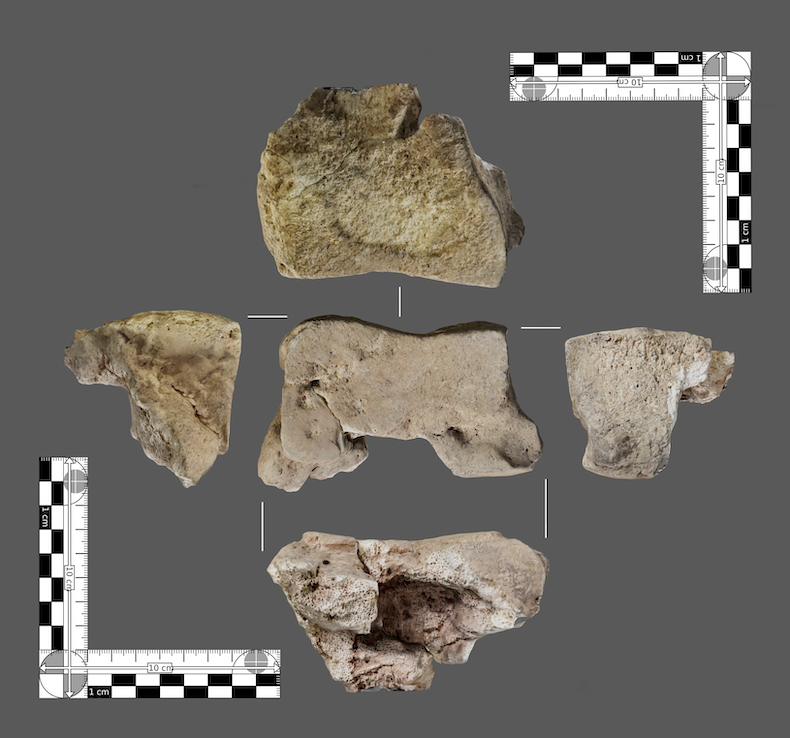
Until now, there has been absolutely no physical evidence to support the stories that when the Carthaginian general crossed the Alps into Italy in 218 BC, he did so with 37 elephants under his command. The closest Roman sources, Polybius and Livy, were writing long after the event – Livy some two centuries later – and they can’t even agree if elephants can swim. Instead of getting carried away by a single carpal bone from the right foot of a single elephant, it seems sensible to listen to the more measured assessment of the Spanish team, who point out that finding actual proof – beyond the existence of ivory – that elephants were around in Europe in this period is astonishing in itself.