From the March 2026 issue of Apollo.
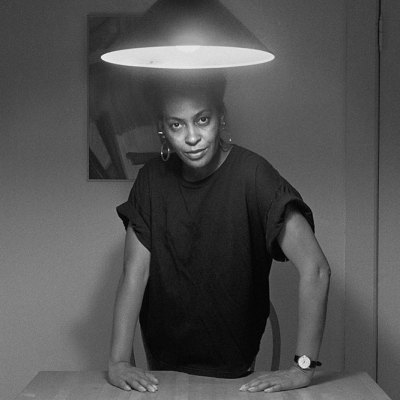
I intended to write about the spirited, S&M-inflected erotica that Catherine Opie shot for the lesbian mag On Our Backs in the late 1980s. I have instead found myself captivated by her engaging, often very beautiful photographs of boys and young men. As a photographer Opie has what is traditionally termed ‘range’, though it would more properly be called a sense of common humanity. In an era of factionalism, name-calling and tribal self-regard (on the arty left in particular), Opie stands out as an artist determined both to give representation to her community and to reach beyond it. Photographing political rallies and demonstrations since the 1980s, she searches for individuals within the crowd. These portraits create a moment of relation within an otherwise alienating mass of people, whether she’s at Barack Obama’s first inauguration or a rally for the Tea Party movement.
Born in Sandusky, Ohio, in 1961, Opie became a photographer as a child, and one with a strong sense of social justice. Long before art school, she conceived of photography as a way to bring eyes to the unseen, to highlight mechanisms of power and to gather evidence to fight wrongdoing. Perhaps it is her own seriousness and thoughtfulness as a child that has led her to portray children as serious and thoughtful in their own right? An exhibition of Opie’s work opening this month at the National Portrait Gallery in London includes seven portraits of children made in 2004 – an unusual presence within a museum dedicated almost entirely to pictures of the great and good (aka adults). Each child is seated against a brightly coloured backdrop in Opie’s home studio, some without T-shirts, as though they’ve just wandered in from a neighbouring garden. Nobody poses and nobody smiles. This is not a performance.
At art school in San Francisco in the mid 1980s Opie found her people within the city’s leather community. As ‘Cathy’ Opie, she had photographs printed in On Our Backs, including the al fresco portrait Anna Marie Pissing (1986) and Raven (1990), in which a model – naked but for a few bits of metalware – stands bound to a chain-link fence on a suburban hilltop, her body framed by strips of barbed wire. When Opie moved south for an MFA at the California Institute of Arts (CalArts) in Santa Clarita she left her community behind. Despite a supportive faculty (foundational queer theorist Catherine Lord was dean of CalArts at the time), Opie was reticent about making work that exposed or addressed her sexuality: ‘I was away from this beloved community that I was so much a part of in San Francisco, but I think my resistance was also a lot about my own internalised homophobia,’ she told curator Charlotte Cotton in 2021. She wanted a teaching job. Could a leather dyke get a teaching job?
Against the backdrop of the Aids epidemic, homophobia had reached such a dangerous pitch by the time Opie graduated from CalArts that she felt she had to step up: she had friends losing their jobs, their worldly goods, even their lives. She exhibited a sensational – and unignorable – pair of self-portraits. In the first, she appears with a pair of skirted stick figures and a house cut into the flesh of her back, and in the second, in a leather mask with needles piercing her arms and ‘Pervert’ carved in extravagant script across her chest. Opie has described the works as ‘another coming out’, in which she revealed both her private sexual practices and her desire to be a parent and make a family home on her own terms. These works were a risk, professionally and personally, but one she felt compelled to take.
I think Opie’s huge gesture of vulnerability has been the basis of the openness that she has since brought to the practice of portraiture. While her compositions are often formally simple – perhaps a single figure positioned against a black backdrop – her subjects are never reduced. They are not there to represent an idea or illustrate a point of view. They are not symbolic. Instead, she gives her sitters the space to expand and become mysterious.
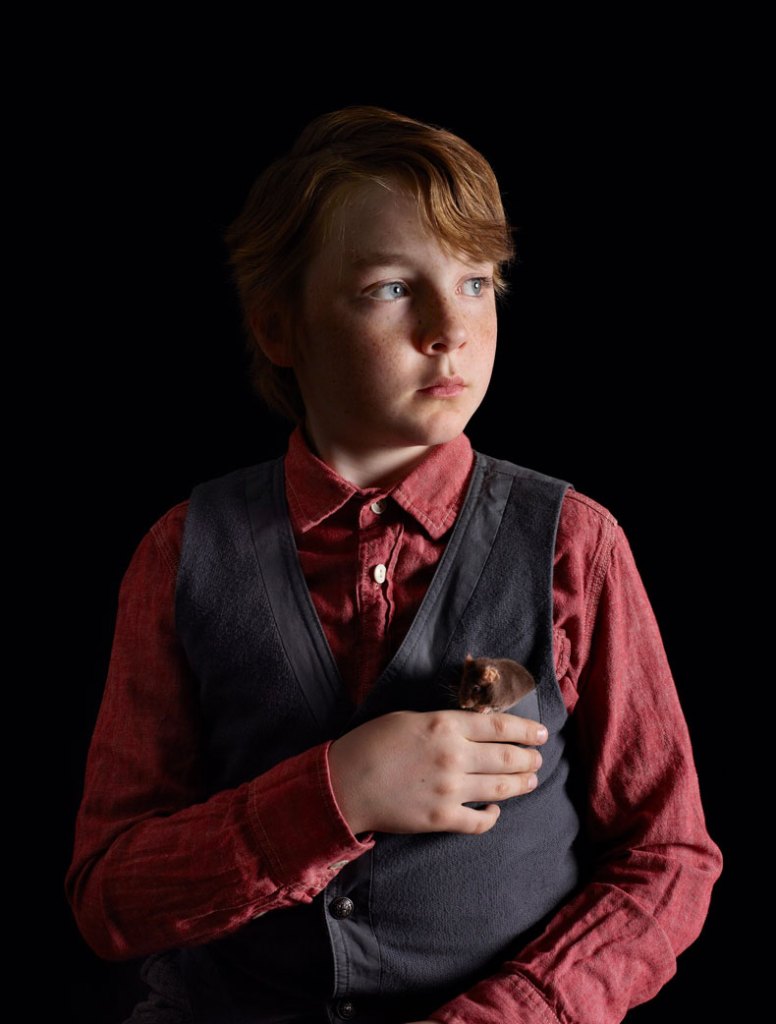
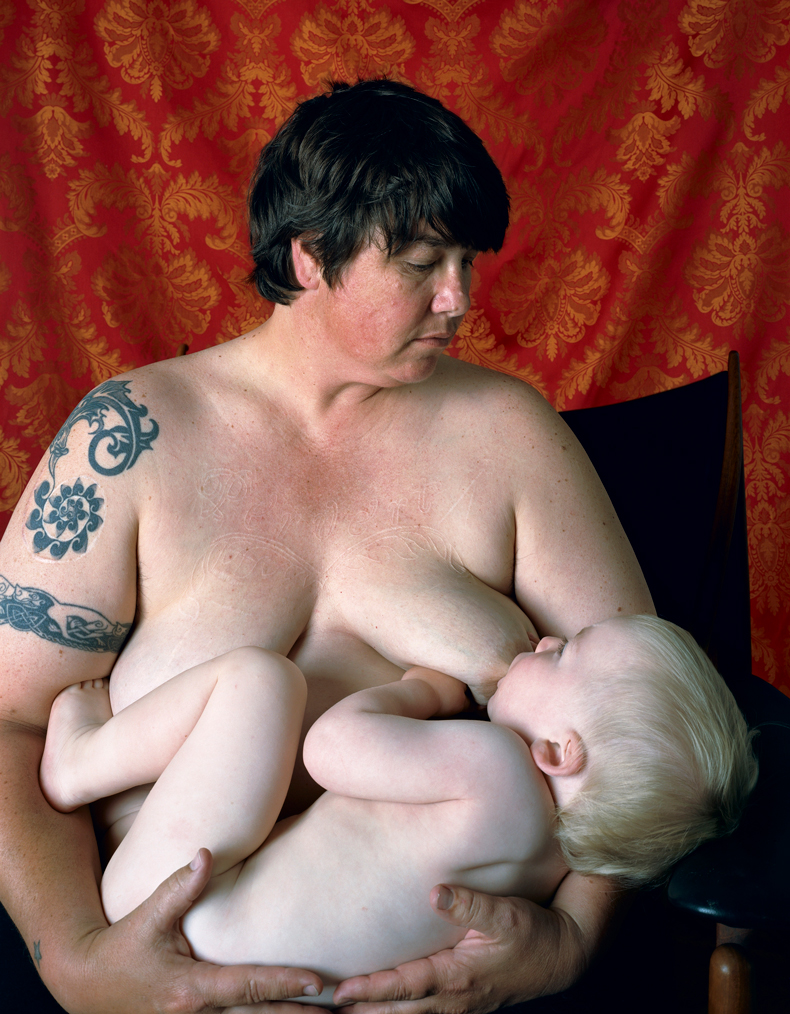
Perhaps nowhere is this gift of space more beautifully evident than in photographs of her own son Oliver and her portraits of footballers. Opie has photographed Oliver since infancy, for works including Self-Portrait/Nursing (2004) and Oliver in a Tutu (2004). A portrait at the age of 10 with a pet mouse in his top pocket – Oliver & Mrs. Nibbles (2012) – borrows its composition and colouring from Leonardo da Vinci’s Lady with an Ermine. Despite these formal constraints, it is a remarkably individual portrait of a small boy (also – kudos to Opie for a Leonardo tribute with ‘Mrs. Nibbles’ in the title).
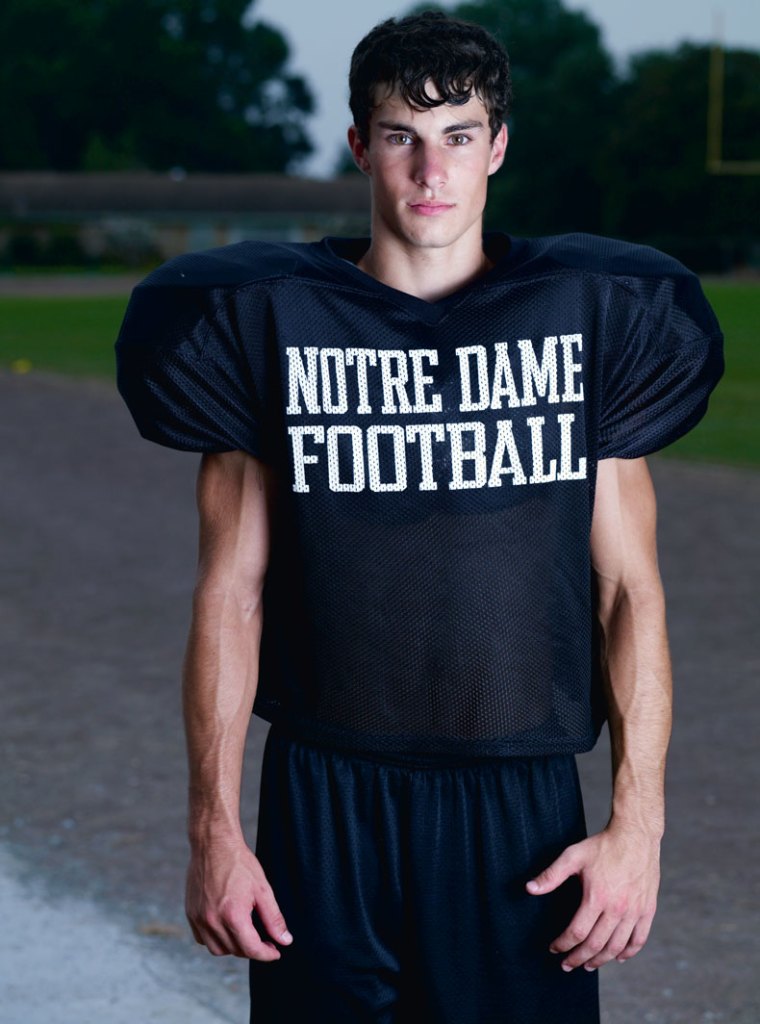
Between 2007 and 2009, Opie photographed high-school football players across the United States, from Alaska to Hawaii. In their heavy padding and gumshields, some look like clumsy squires in knight’s armour, others are muscular and self-confident, or sweet-faced, or contemplative. They are, despite the apparel, anything but uniform. Collectively these portraits are a study of the unpredictable balancing act that occurs between childhood and adulthood, during which changes to mind and body happen with the fluttering speed of a heartbeat. As important as it was for Opie to find her people at that age, that early self-realisation has allowed her to become expansive. ‘Her people’ became a disparate tribe: those who permit themselves to be vulnerable in front of her camera.
‘Catherine Opie: To Be Seen’ is at the National Portrait Gallery, London, from 5 March–31 May.
From the March 2026 issue of Apollo.