You would have thought that 4–7 March would be a pretty terrible time for London auction ‘week’. With a war in the Middle East still raging, who would be thinking about buying art? Quite a lot of people, it turns out.
Perversely, this week’s spring sales of Impressionist, modern and contemporary art in London were buoyant. The art advisor Francis Outred thinks them the strongest since he left Christie’s in 2018. ‘Despite the challenges of Brexit, Covid and the associated government economic policies, London remains an exciting place to live, work, visit, buy and sell,’ Outred tells me. He adds that major November auctions in New York seemed ‘like the beginning of a new era in the art market and that feeling has only strengthened with the response this week in London’.
Looking purely at the evening sales, results were considerably up from a downbeat spring series in 2025. The trio of evening sales at Christie’s – comprising the general 20th and 21st-century art sale, the Art of the Surreal and the Roger and Josette Vanthournout collection – totalled £197.4m (all results include fees), up 52 per cent from last year’s equivalent. Meanwhile at Sotheby’s the previous night, the modern and contemporary evening auction made £131m, with all 53 lots on offer sold – an increase of 110 per cent from March 2025.
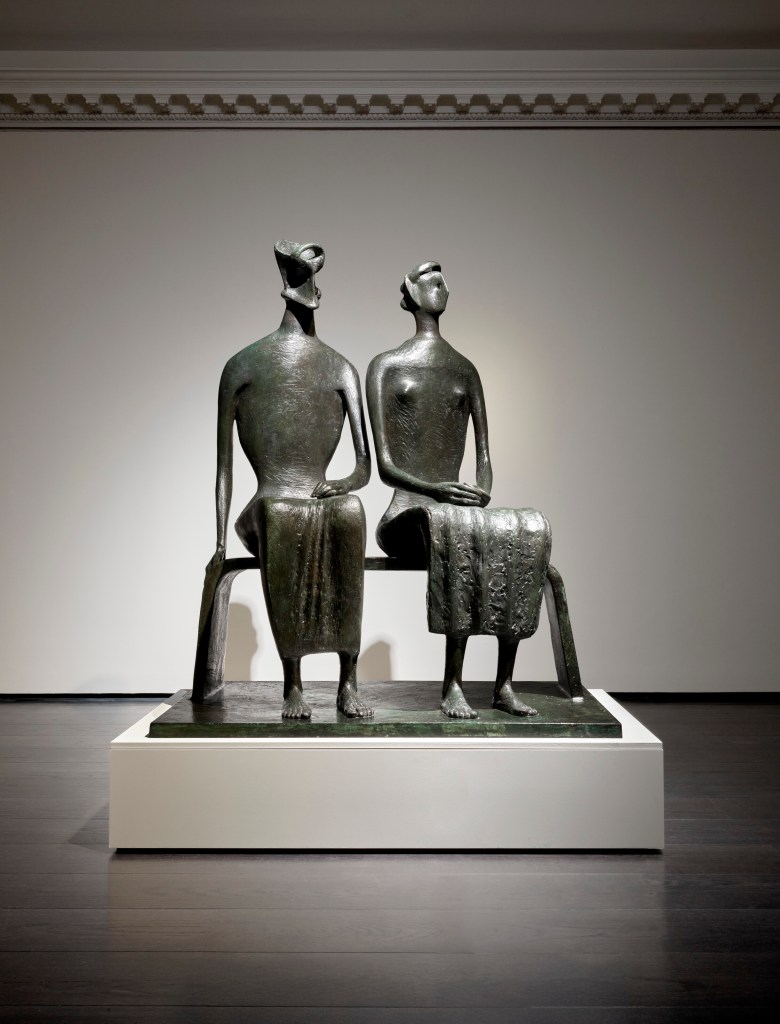
It was a particularly strong week for modern British artists. The top price of the week came at Christie’s, when Henry Moore’s King and Queen (conceived in 1952–53) sold for £26.3m (including buyer’s premium) – a new auction record for the artist. Six bidders vied for the monumental bronze for almost eight minutes, pushing it well above the cautious £10m–£15m estimate.
The work was not guaranteed and received ‘international, private and institutional interest’ before the sales, says Katharine Arnold, Christie’s vice-chairman of 20th and 21st-century art. ‘Monumental Henry Moore is so difficult to secure now,’ she says. ‘There are just so few great casts in private hands and that’s true for almost all dates, even the later work.’
King and Queen will be familiar to many as the sculpture depicted on a windswept moor in black-and-white photographs that Moore kept pinned in his studio, and would later appear in his 1955 catalogue raisonné and numerous books. Though Christie’s does not disclose any names in the provenance, William ‘Tony’ Keswick, a Scottish landowner and banker, bought the work from Moore in 1954 and installed it on his Glenkiln estate in Dumfriesshire. Moore recalls being invited to stay: ‘[Keswick] showed me a scar on one hillside – a kind of scooping out, that formed a natural dais. We thought that this would be the right spot for King and Queen, and here eventually the two figures were placed. They look across 40 miles of countryside into England.’
In 1995 the King and Queen were mysteriously beheaded, following some local discontent about ‘hideous bits of metal and the like’ ruining the landscape, to quote one disgruntled letter to the Keswicks. The sawn-off heads were later reattached.
King and Queen remained in the same spot for 70 years, passed down to Henry Keswick and his wife Tessa Keswick, who died in 2024 and 2022 respectively. The cast, which was produced in an edition of four plus one artist’s copy, is the only example left in private hands. Later casts were made for the Tate in 1957 and the Henry Moore Foundation in 1985. The identity of the buyer last night remains a mystery.
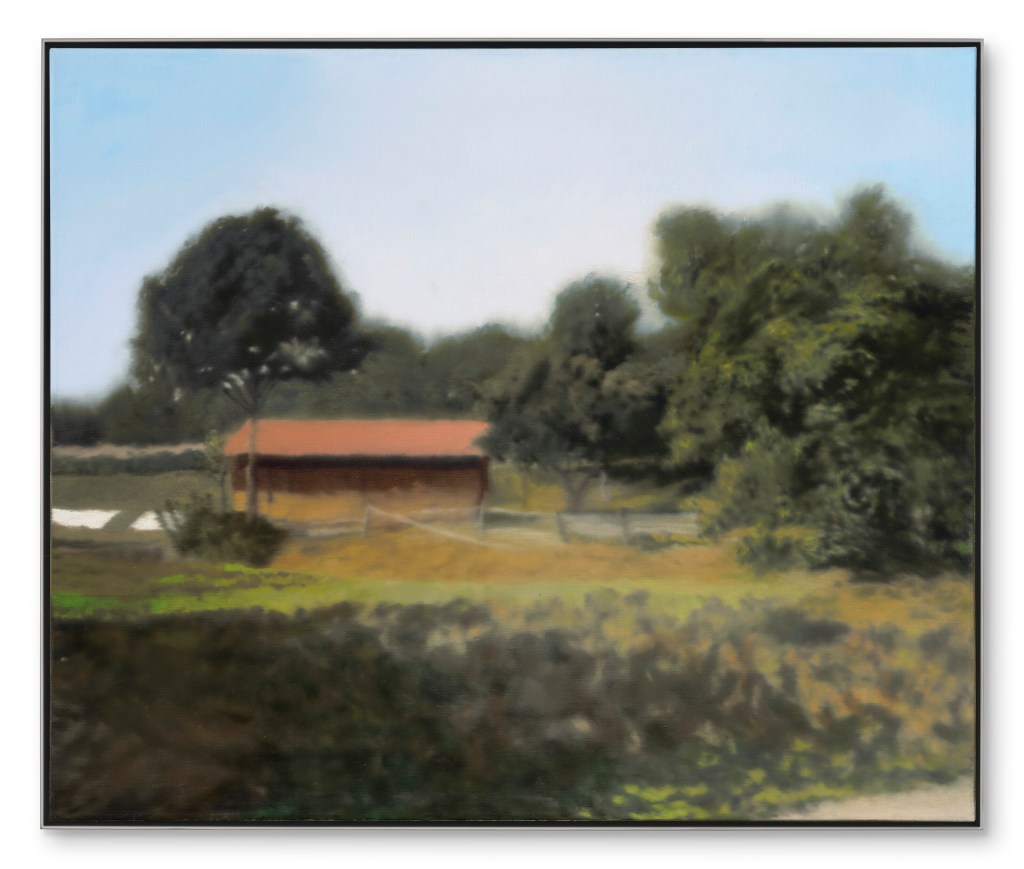
The lot after the Moore was a 1984 photo painting by Gerhard Richter, titled Schober (Haybarn), which sold within its £6m–£9m estimate for £8.4m, followed by one of the artist’s Abstraktes Bild from 1991, which went for £7.6m. Arnold notes that numerous Richter paintings have changed hands privately at a high level over the last year, and has seen some ‘pent-up demand, particularly for photo painting’ since the opening of the major Richter show at the Fondation Louis Vuitton in Paris in October (which closed on 2 March).
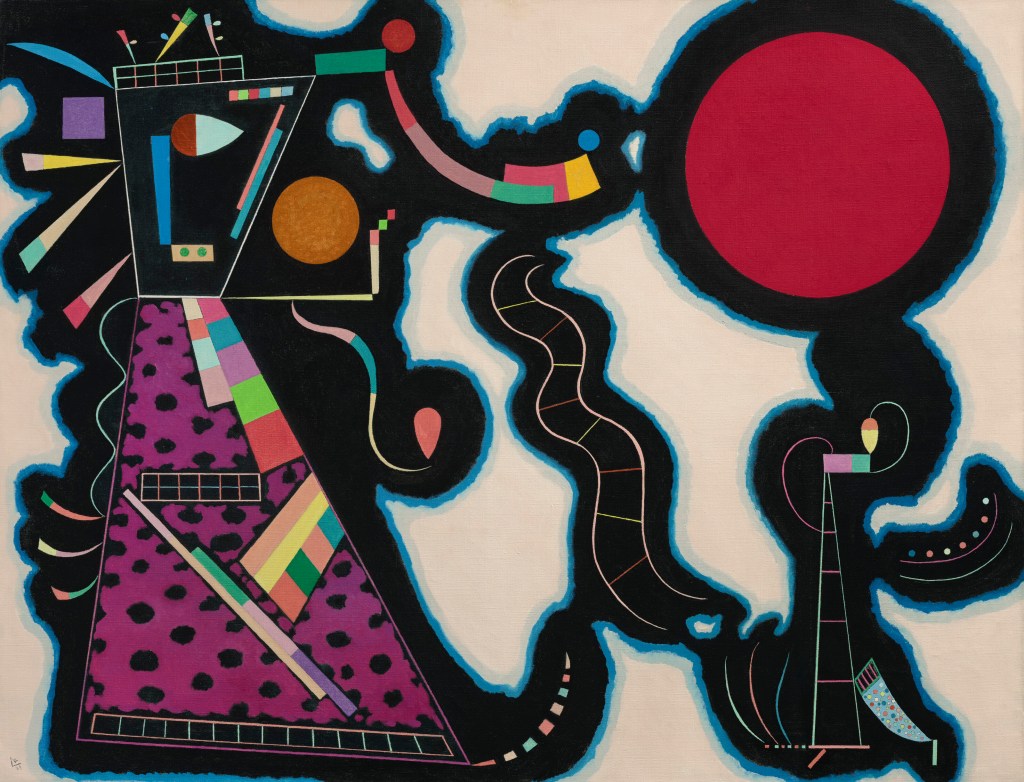
Also in the Christie’s sale was Wassily Kandinsky’s Le rond rouge (1939), which sold for within estimate at £12.5m ($16.7m), a poor return for the seller who bought it for $20.6m at Sotheby’s New York in 2018. ‘It’s a painting we’ve known for a while that we are very keen on, and the consignor was willing to consign it to us, even though theoretically taking a loss,’ said Keith Gill, vice-chairman of 20th and 21st-century art at Christie’s, before the sale. ‘Within a matter of days, we had a third-party guarantee for it, and that confirmed our thoughts about the value being sufficiently attractive.’
The sale of the Moore reflects a generational shift. Melanie Clore of the art advisors Clore Wyndham notes that ‘a generation of collectors are moving on and a new generation are picking the best of what they owned’, pointing to the Moore but also the group of Lucio Fontana works that appeared (to more muted response) on Wednesday night at Sotheby’s, and the Vanthournout collection, from which 31 lots sold at Christie’s last night for £35.3m.
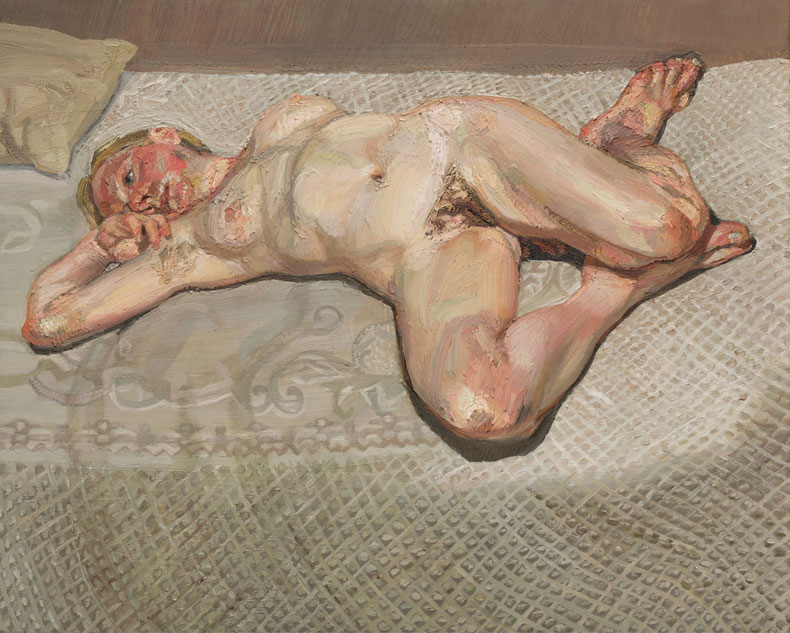
Although the 89-year-old billionaire Joe Lewis is still very much alive, four works from his much-admired collection of School of London works were consigned to Sotheby’s evening sale on Wednesday night. One of them, a self-portrait from 1972 by Francis Bacon, was the second-highest-selling lot of the week at £16m, above an estimate of £8–12m. Two later Freuds – A Young Painter (1957–58), of Ken Brazier, and Blond Girl on a Bed (1987), depicting the painter Sophie de Stempel – sold for £7.2m (est. £4m–£6m) and £7.4m (£6m–£8m) respectively.
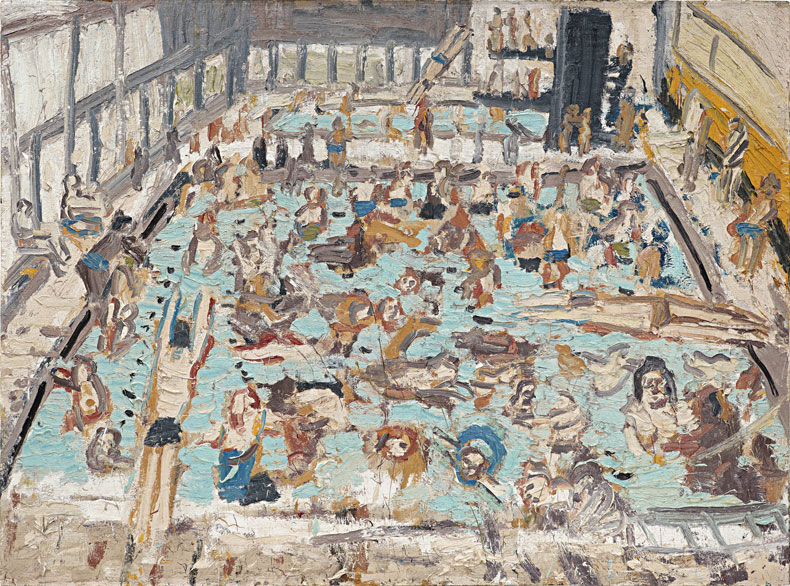
What drew the most attention, however, was Leon Kossoff’s Children’s Swimming Pool, 11 o’clock Saturday Morning, August (1969), the first of five large-scale paintings depicting Kossoff’s local public swimming pool in Willesden (three of the paintings are now in UK museums). After five minutes of bidding it sold for £5.2m, nearly seven times the £600,000–£800,000 estimate and almost four times Kossoff’s previous record of £1.4m.
Sotheby’s Tom Eddison says there were ‘extraordinary levels of interest’ in the Kossoff: ‘We felt confident that there would be a sort of new record price for the artist, but the end result was incredible. We had bidding from Asia, from America, from the UK and from Europe, and that doesn’t necessarily always happen with Kossoff.’
Sotheby’s evening sale on Wednesday night was, the auction house says, the first ever white-glove various-owner sale of Impressionist, modern and contemporary art in the London saleroom. Ottilie Windsor, Sotheby’s head of contemporary art, says that ‘it’s ultimately collections [within these sales] which drive results like that. We had three big, important named or designated collections in the evening sale last night, and buyers are very excited by them.’
Clore notes that none of the artists offered in Sotheby’s evening sale appeared to be under the age of 60. At Christie’s there was only one exception to this – a painting by the Scottish artist Caroline Walker. This marked shift from younger artists to blue-chip works is a trend Clore first observed in New York in November and found conspicuous this week in London. Is this, Clore asks, ‘a sign of the re-emergence of the real collector and the demise of the flipper?’
The art advisory firm Beaumont Nathan – which opened an office in Abu Dhabi last autumn – was actively buying this week, purchasing a Monet, a Brâncuși and a Léger at Sotheby’s evening sale, according to the industry newsletter The Baer Faxt. ‘It feels like there’s more energy in the market, things are priced reasonably well, and to get 100 per cent sold last night was a real achievement,’ Wentworth Beaumont told me the day after the sale. On the conflict in the Middle East, Beaumont says: ‘It’s a very worrying, concerning situation and I’m sure there are collectors either from the region, or directly exposed to it, who probably are feeling less inclined to bid and that’s completely understandable, but our collectors from the US, Europe and the UK seem to be continuing pretty much as normal – at the moment.’