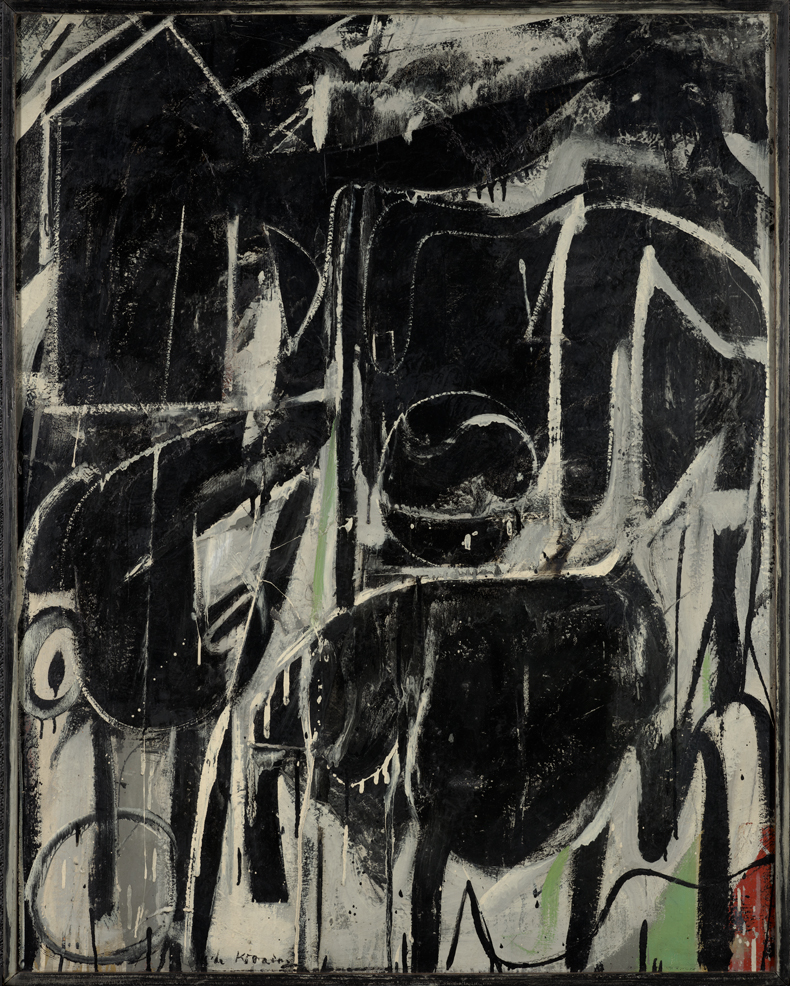
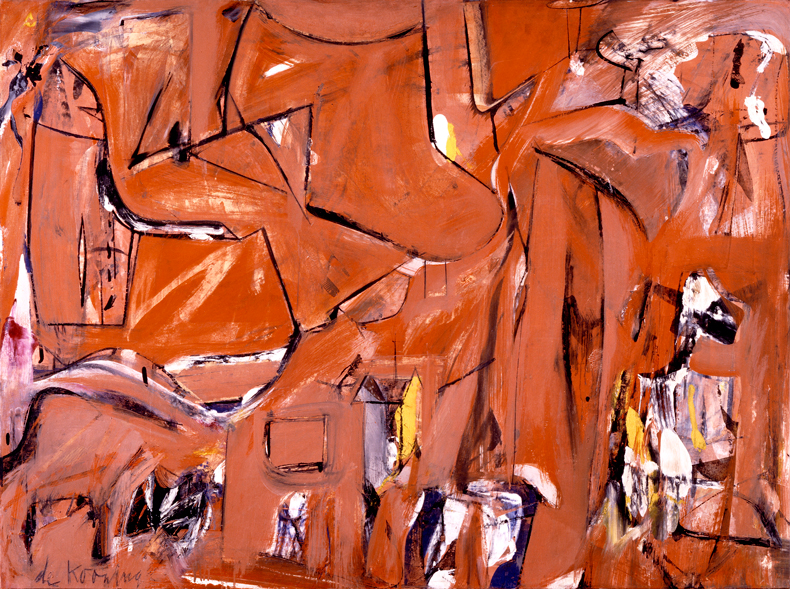
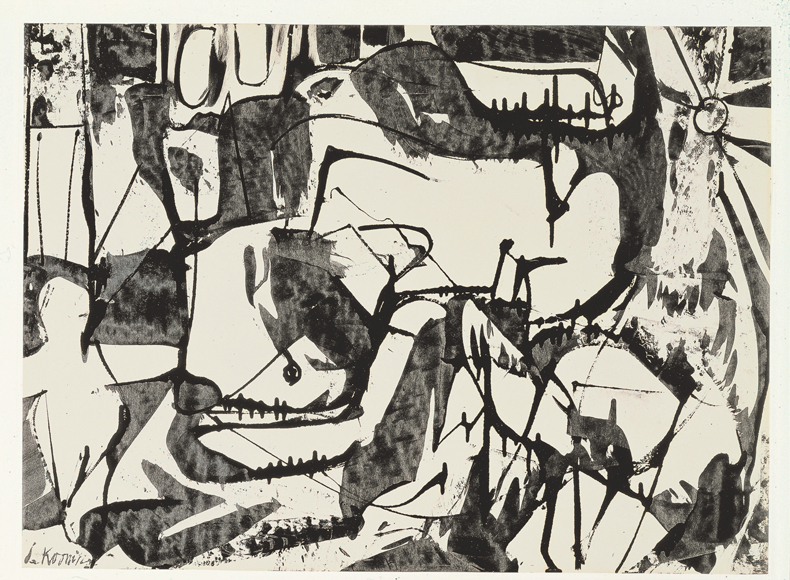
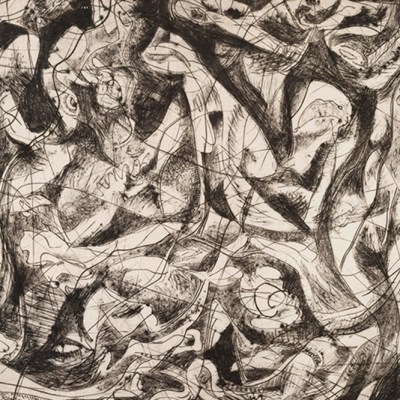
Willem de Kooning did not have a solo show until he was 43, when in 1948 he presented several paintings at Charles Egan Gallery in New York. ‘He comes before us in his maturity,’ wrote the critic Clement Greenberg, ‘with his means under his control, and with enough knowledge of himself and of painting in general to exclude all irrelevancies.’ These largely abstract paintings, many of which were made with oil and enamel, confirmed de Kooning as a leading light of New York’s avant-garde scene. They are energetic works and though many are colourful, informed by Matisse and Miró, the most striking make heavy use of black. De Kooning didn’t date his works and tended to revise them constantly – at least until his wife Elaine wrested them from him, declared them finished and gave them titles – so it’s not always easy to get a sense of his progression in these breakthrough years. But this exhibition suggests that this period was formative for de Kooning and for American art more widely (15 March–26 July).
Find out more from Princeton University Art Museum’s website.
Preview below | View Apollo’s Art Diary