Portrait of Lisa Gherardini, wife of Francesco del Giocondo (aka La Gioconde or Mona Lisa, 1503/19; detail), Musée du Louvre, Paris. Photo: Michel Urtado; © 2018 GrandPalaisRmn (Musée du Louvre)

‘Four things to see’ is sponsored by Bloomberg Connects, a free arts and culture platform that provides access to museums, galleries and cultural spaces around the world on demand. Explore now.
Each week we bring you four of the most interesting objects from the world’s museums, galleries and art institutions, hand-picked to mark significant moments in the calendar.
Sixty years ago this week, on 20 March 1966, the FIFA World Cup trophy – the Jules Rimet Cup – was stolen from an exhibition at Central Hall in Westminster, London. It had been missing for a week when a collie named Pickles found the trophy wrapped in newspaper beneath a hedge. The episode seems almost farcical but was a sharp reminder that valuable objects are always vulnerable to sudden acts of theft, no matter how tightly guarded they seem.
Some artworks are stolen because they are famous; others gain new levels of fame because they are stolen. All major institutions have preventative measures in place to prevent heists, but as recent events at the Louvre have demonstrated, these measures do not always work. Museums that fail to recover vanished works might try to downplay the loss as much as possible – or respond by making absence visible. This week we examine four works that have been the target of high-profile heists, or commemorate stolen art that has never been recovered.
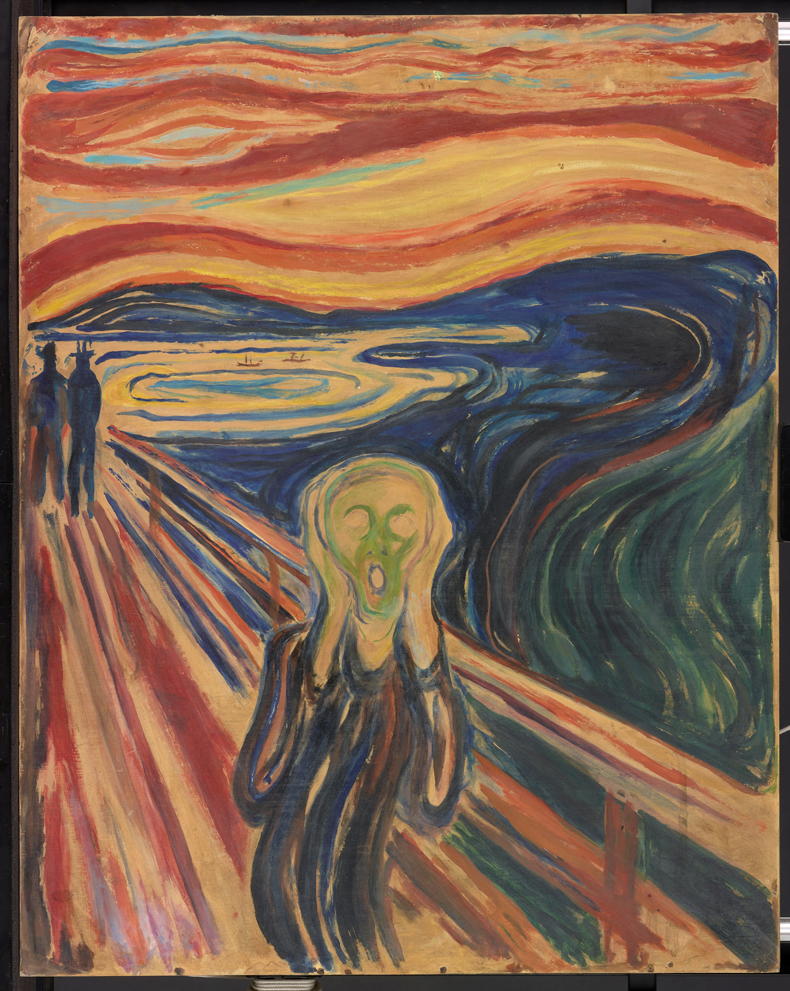
The Scream (c. 1910), Edvard Munch
Munchmuseet, Oslo
More than one version of Edvard Munch’s most famous painting has been stolen in Norway. In 1994 the professional footballer Pål Enger, who had played in Norway’s first division and in the UEFA Cup, broke one of the upper-floor windows at the National Gallery in Oslo and made off with the first extant version, painted in 1893, though it was recovered in around three months. Ten years later, masked gunmen stormed the Munchmuseet in Oslo in broad daylight and stole another version of The Scream, also made with tempera on cardboard, thought to have been painted in 1910. This time it took two years to locate the painting but the authorities did find it in the end. Click here to read more.
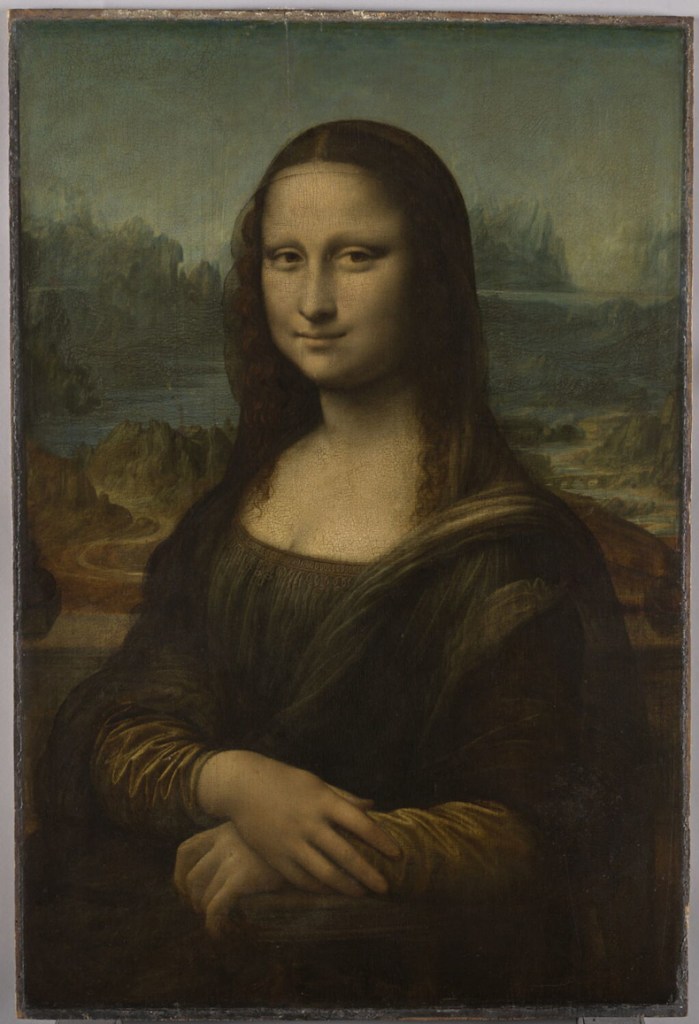
Mona Lisa (1503/19), Leonardo da Vinci
Musée du Louvre, Paris
Whereas The Scream was already famous before its first theft in 1994, Leonardo’s Mona Lisa – a portrait of Lisa Gherardini, the wife of Florentine silk merchant Francesco del Giocondo – may never have become the world’s most famous painting if it hadn’t been stolen. In 1911 Vincenzo Peruggia – a 29-year-old handyman from Lombardy who had worked at the Louvre for some years and constructed secure cases for a number of paintings, including the Mona Lisa – lifted the work off its iron pegs, took it to a nearby staircase, removed the painting from its frame and promptly left the building. At least two people were arrested – including Pablo Picasso and Guillaume Apollinaire – and due to police incompetence the painting was not found until two years later, when Peruggia tried to offload it to a gallerist in Florence. Click here to discover more.
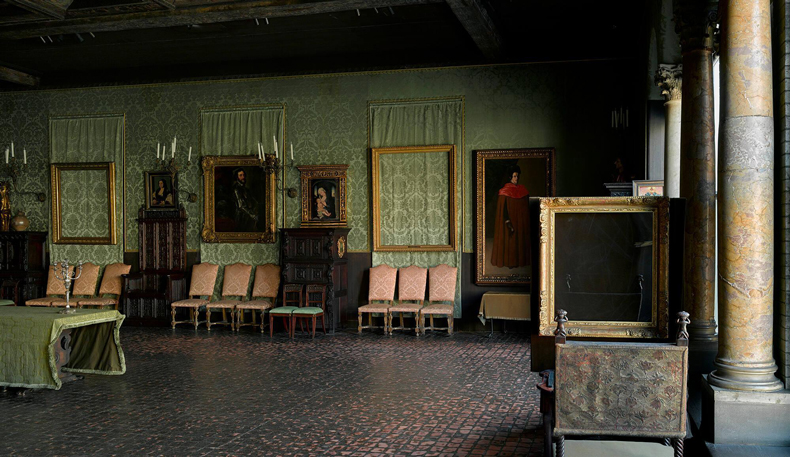
Dutch Room with empty frames (2016)
Isabella Stewart Gardner Museum, Boston
Empty frames hang on the walls marking the spots where Vermeer’s The Concert (c. 1664), Rembrandt’s only surviving seascape and works by Manet and Degas resided before 1990, when two thieves dressed as policemen walked into the museum, removed 13 masterpieces and disappeared. The museum’s decision to leave the frames in place transforms absence into memorial – a permanent reminder of the unsolved theft and the void left behind. Click here to find out more.

Portrait of a Lady (1916–17), Gustav Klimt
Galleria Ricci-Oddi, Piacenza
Two years before he died, Gustav Klimt began to paint over a work he had made in c. 1910: Portrait of a Young Lady, of a woman in a wide-brimmed black hat and thick scarf looking out at the viewer. Doing away with the hat and scarf and with far quicker brushstrokes than the first time round, Klimt remade the painting in the Expressionistic style that defined his later years. The Galleria Ricci-Oddi in Piacenza acquired it in 1925, but in 1997, during preparations for an exhibition, the painting disappeared – and did not resurface until nearly 23 years later, when some workmen found it in a plastic bag in a small unlocked compartment in the gallery’s exterior wall. The mystery has never been solved. Click here to learn more.

‘Four things to see’ is sponsored by Bloomberg Connects, a free arts and culture platform that provides access to museums, galleries and cultural spaces around the world on demand. Explore now.