British Museum, London
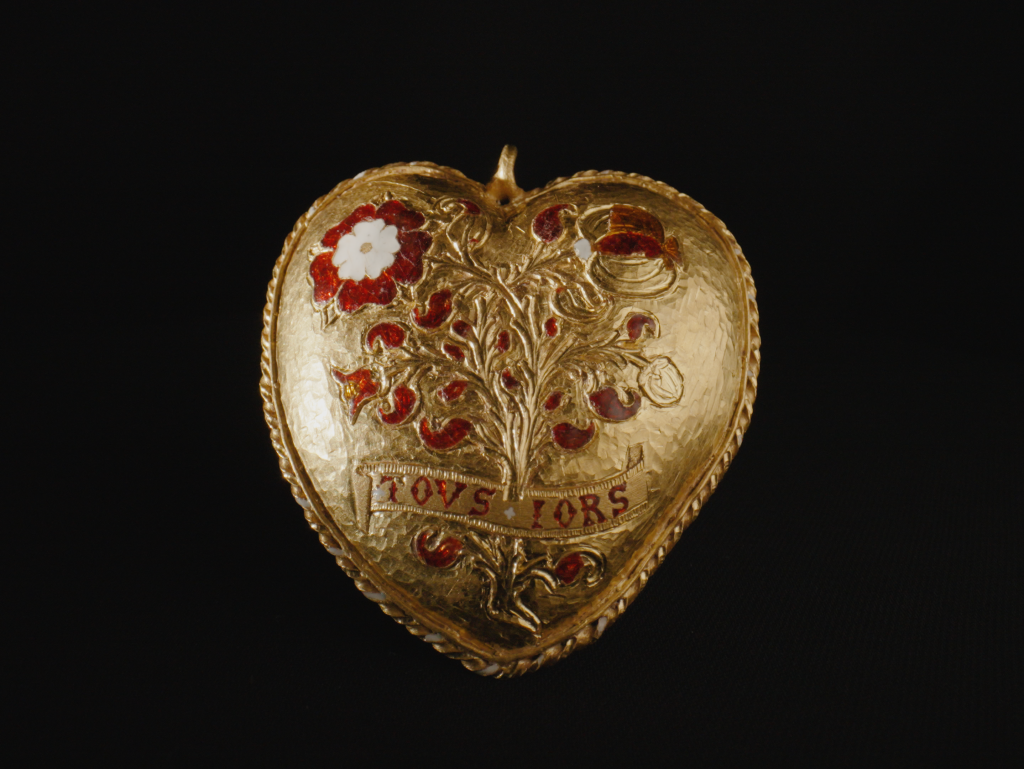
Tudor Heart Pendant (1518)
The British Museum has announced that its fundraising campaign to save a rare surviving object from the early years of Henry VIII’s reign has been successful. The Tudor Heart Pendant, which was dug up by a metal detectorist in Warwickshire in 2019, is thought to have direct links to Henry VIII and his first wife, Catherine of Aragon: the front bears the initials H and K, while the back shows a Tudor rose entwined with a pomegranate bush, the latter being the personal emblem of Queen Catherine. Research has confirmed that it is a genuine artefact and that it may have been commissioned by the monarchy for a tournament that marked the betrothal of a young Princess Mary (later Queen Mary I) to the French heir apparent in 1518. The campaign to raise the £3.5m to purchase the pendant was launched in October and has succeeded thanks to some 45,000 individual donations, alongside £1.75m from the National Heritage Memorial Fund and six-figure sums given by the Julia Rausing Trust, Art Fund and the American Friends of the British Museum.
Musée d’Orsay, Paris
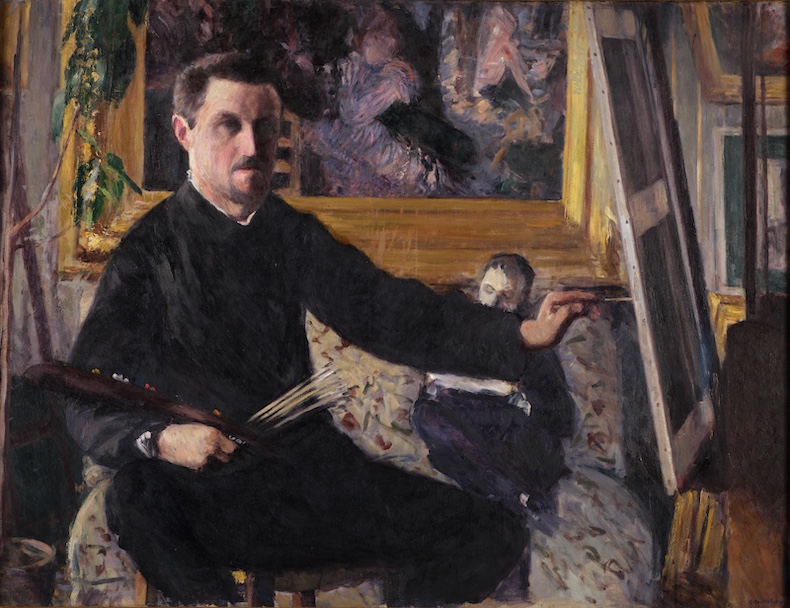
Portrait of the artist with an easel (1879), Gustave Caillebotte
With 15 works by the artist in its collection, the Musée d’Orsay owns more work by Gustave Caillebotte, a member, patron and friend of the Impressionists, than any other institution in France. Caillebotte has never been as well known as Monet, Cézanne or many of his other peers; it was only in the late 20th century that interest in his work took off in earnest in France. The museum has added to its collection a candid self-portrait that Caillebotte painted in 1879 at the age of 31, three years after he had first exhibited with the Impressionists. Fashioning himself as both a painter and a consumer of art, he is depicted with brush in hand, as if caught in the act of production, while on the wall behind him hangs a work by his friend and fellow Impressionist Renoir: Bal du Moulin de la Galette (1876), which was owned by Caillebotte until his death and has been in the Musée d’Orsay’s collection since the 1980s.
Art Institute of Chicago
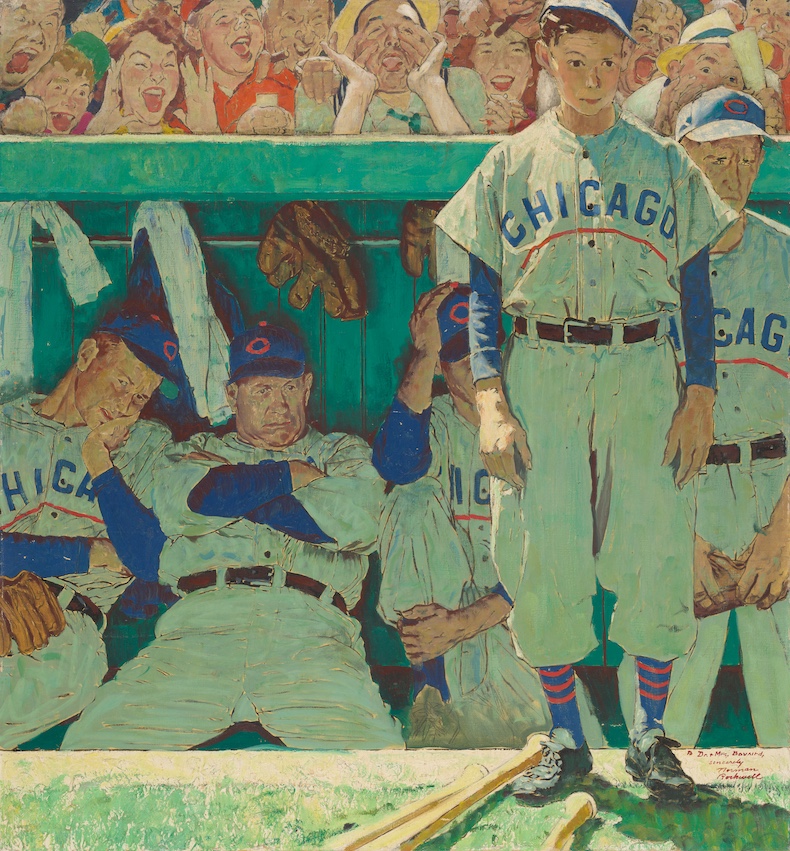
The Dugout (1948), Norman Rockwell
The 4 September 1948 edition of the Saturday Evening Post featured an illustration by Norman Rockwell, showing dejected members of the Chicago Cubs baseball team while, just above their dugout, ecstatic Boston Braves fans cheer and scream at their team’s success. It went on to become one of Rockwell’s most enduring magazine covers. The composition of the image was not as spontaneous as it might seem; Rockwell enlisted players and fans to pose in different states of joy and woe, which he photographed before producing several charcoal sketches and oil paintings of the scene. The Art Institute of Chicago has acquired an early oil version of the work, which now hangs in the ‘Arts of the Americas’ gallery, near several other famous works of 20th-century American painting, including Edward Hopper’s Nighthawks (1942).
National Galleries of Scotland
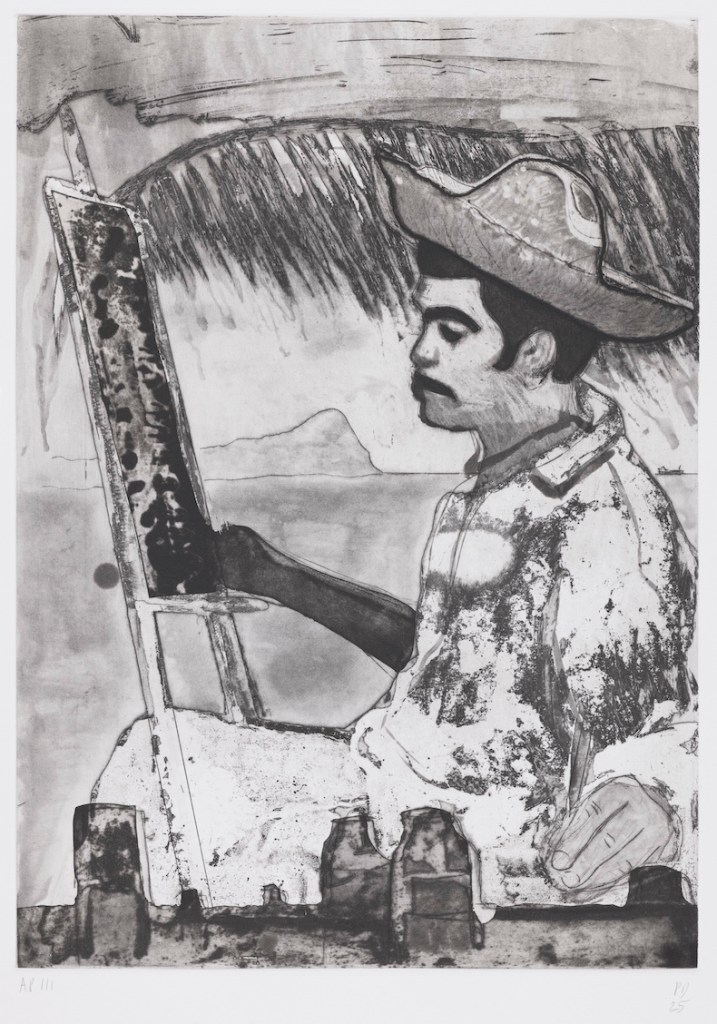
67 prints by Peter Doig
From 2002 until 2021 Peter Doig lived in Trinidad and is well known for his evocative Caribbean landscapes and beach scenes. The artist was born in Edinburgh, however, and this gift of prints to the National Galleries of Scotland shows his affection for the country of his birth. As well as the 67 existing works, Doig has promised to donate at least one edition of every future print he makes to the National Galleries. The gift constitutes the National Galleries’ largest ever acquisition of prints by a living artist; a selection is currently on display at Modern One in Edinburgh and is free to visit.
Victoria and Albert Museum, London
First ever YouTube video and a reconstruction of the original YouTube webpage
YouTube is the second-most visited website in the world, with an estimated 20m videos uploaded to it every day, a lot of them exceedingly mundane. It feels fitting, then, that the first video ever uploaded to the website – ‘Me at the zoo’ (2005), a 19-second clip of one of YouTube’s founders, Jawed Karim, standing in front of an elephant enclosure and commenting on their trunks – is also quite dull. It is for YouTube’s ongoing cultural significance, however, that the V&A has acquired a video file of ‘Me at the zoo’, as well as reconstructing a working version of an early watch page from 2006, allowing visitors born in the ’90s or earlier a healthy dose of nostalgia. It joins the V&A’s growing collection of digital objects and recent phenomena, including WeChat gifs and an example of the mobile app Euki, which is dedicated to reproductive health. The YouTube video and website are available to view at the V&A’s ‘Design 1900–Now’ galleries.