Jennifer Scott, Dulwich Picture Gallery

Jennifer Scott, photographed at Dulwich Picture Gallery by Graham Turner. Courtesy Dulwich Picture Gallery
Jennifer Scott, photographed at Dulwich Picture Gallery by Graham Turner. Courtesy Dulwich Picture Gallery

‘From the Director’s Office’ is supported by Bloomberg Connects.
In the first edition of ‘From the Director’s Office’ – a new series in which we talk to museum directors about their collections and what they are doing to draw in audiences – we speak to Jennifer Scott, who has been director of Dulwich Picture Gallery in London since 2017. She tells Apollo about her favourite works from the collection, how to get new audiences into Old Masters, and the museum she most admires.
What’s most special about Dulwich Picture Gallery’s collection?
It’s got such a unique story. The core of the collection was built up by two intrepid art dealers for the King of Poland, Stanisław August Poniatowski. After building a collection fit for a king, they asked their friend Sir John Soane to design a building to house those paintings. The building is like an embrace around the paintings; the architect was responding to them when he was thinking of the best way for them to be displayed.
How much of the collection is on display?
We have about 652 paintings, so it’s quite easy for us to have a third of that collection on display at any time. A third are on loan – either on permanent loan to National Trust houses and places like Strawberry Hill House, or on short-term loan to exhibitions around the world – and a third are in storage.
How do you ensure that the works not on display are ‘working’ for the museum in some way?
Bloomberg Connects is really great for that. We can put our collection on the app for people to go behind the scenes. At the moment we’re adding infrared images, X-rays and technical information. And on our new website, it’s looking so fresh. You can download images of every single painting in the collection for free, we update the website with information as often as we can.
Dulwich Picture Gallery is more than 200 years old. What are the biggest challenges of running such a historic institution?
Money is the biggest worry. We are not a government-supported organisation; we’re an independent charity. We have to work hard to raise every penny of the £4.5m that it takes every year to keep this place running. And because we’re so old – and because we’re so good – I think people assume that we’re really rich, and we’re not. It’s important for us to put our best foot forward, to create the best visitor experience and to make sure everything really is design-led and presented to the highest possible quality. Beneath the surface, behind the scenes, we’re working very, very hard to generate the income to keep ourselves going.
What is the most surprising or unusual object in Dulwich Picture Gallery’s collection?
We call ourselves ‘the original gallery’, because there’s this originality at our core, as well as our being the first purpose-built public art gallery. So when it comes to the most unusual thing, it’s not one of our paintings, it’s actually the building – and the mausoleum within the building. In the mausoleum we’ve got three dead bodies; we’ve got our family buried here at Dulwich Picture Gallery. And that’s definitely the most unusual, unexpected thing our visitors encounter when they come here.
What do you look for when acquiring works for the collection?
That’s an interesting question, because some would say we don’t acquire very often. We don’t have an acquisitions budget or a designated fund for acquisitions. Occasionally paintings are gifted to us; under the Acceptance in Lieu scheme, for instance, people might leave us a painting in their will, and that’s a really nice way of adding to the collection.
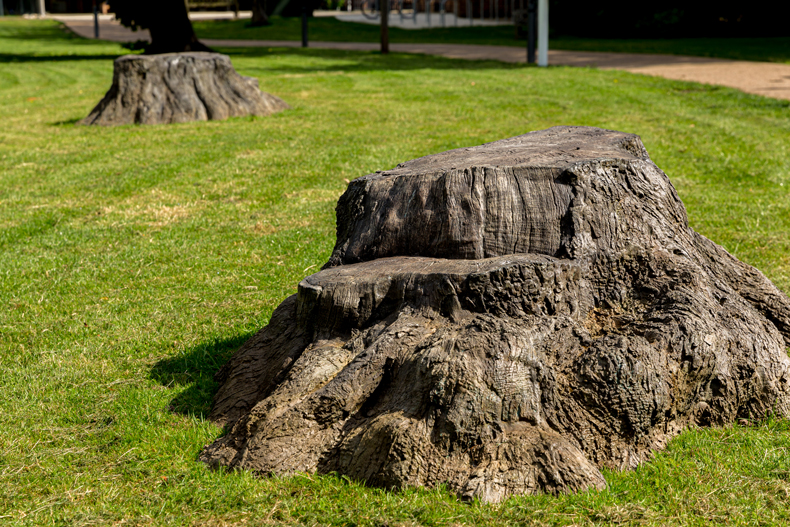
Last year we launched our sculpture garden. As part of that, we wanted to add a sculpture to the collection – a ‘hero piece’, to really show our intention within our three acres of green space. So we acquired Bronze Oak Grove [2017] by Rob and Nick Carter, an amazing sculpture cast in bronze that brings to life a 17th-century Dutch drawing. The rest of the sculptures we bring in on loan, but the sculptures that you can [always] encounter here at Dulwich Picture Gallery tell old stories in a new way – contemporary artists who respond to the Old Masters.
How have your thoughts on the collection changed since you began working at Dulwich Picture Gallery?
So much. Every day we’re learning more, uncovering new, surprising contrasts or conversations. It’s really interesting to hear from our visitors what they think about the paintings. And as we change and as I grow, I learn more. A few years ago we took our patrons to Poland, and I hadn’t been before. We went to Warsaw, and I saw the collection that King Stanisław August Poniatowski had built up. I could see what he had already owned, and that our founders, were trying to fill those gaps. I suddenly understood the buying mentality of these great art dealers who were serving the person they were buying for, and that shifted my whole perception. It was also interesting to play a game of where our paintings would have been had they gone to Poland.
Has your understanding of Dulwich Picture Gallery’s audience changed since you began working here?
Massively. We’ve also increased our audience. Now, with the new sculpture garden, we think we’ll be attracting around 300,000 visitors a year, so the vibrancy of the place is really exciting. And because of the sculpture garden, we’re now open on Mondays too. Because of that, and our ArtPlay Pavilion for under-eights, we have more families visiting now.
Over the last few years I’ve seen the way that audiences respond, and we tailor our programme accordingly. We’re a very ‘listening’ gallery; we’re really receptive to audience feedback and evaluation. What I’ve learned is that you can never assume what people will like. Listen to how they respond to things and dare to try. It’s one of our mottos here: dare to take some risks. And that’s constantly evolving. We are genuinely a place for the public. We don’t tell people what to think about our paintings – we open up that conversation, and that helps to keep the art alive and relevant.
What are you doing to bring in new audiences?
So much. You cannot rest on your laurels, or ever assume in any art gallery that if you build it, people will just come. Because of our location, we want to make sure that people have enough to do, so it’s a ‘Dulwich day out’. So in the last few years we’ve really been thinking about making sure that our food and beverage offer is good. In addition to our cafe, we’ve opened a new grab-and-go canteen, which has really nice seating areas inside and out. We developed the sculpture garden, so it’s a real sanctuary in the city for people. Many visitors encounter the gallery for the first time when attending one of our exhibitions, whether it’s our programme of shows presenting artists renowned in their home countries but previously overlooked in the UK, or contemporary artists providing fresh perspectives on historic works, or leading names and movements that have paved new directions in art.
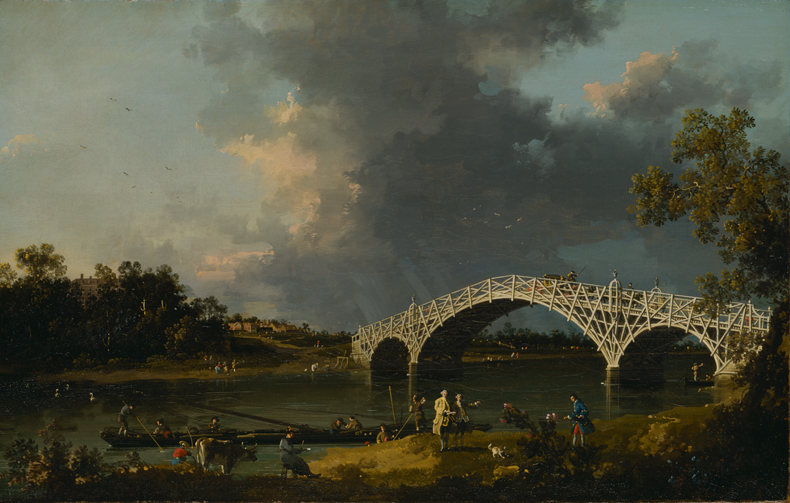
Our family programming was oversubscribed, and so we developed a whole new offer for under-eights – the ArtPlay Pavilion, which genuinely brings our historic paintings to life. You can slide down Jacob’s Ladder, swing in Poussin’s clouds and run over Canaletto’s bridge. After that, they can actually see Canaletto’s View of Walton Bridge [1754], for example, and there’s that familiarity, that recognition. The immersive play is so children can feel that this is a collection for them. We create these experiences so that our paintings aren’t static.
How else are you making Old Masters accessible to new audiences?
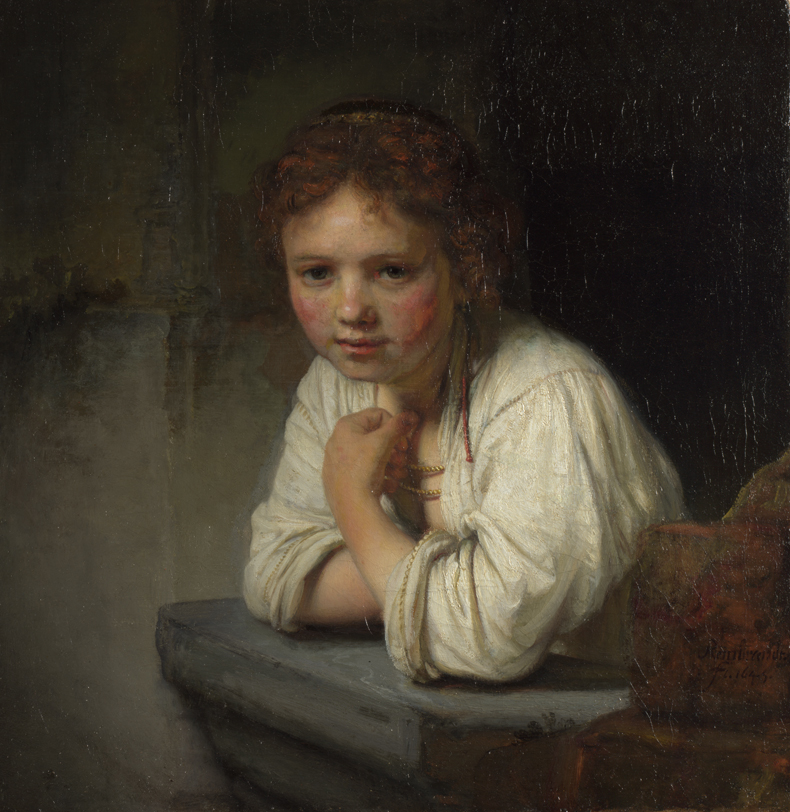
Historic paintings are so good that we can take them for granted. The name ‘Rembrandt’ can just trip off the tongue, and you just think, ‘Yes, he’s one of the great masters,’ and you forget to look. So we really try to find ways to excite again, to take the idea that when Rembrandt painted Girl at a Window in 1645, it was contemporary art. People were talking about it; it was changing things, it was exciting. So how do we tap into that?
Here we use the phrase ‘unlocking paintings’. We think our founders were the first people ever to glaze paintings – to put glass on the frames – and they had these little keys so that you could unlock the frames to get closer to the art. We use that as a metaphor. We’ve created a new guidebook in which we present the greatest hits of the collection in a thematic way – for instance, ‘Love and Loss’ or ‘Stillness and Action’. It’s a fresh key to interpreting historic paintings that we believe can be applied in any art gallery or collection of Western paintings around the world.
As a spin-off of that, we have one room in the gallery that’s our laboratory, where we put on our ‘Unlocking paintings’ displays. These can be contemporary artists reimagining our collection, or community-curated displays where community groups come in and rethink our collection. Or we put conservation work in the spotlight, or put an artist ‘on trial’ for plagiarism. That’s a really exciting, immersive zone in the gallery, where we literally unlock paintings for our visitors to enjoy.
Which museums outside the UK do you most admire for what they do with their permanent collection?
The Mauritshuis in the Hague – the way the team trust in their paintings, allowing the paintings space to do the talking. They really honour their collection. And it’s such a jewel box of a museum. I see a real similarity between Dulwich Picture Gallery and the Mauritshuis – I really respect their expertise, but also the way they share their collection and generate excitement in the constant relevance of the Old Masters.
Bloomberg Connects is a free app that helps museums, galleries, historic sites and cultural spaces around the world deepen engagement with their audiences. Click here to access Dulwich Picture Gallery’s guide.