From the April 2026 issue of Apollo.
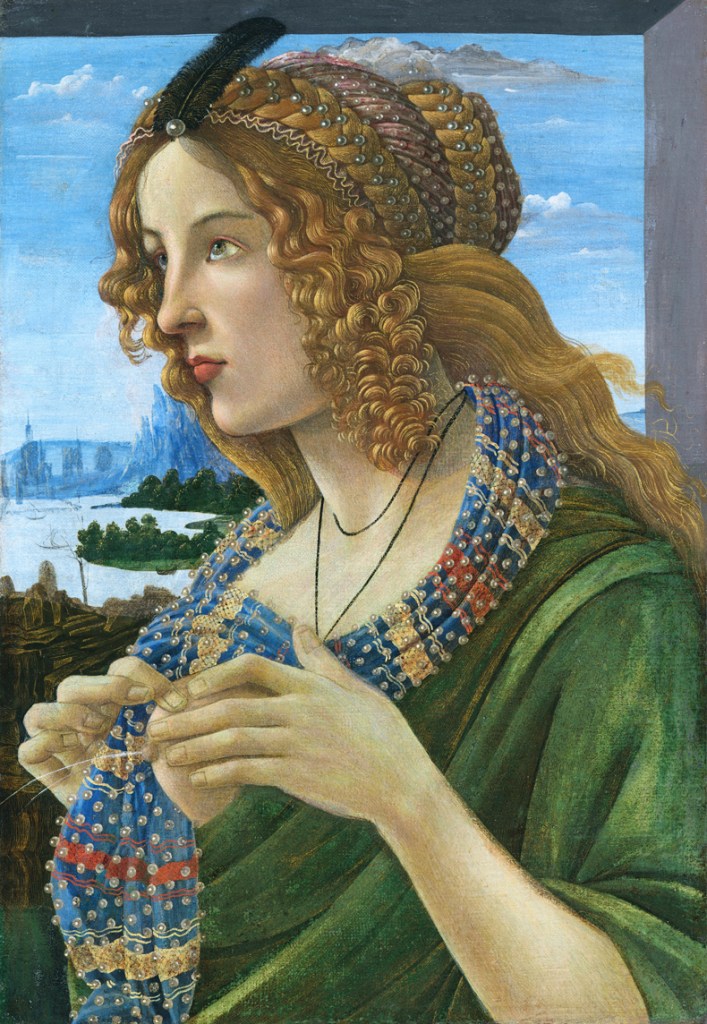
What to do about beauty and ugliness? Not of things, or places, but of people. And not of the soul, or the mind, but the body? The tension between the beautiful and the ugly is foundational to art, literature, story and song, yet in contemporary culture they have become troublesome concepts. ‘Bellezza e Bruttezza’ at Bozar in Brussels charts the evolution of European beauty ideals during the Renaissance, with ideas about proportion and grace derived from classical sculptures of the Venus Pudica and The Three Graces, as well as legendary lookers such as Simonetta Vespucci – thought to be the model for Botticelli’s Venus.
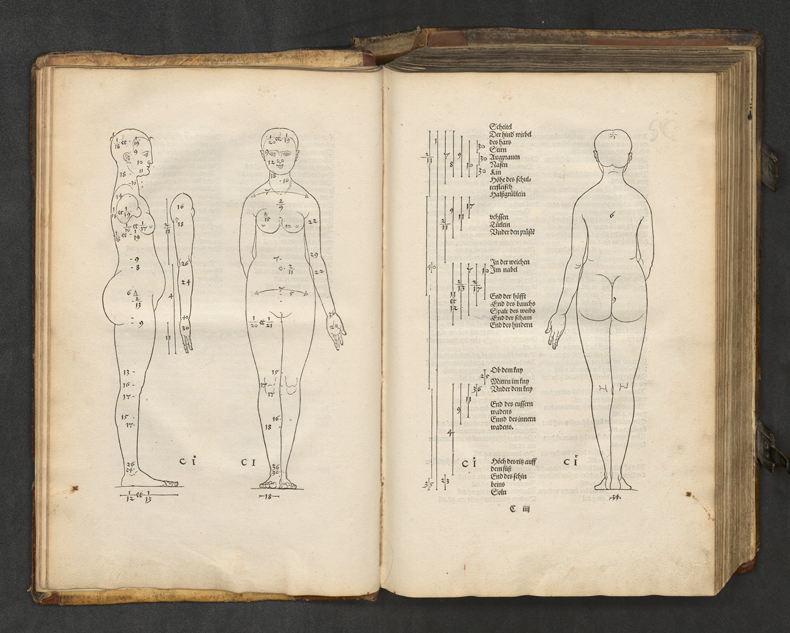
Favoured body shapes differed between northern and southern Europe. At Bozar, Albrecht Dürer’s Four Books on Human Proportions (1528) are displayed with the pages open on his measurements and analysis of the standing female body. Dürer’s ideal (reflected here in paintings by Lucas Cranach) has small, high breasts, narrow sloped shoulders and a pronounced belly; his Italian contemporaries favoured broader shoulders and a flatter (arguably more masculine) stomach. Regional variations aside, the understanding of beauty has, for better or worse, changed little in the intervening centuries. In paintings by Titian, Bordone and Joos van Cleve, it is intertwined with youth, health, light skin, a slender body, pale flowing hair and a decadent dressing-up box of gemstones, pearls, velvets and silks. To show them to advantage, the pale beauties in these paintings are often paired with maidservants who are older, poorer, darker-skinned, toothless, hunched from work, with years of wet-nursing behind them. In its affinity with pearls and wet-nurses, beauty is here entwined with social status, or notions of intrinsic nobility.
Within the scope of the exhibition, ‘ugliness’ is a broad and well-populated field, extending from the merely plain to the old, to the physically impaired, to the mentally ill, to the foreign ‘other’, to actual storybook monsters. Save for the last, the use of the term ‘ugly’ applied as a default to any of these groups is so appalling that it is tempting to propose the term be retired altogether – at least in relation to human beings. Yet ugliness must be named, and honestly, because it lingers as our enduring (and very lucrative) fear. What powers the vast cosmetics and plastic surgery industries is not a desire for beauty but a fear of ugliness – specifically the fear of one’s own ugliness.
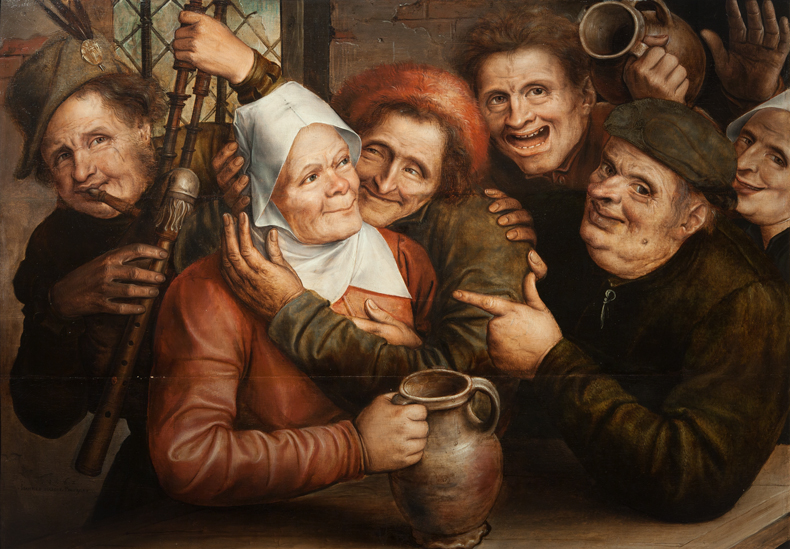
Under the right circumstances we are willing to make firm distinctions between those we consider beautiful and those we consider ugly: on a dating app, for example, or locking eyes with a stranger in a bar. Cloaked in anonymity, online trolls are swift to label those they disapprove of, or resent, or feel threatened by, ‘ugly’. It is a word used to draw a line, however deep, between those who conform to aesthetic codes, behaviours and beliefs we hold dear and those who do not, between ‘us’ and ‘them’. In ‘Bellezza e Bruttezza’ grotesque paintings mock the greedy, the drunk, the lustful and even those given to excessive jocularity. The centrepiece of Jan Metsys’s A Merry Company (1562) is a couple of elderly flirts being ogled and jeered by their drinking companions. The woman holds a large, empty jug while a musician behind her shoulder plays the pipes, just in case the sexual innuendos of the mocking rabble weren’t clear. Love and sex, the painting instructs, are affairs of the young. Lusty oldsters be warned!
The notion of beauty is likewise troublesome. There are few surer ways to open oneself up to ridicule than pronounce oneself beautiful. The week before I visited Bozar, podcasters and newspaper columnists were eagerly mocking looksmaxxing, mogging and other practices paraded on TikTok in the name of attractiveness. It seems a person’s public pronouncement of their own beauty is the only socially acceptable occasion on which to accuse someone of ugliness.
In art and literature, beauty and ugliness are deeply entwined with ideas of good and bad, but not always in straightforward ways. Beautiful women are commonly portrayed holding mirrors, suggesting their capacity for vanity. They are also cast as scheming temptresses who prey on fools. The Mismatched Couple was a popular subject for Lucas Cranach, from whose hand (or workshop) survive 40 paintings on the theme. An example here from 1531 portrays a lovely young woman in red velvet having her chest groped by a white-bearded man. She has a dreamy faraway look in her eyes, which might suggest romantic transport, or possibly the deep concentration required to extract coins from the leather purse slung from his waist. More unusual is a painting in which the conventional genders are switched, and a young man is portrayed with his arm around a toothless old woman, who eagerly passes him money. Conceptually, ‘ugly’ demarks a transgression – a body or behaviour that is uncontained, or that has slipped beyond socially acceptable boundaries. Here, beauty is the lure, and ugliness the punishment.
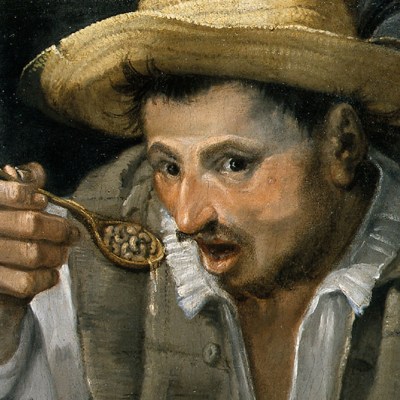
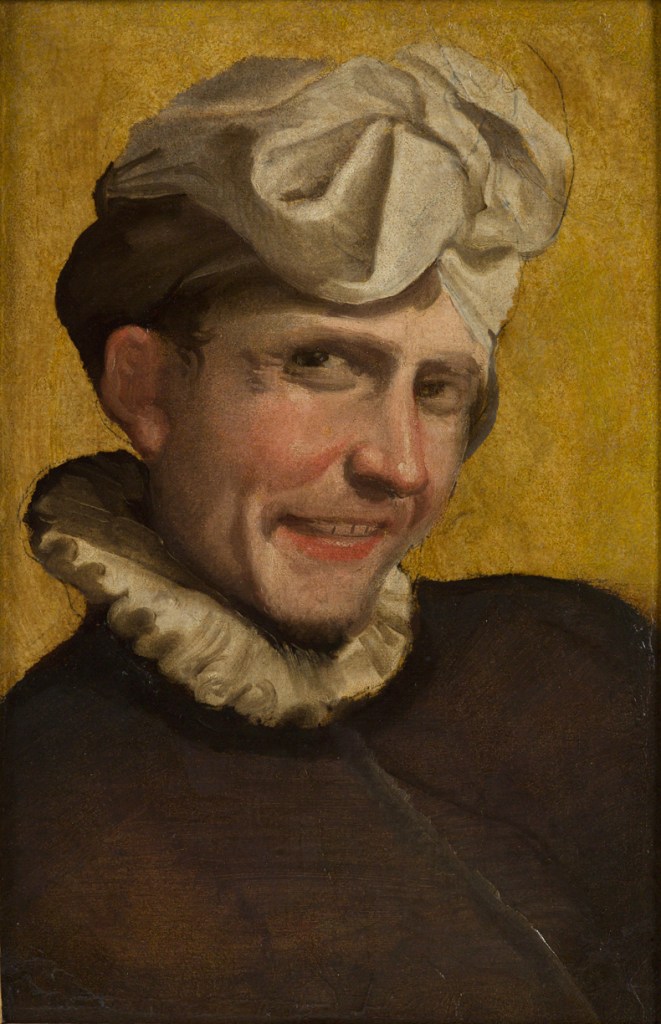
Of all the faces, sublime or sinister, the one that haunts me is Annibale Carracci’s The Jester (Head of a Laughing Youth) (c. 1585), a small portrait of a white-ruffed figure with a sly grin. The uncanny impact of Carracci’s painting comes not from caricature but from his sitter’s mocking insouciance – he looks like a man with nothing to lose, poised to bite. If ‘ugly’ is what we name our fears, then to adopt ugliness as a position carries an unsettling power.
‘Bellezza e Bruttezza: Beauty and Ugliness in the Renaissance’ is at Bozar, Brussels, until 14 June 2026.
From the April 2026 issue of Apollo.