
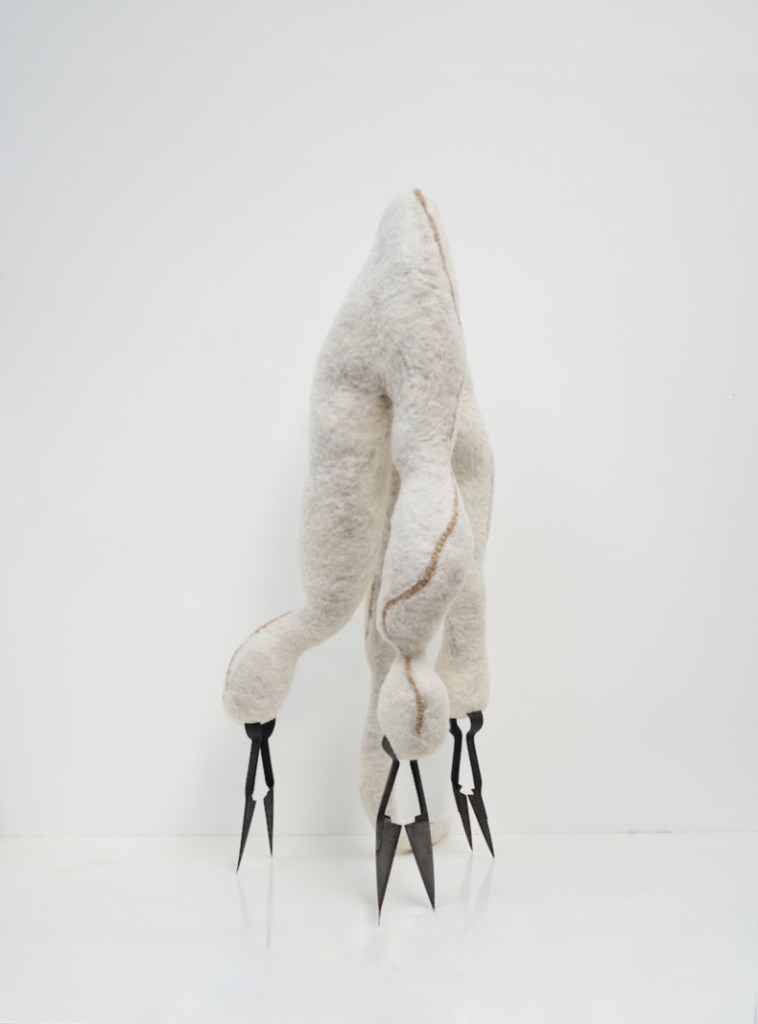
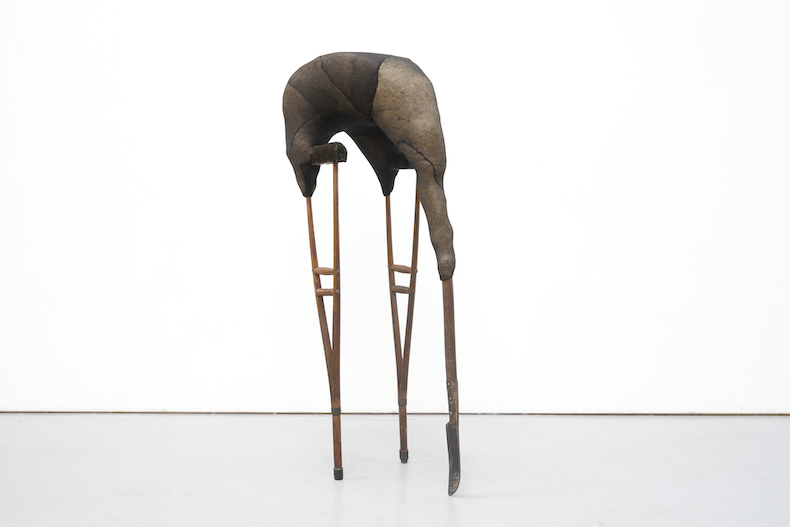
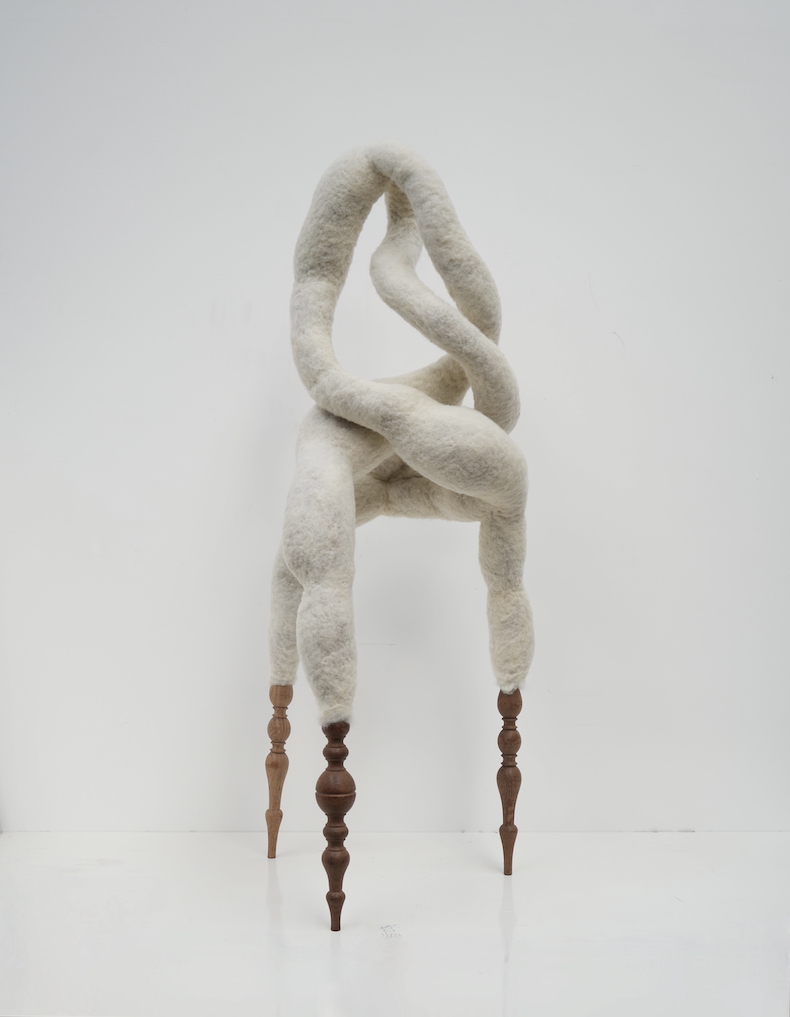
The twisting, tentacular sculpures of Nicola Turner (b. 1967) are fashioned from what she calls ‘dead’ materials such as horsehair and wool. They have invaded spaces from the courtyard of the Royal Academy of Arts, where they contorted around a sculpture of Joshua Reynolds, to the set of ‘Wuthering Heights’ (2026), tendrils spilling out of the windows and doorways of the film’s titular house. Their next host is an 18th-century chapel on the grounds of Yorkshire Sculpture Park, where Turner is presenting new, site-specific work as part of her exhibition ‘Time’s Scythe’ from 28 March–27 September. Moving away from foreboding dark forms, Turner has made the sculptures in this show from a paler wool, each tentacle tipped with sheep shears – a reference to the flocks that graze nearby and the labour and industry that have shaped West Yorkshire.
Where is your studio?
In 2023 I converted an old industrial unit into FORM-ica, for an independent collective of artists [of the same name]. The building is in the south-west of Bath. It was previously a factory that made kitchen countertops; historically the site was a laundry.
There are seven studio spaces, of which I have one, and a flexible shared communal space that is used to host events including courses, meetings, artist talks and discussions. The studios vary in size and are rented by a diverse group of artists at different stages of their careers.
How would you describe the atmosphere in your studio?
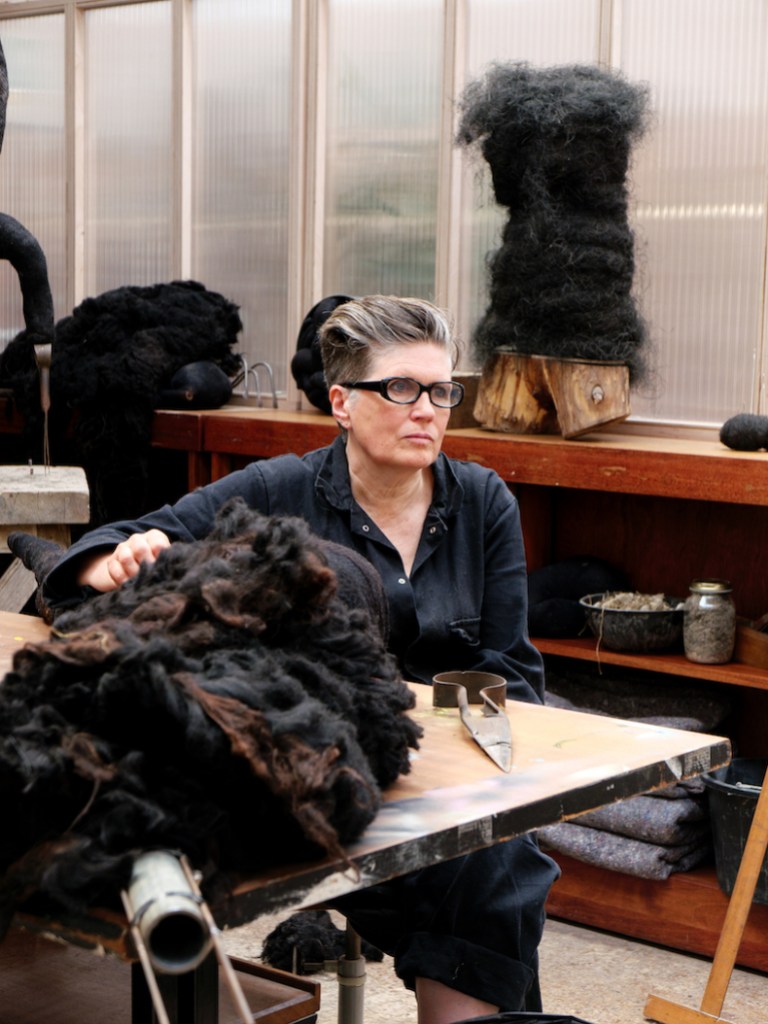
I love the atmosphere of my studio. It is very light with high ceilings. I try and keep everything on wheels so that it can be a flexible space, including containers of plants and trees, an idea I borrowed from Het Hem in Zaandam. The walls are painted brick, apart from one that is plaster over plyboard painted white, on which it is easy to display work. I work on large-scale site-responsive installations so just before a project I can be surrounded by mounds of material awaiting processing. It is then that I feel I need a visit from Rumpelstiltskin. I never feel alone as my material has so much vitality.
Storage can be an issue. I have an undercroft, which I can get warm quickly, where I work on my computer, have a printer and keep all my papers and tools. In the undercroft I have a plan chest that I inherited from my grandfather, who was an architect. There is a rawness to the studio space, which makes it a comfortable place to be. The rawness leaves it open to transformations and possibilities.
Is there anything you don’t like about your studio?
Water coming in where it shouldn’t. As part of the renovation work we had to replace the roof but it still leaks in places. When the water table rises after heavy rain, we get water rising up through the floor of the entrance corridor – an issue I need to resolve. On historical maps there is a river running across the site, which must have been why the laundry was sited there.
What does your studio routine look like?
I normally arrive at the studio soon after 9am. I drive over, cycle or walk from my home with my dog. I do not have a particular routine; it depends on what I am working on. My materials include wool and horsehair and I can be sorting, processing, cleaning, carding, stitching or needle felting. For large installations I prepare tendrils to take to site; all my standalone works I complete in the studio. Around 1pm, or when I hear clattering starting in the kitchen area, I stop for lunch. It is a time to connect with the other artists who might be in that day. I value being in a community of artists. There are always interesting conversations to be had.
At other times of the day there might be a shout-out to ask if anyone wants a cup of tea. In my studio I try and have a few things on the go at once so I can move from one work to the next.
Do you work with anyone in your studio?
I work alone unless I have a big project on the go and need support. In those situations I have worked with local students or employ self-employed artists who can spare a day or two. My family are a great support when I need to shift items around the studio. They also help collect material and with loading up vans for transportation.
Do you have many visitors?
Being in a studio with other artists there are often visitors coming and going, or joining for a spontaneous studio lunch. Occasionally I have talked about my practice to visiting groups or individuals who have approached me for a studio visit. At our last open studio event we welcomed around 400 visitors over the course of the afternoon/evening.
Who is the most interesting or unusual visitor you’ve had?
In the summer I work with the large roller door open on to the communal yard and can get surprised by some four-legged visitors wandering in on the hunt for food or interesting smells.
Do you listen to anything while you work?
I often work in silence but do occasionally listen to podcasts about art or BBC Radio 4. I zone in and out of listening depending on the tasks I am doing. Occasionally I listen to music, or the music of the artists who have studios close to mine. Three of us have studios with walls not quite reaching the ceiling, so we agree on who has the playlist. Other sounds include the rain on the roof or the gulls who merrily criss-cross the roof lights. Headphones are on hand to block out all other noises if needed.
What is the most unusual object in your studio?
I have a jar of dust on my studio shelf that I collected out of an old mattress, which had come from a neighbour, who had lived in the same house for over 90 years. I could see the outline of a body in dust, when removing the ticking (the striped fabric cover) from the horsehair mattress. As humans we lose 300,000 skin cells every night. That’s 10 grams of dead skin cells a week, some of which ends up within the mattress itself. I’m fascinated by what stories they have absorbed over the years – mattresses can be sites of conception, birth and death. One mattress given to me was initially on a four-poster bed in Fetteresso Castle, near Stonehaven in Scotland, and in 1715 James Stuart, or the ‘Old Pretender’, was unofficially proclaimed King James Ill by the Earl of Mar. I was told he probably slept on the very mattress I was given.
What is your most well-thumbed book?
I have a selection of art books in the studio’s communal area, the overflow from my home library. My most well-thumbed book is one I have at home: Powers of Horror by Julia Kristeva. I called one of my pieces, displayed around a doorway at the Royal West of England Academy in Bristol, Vortex of Summons after a line from the book. I often get inspiration for titles from quotations.
‘Nicola Turner: Time’s Scythe’ is at Yorkshire Sculpture Park from 28 March–27 September.