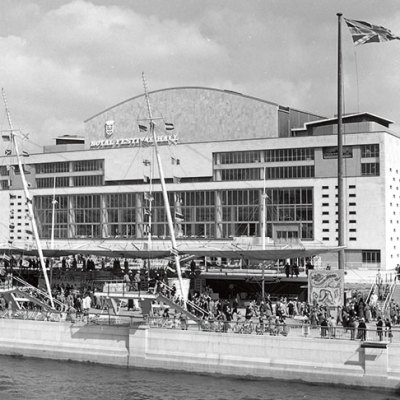
In February, after a 35-year campaign by the Twentieth Century Society, the Southbank Centre in London was Grade II-listed. The granting of protected status to what the Daily Mail once described as ‘Britain’s ugliest building’ represents the final stage of brutalism’s rehabilitation after decades of deep dislike.
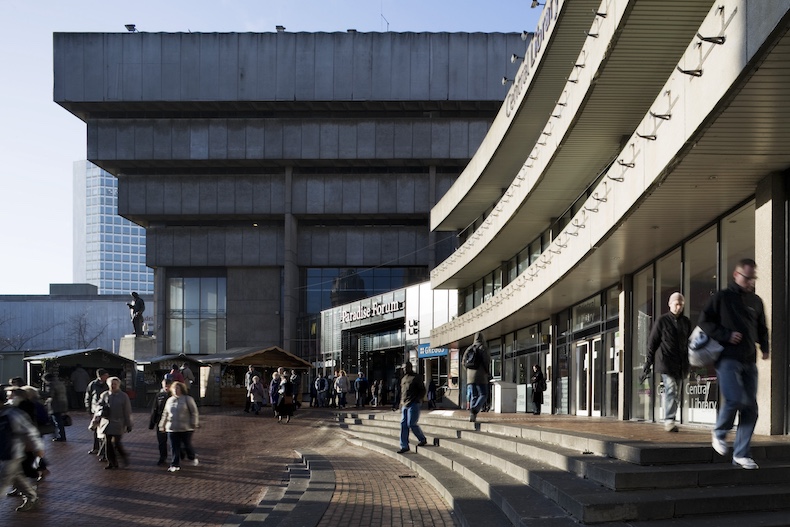
The term brutalism was first coined by the British architects Alison and Peter Smithson in their essay The New Brutalism (1957). While the essay was never prescriptive about style, concentrating instead on the concept of using materials in their raw, unadorned state, brutalism became synonymous with the kind of powerful, sculptural concrete forms employed at the Southbank Centre, as well as buildings such as Trinity Square Car Park in Gateshead, the Tricorn Centre in Portsmouth and Birmingham Central Library.
The latter three structures were all demolished between 2004 and 2016. The return to respectability of brutalism came too late to save them, despite attempts to have them listed. Though their individual merits may have varied, they were ultimately victims not just of changing architectural tastes but of wider cultural and political shifts too.
The rejection of modernist architecture and the turn towards more traditional forms that began in the 1970s was as much a political moment as an aesthetic one. Brutalism was regarded as a product of the post-war welfare state, an architecture of social housing, cultural centres, new universities and New Towns. In the case of the Southbank Centre, it was not simply the architecture that was problematic but the very idea of culture that it embodied. Not a single building but a generous public realm linking galleries, concert halls and cultural spaces, the Southbank Centre was completed in 1967, long before the advent of the retail-driven urbanism that now underpins any major new development. The Southbank Centre was the social democratic project made (literally) concrete. Its art gallery, the Hayward, is even named after a leader of London County Council.
Granting conservation status does not necessarily ensure a building’s survival, however. Buildings require maintenance and protected buildings need to be repaired in line with their historic value. The Southbank Centre is currently looking at a £50m bill to repair several of its buildings, while, just across the river, the Barbican cultural complex will soon close while an extensive refurbishment programme is carried out. Whether brutalist buildings are intrinsically expensive to maintain is irrelevant to the question of whether we should value and protect them, but it is certainly the case that exposed concrete, flat roofs and the complex relationships of landscape and architecture that typifies the style can make their upkeep challenging.
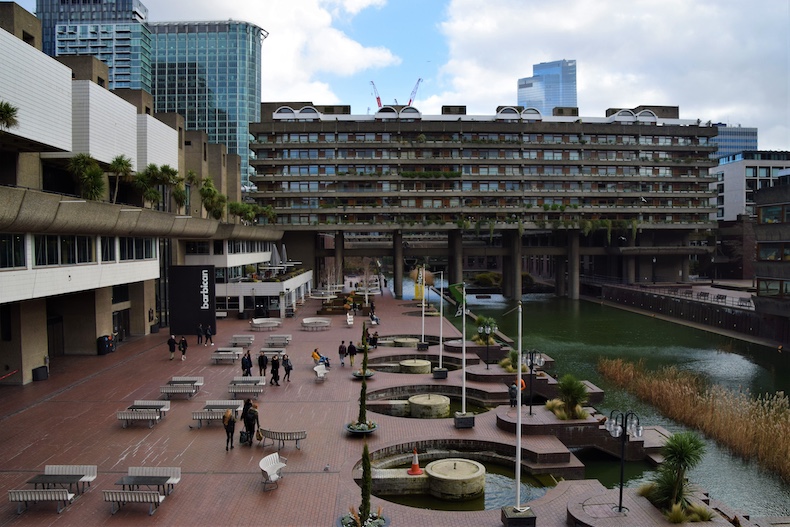
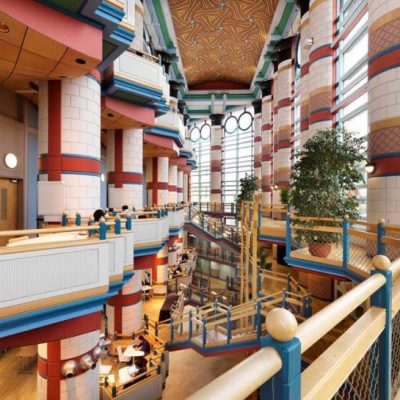
While it still has its detractors and is just as likely to enrage those who hate, or pretend to hate, modern architecture, brutalism has largely become loved again. This week the UK government’s Arts Everywhere Fund announced a £130m package to be distributed across cultural institutions around the UK; the Southbank Centre was allocated £10m – the highest amount of all the recipients on the list. Conservation arguments move on, however, and cycles of fashion and taste keep turning. In conservation terms, the buildings that are most at threat now are postmodernist (PoMo), a style that began in the 1970s but flourished in the following decade. PoMo has always been divisive. Previous generations of modernists hated its historical inflections and lack of material authenticity. The Big Bang of 1986 resulted in a development boom with pedimented office blocks and neo-Gothic trading floors proliferating across the City.
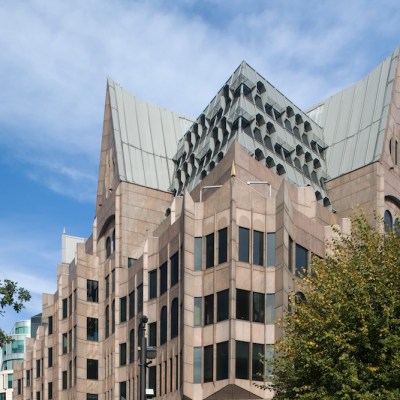
These buildings are now very much ‘at risk’, in the parlance of conservation. Contemporary office space requirements, new thermal standards and general maintenance issues have coincided with a contemporary dislike of the era, which means that many PoMo buildings are being demolished or redeveloped beyond recognition. And there are fewer supporters to make the case for their survival. Despite attempts at a revival by a younger generation, postmodernism remains unpopular even, or perhaps especially, with architects. Sir Terry Farrell’s Alban Gate – a pair of giant, robot-like offices that loom over London Wall – has so far failed to find favour with Historic England, which has declined to list it. Gollins, Melvin, Ward and Partners’ extraordinary Minster Court is currently subject to an overhaul that will replace its high-camp gothic with something far more sober. Most recently, The Point in Milton Keynes, a high-tech meets PoMo pyramid containing Britain’s first multiplex cinema, remains at risk after a certificate of immunity from listing was extended by the DCMS and Historic England in March.
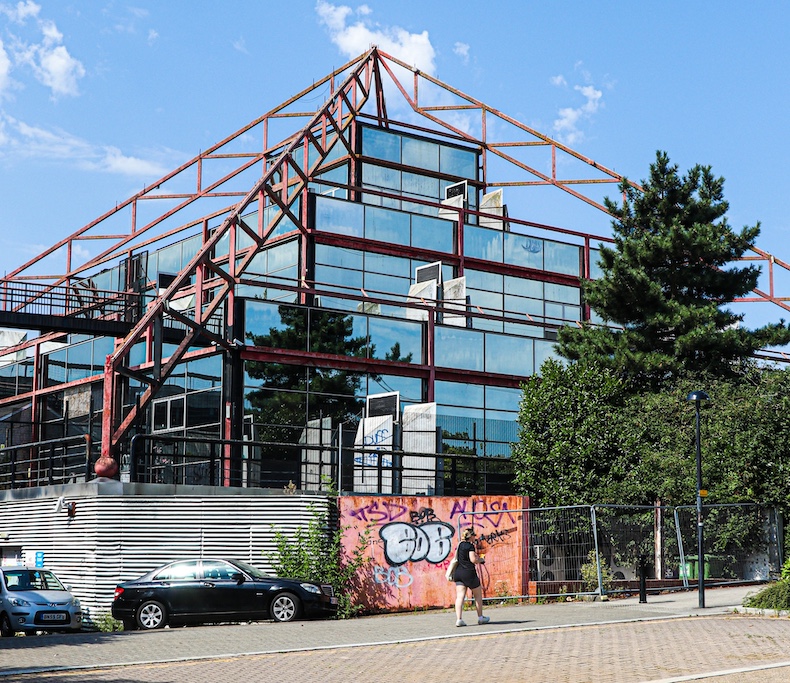
Right now, these buildings are at the bottom of the architectural depreciation curve, which is precisely when they become most prey to insensitive redevelopment. Many styles of architecture become unfashionable and unpopular. Victorian eclecticism was derided for much of the 20th century by modernists and traditionalists alike who found it gaudy and vulgar. In the mid 18th century, the austere good taste of Palladianism was replaced by the moody wildness of Gothic Revivalism. And the Georgians slapped false bricks and new facades on medieval timber buildings to make them look more modern. In time, all these styles have become reappraised, their best examples preserved and championed.
Fortunately, the tide is turning away from demolition and redevelopment in favour of preservation through intelligent retrofit. The principle of conservation has aligned with the imperative to avoid wasteful cycles of construction and demolition. Buildings – especially brutalist ones – contain a lot of embodied energy, materials that have been extracted from the earth or subjected to energy intensive processes. Throwing these away makes no sense. Ironically, postmodernism – an architectural style synonymous with a throwaway aesthetic – may find a saviour in a more ecologically motivated view of buildings as things that we need to work with rather than remove.