
The Louvre has had a rough go of it in recent months: staff strikes, leaky ceilings and, worst of all, the staggering heist of last October. Although Rakewell is not minded to make a song and dance about security failings at the world’s most visited museum, it seems that Andrew Lloyd Webber wants to do just that: this week the composer is starting work on a musical about the theft of the Mona Lisa in 1911.
The story of the heist, in which handyman and former Louvre staffer Vincenzo Peruggia made off with the artwork under his coat, has been told in various mediums. The German film The Theft of the Mona Lisa (1931) imagines a lovestruck Peruggia stealing the painting to impress a French hotel maid. A generation later, Michel Deville turned the heist into a breezy caper in The Mona Lisa Has Been Stolen (1966). Where Deville gallicised Vincenzo’s name to Vincent, Ivan Graziani’s ‘Monna Lisa’ – a sprightly bit of funk-pop in which the songwriter pictures the Louvre as a greedy caretaker with a mouth full of museum tickets – wears its tricolore on its sleeve, positioning the heist as an act of repatriation.
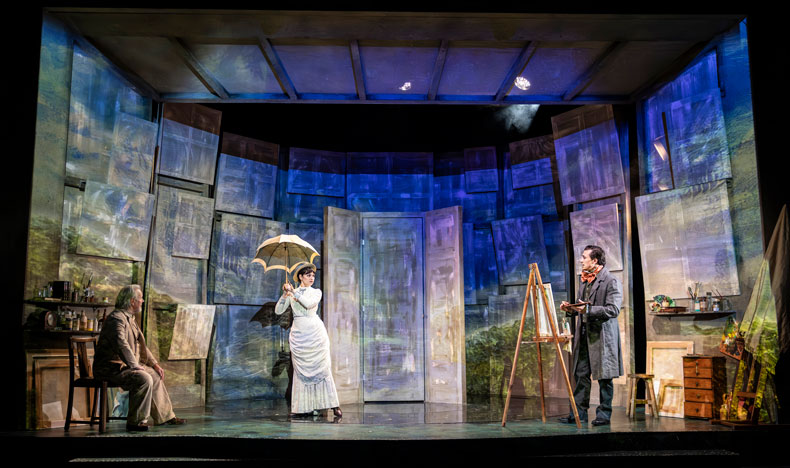
But perhaps Lloyd Webber, an art aficionado himself, can bring fresh insights to the story. He wouldn’t be the first to give art life on stage. Rakewell is looking forward to seeing A Mirrored Monet, a musical (at Charing Cross Theatre, London, until 9 May) that draws from the painter’s letters and diaries to relate how he struggled to complete Water Lilies in the middle of the First World War.
Perhaps the experience will make up for Lempicka, a musical about the Polish art deco painter, not having crossed the Atlantic after a five-week run on Broadway in 2024. Your roving correspondent noted the acerbic reviews but remains interested in songs sung from the point of view of not only Lempicka but also Filippo Tommaso Marinetti. In the duet ‘Plan and Design’, the painter and the founder of Futurism each work out their own ideas of what art is, before sensibly agreeing: ‘We do not control the world / We control one flat rectangle of canvas at a time.’
Polyglot art lovers are also well catered for. In 2006, to celebrate the 400th anniversary of the Old Master’s birth, Rembrandt, aka Rembrandt De Musical, graced Dutch theatreland. It recounts the painter’s life from his arrival in Amsterdam as a young man to the death of his son Titus some 40 years later. Throughout the musical the players recreate Rembrandt paintings in tableaux vivants – not just The Night Watch but some of the deep cuts too. And speaking of tableaux vivants, German speakers can thrill to Paul Hindemith’s Mathis der Maler, an ‘opera in seven tableaux’, as he called it, which premiered in Zürich in 1938 and tells the story of how Matthias Grünewald came to paint the Isenheim Altarpiece (1512–16) as the Reformation convulsed Europe. As well as reimagining panels from the altarpiece, including the temptations of Saint Anthony, Keith Warner’s staging in Vienna in 2012 memorably featured a colossal crucified Christ splayed across almost the entire stage.
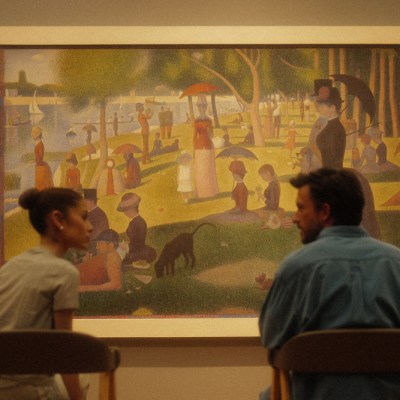
Whether Lloyd Webber will be able to conjure an image or tableau quite as arresting remains to be seen. In the meantime, Rakewell is patiently awaiting the new staging of Stephen Sondheim’s Sunday in the Park with George, which arrives at the Barbican next year and stars Jonathan Bailey as Georges Seurat and Ariana Grande as his fictional mistress and model, Dot – a witty reference to the Post-Impressionist’s technique. Monet, Seurat and the Mona Lisa all treading the boards in the weeks and years to come? It’s enough to make Rakewell want to burst into song.