From the May 2026 issue of Apollo.
In 1923, in his mid thirties, Charles Édouard-Jeanneret, already operating under the pseudonym Le Corbusier, wrote his manifesto Toward an Architecture, setting out his radical views on architecture and urban planning. It included the memorable declaration: ‘A house is a machine for living in.’ Less often recalled is the corollary, ‘An armchair is a machine for sitting in.’ That year France was in the grip of its love affair with art deco – sleek geometries and opulent materials – which culminated in the 1925 International Exhibition of Modern Decorative and Industrial Arts. Le Corbusier was furiously opposed to this trend: his contribution to the exhibition was a rigorous white box, his Pavillon de l’Esprit Nouveau, which was inspired by factory standardisation and a machine aesthetic. But it was not until 1928, when Charlotte Perriand, a recent design graduate, joined Le Corbusier’s firm, that these ideas began to find expression in furniture. Together with Le Corbusier’s cousin Pierre Jeanneret they produced three chairs: the B301 slingback armchair for conversation; the LC2 ‘Grand Confort’ chair for relaxation; and the B306 chaise longue for reclining. The chairs had tubular steel frames, married with leather. These pieces heralded a new age.
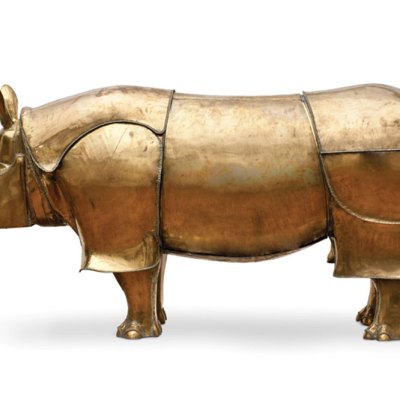
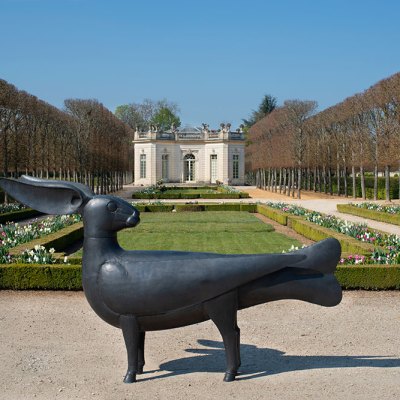
That same year, the architect and designer Pierre Chareau embarked on his masterpiece, the Maison de Verre in Paris, which offered a parallel vision. Here, rational functionality, expressed in steel and glass, coexisted with a refined taste for materials such as alabaster, cast iron and mahogany. The following year he exhibited alongside Perriand with the Union des Artistes Modernes (UAM), founded in 1929 by Robert Mallet-Stevens and friends to promote a radical modernism. From 1931, when the young artisan blacksmith Jean Prouvé opened his atelier, a strong social vision and the sequential crises of economic depression, war and post-war austerity helped shape design, inspiring inventive mass-produced furniture for schools, hospitals and public housing made from cheap materials such as steel, aluminium and wood. In the 1950s, contrary to Le Corbusier’s insistence that ‘chairs are architecture, sofas are bourgeois’, the self-taught designer Jean Royère introduced a new playfulness and poetry with his serpentine ‘Liane’ light fixtures and his inviting ‘Polar Bear’ sofas. At the same time, the younger architect Pierre Guariche, with his colleagues at the Atelier de Recherche Plastique, Michel Mortier and Joseph-André Motte, alongside the lighting designer Serge Mouille and others, set about creating a formally interesting but economical alternative to traditional French designs, without severity – chic but liveable. Diego Giacometti continued after the war to explore a sculptural approach to furniture, initiated by his brother Alberto, producing one-off or limited-edition bronze furniture pieces. This artistic strand within design was pursued well into the 21st century by the auction-house darlings Les Lalanne (François-Xavier and Claude Lalanne). It is these tensions – between function and art, egalitarianism and luxury, modern industrial and traditional methodologies and materials – that underpin the energy and inventiveness of French mid 20th-century design.
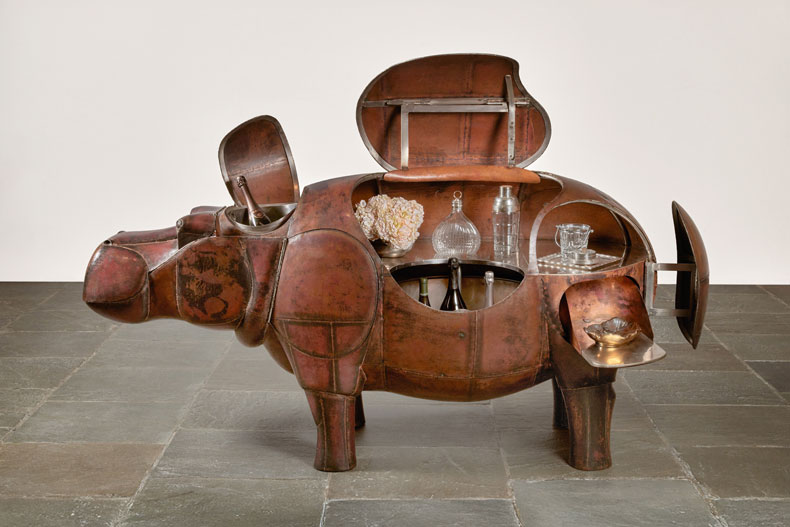
The market in mid-century French design has bloomed over the first quarter of the 21st century. According to Elie Massaoutis, head of design at Phillips Paris, ‘Now it is sought after even by younger generations.’ What collectors look for, he says, is ‘authenticity’ – they want characteristic pieces by notable names, which ‘embrace the idea of the mid century’, and will pay more for a piece that has original paint or patina than one in perfect condition. Particularly sought after are unique or bespoke pieces by Prouvé, Perriand or Royère. ‘The market has evolved very quickly recently,’ Massaoutis adds. Three or four years ago, Royère’s prices were uniformly high: a ‘Polar Bear’ sofa and pair of armchairs, c. 1952, from the Adam Lindemann collection, sold for a record $3.4m in March 2023 at Christie’s in New York (estimate $1m–$1.5m); today, it is his rare straw marquetry pieces or more unusual ‘Liane’ lights that draw collector interest. For Florent Jeanniard, joint worldwide head of design at Sotheby’s, the most exciting development in the market over the last 20 years has been the astonishing rise in prices for the artist-designers Diego Giacometti and Les Lalanne. He cites the $31.4m – three times the top estimate – paid at Sotheby’s New York in December 2025 for François-Xavier Lalanne’s charmingly surreal copper Hippopotamus Bar (1976) – a record for any work of design at auction. Flavien Gaillard, Christie’s Head of Design, thinks that a collector’s ‘aura’ can have ‘a strong influence on the final price’. He cites the Hubert de Givenchy collection sale in Paris in 2022, where furniture by Diego Giacometti, commissioned directly from the artist, was hotly contested, including a unique bronze console table with a bird and a cup from 1976 that sold for €1.7m (estimate €400,000–€600,000).
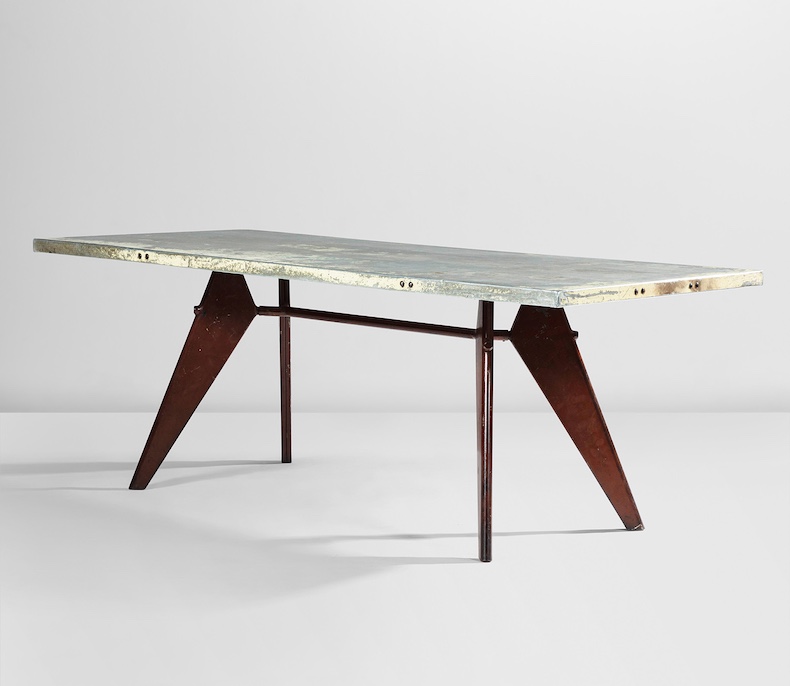
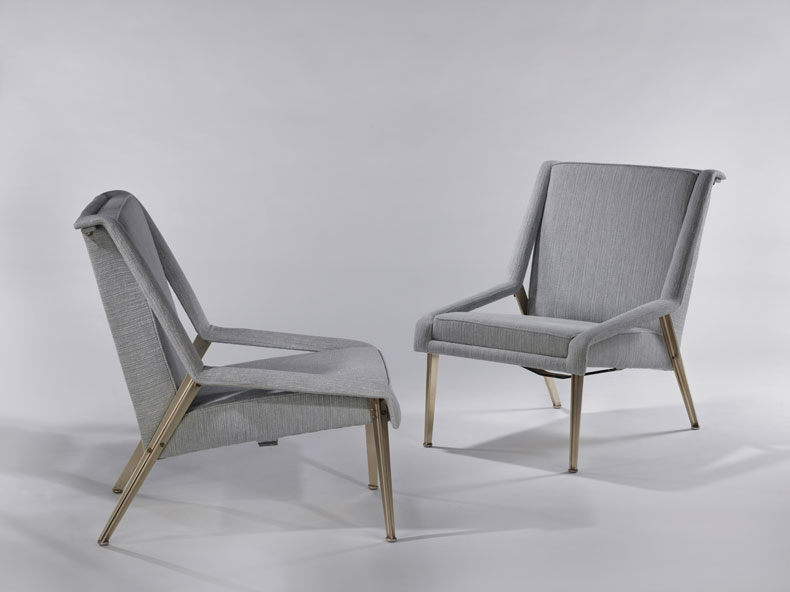
One of the Paris gallerists who nurtured Prouvé’s, Perriand’s and Jeanneret’s market, François Laffanour of Galerie Downtown comments that today ‘There is a particularly strong demand for works from the 1950s, a decade that represents a peak in clarity and innovation. Iconic pieces such as Jean Prouvé’s ‘Trapèze’ table or his ‘Visiteur’ armchairs remain highly sought after. Charlotte Perriand’s designs – especially her ‘Mexique’ and ‘Tunisie’ bookcases or her hexagonal tables – are also extremely popular.’ The United States remains ‘the primary base for collectors, with a particularly strong and established demand’. Laffanour will take a rare Royère ‘Polar Bear’ sofa to TEFAF New York alongside ‘an exceptional table’ by Charlotte Perriand.
Patrick Seguin, also based in Paris, who has championed the markets for Prouvé, Perriand, Jeanneret and Royère since 1989, notes continued interest both in Prouvé’s ‘iconic yet common pieces, such as chairs and dining tables, as well as his exceptional, and therefore rare, pieces, such as the ‘Présidence’ desk, the ‘Visiteurs’ armchairs, the ‘Centrale’ table, and the swing-jib lamp for Brazzaville…’ For Perriand, he says, it’s the ‘Nuages’ bookcases that collectors covet, while for Jeanneret, who produced little, ‘It’s mainly the furniture he designed for the city of Chandigarh.’ He notes that over the last 20 years ‘We’ve moved from a focus on the big names of modernism (Prouvé, Perriand…) to a search for more unique pieces (prototypes, limited editions, rare variants).’ And while digital technology and social media have broadened and homogenised certain tastes, ‘They have also fostered highly specialised niches.’ Seguin will present an array of Prouvé’s famous ‘demountable’ structures of the 1940s and ’50s at TEFAF New York – including the ‘SCAL’ pavilion (1940), various emergency housing units, the 8×8 Carnac vacation house (1946), and school and office buildings. These avant-garde solutions to the crisis of war and the demands of post-war reconstruction have become highly desirable six-figure garden studios.
The New York gallery Demisch Danant offers tightly curated shows featuring a younger generation of designers, from the 1950s to the ’70s. Stephane Danant remarks that clients are drawn to the elegant, spare aesthetic of Maria Pergay, Pierre Paulin, Michel Boyer, Pierre Guariche, Antoine Philippon and Jacqueline Lecoq and others. When the gallery opened 20 years ago, no one had heard of his designers but today, ‘Books have been published and information has spread through the internet.’ They will show pieces designed by Maxime Old for the cruise-liner SS France, launched in 1962. Leaping back 40 years, Galerie Marcilhac, specialists in the art deco period, will bring to TEFAF among other pieces a low bookcase by Pierre Chareau, c. 1923, in walnut veneer and burr walnut. Maria Baranzelli, gallery manager, suggests that, in its elegant simplicity, it reinforces Chareau’s role as a pioneer ‘of the forms and ideas that would fully develop in the 1950s’. She adds: ‘Our clients are all art collectors.’ Acquiring decorative arts is for them a further step. ‘It means choosing not only to contemplate artworks, but to live with them. These pieces enter daily life and create a direct, almost intimate relationship with their owner.’
From the May 2026 issue of Apollo.