As a young student in comparative anatomy at the Sorbonne in the 1920s, Jean Painlevé made two early discoveries. The observational tools he was using offered insights into the natural and biological world that the human eye had never before been allowed, but they also required cutting up our way of looking – in slow or fast motion, through microscopes and in glass jars – and reassembling the results to present to fellow scientists. In anatomy the object was separated from its whole and, in the process, could be seen anew. These findings drew Painlevé closer to the Surrealist circle and the influence of figures such as André Breton and Louis Aragon, who advocated just this way of seeing and representing the world in art and poetry: make the object strange!
While captivated by this approach to nature and the environment, Painlevé made another more troubling observation. The scientific discoveries made in laboratories were rarely shared beyond academia. Yet here was cinema, a young and increasingly mass industry, using exactly the same medium as science: the moving image. Films of all sorts were being made and screened in growing networks of cinemas, but France had yet to develop a tradition of popular scientific documentaries. (Although there were solitary pioneers such as Jean Comandon, active since the 1910s, his films were essentially pedagogic and shown mostly in schools.)
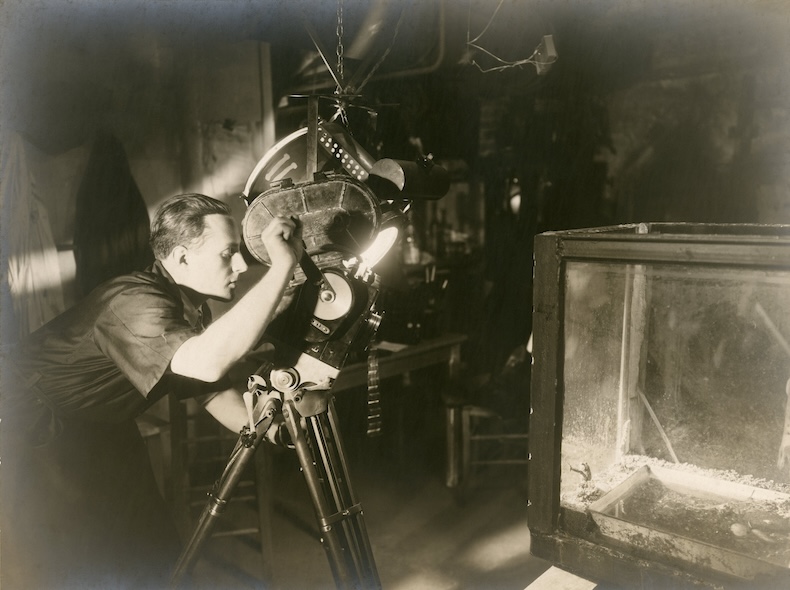
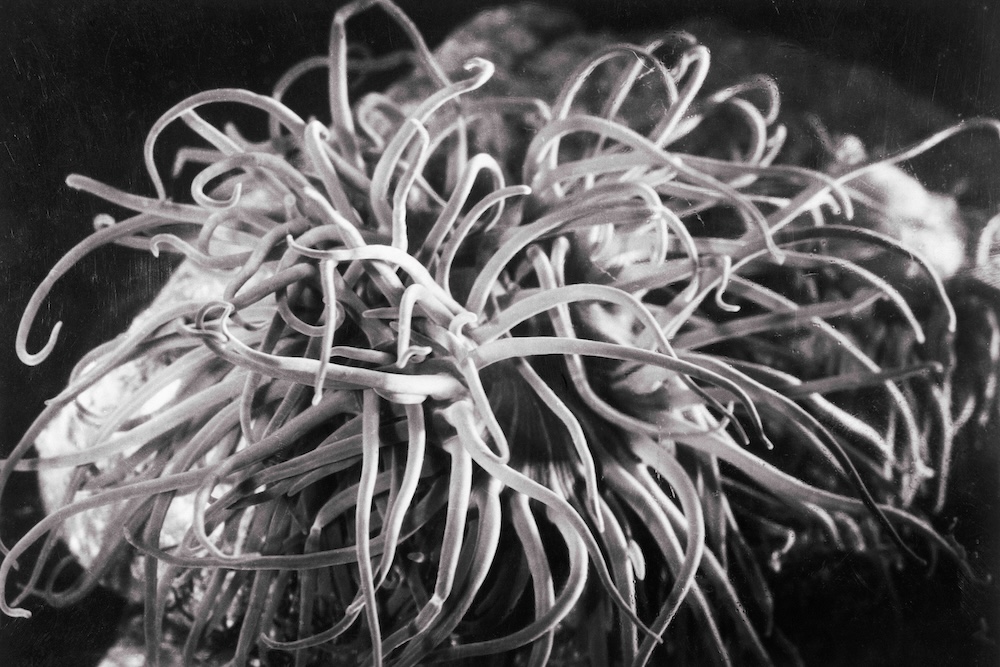
Painlevé’s quest to fuse Surrealism and science into cinema for a mass audience is the story told by some 200 items including films clips, photographs and writings across a single large floor of the Pont-Aven Museum. In the course of his lifetime (1902–89) he made around 200 films, with 40 destined for the cinema and the rest for scientific distribution. Most concentrated on marine species such as sea worms, urchins, hermit crabs and octopuses. His most famous subjects were seahorses, which he filmed in 1935, and, a decade later – in a rare excursion on dry land – the vampire bat of South America. In each work Painlevé used the newest technology available, from microscopy to early colour film, and respected no conventional forms of film-making: each creature, he said, determined the style, structure and commentary. The only method he followed was his own, set down in his ‘Ten Commandments’ of 1948, which included warnings against tricking the viewer with montage – by all means do it, but don’t hide it – and unnecessary special effects. Nature was its own spectacle, he insisted; it did not need creating. Films should reveal the reality of what is out there, not a fabricated version of one’s own. Above all he aimed for what he called ‘exact poetry’.
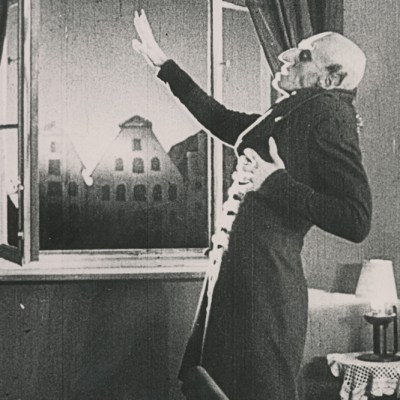
We get glimpses of his remarkable films in the clips projected on the walls in several sections of the exhibition; these includes footage of urchins, shrimp and hermit crabs and also the full nine minutes of The Vampire. It’s a treat to see the latter projected on a big screen, although perhaps ‘treat’ is not quite the right word. The film is among Painlevé’s most disturbing, as the blood-sucking habits of its tiny subject are observed in intense close-up. There is a long sequence showing how it feeds off its victims: a guinea pig is heartbreakingly oblivious to what is happening. The behaviour of the bat is narrated clearly – this bat is doing what it does to survive – and all of this is soundtracked by two Duke Ellington numbers: ‘Black and Tan Fantasy’ and ‘Echoes of the Jungle’. When the film was shown in cinemas across France in 1945 it inspired many commentators to find in its tale of deathly contagion an allegory of fascism. This impression was further encouraged by one of the closing shots, in which the little bat raises its wing in something like a Nazi salute. Even today the film looks like nothing else that has ever been released in a cinema.
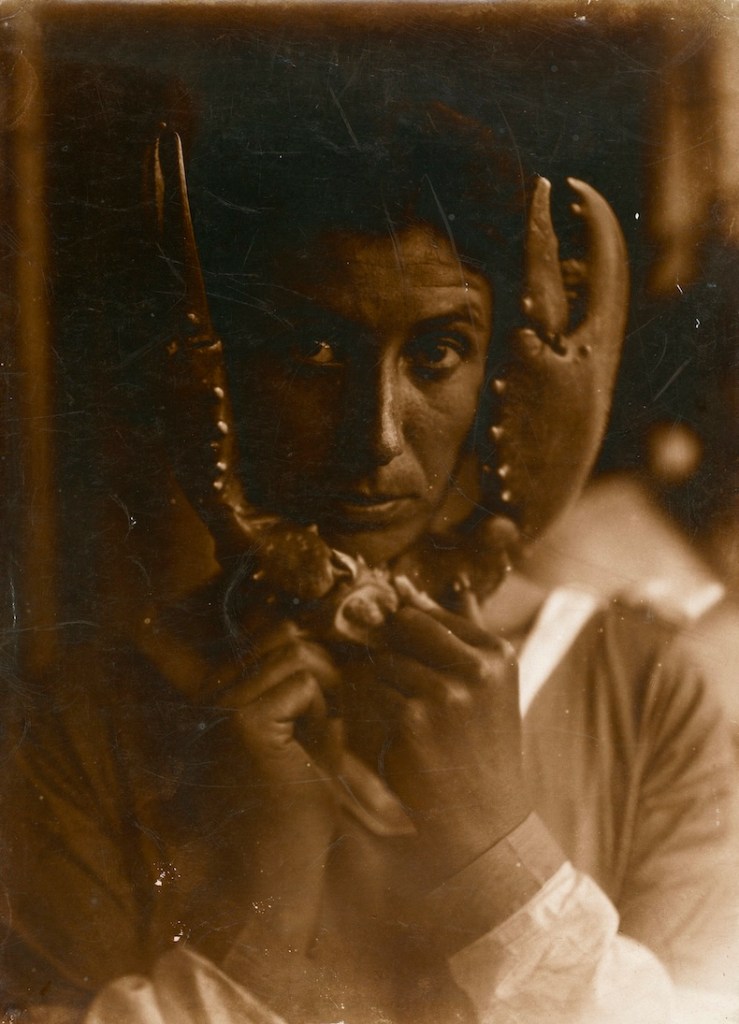
The exhibition in Pont-Aven is a modified version of the Jeu de Paume’s show of 2022. Here it has been adapted to include more material on Painlevé’s work on the foreshores of Brittany, a region where he spent a great deal of time and carried out research. It was also the home of his life companion, Geneviève Hamon, who co-directed many of his films. However, she rarely appears on the walls of the museum apart from in the credits and in a few photographs. In one particularly striking image, she crouches over some shallow water, paddling her feet, a fishing net in one hand and a Gauloise hanging out of her mouth. Historians have managed to gather only fragments of information about her and it is likely this was intentional on her part. In most photographs her face is partially hidden by an animal she is holding up to it. Her gesture seems an elegant, silent statement about her work with Painlevé: the animals are the stars.
Today scientists and students use tiny GoPros to capture underwater footage of marine life of the same Breton foreshore that Painlevé explored more than half a century ago in plastic sea sandals, equipped with snorkel and a cumbersome camera strapped to his chest. He would have been delighted by all this activity and thrilled by the technology enabling it, in the spirit of bridging the gap between science and the public via the moving image. But he would have regretted the absence of movies using this footage making it to the cinemas. As the show at Pont-Aven makes clear, Painlevé was a special kind of scientist, using the camera not only as a recording device but to communicate his zoologically Surreal outlook, inviting viewers not to judge nature but to observe it in all its otherness. While he had a great influence on Surrealist photographers and fiction directors, Painlevé also opened up a completely alternative path for popular science documentaries that few, so far, have followed.
‘Jean Painlevé: Feet in the Water’ is at the Musée de Pont-Aven until 31 May.