This review of Architecture and Artifice: The Crafted Surface in Eighteenth-Century Building Practice by Christine Casey appears in the May 2026 issue of Apollo.
The Marble Hall at Clandon Park in Surrey was once one of the most celebrated 18th-century interiors in England. Executed not in marble for the most part but in gleaming white stucco, it was the product of a collaboration between a team of stuccatori, probably headed by Giuseppe Artari and the Venetian-born architect Giacomo – or James – Leoni. As it appeared on the front cover of Christine Casey’s last monograph, Making Magnificence, the astonishing virtuosity of the Marble Hall’s ceiling, with its combination of elaborate architectural ornament and writhing nude figures, stood as a beguiling testament to the skill of the stuccatori who were the book’s subject.
Images of the same interior that appear in Casey’s latest book, Architecture and Artifice, tell a different story. With the house ravaged by a devastating fire in 2015, immaculate limewash renderings have been incinerated to reveal the truth behind seemingly marble fiction: brick walls, iron cramps, plaster and wooden lathe. They vividly illustrate the visual conceit on which classical-style buildings such as Clandon depend: they appear to be built of stone laid upon stone, whereas what we see is actually little more than a skin, carefully crafted and lovingly applied.
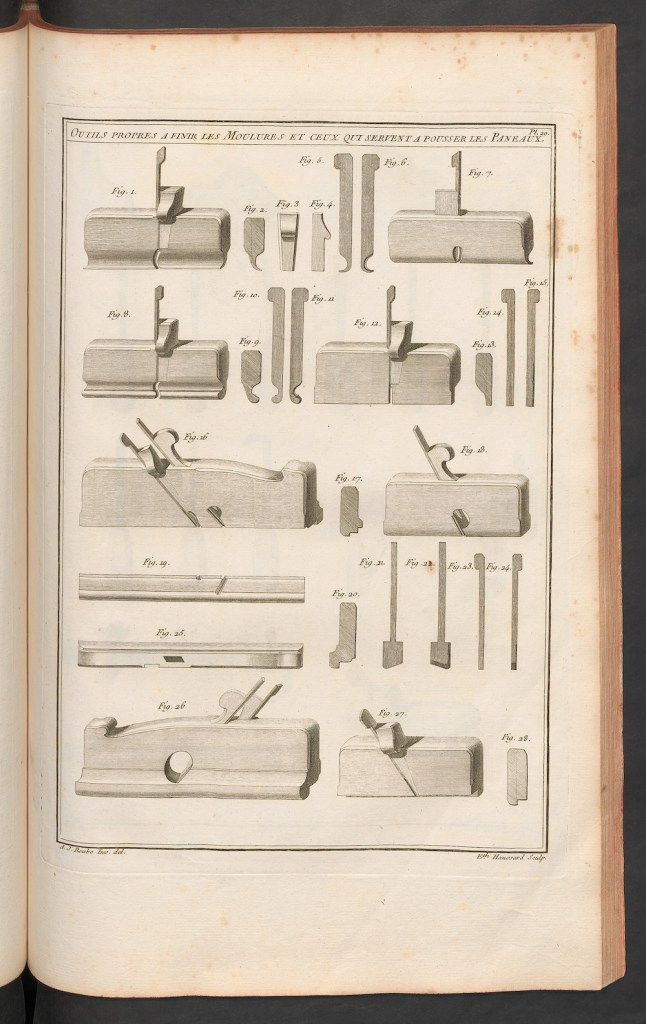
Casey’s interest in Architecture and Artifice is in the people and processes that were involved in achieving this conceit. She attempts to advance our understanding of the great buildings of 18th-century England and Ireland (Scotland is outside the book’s parameters) by looking at who made these buildings, of what materials they were constructed and how these materials were acquired.
These aims are not modest. Casey argues that by focusing on questions of design and authorship, architectural historians have too often neglected to consider how the buildings they study were actually made. ‘How many students of British architecture could name the stones employed in landmark buildings such as Castle Howard, Houghton Hall and Kedleston?’ she asks. How different would Christopher Wren’s library at Trinity College, Cambridge, have looked had it been made of hard, white Portland stone and not of ‘pink and gold Ketton limestone, which glows in elevation and in watery reflection’? Clients and architects, then, are ‘gently nudged aside’ in this study. In their place are the masons, sculptors, plasterers, carpenters, plumbers and other craftsmen and women who realised their visions.
Casey wisely doesn’t claim primacy for these figures over architects, or argue that materials were necessarily more important to a building’s appearance than its overall design. Rather, her account could be considered as a recalibrating of the scales. Materials and construction techniques have not always been of the greatest interest to architectural historians, but they mattered greatly to the people who created the buildings they study. This includes architects.
When building St Paul’s, for instance, Wren took a close interest in work at the quarry on the Isle of Portland in Devon, the source for the eponymous stone used to face the cathedral. Although he visited on one occasion, he mainly had to rely on the expertise of skilled craftsmen, such as his mason Edward Strong, to get accurate information about the situation on the ground.
With architects often unable to give close supervision to their projects outside of London due to the distances involved, they placed a considerable store of trust in figures such as Strong, who was also the master mason at Blenheim Palace. ‘Apply yourself to old Mr Strong,’ Nicholas Hawksmoor wrote to Henry Joynes, the clerk of works at Blenheim; if Joynes had concerns about the work, he should ‘pray call Mr Strong to your aid’. Architects could form close bonds with the craftsmen with whom they worked, as can be seen in a group portrait, sadly lost, of the architect Henry Keene socialising with masons and other building associates.
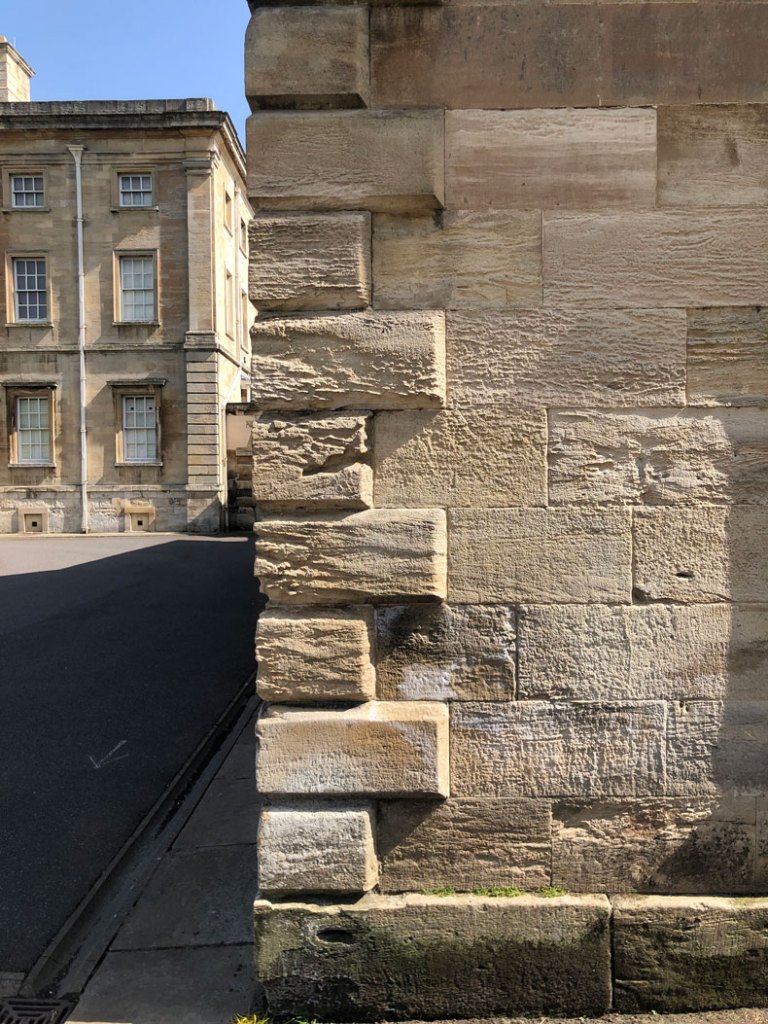
Knowledge of materials also had design implications. On one occasion, Wren explained to the architect and lawyer Roger North that he had been unable to use a giant order for the portico of St Paul’s Cathedral – as he had intended – because the weight of the entablature would have been too much for the Portland stone columns to bear. Elsewhere, Casey points out that stonework executed in the round, that is on curved as opposed to straight plans, was both more difficult to execute and more costly. She makes the intriguing suggestion that this might account for the relative absence of convex and concave forms in works by the English baroque architects John Vanbrugh and Hawksmoor. With this information in mind, the boldly projecting curves of the east end of St Paul’s and its north and south porticoes appear more conspicuously opulent than they did before.
Architecture is unlike many other arts in that the architect can never be the sole executor of his or her vision and, indeed, the realisation of this vision is bounded by a far greater range of material constraints than is the case for a painter or a sculptor. Supported by the lavish illustrations, Casey’s forensic account tells us a great deal more about the people, materials and processes that brought an 18th-century architect’s vision to life, while the ground she leaves uncovered presents an enticing invitation for future research. If architects of the likes of Wren, Hawksmoor, Vanbrugh and James Gibbs are allowed to remain on their pedestals, then perhaps they can now be joined by their mason colleagues Robert Grumbold, Edward Strong and Christopher Cass. The stone these pedestals will be made of is another matter.
Architecture and Artifice: The Crafted Surface in Eighteenth-Century Building Practice by Christine Casey is published by the Paul Mellon Centre for Studies in British Art.
From the May 2026 issue of Apollo.