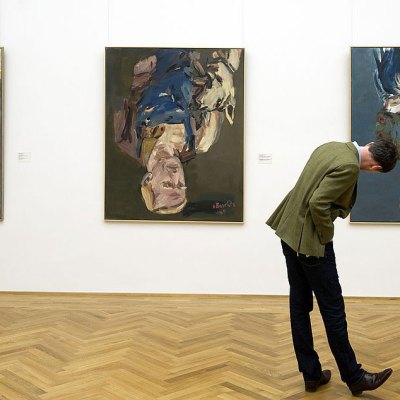
The artist Georg Baselitz has died at the age of 88. Widely regarded as one of the most important German painters of the late 20th century, Baselitz was born Hans-Georg Kern in 1938 in Deutschbaselitz, Saxony. Like his compatriots and contemporaries Anselm Kiefer and Gerhard Richter, Baselitz’s work frequently tackled the subject of national identity in Germany after the Second World War. Perhaps the technique he is best known for is painting (and hanging) works upside down, believing that it helped slow his painting process and encouraged the viewer to look at the work more closely. In 1980, he represented Germany at the Venice Biennale and was awarded the Golden Lion for Lifetime Achievement at the 59th edition of the event in 2022. Read Apollo’s interview with Baselitz in 2019 here.
The jury of the Venice Biennale has resigned just nine days before the event is due to open. In a statement shared on e-flux, the jury stated that it was resigning in accordance with the statement of intention it issued on 23 April, which said that they would not award prizes to artists from countries whose leaders have been indicted for war crimes, including Russia and Israel. Meanwhile, Italian culture minister Alessandro Giuli has launched an investigation into the Russia pavilion. La Stampa reports that the investigation is focused on finding flaws in official documents that could prevent the pavilion opening to the public on 9 May.
Janne Sirén will step down as director of the Buffalo AKG Art Museum after 13 years in the role. Born in Finland, Sirén was director of the Helsinki Art Museum before relocating to the New York museum. He will depart in October and return to Europe. The museum’s board of directors will begin looking for his replacement this summer. In Colombia, Martha Ortiz has left her position as director of the Museo de Arte Moderno de Bogotá amid accusations that she harassed staff members and created a toxic work environment. His departure comes after the museum’s artistic director Eugenio Viola was fired in February. Speaking to the Art Newspaper following his dismissal, Viola said he had been dismissed after he raised concerns about the ‘deterioration of working conditions’ at the museum. His role remains unfilled. The museum says it has begun the process of finding a new director.
The Danish antiques dealer Ittai Gradel has died of cancer at the age of 61. It was Gradel who, in 2021, first alerted the British Museum to the possibility that gems from its collection were being sold on eBay. Before his death in a hospice in Denmark, the British Museum awarded Gradel a medal for what its current director, Nicholas Cullinan, called his ‘very significant contribution’. In 2024, Ittai Gradel was Apollo’s Personality of the Year; read Michael Hall’s interview with him here.