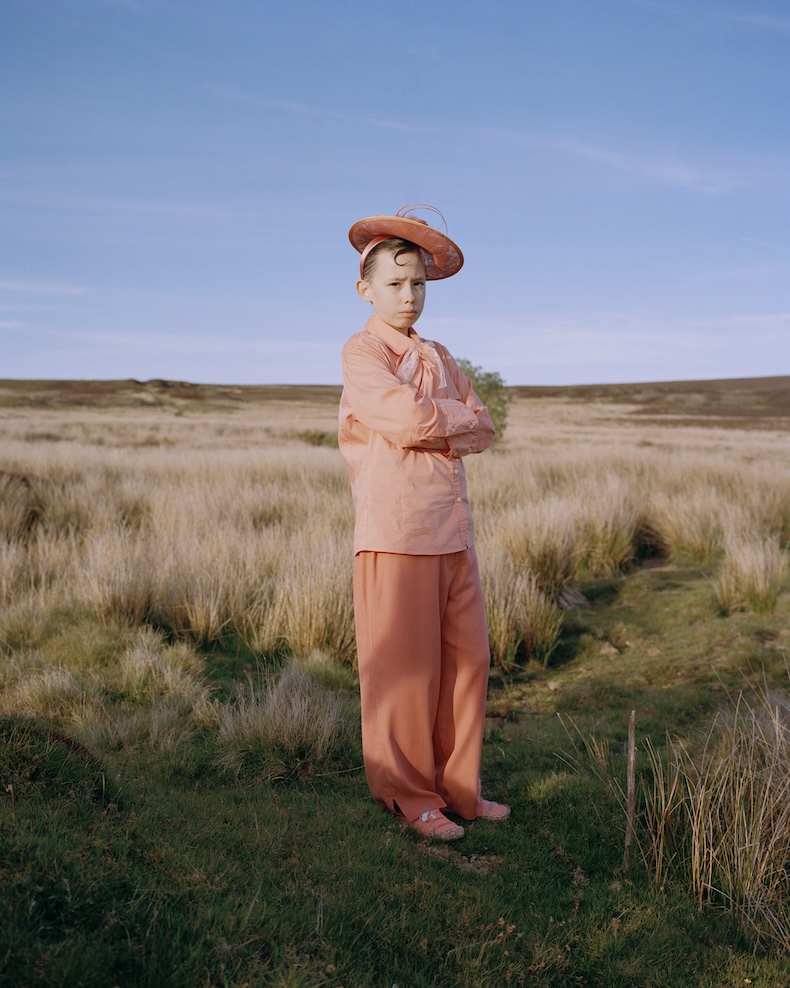
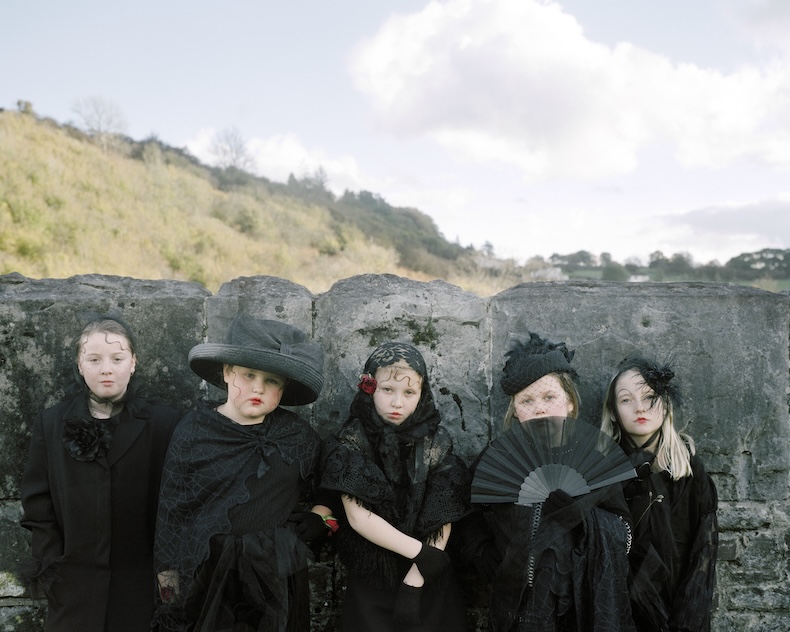
During a photoshoot in the South Wales Valleys, a passer-by encountered a group of young girls dressed entirely in black. ‘Ha, you lot look like you’re off to a funeral,’ they shouted. The reply from the girls came straight back: ‘It’s called fashion. Look it up.’ ‘Ffasiwn’, which opens at the National Museum Cardiff this month, takes its name from that exchange. It is a ten-year retrospective of work by French photographer Clémentine Schneidermann and Welsh creative director and film-maker Charlotte James.
Wales is not a country you associate with fashion. Julien Macdonald is from Merthyr and Mary Quant had Welsh parentage, but they are exceptions that prove the rule, their careers made by leaving. The length of the M4 has always put Wales behind the curve: geographically peripheral, culturally overlooked, its creative talent exported rather than sustained. Which makes it all the more unlikely that one of the most original fashion photography projects of the past decade comes not from London or Paris but from the post-industrial valleys of South Wales.
Bleak Fabulous is the studio name adopted by Schneidermann and James. The two met in London in 2015, introduced by a fashion photo editor. Schneidermann was in the middle of a residency in Abertillery and had been given three months to make a body of work in a community she barely knew. James was working in the Valleys, already angry at the way fashion closed its doors. They took a youth club, borrowed some clothes and shot in the rain. Neither of them knew the project would last ten years. ‘Three months is nothing,’ Schneidermann says. ‘You just get started in three months.’ When the residency ended, they carried on.
A key figure was Michelle Hurter, the youth worker who introduced Schneidermann to the young people of Blaenau Gwent and who has remained a collaborator throughout. Before each shoot, Schneidermann and James ran workshops – sewing, styling, set design, photography – involving the participants in the process rather than simply asking them to show up and be photographed. Fashion, James says, was always a tool rather than a subject. ‘It was an excuse to bring all these girls together in a room. And, otherwise, what would we say to them: let’s just do a shoot?’
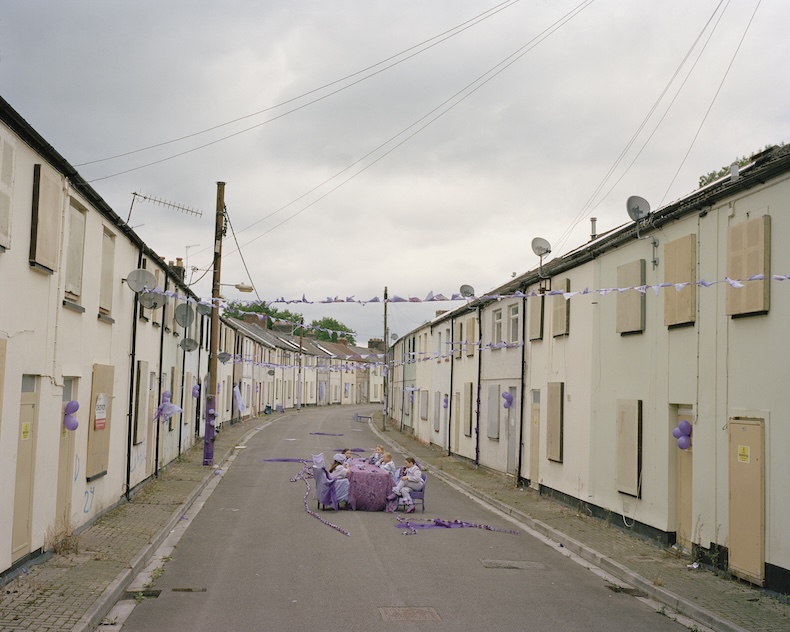
The work sits at the edges of documentary photography, portraiture and performance – and refuses the terms of all three forms. There is a long tradition of documentary photography in South Wales: solemn, weighty, defined by what has been lost. Schneidermann and James were operating from a completely different set of references: Pinterest boards, Instagram, film, celebrity culture, the endless stream of contemporary visual culture. We are, Schneidermann observes, constantly fed images with no filter to pause and digest anything we look at. The work they have made demands the opposite: it is slow, located, seasonal, built over a decade. Where the documentary tradition finds elegy and the image economy finds content, ‘Ffasiwn’ finds vitality: in the people, in the places, in the refusal to treat either as a subject for mourning. James describes their creative dynamic as one of productive tension. ‘Sometimes my ideas are so big. I want to do a shoot inside the labour club with all the women from bingo and a horse. And Clémentine will strip that back just a tiny little bit. That tension between us is the magic.’
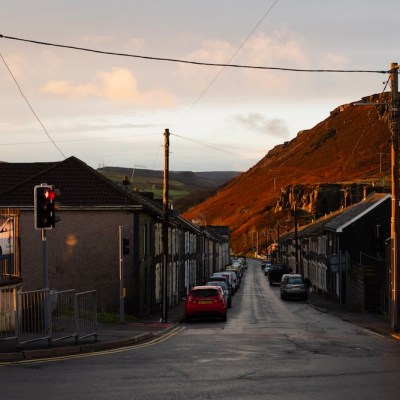
The Valleys themselves are present throughout the work but never fetishised. James is from Merthyr Tydfil; Schneidermann was commissioned there. ‘It was never our intention to be, like, this is a Valleys project,’ James says. ‘It was circumstance.’ That absence of missionary intent is precisely what frees the work from the tropes that have long defined how the region is seen: the poverty, the loss, the hiraeth (the Welsh longing for what is gone). ‘People are just so open and up for it,’ Schneidermann says. ‘They can feel we’re coming from a good place.’ Instead the work finds its subjects in the texture of everyday life: the labour clubs, the terraced streets, the yellow house on the terraced row they came across just when they were doing a yellow-themed shoot – whose owner said yes to them using it without a second thought.
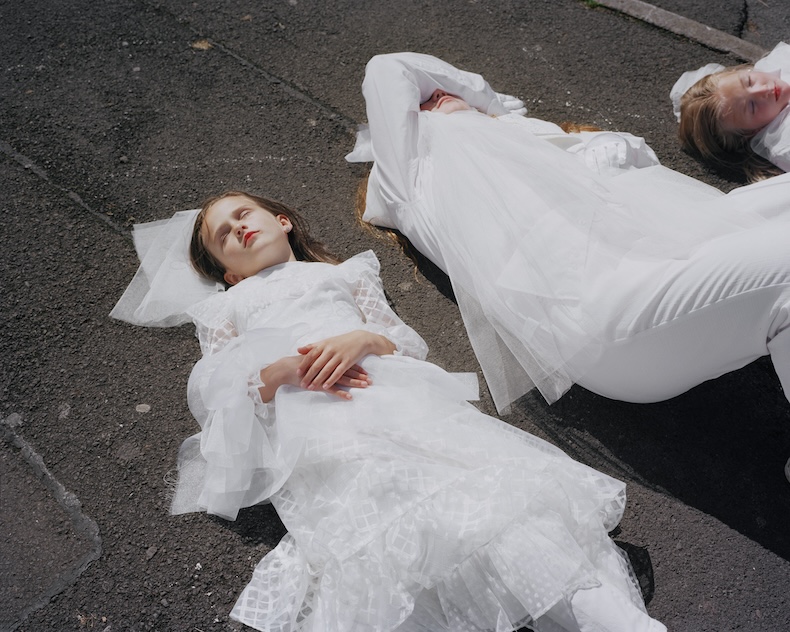
The exhibition at the National Museum Cardiff presents nearly 60 prints, two films and a reimagined working women’s club. ‘Slowly going from the bleak winter,’ Schneidermann says, ‘and slowly you start the seasons blooming and the girls blooming.’ Some of those involved have now been with the project for a decade and were children when it started; Schneidermann and James weren’t all that much older. ‘We started the work when we were in our early twenties. We were so young,’ Schneidermann says. The growing up has gone in both directions. One of the participants recently assisted on a Welsh National Opera costume production and returned to style the final shoot, dressing the others herself. ‘She could easily replace us,’ Schneidermann says. When Schneidermann and James interviewed the young people for an upcoming book, one put it with more clarity than any critic might manage: ‘It shows where we live. What we do. It shows what Merthyr is. What Merthyr has to offer. We are from Merthyr and we are iconic.’
Ffasiwn is at the National Museum Cardiff from 23 May until 4 April 2027.