From the June 2026 issue of Apollo.
When the art dealer Joseph Duveen dismissed as a copy a painting its owner was trying to sell as a Leonardo – without seeing it – the entire discipline of connoisseurship found itself on trial. On the first day of Hahn v Duveen in court in 1929, he was asked in cross-examination: ‘Don’t scholars use inventories and documents to make judgements about attribution?’ Duveen’s reply: ‘No. Certainly not.’ The precise nature of the connoisseur’s skill baffled the jurors, who refused to reach a verdict over whether Harry Hahn’s La Belle Ferronnière was the real deal. The controversy over connoisseurship has persisted ever since. Can the eye really determine what documentation and technology cannot?
The cultural historian Peter Burke is reluctant to limit the definition of connoisseurship to those who rely on sight alone. He instead defines it as a ‘bundle or even a system of practices’ that include judging quality, attributing works to times, places and artists and distinguishing originals from copies or forgeries. As to how, he draws on the psychologist Daniel Kahneman’s distinction between rapid and unconscious thinking and conscious thought, suggesting that the connoisseur must do both. An initial judgment of a work – based on connaissance, or knowledge from experience, is crucial. But at least in the modern day, it must then be ‘sceptically and coolly’ put to the test, as the German curator and art historian Max J. Friedländer put it. That involves a dose of savoir – knowledge from research.
Many connoisseurs, including Duveen at the 1929 trial, have compared their art to the recognition of handwriting. The process, Burke argues, requires not just a sharp eye and total immersion, but an ‘unusually powerful visual memory’. The medieval sculpture expert Hanns Swarzenski was said to have experienced objects ‘with all his senses’, while Bernard Berenson claimed to experience ‘a curious ringing in his ears’ in the presence of a fake.
Works in a particular style have all too often been attributed to the most famous artists working in that style. But some leading connoisseurs have seen it as their job to push in the other direction. Berenson reduced the number of known Titians from around 1,000 to 133. As his reputation soared, hefty fees rolled in from collectors and dealers. In later life, his attributions became more liberal. ‘They are continually at him to make him say pictures are different from what he thinks,’ his wife Mary complained.
Though the roots of connoisseurship can be found in China, as well as ancient Greece and Rome, Burke limits his study to the West. He finds connoisseurship itself, based on analysis of style and the expert eye, ‘gradually emerging between the 16th and the 19th centuries’. Albrecht Dürer encountered people ‘knowledgeable in painting’ on his visit to Venice in 1505, but connoisseurship did not begin to be codified until the 17th century, when texts on judging paintings began to proliferate – mostly in Italy. If the first connoisseurs spoke Italian, their successors in the 1700s spoke French and invented art criticism. When academic art history emerged in the 19th century, the discipline was a thoroughly German-speaking affair.
Burke provides plenty of lists to illustrate developments such as the emergence of European and North American art museums in the 1800s. These provide valuable context, but also push the narrative towards a general history of the art world. Tales of forgery seem somewhat peripheral and, at points, the term ‘connoisseur’ seems to apply to any operator in the field of art. Burke proves his own connoisseurial skill in a pleasing attribution of Berenson’s first book, Venetian Painters (1894), not to the great master but to Mary. It is a shame he cannot use this to make stronger judgements on the crucial question of who is a connoisseur and who is not.
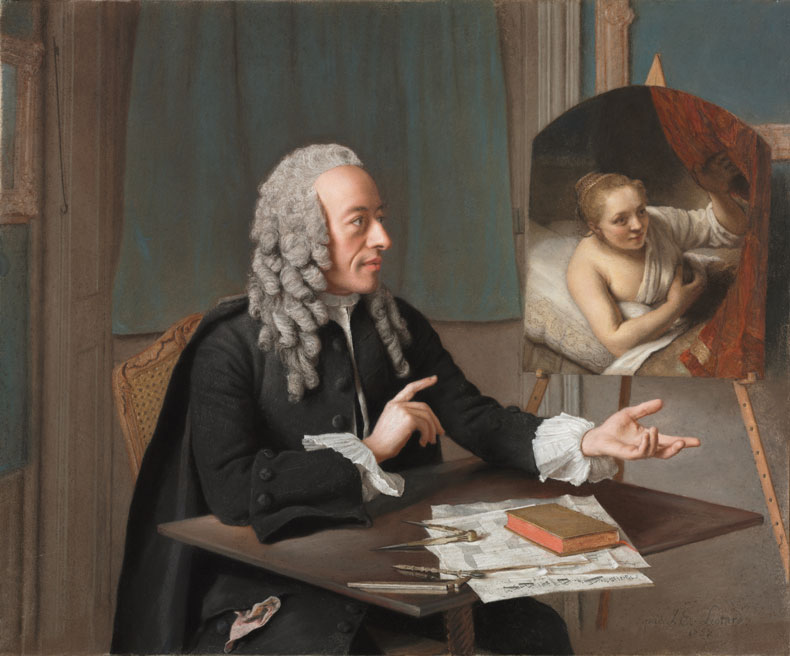
Apart from Mary Berenson, the Impressionist painter and art adviser Mary Cassatt and the Italian art historian Mina Gregori, women are largely absent from this book. Burke compensates with a jarring subsection on women’s contribution to art history and curation. But if women cannot be integrated into the main narrative, surely that demands more research on the numerous examples listed? And if even those who practised as critics, collectors or curators did not act as connoisseurs, why not? The career of Rosa Schapire, who combined criticism, collecting and modelling in Weimar Germany and post-war Britain – even writing for The Connoisseur magazine – could be a useful case study, but goes unmentioned.
Though he attends to the connoisseur’s role as tastemaker, Burke never properly grapples with the performance of sophistication that seems crucial to the connoisseur’s authority. He makes frequent use of the term ‘amateur’ without defining it – or examining how its meaning has evolved from a proud marker of dedication to a pejorative dig. And while the tension between attribution to a single hand and the realities of Old Master workshops is a running theme, Burke discusses scepticism of artistic genius only right at the end.
After decades in a vault in Omaha, Nebraska, La Belle Ferronnière was sold at auction for $1.5 million – triple its high estimate – in 2010. It was attributed to ‘follower of Leonardo da Vinci, probably before 1750’. Museums seem increasingly willing to attribute to schools and periods rather than individual artists, while some contemporary art theory questions the value of attribution altogether. All the while, the commercial art world now demands ‘authentication’ complete with certificates – and, if things go wrong, major financial repercussions. Both trends have contributed to what Burke calls, with a hint of scepticism, the ‘crisis’ of connoisseurship. He concludes that the connoisseur still has a crucial role alongside, and not instead of, documentation. But given that the next battle will be waged not by archivists, but by tech bros proffering the supposed wonders of AI, a more compelling case for the connoisseur can be found right at the beginning. Connoisseurship originally valued the judgment of aesthetic quality as much as attribution. That is one thing, as yet, that technology cannot even claim to reproduce.
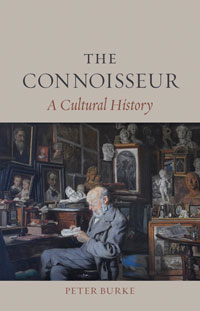
The Connoisseur: A Cultural History by Peter Burke is published by Reaktion Books (£20).
From the June 2026 issue of Apollo.