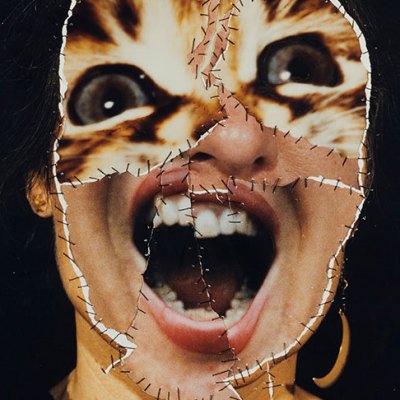
Dada Review (1919; detail), Hannah Höch. Berlinische Galerie, Berlin. Photo: Kai-Annett Becker; © VG Bild-Kunst, Bonn 2019

‘Four things to see’ is sponsored by Bloomberg Connects, a free arts and culture platform that provides access to museums, galleries and cultural spaces around the world on demand. Explore now.
Each week we bring you four of the most interesting objects from the world’s museums, galleries and art institutions, hand-picked to mark significant moments in the calendar.
On 7 June 1966, 60 years ago this week, Jean (Hans) Arp – a founding member of Dada – died in Basel. His wooden reliefs and biomorphic sculptures, shaped more by chance and organic instinct than by rational design, remained central to his work long after the movement dissolved.
Dada was conceived in Zürich in 1916 by artists including Hugo Ball and Emmy Hennings in reaction to the First World War and the unprecedented scale of death and destruction it brought. The seemingly infantile name – a French colloquialism for ‘hobby horse’ that sounds equally like a baby’s babble – signalled the movement’s contempt for official culture. Dada embraced absurdism, provocation and chance, wielding nonsense as a serious critical tool. It asked questions about art and culture that remain pertinent more than a century later: what counts as art? Who decides? What is taste for and whose interests does it serve? This week we look at four works that capture the movement’s irreverent, inventive spirit.
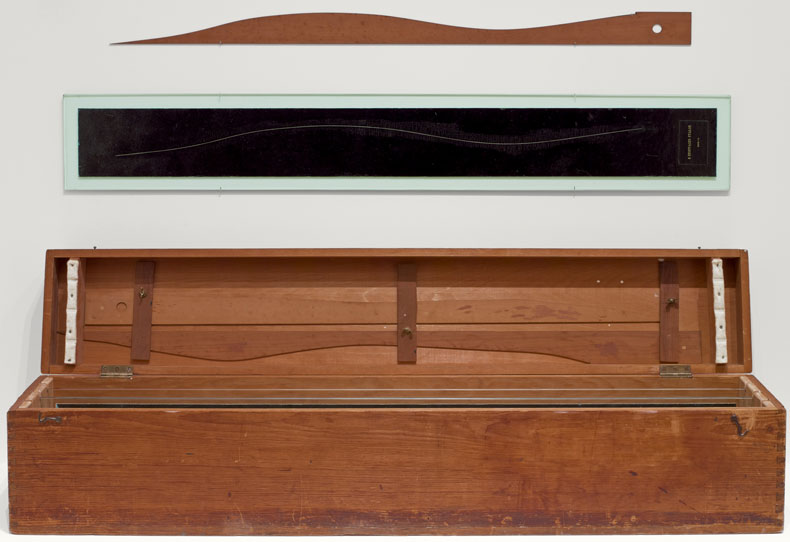
3 Standard Stoppages (1913–14), Marcel Duchamp
Museum of Modern Art, New York
Three threads, each exactly one metre long, dropped from a one-metre height on to a painted canvas: the result is three differently curving lines, each shaped by chance. Duchamp made wooden templates from the curves and presented them in a long wooden box, giving it the dry authority of a scientific instrument. In so doing he struck at two long-held assumptions about art: that it requires technical skill and that it is shaped by the artist’s precise intentions. Click here to find out more.
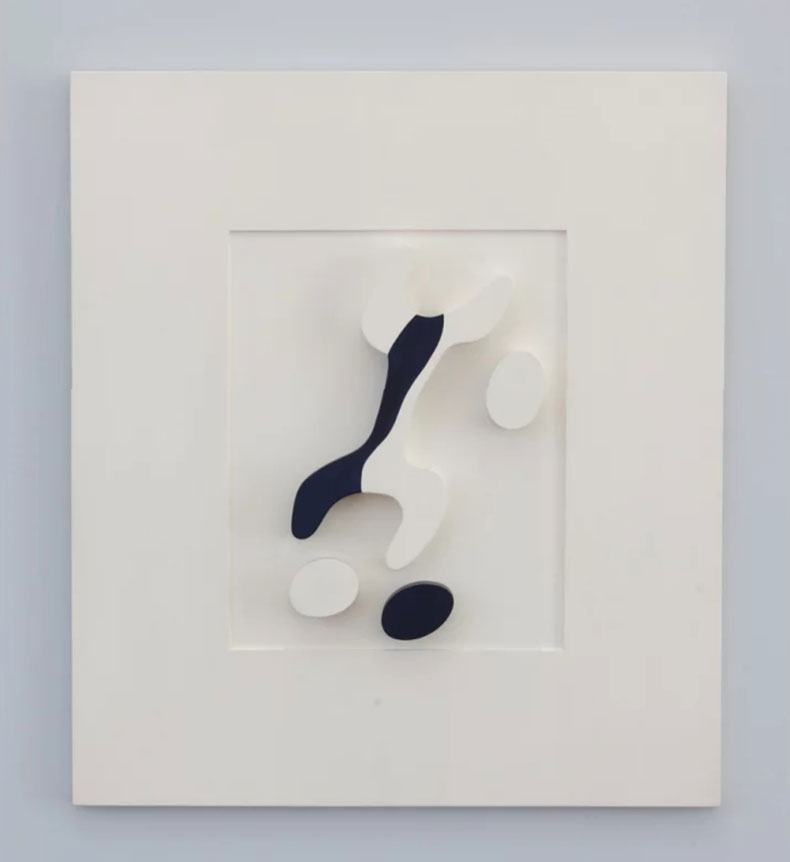
Torso and Navels (1924/63), Hans Arp
Arp Museum Rolandseck, Remagen
Three oval forms orbit a body so abstracted that it resembles not so much a torso as a spanner or a bone. This painted wooden relief exemplifies the visual language that Arp developed from the 1920s onwards, and belongs to a long series in which Arp varied the torso-and-navel pairing. The soft, near-amorphous shapes reflect his belief in biomorphic form and constitute a form of art that follows the logic of organisms rather than machines – a rejection of the rigid rationalism that Arp associated with the First World War. Click here to learn more.
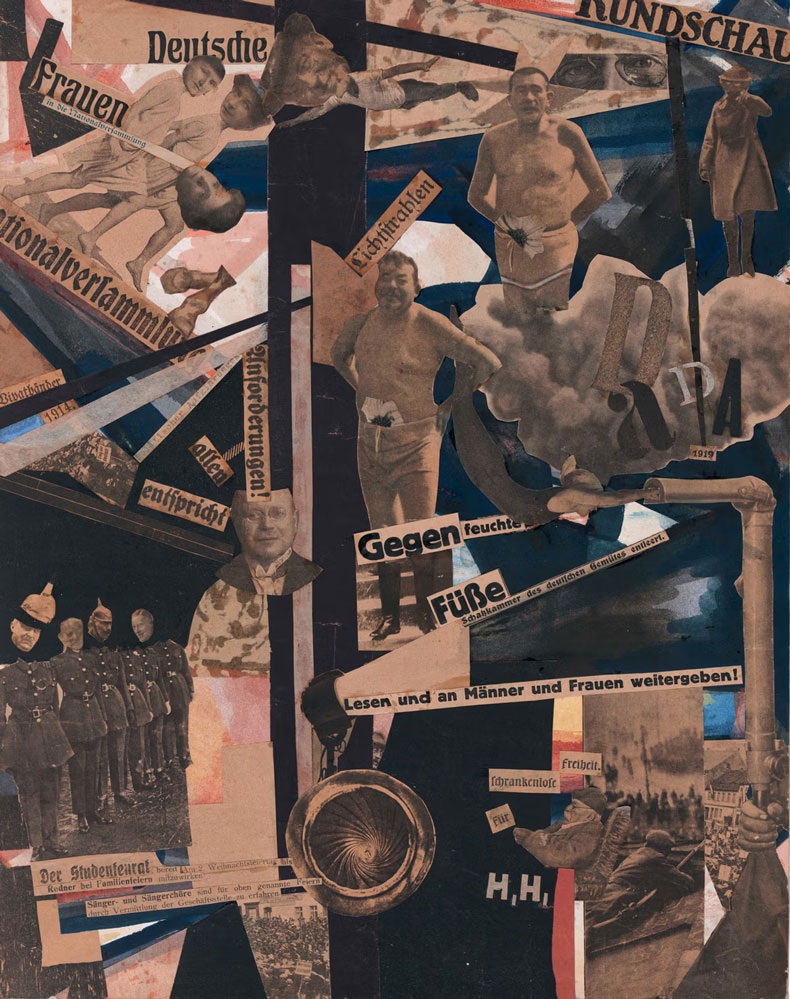
Dada Review (1919), Hannah Höch
Berlinische Galerie, Berlin
Hannah Höch was the only woman among Berlin’s Dadaists, and Dada Review demonstrates both her technical invention and her political bite. By lifting images from their original journalistic context and recombining them, she exposed how the media constructed authority, respectability and power – and how quickly those constructions could be made to look ridiculous. Soldiers appear without heads; politicians wear swimming trunks. The photomontage technique, of which Höch was a pioneer, became a tool for dismantling coherence itself: bodies assembled from incoherent parts, identities shown to be unstable, the idea of a reliable picture of the world treated as the greatest absurdity of all. Click here to read more.
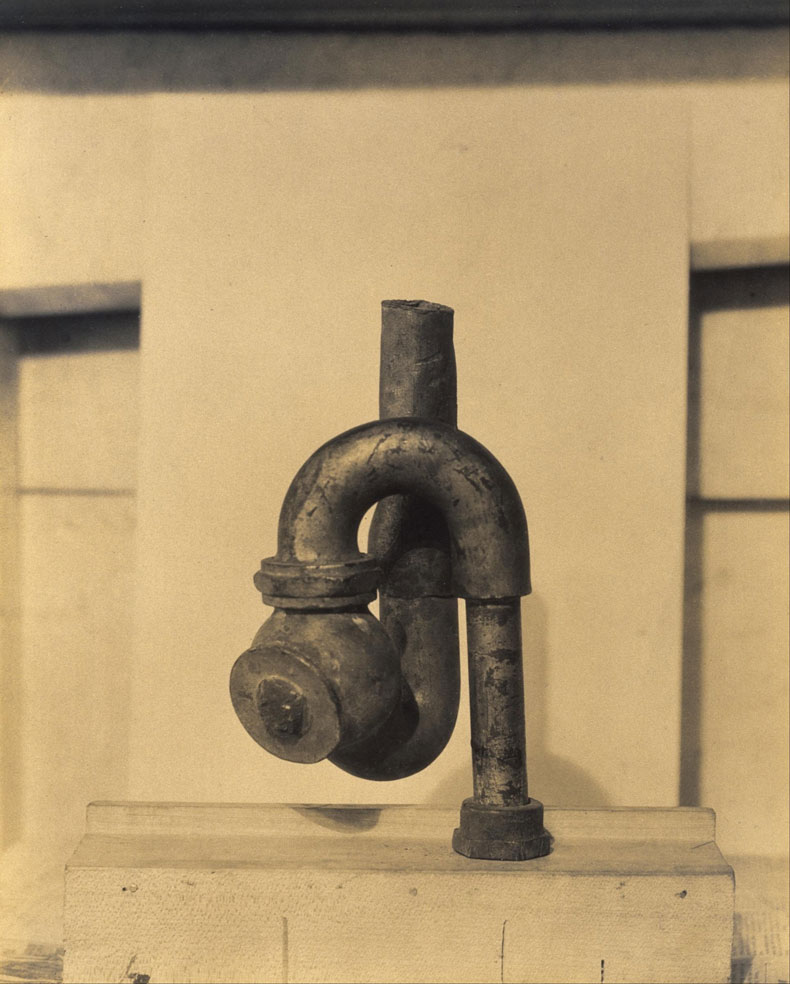
God (1917), Baroness Elsa von Freytag-Loringhoven and Morton Schamberg
Museum of Fine Arts, Houston
Morton Schamberg’s photograph documents a sculpture by Baroness Elsa von Freytag-Loringhoven – a cast-iron plumbing trap inverted and mounted on a wooden box. Freytag-Loringhoven was among the most radical figures in the New York Dada scene, a German-born poet and performance artist who decorated herself with found objects and wore tin cans as brassieres. Known as the ‘Mama of Dada’, she brought a ferocious wit and physical boldness to the movement that set her apart from its more cerebral practitioners. Click here to discover more.

‘Four things to see’ is sponsored by Bloomberg Connects, a free arts and culture platform that provides access to museums, galleries and cultural spaces around the world on demand. Explore now.