
As heatwaves become a regular feature of the European summer, Rakewell is feeling envious of Berliners who will soon have a new way to cool off in the city. The Volksbühne, famous as a home for experimental theatre, has made waves by announcing a plan to install a 25-metre swimming pool in front of the building on Rosa-Luxemburg-Platz, free for anyone to use between 7 August and early October. Whoever said theatre should stay in its lane?
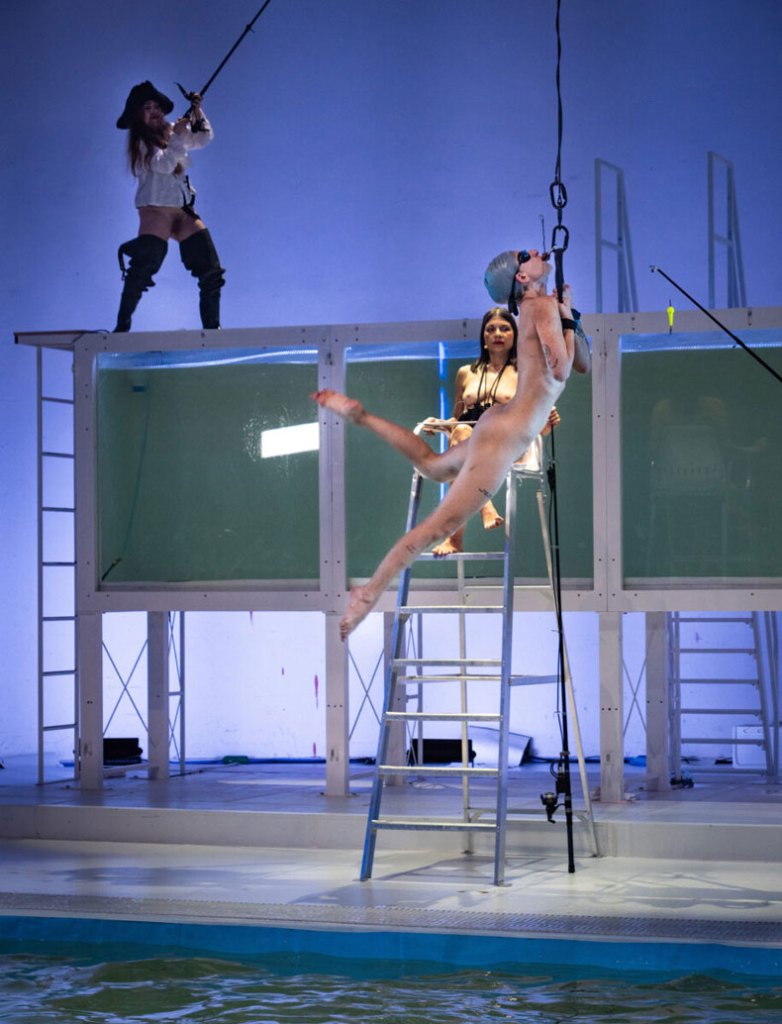
The pool is the brainchild of incoming artistic director Matthias Lilienthal, who, as well as redubbing the theatre ‘Volksbad’ (or ‘people’s pool’), has said that ‘splashing each other with water can take on a theatrical quality’. The Volksbühne itself has already dipped a toe into this area. Before she made a splash, literally, at this year’s Venice Biennale, Florentina Holzinger masterminded Ophelia’s Got Talent at the Volksbühne in 2022, in which the artist and performer played Shakespeare’s Ophelia through the ages, with a nude all-women cast swimming through pools and water tanks.
All this has prompted Rakewell to dive into the history of theatres getting their stages wet. It’s a tradition that stretches back to antiquity: consider the naumachiae, mock sea-battles orchestrated by the Romans on a grand scale. Many of these took place in lakes or purpose-built basins, though Nero took things a step further, according to Tacitus, when he had a wooden amphitheatre built in the Campus Martius and, if Cassius Dio is to be believed, filled it with seawater so that ‘Persians’ and ‘Athenians’ could slug it out in the company of live sea creatures.
Spectacles like this were still going strong in Italy more than 1,500 years later. In 1628 the first-ever performance at the Teatro Farnese in Parma was Mercury and Mars, a mythological drama scored by Monteverdi, in which stage managers pumped water from the Farnese aqueduct into the arena using a powerful hydraulic system, for a baroque naumachia – this time with fabricated sea-monsters.
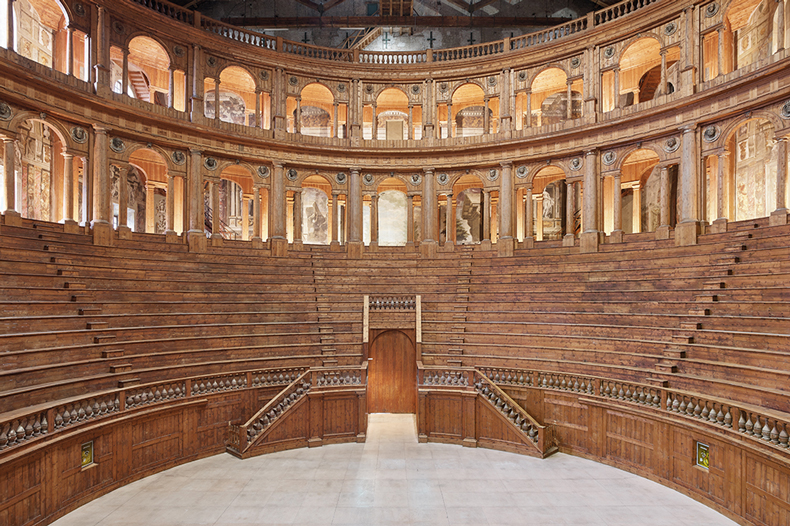
Even those of us who saw Fiona Shaw’s Medea submerging herself in an onstage pool at the Queen’s Theatre in 2001, or Eddie Redmayne emerging dripping wet from the sea (in reality a tank below the stage) in Hecuba at the Donmar in 2004, would have to concede that the ambitions of modern theatre seem damp compared to the naumachiae of old.
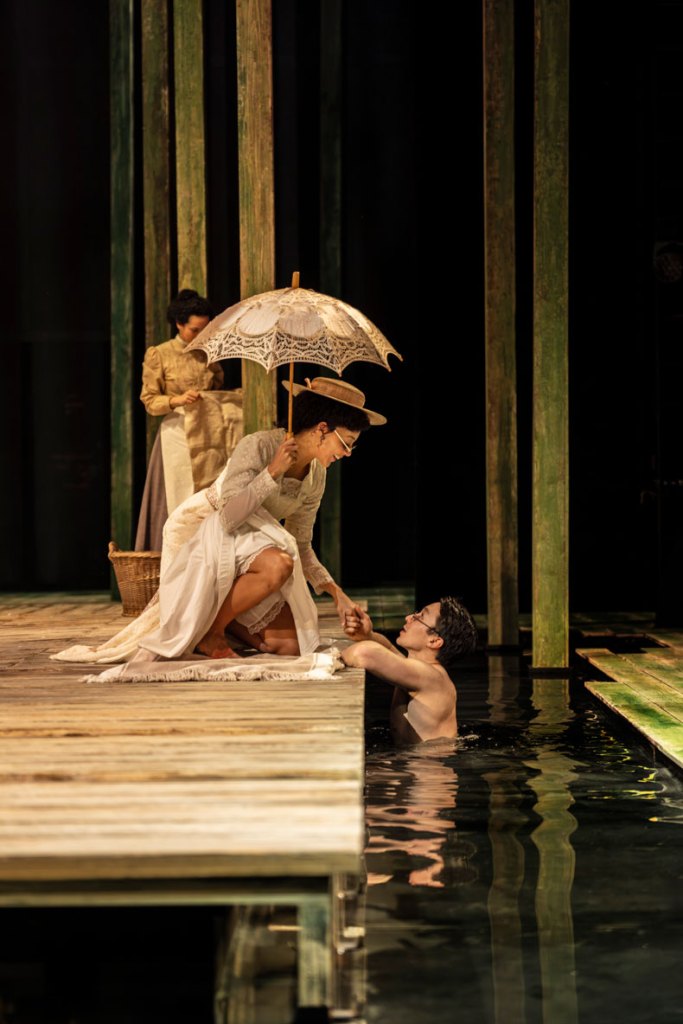
True, the Chicago Opera Theater brought the River Styx to life by staging Orpheus and Eurydice in a municipal swimming pool in 2013. The Opéra de Marseille’s staging of Dvořák’s Rusalka last year, on the other hand – in an emptied Olympic-size swimming pool – was a nadir for theatre’s hydraulic ambitions, whatever the artistic merits of the production. Still, a recent resurgence in water features on stage – a trickle that with any luck will turn into a flood – has given Rakewell reason to hope. Earlier this year, in the second half of Maxim Gorky’s Summerfolk at the National Theatre in London, much of the ensemble cast got to dangle their feet in the water that surrounded the wooden stage. And, a few minutes down the road, Bridge Theatre gave Ibsen’s The Lady from the Sea a modern twist last autumn, setting the final stretch in a swimming pool that got deeper and deeper until the actors began swimming through it.
In that production the water was kept at 33°C for the performers’ comfort. What a relief, in contrast, for the comptrollers on Rosa-Luxemburg-Platz that it’s the planet that’s doing the warming, not the Volksbühne.