Mary in Adoration Before the Sleeping Child Jesus (c. 1616), Peter Paul Rubens. Snijders&Rockox House, Antwerp. Public domain, via Wikimedia Commons

‘Four things to see’ is sponsored by Bloomberg Connects, a free arts and culture platform that provides access to museums, galleries and cultural spaces around the world on demand. Explore now.
Each week we bring you four of the most interesting objects from the world’s museums, galleries and art institutions, hand-picked to mark significant moments in the calendar.
On 14 June 1926, 100 years ago this week, Mary Cassatt died in France at the age of 82. The American painter and printmaker had spent most of her adult life in Paris, where she became the only US artist fully integrated into the Impressionist circle, exhibiting alongside Degas, Monet and Renoir. She brought to the movement a view of the domestic and social worlds of women, rendered with directness and psychological intimacy. It is these qualities that she brought again and again to the subject of mother and child.
Be it the Madonna and Child images that dominated Christian iconography for centuries, the maternity figures placed on Yoruba altars, or Japanese bijin-ga – highly refined paintings of women that explored everyday subjects, including motherhood – artists have frequently been drawn to this pairing. This week, to mark a century since Cassatt’s death, we examine four works that explore the mother-and-child theme in very different traditions and contexts.
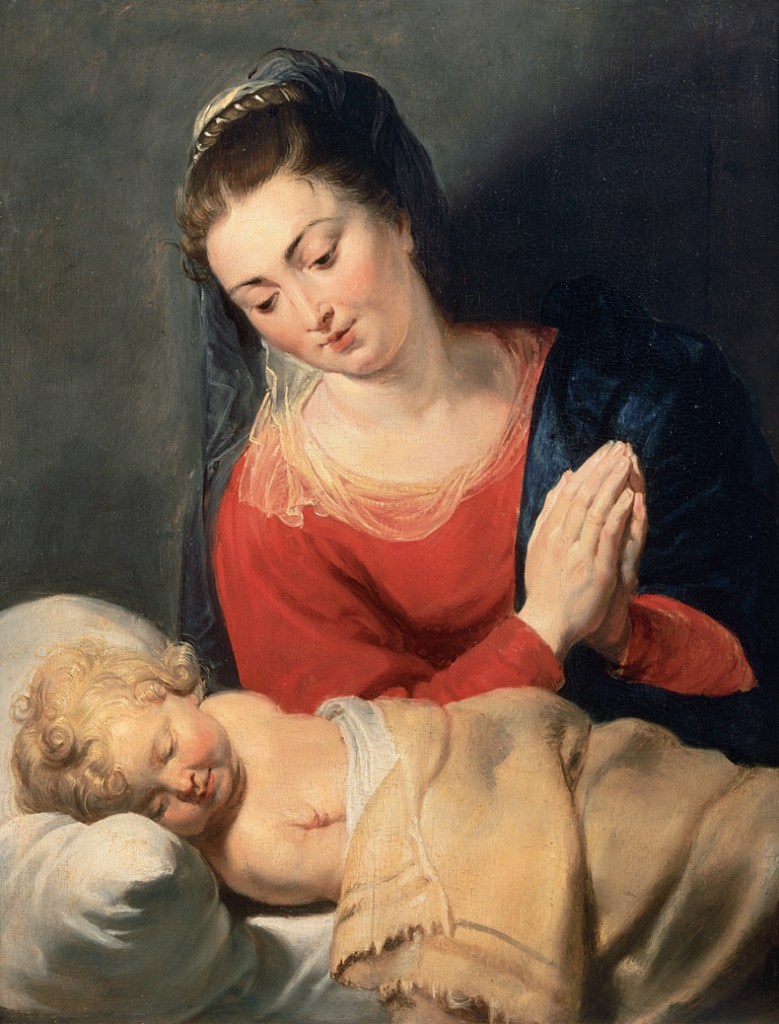
Mary in Adoration Before the Sleeping Child Jesus (c. 1616), Peter Paul Rubens
Snijders&Rockox House, Antwerp
In this small panel the Virgin Mary bends over the sleeping infant Christ in quiet devotion. The scene is intimate – no hovering angels, no theatrical scale, only a mother watching her child sleep. The work is thought to draw directly on Rubens’s own domestic life. His first wife, Isabella Brant, is believed to have modelled for the Virgin, and the sleeping child is likely his second son, Nicolaas. The blurring of the sacred and the personal gives the painting a particular warmth. Click here to find out more.
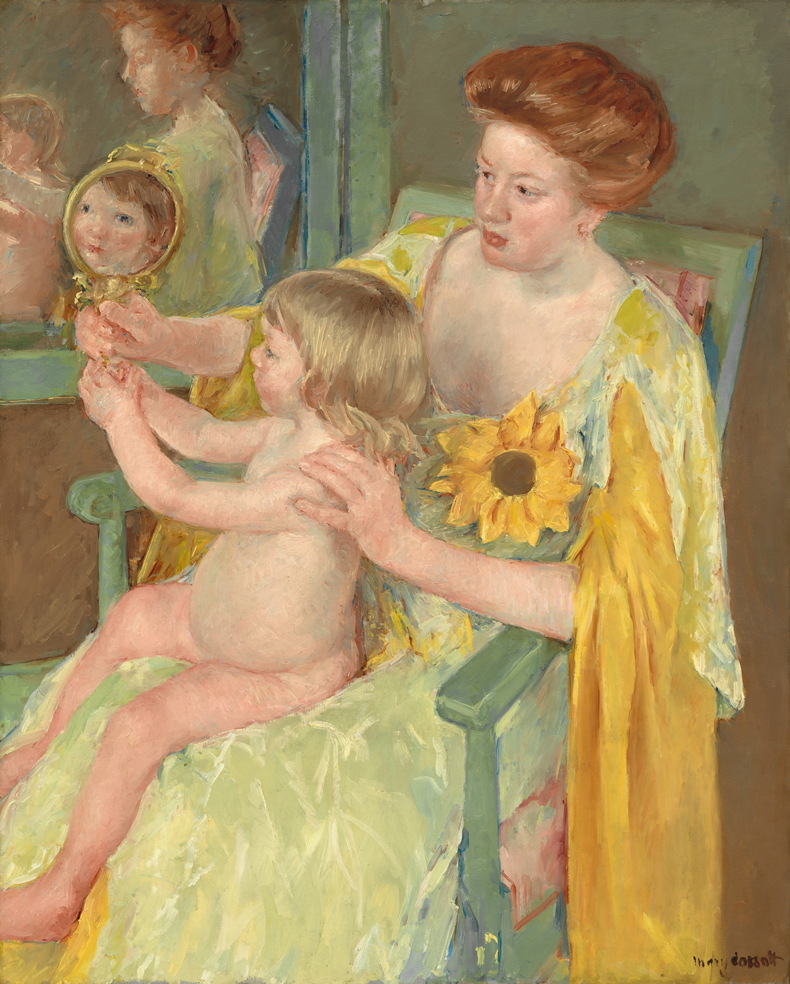
Woman with a Sunflower (c. 1905), Mary Cassatt
National Gallery of Art, Washington, D.C.
A woman and a young girl are seen in a moment of gentle instruction: the older figure, wearing a large sunflower at her breast, holds up a mirror so the child can see herself. The tiny mirror becomes the painting’s emotional centre. Cassatt was deeply involved in the women’s suffrage movement, and by 1905 the sunflower had become a widely recognised emblem of the US campaign for the vote. Its prominent placement here was almost certainly a way of embedding a radical political statement within a subject deemed appropriately feminine. Click here to learn more.
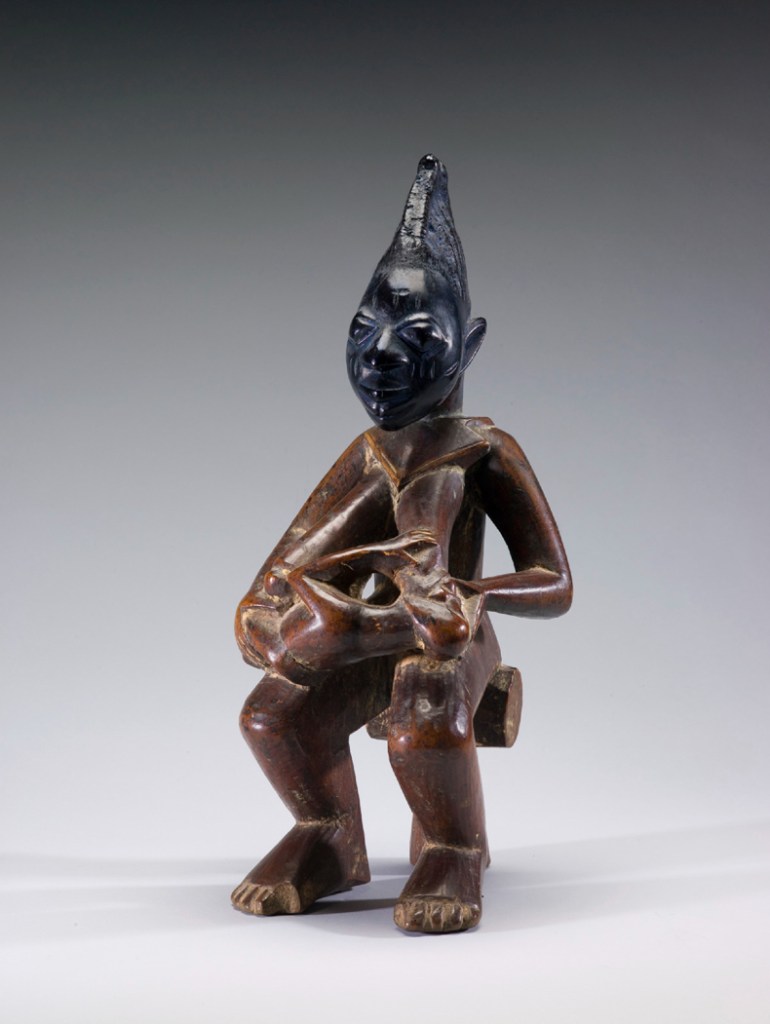
Figure of a Mother and Child (mid 20th century), Yoruba artist
Saint Louis Art Museum
This Yoruba maternity figure presents a mother, composed and dignified, as she nurses her child. The figure was made in devotion to Shango, the Yoruba god of thunder and lightning, who is also credited as the giver of children. Placed on an altar either in appeal or gratitude, it served a clear spiritual function. The application of indigo to the figure’s head was an offering intended to cool Shango’s fierce temperament. What might initially appear a tender scene of everyday nursing is also, in this context, an act of prayer. Click here to discover more.
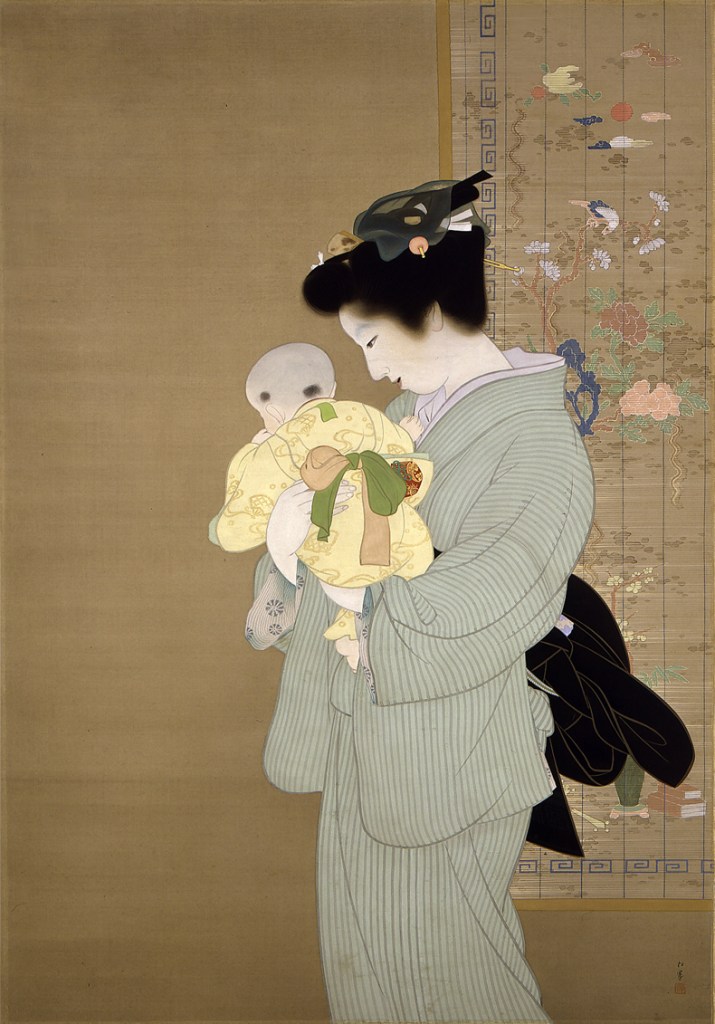
Mother and Child (1934), Uemura Shōen
National Museum of Modern Art, Tokyo
A baby leans forward and clutches its mother’s kimono at the collar. The mother draws the infant close, her gaze steady and warm. Uemura Shōen was a pioneering figure in modern Japanese painting and the first woman to receive the Order of Culture in Japan. Known for bijin-ga, she brought to the mother-and-child subject the same sensitivity to surface, gesture and psychological nuance that characterised her finest portraits. This work carries an additional layer of feeling: it was first shown at the Imperial Academy exhibition in the year her own mother died. Click here to read more.

‘Four things to see’ is sponsored by Bloomberg Connects, a free arts and culture platform that provides access to museums, galleries and cultural spaces around the world on demand. Explore now.