
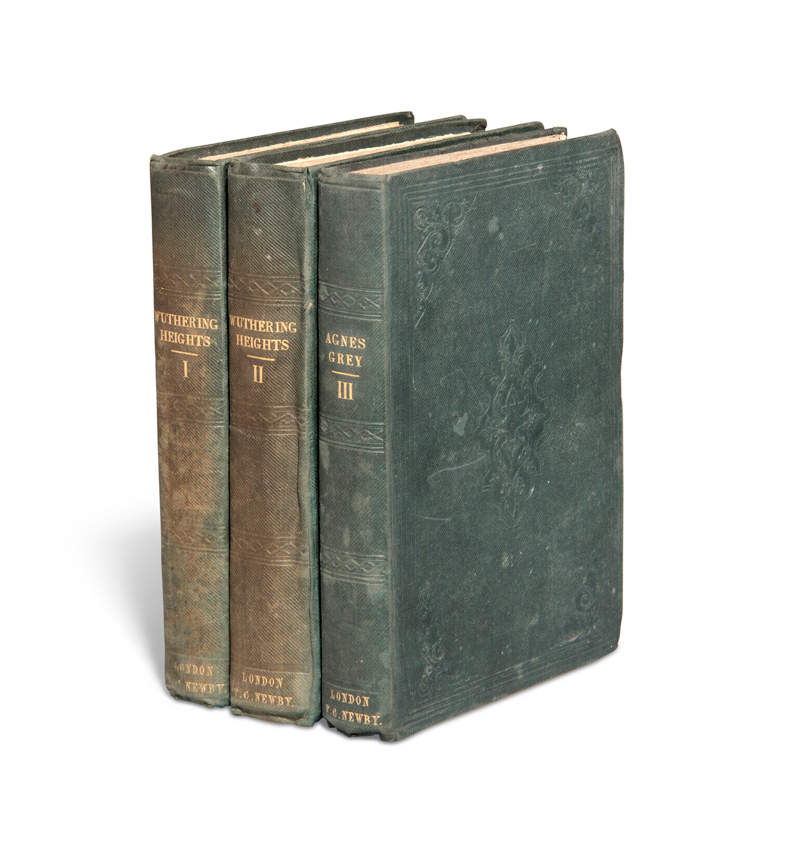
Rakewell may be a roué but, when it comes to spelling, grammar and punctuation, your roving correspondent tries always to be diligent. In the world of art and rare books, however, scruples can spoil the fun. A cloth-bound first edition of Emily Brontë’s Wuthering Heights (1847) is coming up for auction at Christie’s later this month, and part of its charm is the sheer number of typos that abound in its pages.
Wuthering Heights – and Anne Brontë’s Agnes Grey, which is included in the Christie’s lot – was rush-released by the London publisher Thomas Cautley Newby after the sensational popularity of sister Charlotte’s Jane Eyre. But, as Charlotte noted, ‘the books are not well got up – they abound in errors of the press.’ These include misnumbered pages, errant punctuation and, in several places, the title rendered as ‘WUTHERING HEGHTS’.
Rakewell can think of worse publishing mishaps, such as the time one printer accidentally interpolated pages from Sue Townsend’s The Secret Diary of Adrian Mole Aged 13¾ into copies of The Diary of a Young Girl by Anne Frank. And typos can spell trouble in the art world. Earlier this week the Italian ministry of culture lost a dispute with a Swiss company regarding a painting by the so-called Master of 1302. After a clerk recorded the work as dating to 1850 rather than 1350, the culture ministry granted it a certificate of free circulation, allowing the painting – then valued at €38,000 – to be acquired by a foreign buyer. But after Christie’s redated it to the 14th century and estimated it to be worth more than ten times that sum, the ministry tried to claw it back – to no avail.
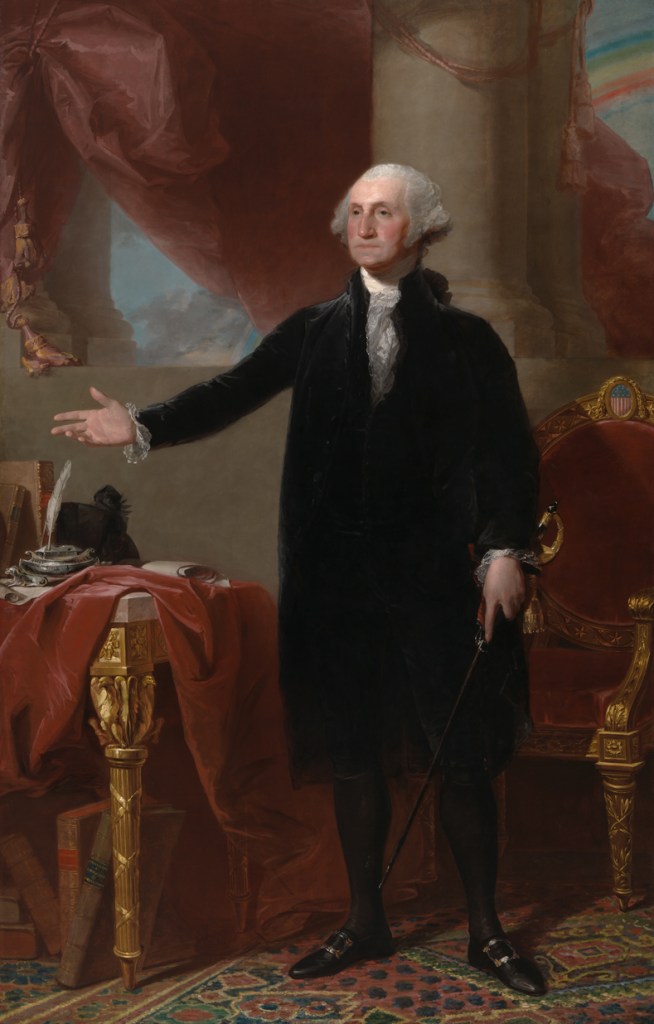
However disappointed the Brontës were by the errata in Wuthering Heights, the typos are part of the story of the Christie’s lot, and therefore part of the reason why the books are estimated to fetch £400,000–£600,000. In fact, some typos are deliberate. Think of Gilbert Stuart’s ‘Landsdowne portrait’, a full-length depiction of George Washington (1796): the artist painted it for the British prime minister William Petty, 1st Marquess of Landsdowne, but also painted a number of copies in which, on the spine of one of the books near the Founding Father’s feet, the name of the country is deliberately spelled ‘United Sates’, in order to distinguish the replicas from the original.
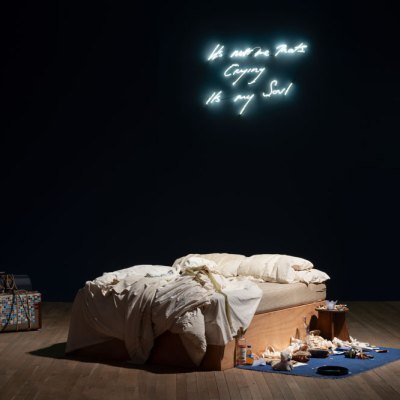
Typos – or perhaps we might call it heterodox spelling – play a role in contemporary art too. In the word-paintings he stencils on to canvas, Christopher Wool often omits vowels entirely, has little time for punctuation and inserts or elides spaces to make us think harder about what we’re reading. Tracey Emin, who is dyslexic, cocks a snook at orthography in paintings, tapestries and neon works, but with a different kind of intention: ‘I try to put the word down,’ she has said, ‘but if I don’t know it I don’t care.’
Those of us who celebrate the garbling of sentences, accidental or otherwise, can take pleasure in an exhibition that is on view until 6 September at the Sterling Memorial Library at Yale University. ‘Beauties of My Style’ takes its name from a letter James Joyce wrote to his editors shortly after the publication of Ulysses in 1922: yes, there were plenty of ‘printer’s errors’, but many of the other apparent mistakes were ‘not misprints but beauties of my style hitherto undreamt of’. There are plenty of delights in the Yale exhibition, including a corrective chit clarifying that Ken Knabb’s translation of Guy Debord’s Society of the Spectacle (1967) was not an ‘authorised translation’, as publicity materials had touted, but was very much unauthorised. There is also a book of Iowa maps that includes a note which reads:
Dear Sir, or Madam,
We goofed in the Appanoose County Plat Book.
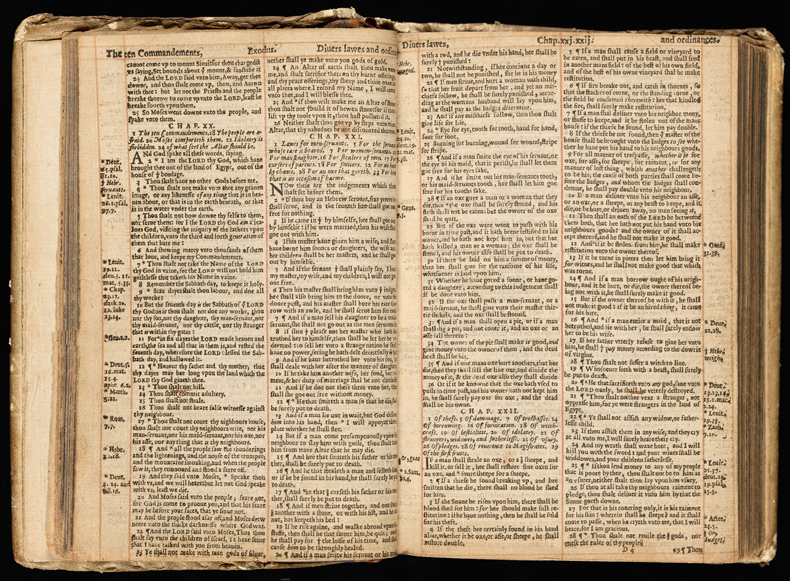
But Rakewell’s favourite erratum by far can be found in a Bible printed in 1631, in which the Seventh Commandment very clearly reads: ‘Thou shalt commit adultery.’ The printers’ licence was revoked, most of the thousand copies were destroyed and the edition has since become known as ‘the Wicked Bible’, but let that be a lesson: there are some typos that history will never forget.