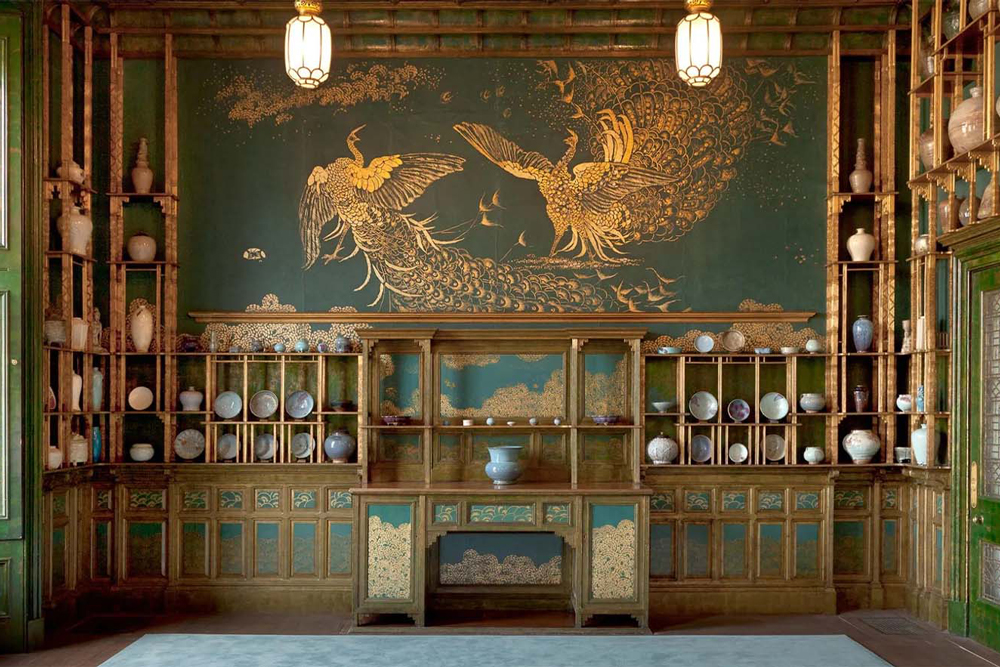
View of the Peacock Room (1876–77) by James McNeill Whistler. Freer Gallery of Art, Smithsonian Institution, Washington, D.C. Photo: © 2026 Smithsonian Institution

‘Four things to see’ is sponsored by Bloomberg Connects, a free arts and culture platform that provides access to museums, galleries and cultural spaces around the world on demand. Explore now.
Each week we bring you four of the most interesting objects from the world’s museums, galleries and art institutions, hand-picked to mark significant moments in the calendar.
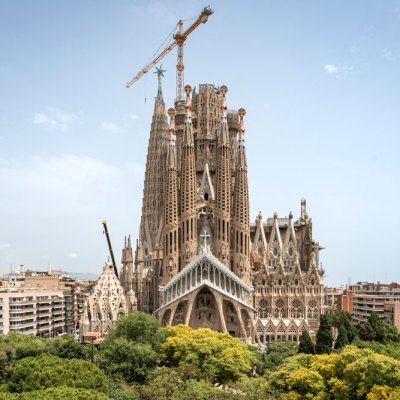
On 25 June 1852, 174 years ago this week, Antoni Gaudí was born in Reus, Catalonia. No other architect has done more to make buildings seem like living organisms. The undulating façades of Casa Batlló, the branching stone columns of the Sagrada Família and the lizard-encrusted terraces of Park Güell seem less like constructions than natural formations that have accreted over time. What distinguished Gaudí was not mere fondness for floral ornament but a conviction that nature’s engineering was superior. He studied how branches bear loads, how shells distribute stress, how bones are hollowed to save weight, and translated these insights into furniture and architecture.
Gaudí’s was the most radical expression of a wider impulse. Across Europe in the late 19th century, designers in every discipline were turning to biological forms for inspiration. Practitioners of art nouveau modelled their creations on nature in architecture, furniture, glass and the decorative arts. Here are four works that show how fertile this line of exploration has proven over the last century and a half.
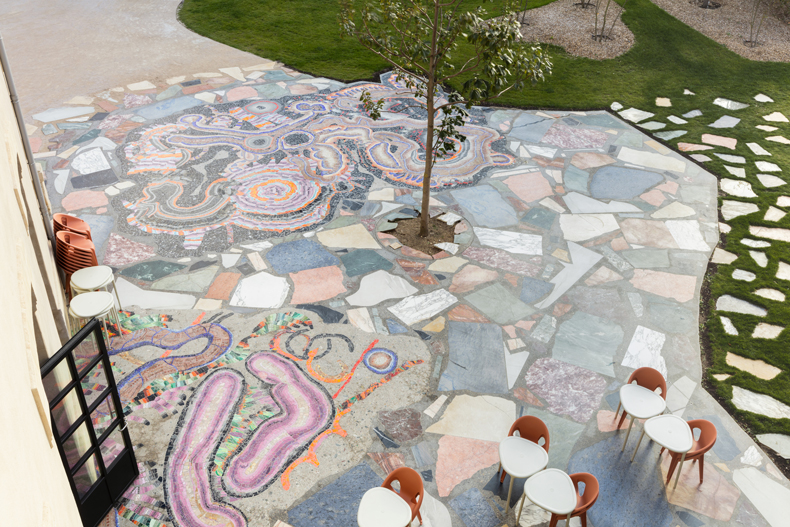
Memory (2021), Kerstin Brätsch
LUMA Arles
Seen from above, Kerstin Brätsch’s mosaic floor of the Café du Parc at LUMA Arles resolves into swirling biomorphic forms. Rendered in fragments of ceramic, glass and natural stone, the work spreads seamlessly from terrace to interior, with glass-topped tables allowing visitors to look down at the art beneath their feet. The title suggests that stone stores the earth’s deepest memories – geological time encoded in mineral form. Brätsch drew on the ancient Roman mosaics still visible in Arles, connecting the work to the city’s own layered history. Click here to learn more.
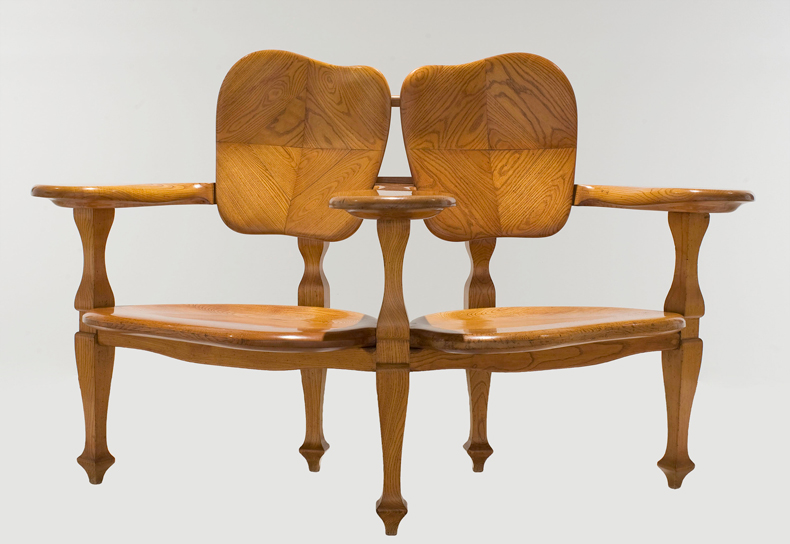
Confidant from Casa Batlló (c. 1904–06), Antoni Gaudí
Museu Nacional d’Art de Catalunya, Barcelona
This two-seater, carved from ash, curves and swells as though it had been moulded around the bodies it was built to hold. Gaudí designed it for the dining room of Casa Batlló in Barcelona, and it reveals another side of his debt to nature: structural inspiration rather than floral ornament. Eschewing upholstery and surplus decoration, Gaudí let the grain of the ash carry the effect, and the result might be considered a forerunner of ergonomic design. Click here to discover more.
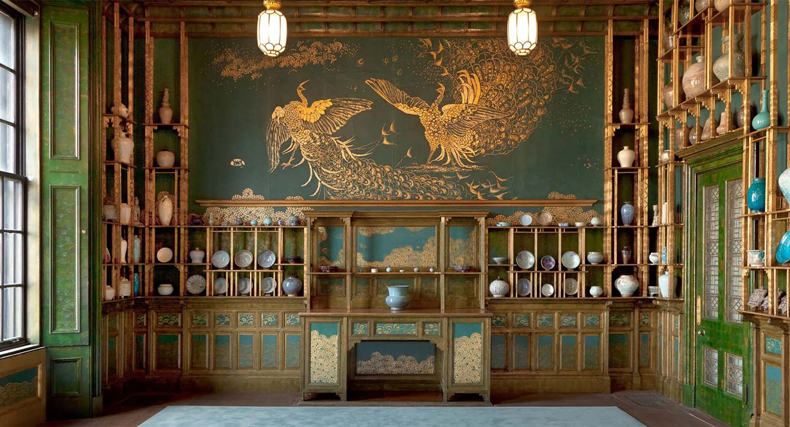
Peacock Room (1876–77), James McNeill Whistler
Freer Gallery of Art, Smithsonian Institution, Washington, D.C.
Painted in blue-greens with gold leaf – a palette borrowed from East Asian art – Whistler’s room surrounds its occupant with stylised peacock feathers, blossoms and gilded birds; two great peacocks face each other above the sideboard in a confrontation that is heraldic and theatrical. Whistler was commissioned to touch up the existing leather wall coverings of a London shipping magnate’s dining room in 1876, but kept going until he had repainted the entire room. His patron was furious, but the room survived, eventually travelling to the Freer Gallery, where it has been on display since 1923. Click here to read more.
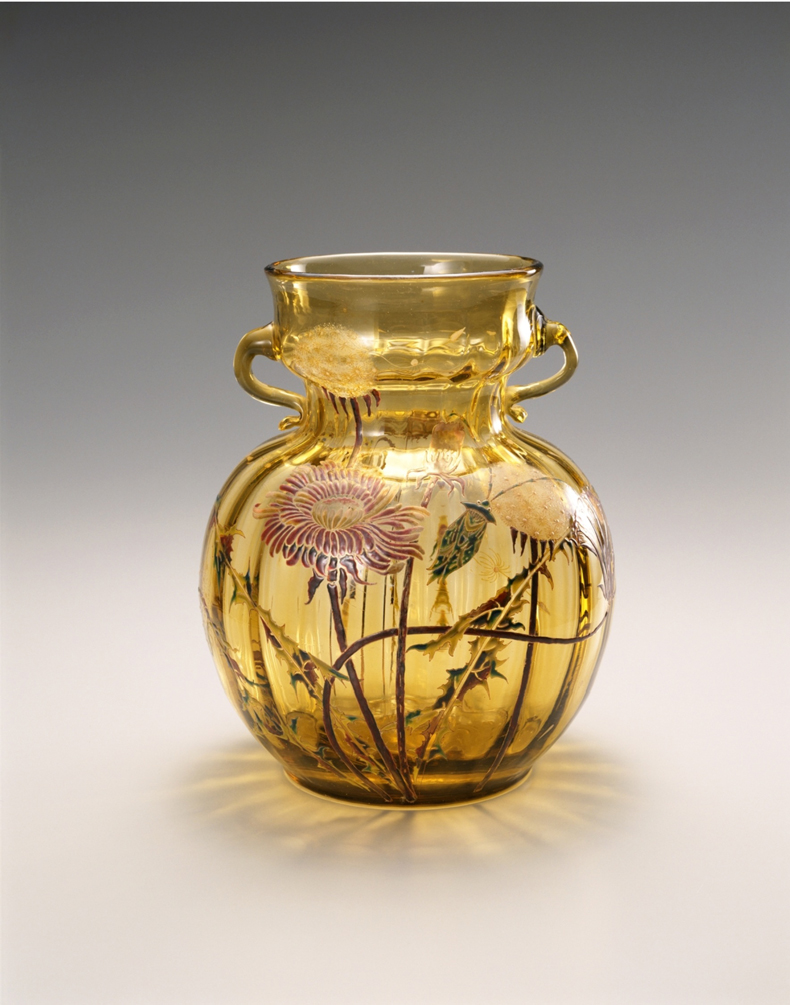
Two-handled vase with dandelion design (1890s), Émile Gallé
Pola Museum of Art, Hakone
A rounded glass body carries an enamelled decoration of dandelions at every stage of their life. The subject is characteristic of Émile Gallé, the designer who transformed glassmaking by incorporating influences from botany, Japanese art and Symbolist poetry. Where others favoured roses or irises, Gallé was drawn to plants that were widely seen as weedy or commonplace, finding beauty where conventional taste had passed over it. The dandelion’s seed-head carries its own symbolism – impermanence, dispersal, regeneration. Click here to find out more.

‘Four things to see’ is sponsored by Bloomberg Connects, a free arts and culture platform that provides access to museums, galleries and cultural spaces around the world on demand. Explore now.