Princeton University Art Museum
34 paintings by 20th-century Haitian artists
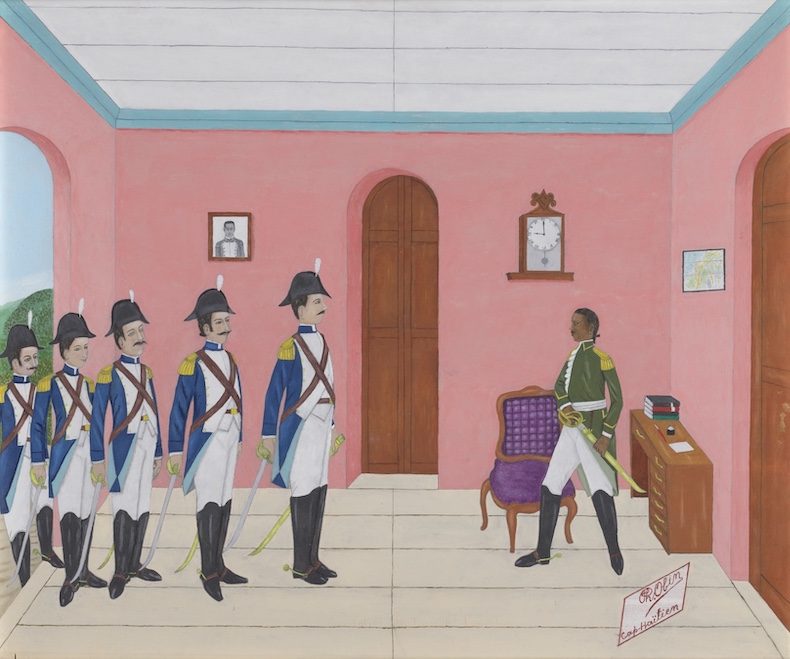
The art collector Kay Heller began to grow interested in Haitian art in the 1980s, when she worked in a mission hospital in Limbé in the north of the country. Since then she and her husband, J. Roderick Heller, have built up an enviable collection of mostly 20th-century Haitian art, much of which they have donated to museums including the National Gallery of Art in Washington, D.C., and the Tampa Museum of Art. The couple have chosen J. Roderick’s alma mater, Princeton University, as the recipient of their latest donation, a group of 34 paintings by Haitian artists mostly associated with the Centre d’Art in Port-au-Prince, which has trained, supported and exhibited artists since it was established in 1944. Highlights include three paintings by Rigaud Benoit, an early member of the Centre d’Art and one of Haiti’s most beloved painters, and a work by Philomé Obin depicting the arrest of Toussaint L’Ouverture, the hero of the Haitian Revolution, by the French authorities in 1802.
King Baudouin Foundation/Rubenshuis, Antwerp
Drawing and letter by Peter Paul Rubens
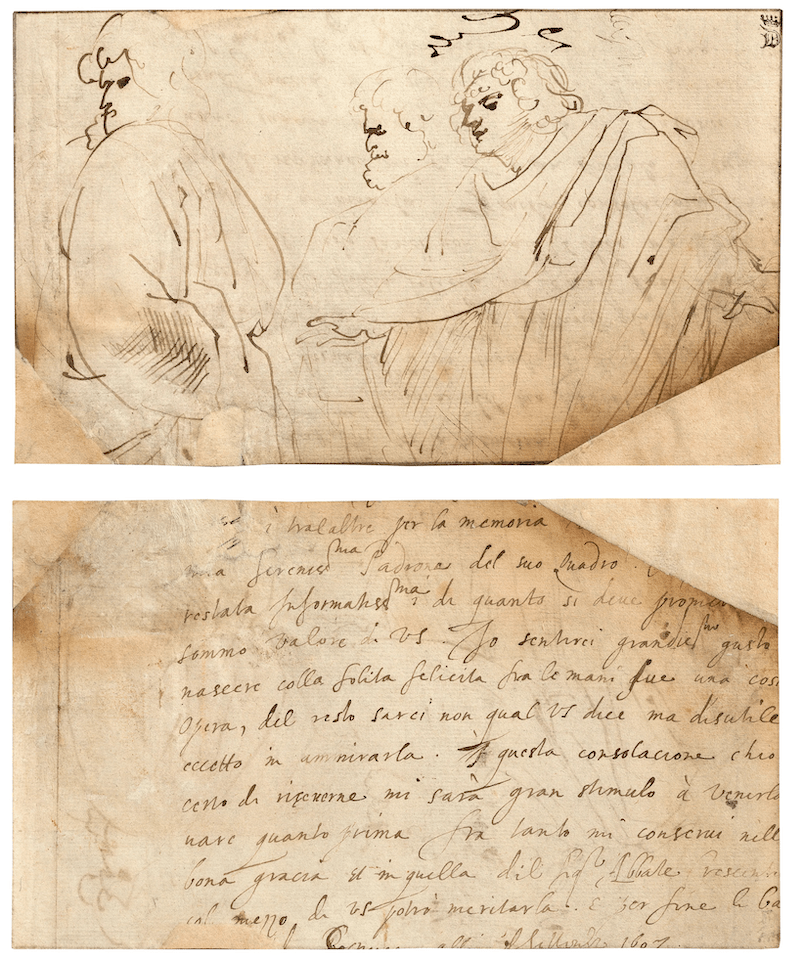
The King Baudouin Foundation, which supports cultural and philanthropic projects in Belgium, has announced its acquisition of a rare double-sided sheet by Rubens that dates from the time he spent in Rome in the 1600s. On the front of the sheet is a sketch of three men, perhaps apostles, while the back contains a handwritten draft of a letter, dated September 1607, to Cristoforo Roncalli, an Italian artist who had been commissioned by Eleonora de’ Medici – also one of Rubens’s patrons – to paint a work for her chapel in Mantua. The letter, in which Rubens asks Roncalli how the painting is coming along on behalf of his ‘most serene mistress’, shows the extent to which Rubens became something of a diplomat and mediator during his time in Italy. The sheet is owned by the foundation but will be on long-term loan to the Rubenshuis, which is in the middle of renovations and hopes to reopen in 2030. It is currently on display at the Rubens Experience – part of the museum that remains open – but will be moved to the house itself when the renovations are complete.
Fitzwilliam Museum, Cambridge
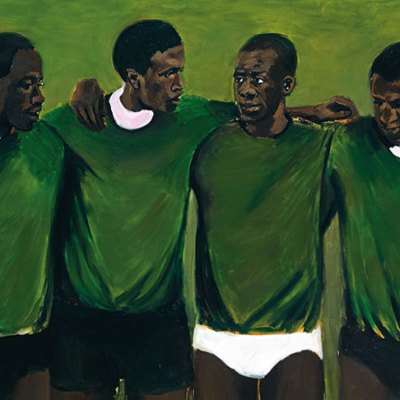
Flamingo (2024), Lynette Yiadom-Boakye
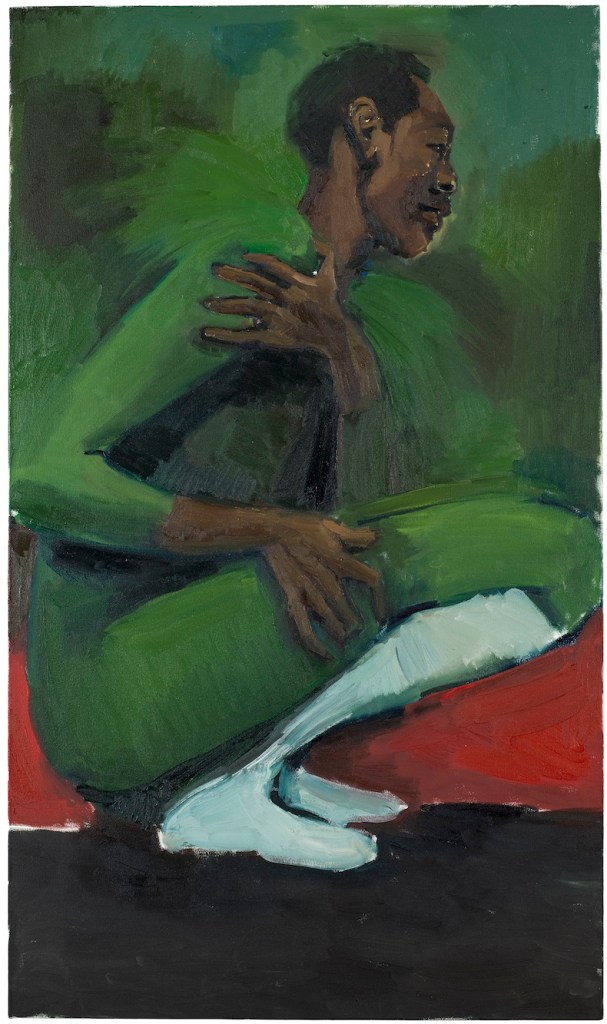
Since the appointment in 2021 of Habda Rashid as its first ever curator of contemporary art, the Fitzwilliam has been expanding its collection of new works, acquiring, over the last few years, paintings by artists including David Hockney, Shaqúelle Whyte and Kerry James Marshall, as well as ceramics by modern and contemporary studio potters. Its latest contemporary acquisition is Flamingo, a painting by the British artist Lynette Yiadom-Boakye of a crouching Black figure, with gestural brushstrokes around the man’s shoulders suggestive of historical dress, or perhaps wings. The work was painted in 2024 and has not been exhibited before; it can now be seen in Gallery 3, which since the Fitzwilliam’s rehang in 2024 has been themed around the concept of identity and includes work spanning three centuries, from Gainsborough to Marshall.
Virginia Museum of Fine Arts, Richmond
2,000 photographs from 19th–21st centuries
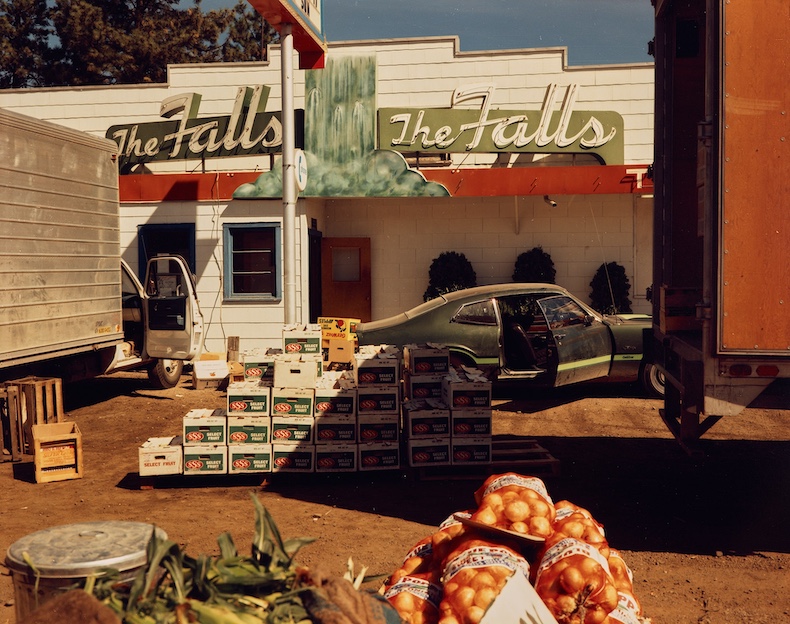
The Virginia Museum of Fine Arts, known primarily for its holdings of American art and of Fabergé objects – one of the largest outside Russia – has in recent years been adding to its collection of photography, and is currently in the middle of a long-term expansion project that includes a new series of photography galleries, scheduled to open in 2027. Joy of Giving Something, the foundation that manages the photography collection assembled by the financier Howard Stein and his wife, Janet, has donated almost 2,000 works to the museum for its new galleries. The range is startling, from daguerreotypes by early practitioners of the technique in the mid 19th century to modernist works by Alfred Stieglitz, Man Ray and Dora Maar, as well as 20th-century documentary photography and works by contemporary artists including David Goldblatt and Cindy Sherman.
Van Gogh Museum, Amsterdam
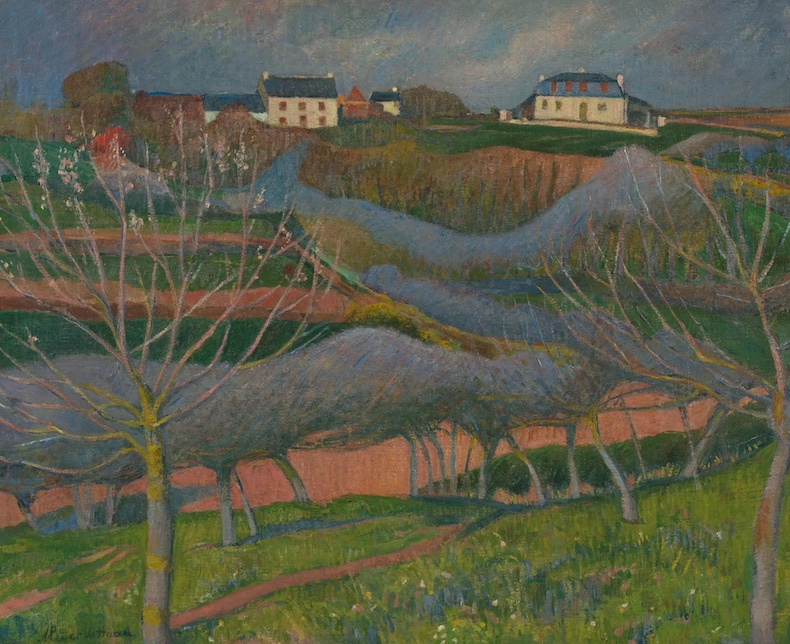
The Valley of Kerzellec, Le Pouldu (1890), Meijer de Haan
The Dutch artist Meijer de Haan started his career as a painter of historical scenes, portraits and Jewish life in Amsterdam, in a realist style that looked back to Dutch masters such as Rembrandt and David Teniers the Younger and was approved of by the Paris Salon, which first exhibited his work in 1879. In 1888 de Haan travelled to Paris, where he stayed with Theo Van Gogh and struck up a friendly correspondence with Vincent, before meeting Paul Gauguin and spending time with him over the next two years in Brittany. It was during these years that he drew on the example of the Impressionists and Post-Impressionists, his work subsequently becoming much more experimental in its use of colour and form, a shift perhaps best represented by a Van Gogh-esque self-portrait de Haan painted in 1890, which was stolen from the Kunsthal Rotterdam in 2012 and has never been recovered. The Valley of Kerzellec, Le Pouldu (1890), recently acquired by the Van Gogh Museum, is a depiction of the village where de Haan and Gauguin stayed – and which Gauguin also depicted several times, notably in Harvest: Le Pouldu of the same year, now in the National Gallery in London.