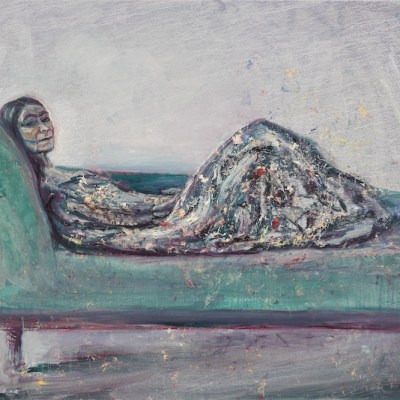
From the July/August 2026 issue of Apollo.
It’s rare that one can describe a show of British post-war painting as ‘revelatory’, but that’s precisely how I felt about the Michael Andrews show at Gagosian’s Grosvenor Hill space in London in 2017. I’d last come across his work at the painter’s retrospective at Tate Britain in 2001: staged six years after his death, it was dutiful in the extreme, framing him as a worthy British landscape painter and a junior partner in the sextet of artists who formed the so-called School of London.
This, however, was different. The exhibition set most of his major works into an impeccably blue-chip context, the art world’s equivalent of the luxury fashion boutique. Tasteful it wasn’t, but it invited us to judge Andrews in the same light we might Twombly, Picasso or Rauschenberg, freeing the paintings from the parochial associations hitherto attached to them. And in every possible respect, its subject came out on top.
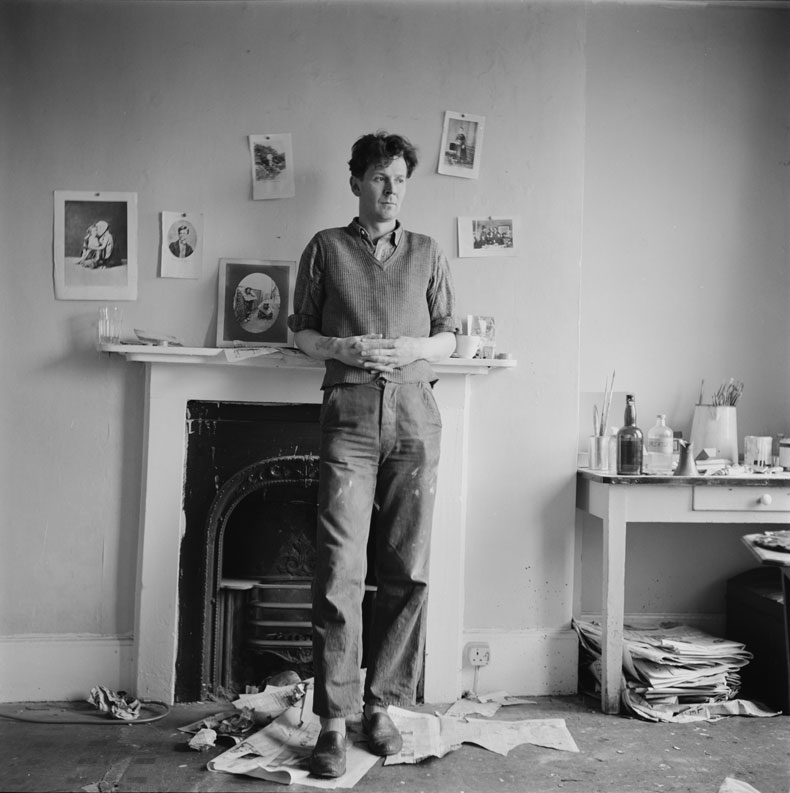
Almost a decade on, Christopher Lloyd’s book on Andrews arrives bearing two subtexts: first, that Andrews was a distinctly British painter, rooted in place and custom; second, to cite a supporter quoted in the text, when Norwich Castle Museum & Art Gallery threatened to sue him for late delivery of a picture, that he was ‘not only a local Norwich artist, but also one of international standing’.
If that sounds like something with which Alan Partridge might identify, don’t be fooled. Born in Norfolk in 1928, Andrews grew up in a pious Methodist household but encountered little hostility when he announced his plans to become an artist. He studied at the Slade under William Coldstream and hesitantly dove into the loucheness of London’s contemporary painting scene. Tall and thin, ‘he walked with an animated lope, almost as if his limbs were attached to the strings of a puppet-master,’ recalled one fellow student. ‘He was the most polite painter I ever met,’ another says. ‘Even when he was engaged in some drunken and passionate debate he would always apologise for swearing.’
Andrews’s paintings almost all depict recognisable imagery and often recognisable places: most famously, Soho’s Colony Room, but also Brighton’s two piers, Waterloo Bridge, Uluru and the Toronto skyline, to name a few. Yet they also suggest the fluid passage of time, many containing figures depicted at different scales to defy naturalistic perspective.
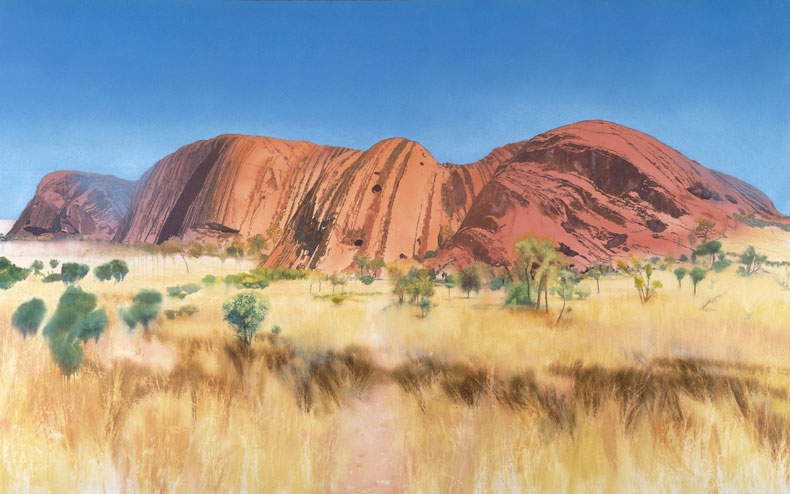
Looking at the pictures from his Lights series of the early 1970s – perhaps his finest body of work – one might detect that the artist was more than a little susceptible to a touch of the woo-woo: something confirmed by Lloyd, who affirms that, even while holding them at arm’s length, Andrews showed a keen interest in the voguish metaphysical texts of his time.
He worked slowly, producing pictures at a rate that could have been considered sloth-like. Yet while Bacon, Freud and even Auerbach would often trot out paintings that verged on self-parody, Andrews, to paraphrase Lawrence Gowing, produced only works that were, if sometimes not quite masterpieces, then never less than fascinating. Lloyd explains why: Andrews would make any number of preparatory sketches, painstakingly storyboarding his compositions until he felt he had the essence of a complete image.
He was all-embracing, incorporating elements sourced from 19th-century etchings, trashy magazine articles or works of art he held up as totems. In one instance, when painting the ornamental gardens at Drummond Castle in Scotland, he somewhat bizarrely chose to disrupt the foreground with four figures in profile, based on the sinister anthropomorphic costumes worn by the Beatles on the cover of their Magical Mystery Tour album (1967). Who knows? Perhaps he felt the record’s lysergic strangeness chimed with the essence of his own corpus.
Andrews’s painting never quite fit within any dominant style: there are moments where it threatens to descend into the claustrophobic miasma of the ‘kitchen-sink’ aesthetic of John Bratby – look at Man in a Landscape (‘The Digswell Man I’) of 1959, for instance. More often, it comes close to Peter Blake-ish British Pop painting, as exemplified by The Deer Park (1962), which somehow works likenesses of Brigitte Bardot, Marilyn Monroe, Ian Fleming and the young Arthur Rimbaud (a key reference) into a chaotic interior/exterior scene replete with a twisting staircase and a landscaped park.
The book itself contains a complete summary of Andrews’s career, sufficiently sparse to fit into a 300-page monograph. Lloyd’s text, meanwhile, is accompanied by full-colour plates of the works in consideration and positively slips by. Taking all the painter’s works in turn, it is authoritative, impeccably sourced and often downright gossipy. Even if you’re not familiar with Andrews’s art, the excellent reproductions thereof will provide a pressing incentive to read about his working methods and life.
If you really need proof of Andrews’s singularity, look to Britain’s public collections. The Tate’s Melanie and Me Swimming (1978–79) is at once a fabulous self-portrait, an unsentimental yet touching depiction of a child, and a masterclass in capturing the distortions of a body in water.
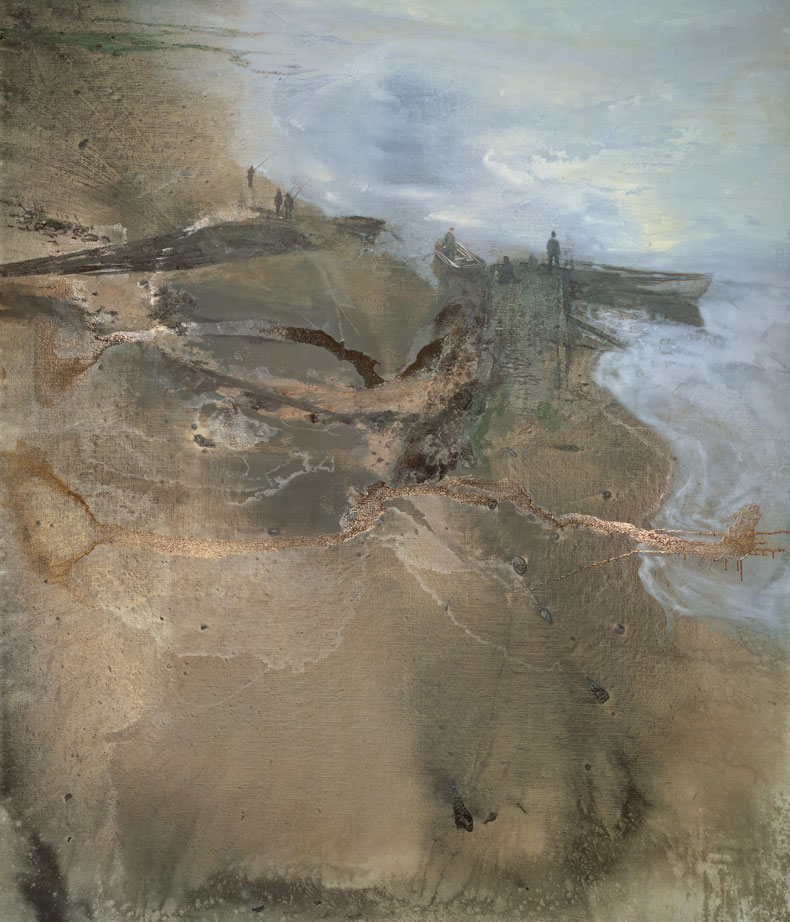
Better still is Thames Painting: The Estuary (1994–95), now in the collection of Pallant House Gallery in Chichester and the clear highlight of its current British landscape exhibition. Completed just before the artist’s death in 1995, it distorts the banks of the eponymous river into a Stygian launching stage. It may well be the most powerful – and terrifying – picture in the whole of our national collection.
Michael Andrews: Painter of Masterpieces by Christopher Lloyd is published by Modern Art Press.
From the July/August 2026 issue of Apollo.