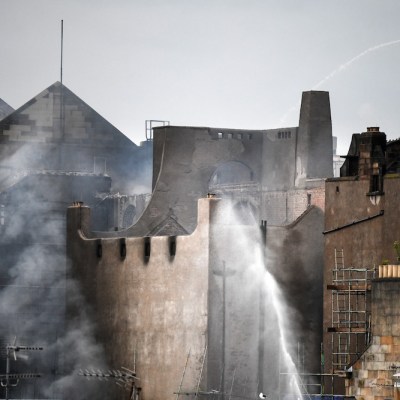
After a few years of uncertainty, there was a flurry of news this week regarding the future of Charles Rennie Mackintosh’s Glasgow School of Art (GSA). In case a reminder was necessary, the art nouveau building known as the Mack – one of the most important works of world architecture from the turn of the 20th century – suffered a partial fire in 2014 and then in 2018, shortly before reopening, a far more destructive fire. Since then it has been hidden behind a scaffolded sheath and, despite stated intentions to ‘faithfully reinstate’ the building, its fate has remained in limbo.
The Sunday Post got in first, reporting that the school had ‘scrapped plans to fully restore’ the building and that instead it was about to propose preserving the facades and constructing a new building behind them. Anyone with even a passing interest in British architecture will recognise the scourge of ‘facadism’, but surely not for a genuine Gesamtkunstwerk? Responses were understandably shocked.
The GSA put out a tetchy press release in response, but the report it published a few days later is only a little less depressing. Essentially, the GSA does not have anything like the means to deliver a ‘faithful reinstatement’ of the Mackintosh building, the estimated cost of which is now £265m, three times its total annual turnover. In the meantime, it proposes to start replacing the temporary works with more permanent support structures, in order to provide a stable base from which to do… whatever it is that will eventually happen to the building. Various options have been very lightly sketched out, ranging from stabilising the remains – who doesn’t love a ruin, after all – to the original goal of full restoration.
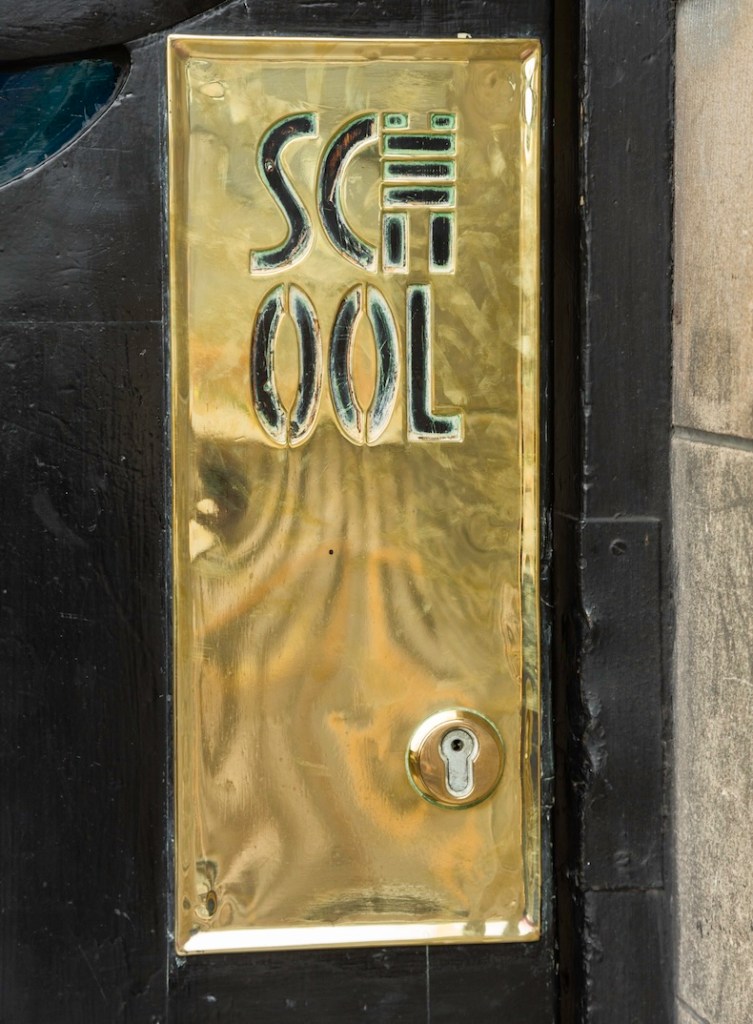
Over the years certain voices have become familiar commenters on the Mack’s fate and their positions, splashed over front pages, haven’t really changed with the latest news. The architect Alan Dunlop is still advocating for a new design to replace the destroyed parts of the building, while Paul Sweeney MSP, a tireless campaigner for Glasgow’s heritage, has called for government to step in to make up the shortfall, describing it as a ‘national project’.
While the immediate proposal to get at least some work done is obvious and sensible, the rest of the GSA’s report unfortunately runs off into managerial gobbledegook that attempts to hook the fortunes of the building to the economic impact of the creative industries – a fool’s errand at the best of times – and also make it part of a ‘supercluster’ of cultural organisations. This wishy-washy regeneration-speak misses the point, which is that the Mack is an important part of the world’s cultural heritage.
Reading between the lines, much of the report seems to be quietly pleading that the GSA, embroiled in the same higher education crisis as every other institution, should not be leading this project. When you’re only ever a couple of bad years of recruitment away from collapse, it’s not a good time to be trying to manage the restoration of a vital piece of architecture, with no immediate return or even discernible impact on your National Student Survey results.
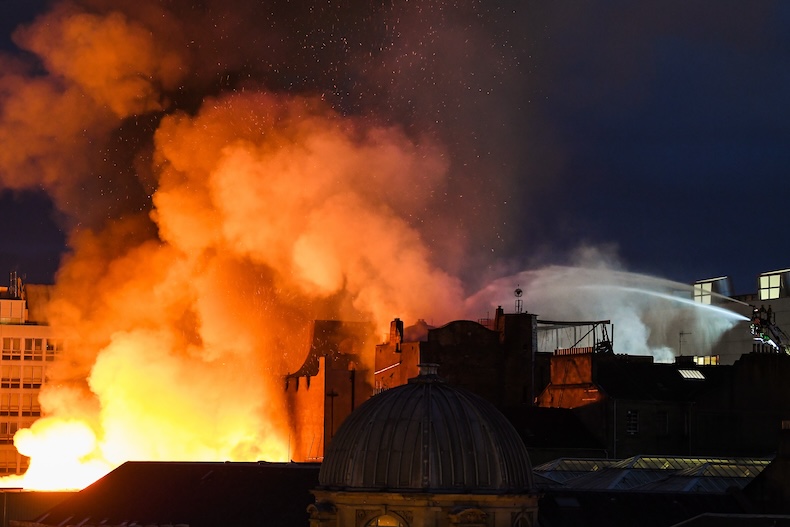
The obvious solution is that government has to become part of, or simply take over, the project. But there are many ill omens – the Scottish government has a history of botched procurement, from the ten-times-over-budget Scottish Parliament building to the ongoing CalMac ferry fiasco. More locally, Glasgow buildings continue to be hit by fires – the most recent being Union Corner, built in 1851, right next to Central Station – while developers still get away with outrageous attacks on heritage, such as applying for (and receiving) permission to demolish the Hillhead Baptist Church (1883) to make way for flats. Even the arts, for a long time a key part of Glasgow’s success story, seem wobbly: Glasgow’s Centre for Contemporary Arts, just around the corner from the Mack, closed this year and is currently for sale.
The answer seems obvious, but it’s shocking that it’s even come to this. If nobody takes charge, the building will be botched, Glasgow will be humiliated, the UK’s inability to procure anything will become even more excruciating and the world will lose one of the most wonderful works of architecture, forever.