Early on the morning of 2 November 1969, the SS Orcades pulled into Sydney Harbour with three unsettled Australians on board: the artist Brett Whiteley, his wife Wendy and their daughter Arkie, who was about to turn five.
Their journey home had been an ordeal. Having spent the decade in London and then New York, the dream had been to settle in Fiji. But it was not to be. Writing from the ship with ‘a bath of bubbling sulphur in my head’, Brett told his mother that their pursuit of paradise was over. There had been a misunderstanding over some opium. The authorities had Brett ‘over a barrel.’ The family had no choice but to head home to Sydney after only a few months in Fiji. As he travelled south, he wrote: ‘What will Australia, my breeding ground, my stupidity, my cradle give me?’
Reporters were on hand to document their arrival, as were family, friends and inquisitive customs officers. The trio was photographed for the local paper while still on board. They looked, according to one observer, like travellers from the age of Aquarius.
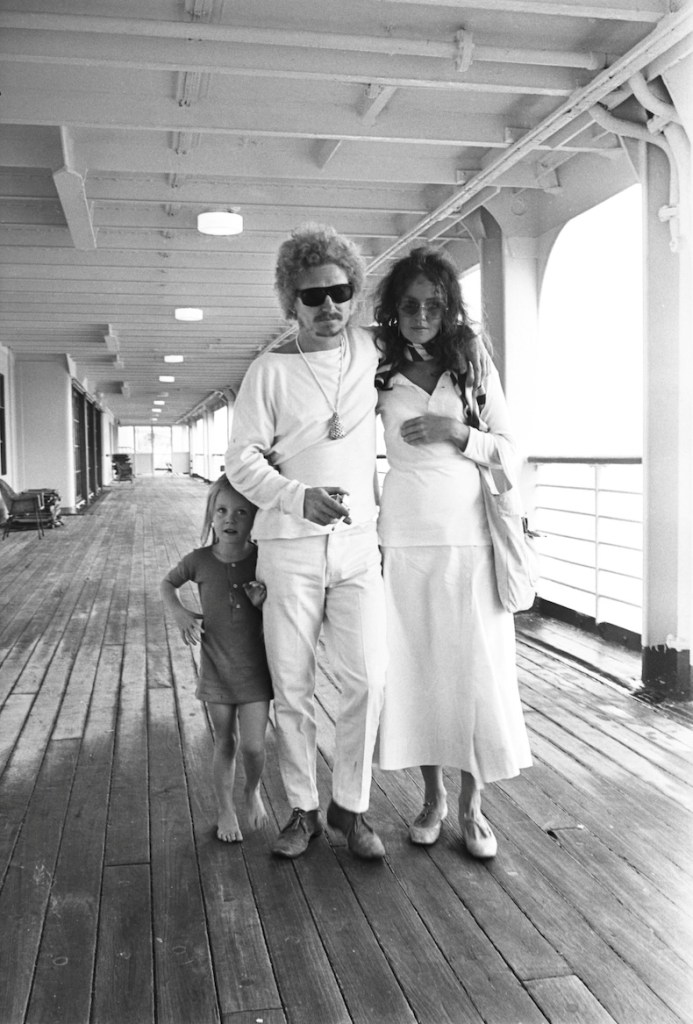
More than five decades on from that day – and 34 years after his death – a large version of that same photograph greets visitors who enter the playfully anarchic building that bears the artist’s name. The Brett Whiteley Studio, managed by the Art Gallery of New South Wales (AGNSW) since 1995, has just opened to the public after two years of renovations, and the result is an exuberant reaffirmation of the artist’s talent.
Much of the work was necessary and overdue: a new roof, a new staircase, a lift, accessible amenities and so on. Regular visitors might notice some of the more subtle changes, including the relocated kitchen, the removal of a supporting beam downstairs and the research room with its aesthetic nod to the home across the harbour in Lavender Bay where Wendy still lives. Taken together, these upgrades bring the space up to code and give it a renewed sense of freshness and purpose.
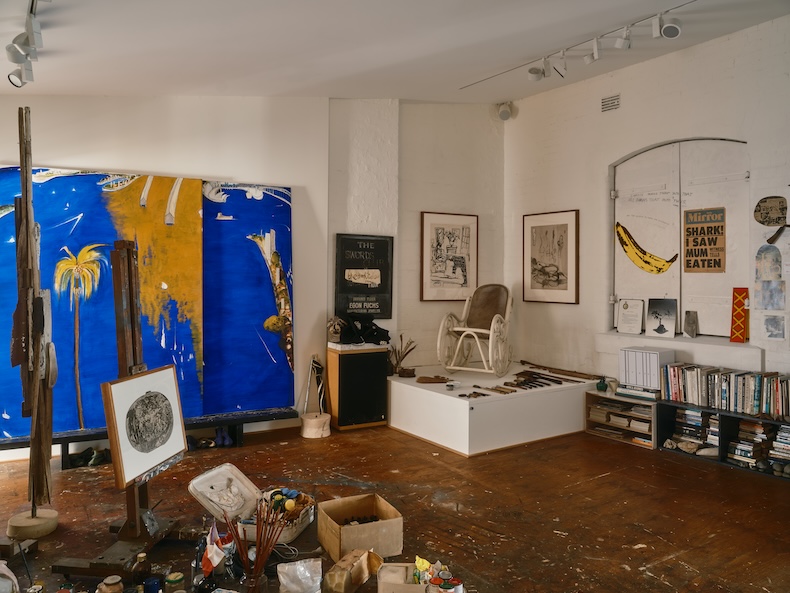
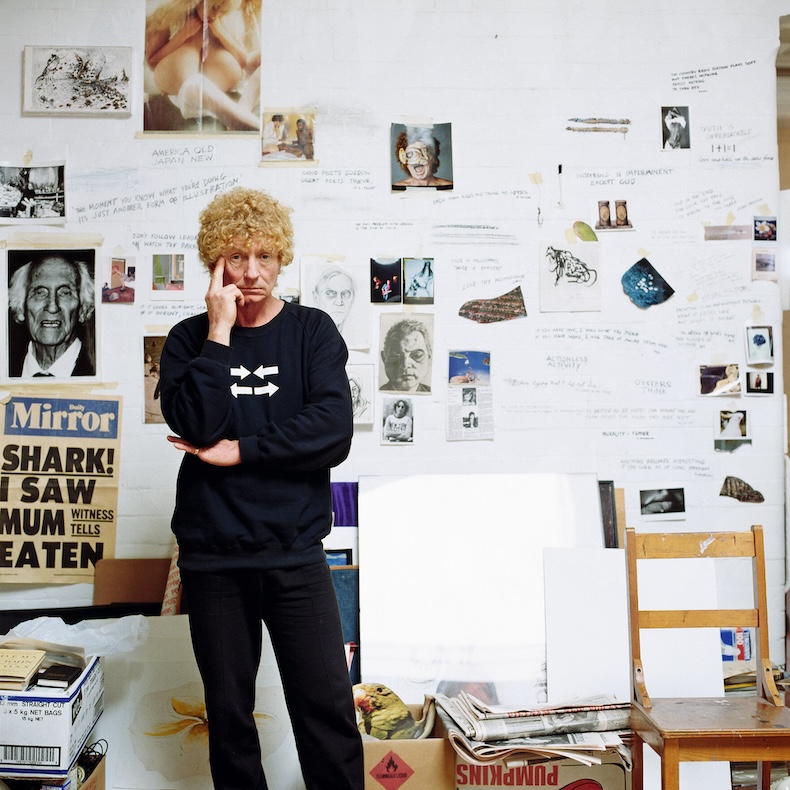
In important ways, this is the same studio. The workspace upstairs is still more or less the same as Whiteley left it, with the scattered paints and records and scribbles on the wall. The photos still track his preoccupations and passions, from Bob Dylan and Dire Straits to Rimbaud and Lloyd Rees. (In a remarkable feat of reanimation, all these items were carefully documented, removed for renovations then returned to their exact spot.)
This is, after all, one of the functions of this space: a time capsule of sorts devoted to one of Australia’s best-loved artists. Whiteley bought the building in 1985, having been alerted to its availability by a nearby gallerist. He worked there and eventually lived there until his death in 1992.
The studio would be an expensive indulgence if it existed solely as a relic. It’s Brett’s art but Wendy’s vision, and she treats it as a living, breathing space. She knows that its potency and relevance are tied to the creative energies that bring it to life throughout the year. As well as events such as drawing classes and performances, the curatorial team presents an evolving series of exhibitions that document different parts of Brett’s practice. And few are more revelatory than the one that is on now to mark the studio’s reopening.
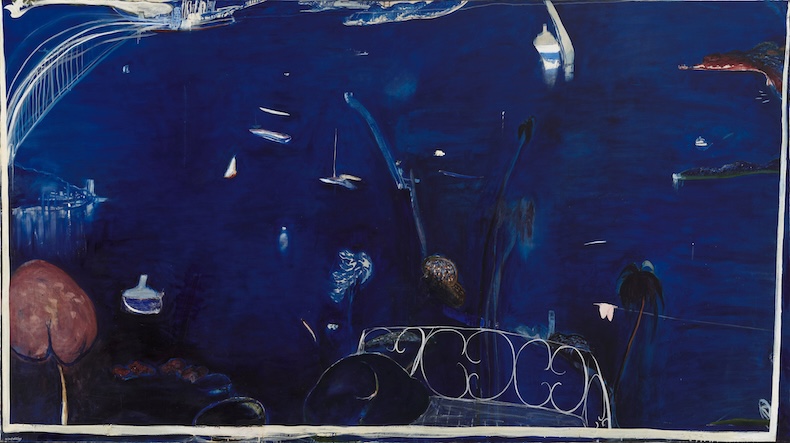
‘Brett Whiteley: Coming Home’ covers Whiteley’s journey from Fiji in the late 1960s to Sydney in the ’70s, when he re-established himself in his home town. It features some of his best-known creations, including Big orange (sunset) (1974), Self-portrait in the studio (1976) – winner of that year’s Archibald Prize – and The balcony 2 (1975), a masterpiece that has delighted thousands of visitors to the AGNSW with its rich ultramarine and now-familiar harbour outlook. These are some of the works that brought Whiteley such renown during his life, a reputation that has only grown in the years since.
A seductive sweep of Sydney suburbia greets the visitor at the top of the stairs, while the sensual wooden sculpture series Her is downstairs. Back on the ground floor is Alchemy (1972–73), an 18-panel whirlpool of imagery and symbols, of which Whiteley once said: ‘I believe that every person has buried deep within their head a little microfilm of intense visions of their whole life.’
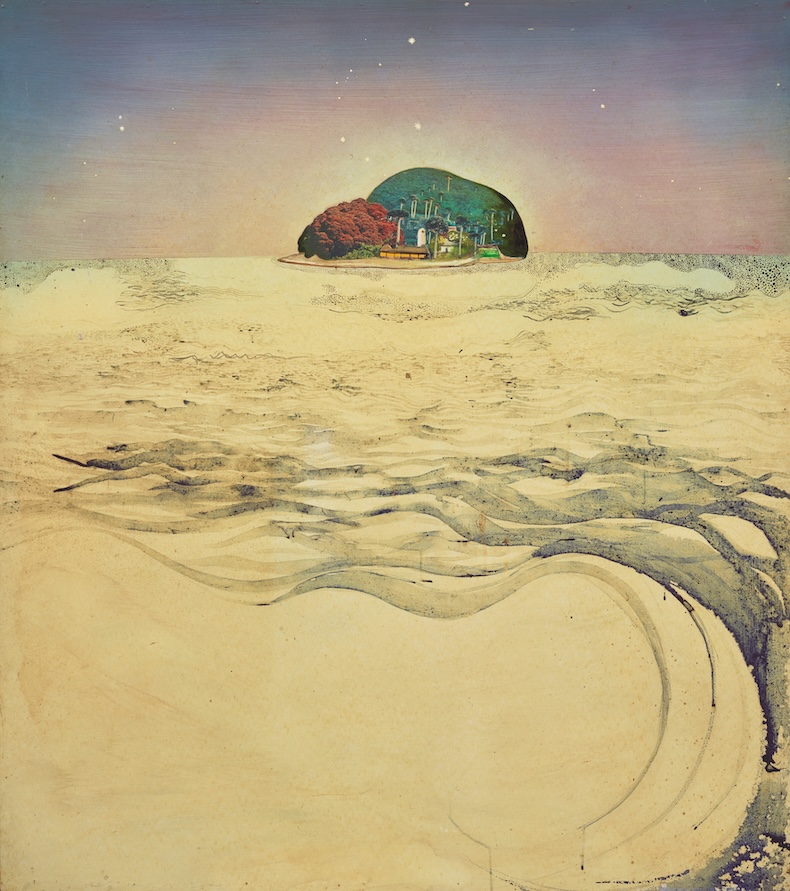
And then there are works that even seasoned Whiteley watchers will be seeing for the first time. Last day blue harbour, an unfinished painting from 1991–92, announces itself upstairs with a rush of line and colour. Nearby, there’s a meditation on the 12 steps of Narcotics Anonymous, no longer concealed in a private room. Downstairs are several scenes from that Fiji idyll, all of them washed with an intoxicating sense of calm and abundance. This is the optimism of a man who has just found his Eden, a state of being that will not last. One of the most striking is The island (1967), a picture of peace and beauty, along with a disquieting hint of turbulence within.
‘Brett Whiteley: Coming Home’ is at the Brett Whiteley Studio, Sydney, until 2027.