
It was with a sense of weariness that your correspondent greeted the news about Westminster Council’s plan to prohibit people ordering at the bar or standing up to drink at public houses. While Rakewell’s interest in drinking tends to be confined to select soirées, our biggest concern is that the council is unaware of the wider cultural implications of its proposal, and the importance of ‘vertical drinking’ to painting.
One of the most enduring images of such scandalous behaviour is The Drinkers (1890). Van Gogh’s popular reimagining of an engraving by Honoré Daumier shows four men enjoying a drink. (Although the solemnity with which they are downing their tankards makes it hard to tell if they are actually enjoying said drinks.) Yet, as any casual drinker knows, pub philosophy is a noble tradition, one perhaps acknowledged by this parody of the Four Ages of Man.
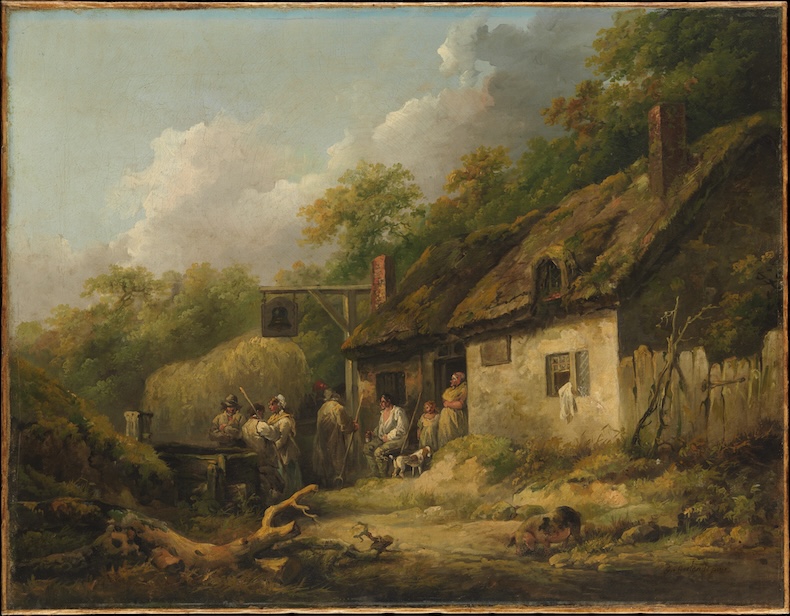
Should this all seem too culturally alien to Westminster Council, Rakewell is only too happy to point them to a work such as The Bell Inn (late 1780s) by the British painter George Morland. This proto-Romantic work depicts a country tavern full of happy rustics taking a well-earned break from labouring in the fields, pitchforks propped against the wall. Everyone seems as content as the pig in the foreground, snouting about for snacks.
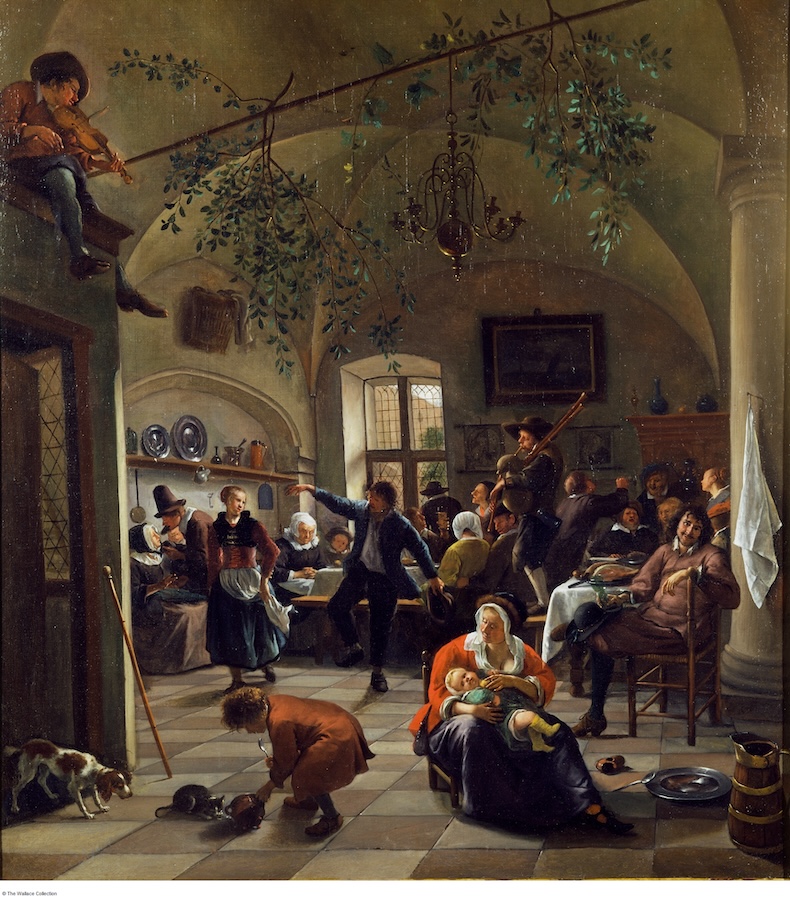
Presumably the council is concerned that drinking might slip into revelry and who knows what else. The Wallace Collection has the perfect painting to warn of these dangers. Jan Steen’s Merrymaking in a Tavern (1674?) is a boisterous scene with dancing, music and, in the background, a man standing at the window – perhaps looking to escape? While couples at every stage of relationships are in evidence no one seems to be tearing at the fabric of society. A dancing couple might become a quarrelsome couple but worry not, Westminster, there’s no sense of mother’s ruin here.
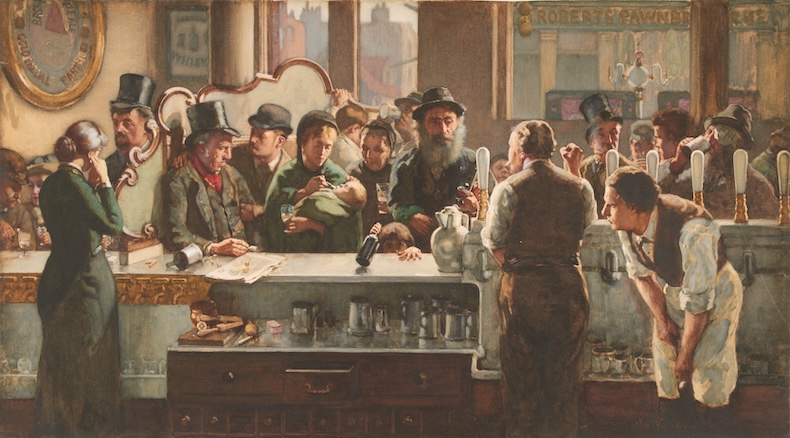
Besides, as John Henry Henshall’s watercolour Behind the Bar (1882) suggests, the idea that the main purpose of a pub is to get its customers drunk is misguided. This particular pub, thought to be on Caledonian Road or Old Street, captures a sense of community. Vertical drinking can sometimes be an upstanding form of drinking.
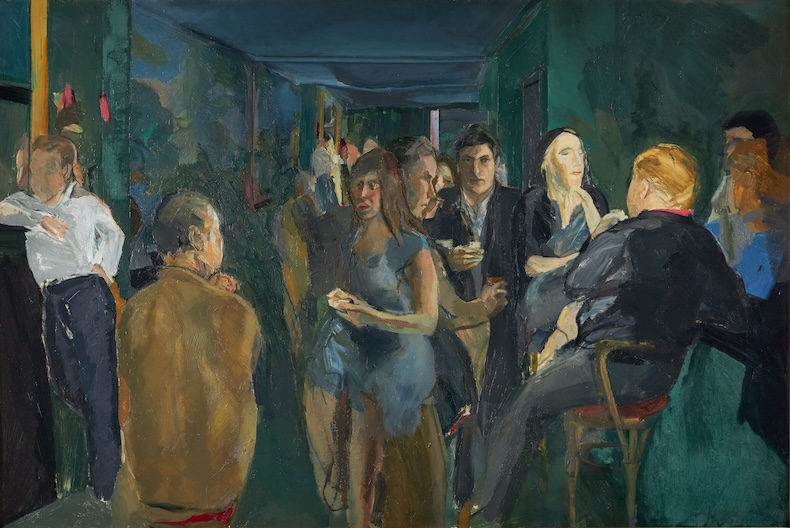
Perhaps the most compelling argument for letting us stay on our feet is the famous painting of Soho’s Colony Room by Michael Andrews. This locus of loose morals was also a convening point for this country’s greatest artists, playing host to Francis Bacon, Lucian Freud, Frank Auerbach, R.B. Kitaj and, later, many of the YBAs. It was also a shelter for many London misfits. Forcing us to drink at tables might be not an act of regulation but a form of cultural dismantling. If you want to know what that looks like, the thoroughly miserable – and seated – couple of Degas’s In a café (1875–76) is a reminder of what we’re trying to avoid here.