Last year, when Kelly Reichardt spoke to Apollo about what inspired her unorthodox art-heist movie The Mastermind, she shared a surprising fact. Her love of art was first sparked not by a visit to a museum, a revelatory TV documentary or an artistic family member, but by playing the board game Masterpiece as a child at her father’s house in Florida.
For more than half a century board-game developers have found all manner of ways to translate the machinations of the art world into entertainment. Masterpiece – the aim of which is to build as valuable a collection as possible by acquiring a crack hand of paintings – is the most famous example but is sadly out of print. However, for anyone missing the cut and thrust of the art world this summer, Apollo has rounded up the most ingenious art-related board games to play before the holiday season ends. Be warned: you may never look at your favourite painting the same way again.
Fresco
It’s a relatable feeling: you’re a master painter on deadline to complete a fresco for the local cathedral, but your workshy apprentices are threatening to mutiny. How to keep these palettes spinning to finish the commission on time?
Conceived by the German game designers Wolfgang Panning, Marco Ruskowski and Marcel Süßelbeck, this is one of the more granular art-related board games on the market. You start the round by deciding what time to wake up for the day: the earlier you awaken, the earlier your turn, and the more options you have when it comes to buying and mixing paint and choosing which bits of the fresco to complete. But get up too early and you risk angering your apprentices, who seem to be anticipating the European Working Time Directive by several centuries.
True, you can placate them by buying them opera tickets, but there are other factors to consider: you need to raise money for expenses (which can be done by painting portraits for patrons) and mix paints correctly for different parts of the fresco. And you have to do all this before the other players…
Art Decko
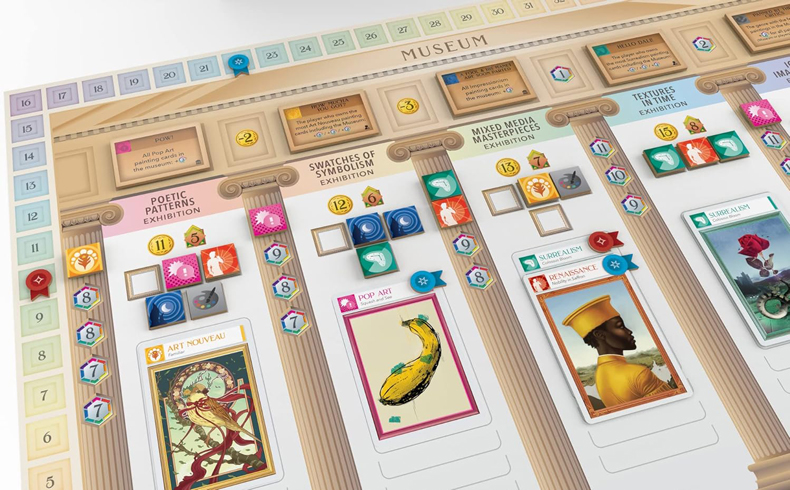
In Art Decko, adapted from the out-of-print game Promenade, only five ‘genres’ of art exist: Renaissance, Impressionism, art nouveau, Surrealism and Pop art. You start with five painting cards – although the paintings are not copies of real artworks, they’ve been cutely designed to evoke the movements they belong to – and five money (or ‘gold’) cards. On your turn you can acquire a painting or a gold card by swapping out your own. Gold cards are worth a fixed amount, but the paintings change in value depending on whether they have been in one of the four galleries or, best of all, the museum. The genres also fluctuate in value, and so in theory art nouveau could financially outmuscle Impressionism and Pop art – either a far-fetched notion or a prediction of the future, depending on how you feel about coups de fouet.
Art Decko is a coldly transactional take on the art world, though not without wit: bonus cards bear such titles as ‘A Fool and His Manet are Soon Parted’ and ‘Hello Dalí!’ And it’s nice that the goal is to get 12 artworks into the museum, rather than use the museum to boost the value of your artworks. On an entirely unrelated note, one wonders what Larry Gagosian would make of this game.
Musée
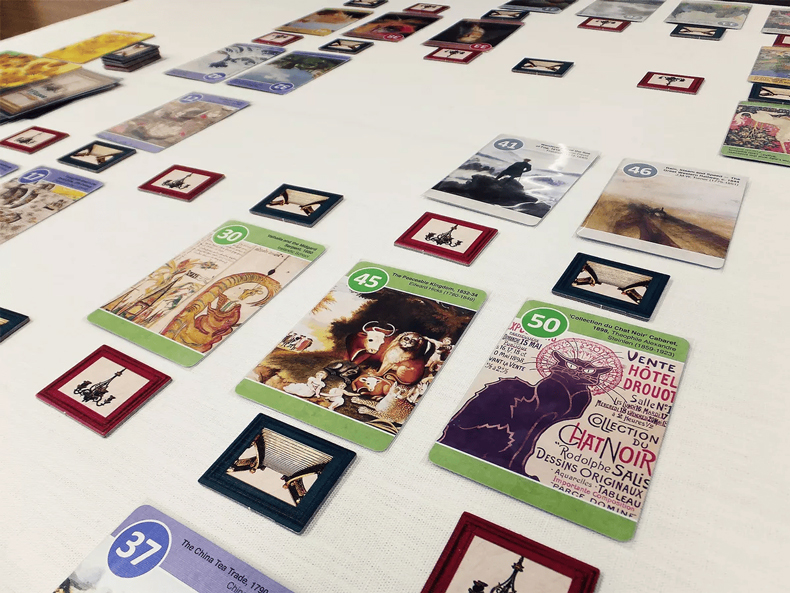
Like Art Decko, this is a deck-building game in which you are a collector amassing valuable works of art. The key difference – besides the fact that the cards are of real paintings, including Pieter Bruegel the Elder’s Tower of Babel (1563), William Blake’s The Ancient of Days (1794) and Edward Hicks’s Peaceable Kingdom (c. 1834) – is that each player has their own museum to decorate.
The emphasis here is on curation. Each player must fill three galleries in the museum in the most tasteful, harmonious way possible, guided by theme: people, animals, architecture, landscapes or seascapes. In the four-player configuration you work in pairs, and if your partner has different ideas from you, tough – you are not allowed to see each other’s hands or communicate with them. Curators who are accustomed to (or dream of) having free reign may wish to stick to the two-player version.
The Gallerist
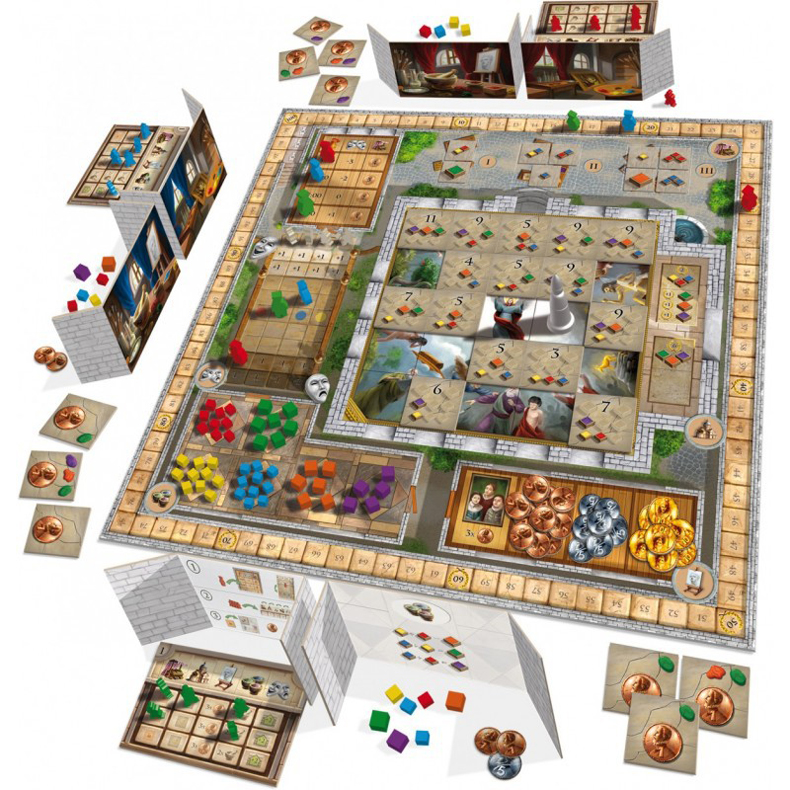
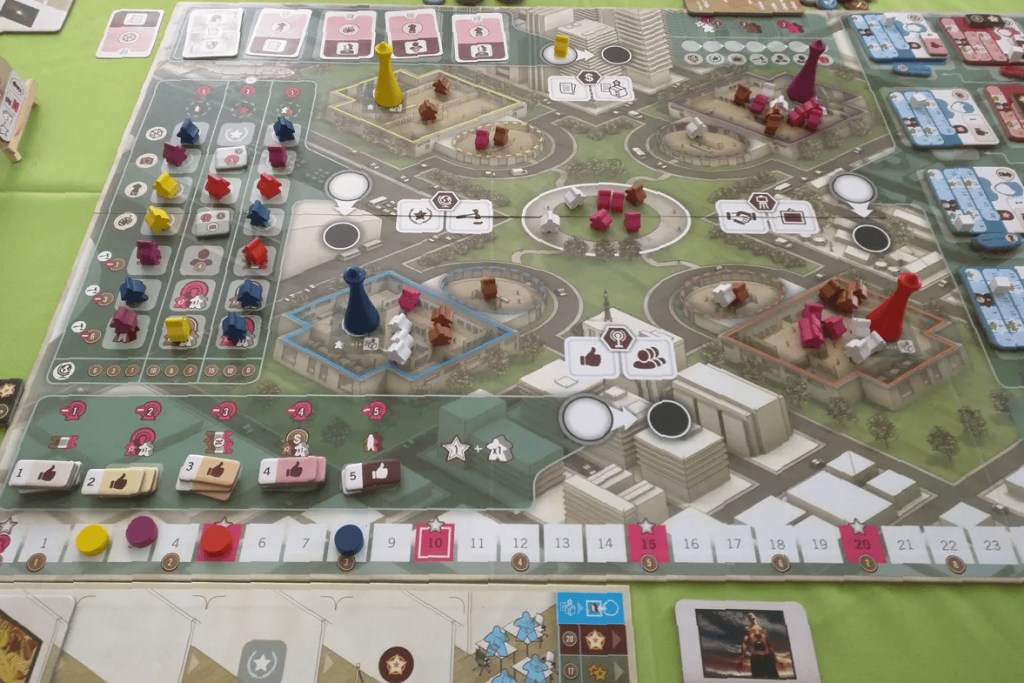
If the entries listed above don’t sound challenging enough, the Portuguese game designer Vital Lacerda has you covered. The Gallerist, which approximates the contemporary art world down to the finest detail, is devilishly complicated: you have to nail your briefs as a curator, a dealer and an artists’ manager to run a lucrative gallery. As in Fresco, you can hire assistants – but this can make your life harder.
The sheer number of meeples (little icons that stand in for players) on the board gives a sense of how multi-faceted the game is. As well as each player’s pawn there are differently coloured meeples for assistants, curators, investors and ‘VIPs’ (think influencers) that are constantly moving around – not to mention tiles for both art and artists. Also on the board are contracts and grids for tracking reputation, auctions and each gallerist’s collection. Success is measured not just in money but also in fame, which is represented, appropriately enough, by a white cube.
Even hardened gamers have compared learning The Gallerist’s rules to swotting for an exam. But this way you can experience the thrills of the contemporary art world without shouldering any financial risk (besides the £100 the game will run you) or having to master International Art English.
Pastiche
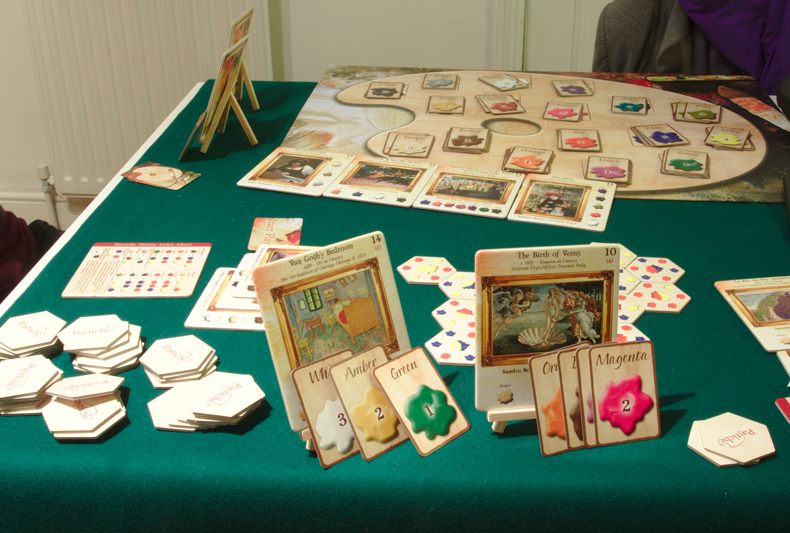
This is a game for the pure of heart: no venal objectives, no HR or PR wrangling, just the closest a board game gets to the mindset of a painter. The aim is to accrue and mix colour cards to build up a palette that matches one of 34 artwork cards. As in Musée, these are licensed from real paintings, so you can get a real appreciation of Vermeer’s mastery of blue in Young Woman with a Water Pitcher (c. 1662) or Gauguin’s command of colour in Arearea (1892).
You begin with secondary colours: green, violet, orange and brown. Then you place hexagonal tiles of primary colours next to each other to create new hues, collecting a corresponding palette card for each colour you create. To win Pastiche you simply need to complete the most paintings, so this is one art-inspired game at which you probably could have beaten Leonardo.
Belratti
After an unsuccessful stint as a gallerist, the German rapscallion Wolfgang Beltracchi – the son of an art restorer – decided to take up forgery. In collusion with his wife, Helene, Beltracchi produced more than a dozen works that closely imitated the style of modern masters including Kees van Dongen, Fernand Léger and Max Ernst, duping not only buyers but also authenticators.
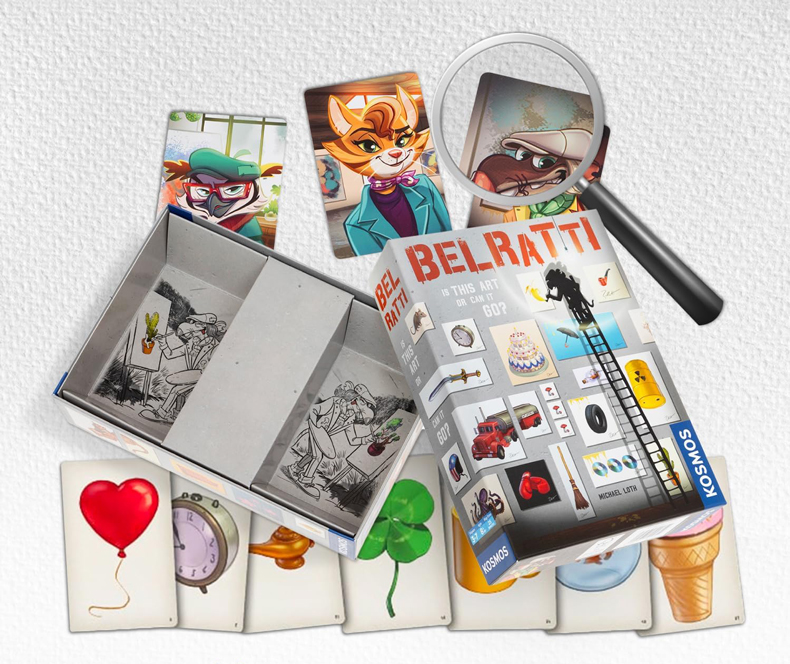
In 2018, a few years after the couple were released from prison, a game inspired by their story hit the market: Belratti. Players alternate between the roles of museum director and painter: the directors ask the painters to submit pictures according to a given theme, while the painters work together to assemble image cards from their hand that best match the theme, and submit them face-down.
But there’s a twist: every round, four ‘fake’ cards are slipped into the cards submitted by the painters – in much the same way as this card game has infiltrated a list ostensibly about board games – and the directors have to figure out which cards are the fakes.
If Belratti racks up six or more cards in a round, it’s game over. But since you’re playing against the game and not against each other, no one goes to jail for forgery. That really would be a sad way to end the summer holiday.