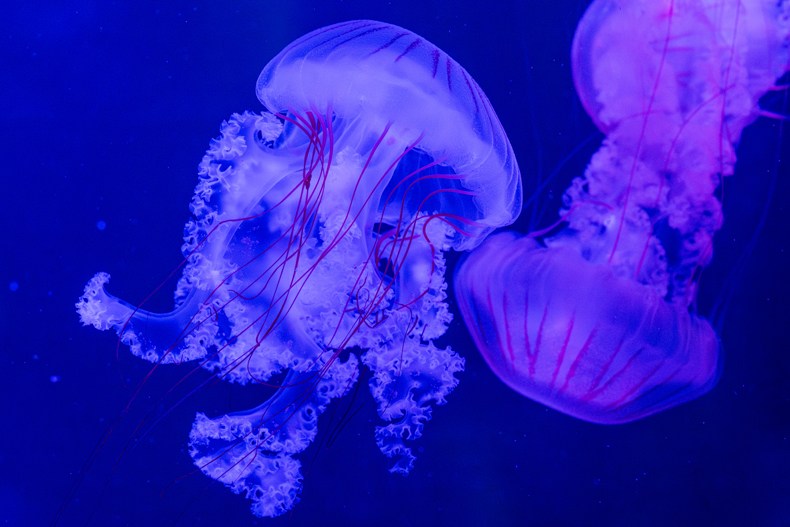

At the height of the summer heatwaves, Rakewell has felt like an amorphous, gelatinous creature who wanted nothing more than to slip into the nearest body of water. Your roving correspondent was struck by a sense of kinship, then, upon seeing the hundreds of jellyfish that have found a new home at the Jellyfish Museum in Pompano Beach, Florida.
At first, Rakewell was perplexed by the choice of name: isn’t the museum more of an aquarium? The founders, Alex and Yana Yanovsky, spent decades working in the aquarium business in Ukraine before deciding to set up a dedicated space for the star exhibits. They opened their first jellyfish museum in 2018 in Kyiv – still operating, despite the Russian invasion – using distinctly museological language: the website proclaims the ‘largest exhibition of jellyfish in Eastern Europe’ and promises that the ‘display will be updated at least three times a year’ (due to the short lifespan of the talent). Some of this language has carried over to the institution the couple have just opened in the Sunshine State: visitors can admire the ‘unique collection’, shown off under ‘specialized lighting’.
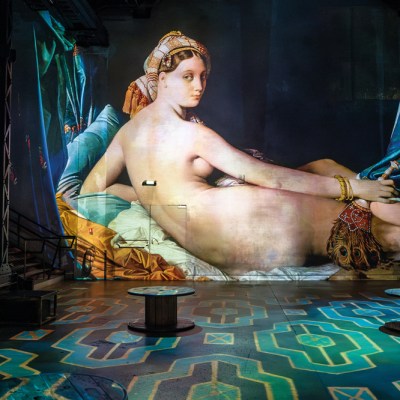
As an animal lover, Rakewell was sceptical at the idea of living creatures being objectified quite so explicitly. But jellies are no strangers to the museum world: in 2019, as part of the exhibition ‘Eco-Visionaries’ at the Royal Academy, the art collective Rimini Protokoll staged win > < win (2017), which comprised 50 moon jellyfish floating around a large tank. And when your roving correspondent saw footage of the aquatic invertebrates doing their thing in Florida, it all made sense: never have animals so closely resembled the kind of ‘immersive art experience’ that is increasingly in vogue around the world, from the giant LED screens at Tottenham Court Road Tube station to Dataland, which opened in Los Angeles in June.
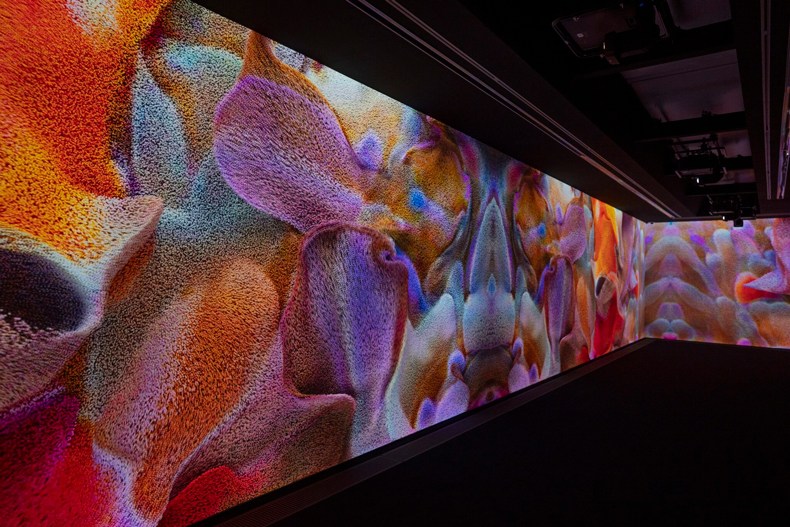
Dataland, co-founded by Refik Anadol, also refers to itself as a museum – ‘the world’s first museum of AI arts’ – but, seemingly inverting the Jellyfish Museum’s approach to nomenclature, has also appropriated language from the natural sciences: Dataland isn’t just a place to look at moving pictures, it’s a ‘digital ecosystem’. The homepage, if your eyes can withstand the torrent of bright blinking images for more than a few seconds, dissolves into a procession of morphing pictures inspired by nature: waterfalls, toucans, mycelial structures of dizzying complexity. In 2024 Anadol’s exhibition ‘Echoes of the Earth’ flooded the Serpentine gallery walls with AI-generated images derived from floral and fungal data. The museumification of natural phenomena was evident in the exhibition’s subtitle: ‘Living Archive’.
It’s understandable that an AI-driven business such as Dataland, surely conscious of the environmental damage it is wreaking, might cloak itself in the wholesome visual and verbal language of the animal kingdom. But why would a home for some 20 species of naturally beautiful medusa-stage jellies use the language of a museum – especially as attendance among zoos and aquariums is up from pre-pandemic levels in the United States, while visitor numbers at science and children’s museums have failed to recover?
Perhaps there’s a clue in the fact that, happily, attendance at art museums is also up – so positioning jellyfish as a class of non-sentient performance artists might bring in the punters. And perhaps, with jellies clogging up water filters at nuclear power stations and Portuguese men o’ war terrorising European beaches, jellyfish museums make the world a little safer.