From the September 2026 issue of Apollo.
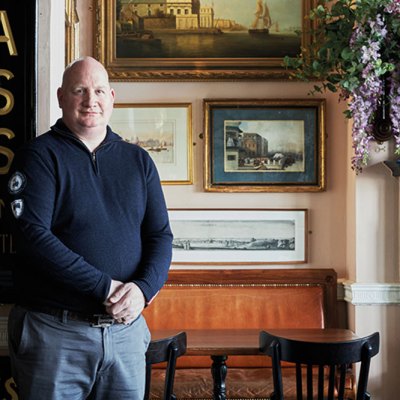
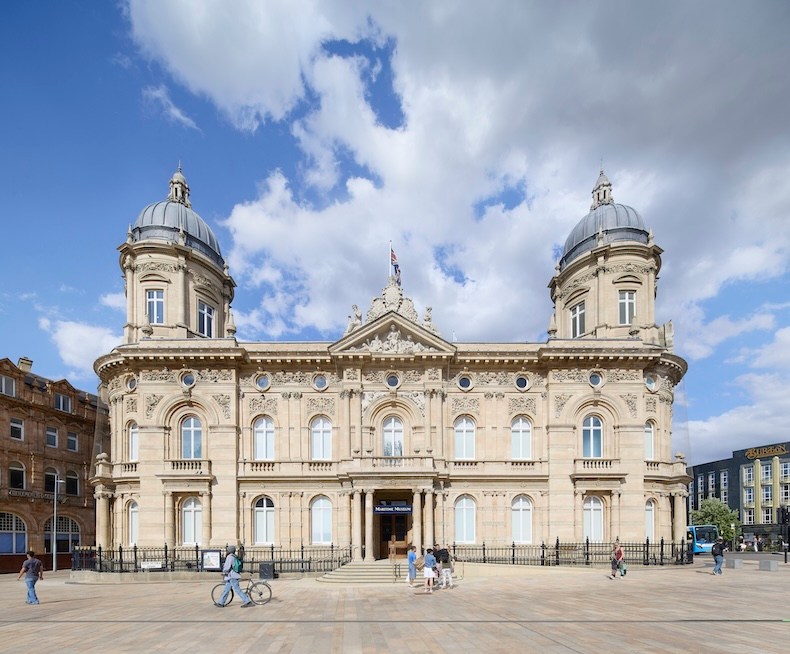
Near the top of Hull Maritime Museum, visitors are invited to climb a newly installed spiral staircase into one of the building’s three domes. From there, for the first time since the building’s construction in 1871, it is possible to look out across Hull in every direction – west towards the railway station, yes, but more importantly south and east along the lines left by the docks, shipyards and waterways that encircled the town centre until the early 20th century. The museum’s £20m refit is the central component of a much larger set of maritime renovations taking place across the city: the basin left by Prince’s Dock is straddled by the unkempt bulk of the city’s central shopping mall, soon to be demolished, while Queen’s Dock, which became Queen’s Gardens a century or so ago, is beautifully restored, reconceived and reopened. The park acts as a conduit to the North End Shipyard on the west bank of the Hull, soon to house the Arctic Corsair, a restored 1960s trawler billed as ‘Hull’s Cutty Sark’, while the Spurn Lightship, built just up the river in Goole in 1927, has been reimagined as a floating museum and docked to the south in Hull Marina. The Maritime Museum is both a cultural repository and a vantage point offering views not just of the city but also of the nautical history of Britain. Its collections matter, but so do its connections; in other words, looking outwards is as important as looking inside.
While the present building, originally Hull’s dock offices, dates from the Victorian period, Hull has been important to Britain’s fisheries and as a trading port since at least the 15th century, when it hosted a Hansa trading post (though it was never a full member of the Hanseatic League). By the early 19th century it had grown into the largest whaling port in Britain. When Elizabeth Gaskell wants to send the dashing Charley Kinraid aboard a whaler in Sylvia’s Lovers (1863), Hull is his port of embarkation. When the whaling industry collapsed in the mid 19th century, triggered by the discovery of commercial petroleum, Hull repurposed itself as a trawler town. Both the history of its trawl fisheries and of the pioneering labour rights movement it engendered, led by Lillian Bilocca and the ‘headscarf revolutionaries’, are commemorated here. The docks in Hull were for a time the largest in the world and served trading networks across Europe and Scandinavia, and eventually further afield: the Alexandra Dock, opened in 1885, was built specifically to export coal and import frozen meat from South America and the Antipodes.
Such themes of connectivity are taken up in the curation of the museum itself. Coloured lines on the floor of exhibition spaces can, for example, be followed from exhibitions pertaining to parts of the world touched by Hull’s maritime industries to an immense globe stored in the base of one of the building’s three domes. Another circular turret room has been converted into a planetarium, where a projection of the stars and the aurora borealis encourages visitors to think about Arctic whaling and celestial navigation, but also to look further outwards into space.
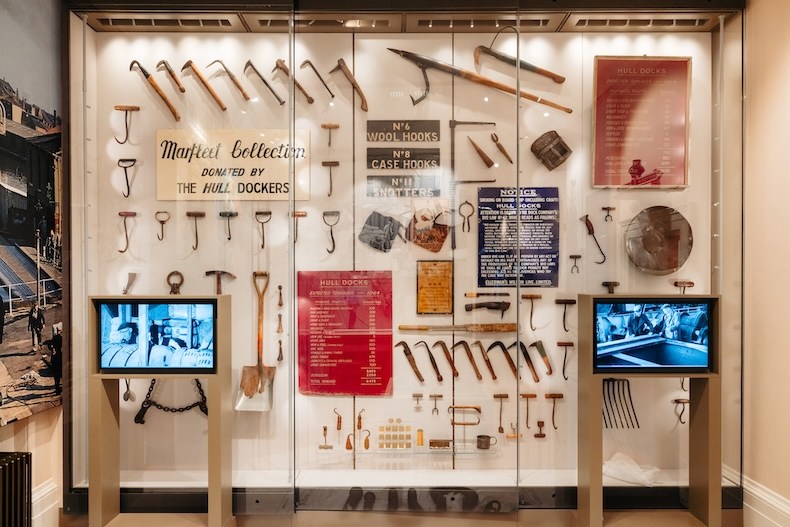
But if there is room for cosmic grandeur, the museum, which was conceived of through a process of public consultation, is also rooted in the local community. A wall-sized display of dockworkers’ tools comprising an array of hand-held iron spikes, knives and gaff-hooks (‘No 6 Wool Hooks’; ‘No 8 Case Hooks’; ‘No 11 Snotters’) originated, for instance, in a collection donated to a local pub by stevedores who no longer needed them; this was offered, years later, to the museum. Another turret, beautifully decorated – like much of the museum – with furnishings by Scottish designer Angus Ross, contains a register of Hullensians lost at sea, offering a quiet place for contemplation and remembrance. The newly opened third floor of the museum is largely given over to objects from the collection selected by locals. The result is an intriguing experiment in democratised curation, substituting a sense of deliberate polish in the displays for a madcap cabinet-of-curiosities approach that nonetheless feels receptive to the things visitors might want from a museum. It contains, among other things, a ship in an oversized lightbulb, an unopened tin of powdered mustard taken on Scott’s Discovery expedition and brought back in 1904, a tiny mock-up of an early life preserver, a huge tuna skeleton and a coatrack made from a narwhal’s tusk. It was my favourite room.
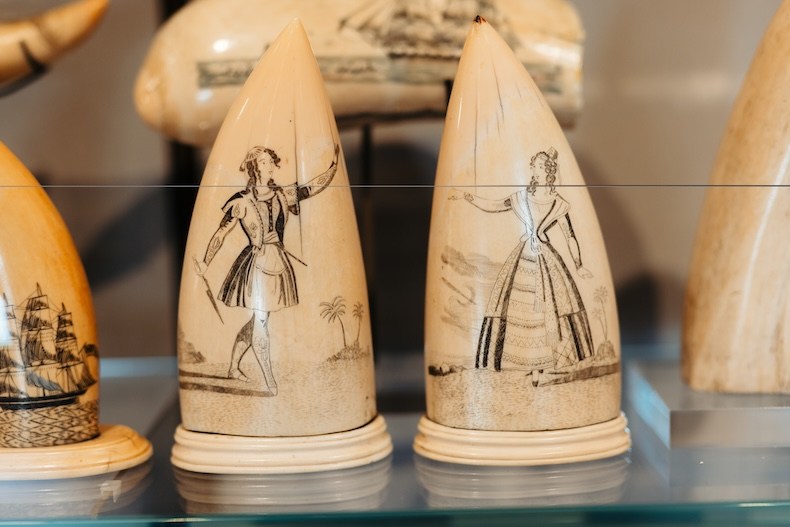
At other times, the museum looks at Hull’s maritime history through collections drawn from the travels of its former citizens. The museum boasts an immense collection of scrimshaw – the best and most varied I’ve ever seen, whether at the National Maritime Museum in Greenwich or the Canterbury Museum in Christchurch, New Zealand. With origins in the 19th century as a whalers’ pastime, scrimshaw – carvings or engravings on whale teeth or bones – is usually pictorial and the collection here has its fair share of crude and at times highly detailed depictions of ships and royalty, whales being harpooned or bloodily flensed. But alongside these we see a wax seal and a roller for printing patterns into pastry, as well as a set of toothpicks designed to look like harpoons stuck into the back of a sperm whale.
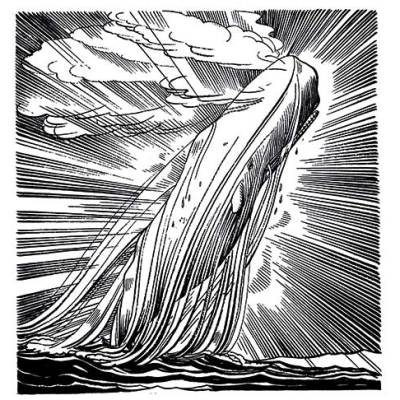
When I visited, no curatorial apparatus was yet in place to explain or discuss these items, but my hope is that the museum finds a way to think through the difficult relationship between nostalgia for Hull’s prosperous past as a centre of the whaling industry and the grotesquerie of whaling, an ecological disaster on a vast scale. As the local museum of a global industry, Hull Maritime Museum is well placed to comment on the interweaving of local interests with larger commercial and economic forces that both drive and depend on them. In Moby-Dick, Ishmael informs Captain Peleg that he is motivated to go whaling ‘in order to see the world’. Peleg replies: ‘Can’t ye see the world where you stand?’
A similar moment of tension emerged for me in front of a display of Inuit kayaks and carvings brought back to Hull from Canada along with two Inuit teenagers, whose life-cast plaster heads are also on display. Before exhibiting these items, the curators consulted with Inuit, seeking permission as well as updating and correcting previously misleading interpretive material. And yet these displays bring home the difficult task faced by an institution poised between its role as a sympathetic custodian of local history and as a world-class maritime museum.
To find out more about Hull Maritime Museum, visit its website.
From the September 2026 issue of Apollo.