From the September 2026 issue of Apollo.
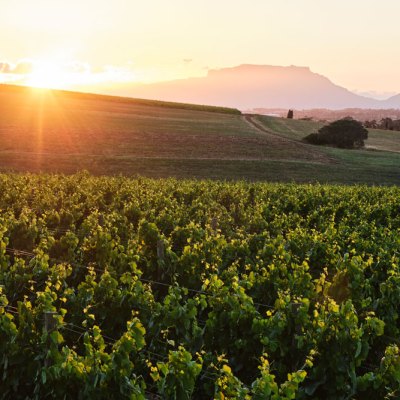
In 2009 William Kentridge went on a road trip through the Swartland and West Coast regions with the winemaker Eben Sadie, viticulturist Rosa Kruger and historian Tim James to visit some of South Africa’s oldest vineyards. The road runs through wheat fields studded with granite domes, under expansive skies, until the Cederberg foothills close in and the vines appear as scribbles of gnarly forms on the sandy soils. This is a landscape already reduced to line and smudge before any artist arrives.
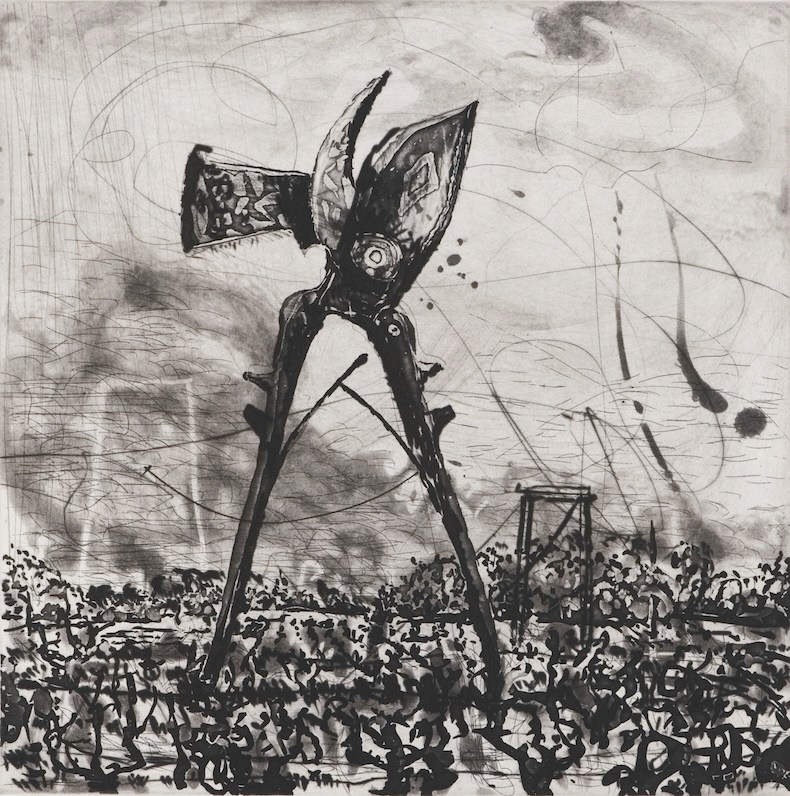
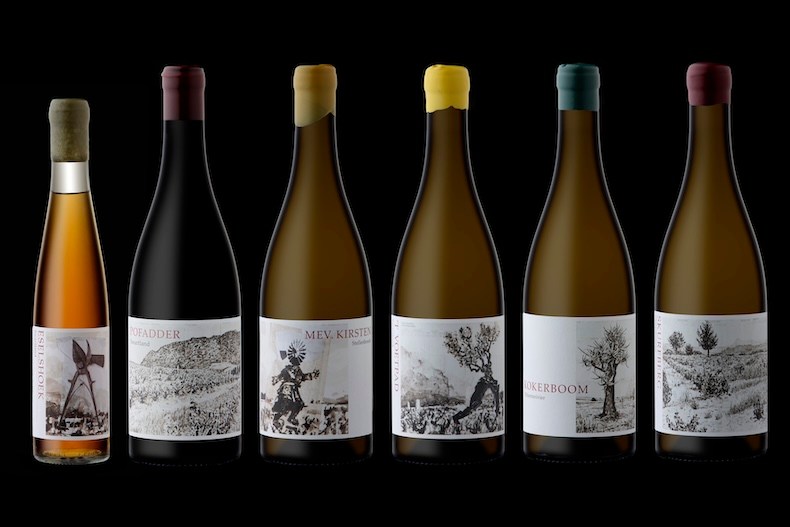
The works that Kentridge made after this trip became the labels of the inaugural Ouwingerdreeks (Old Vine Series), a rare and limited batch of six wines made by Sadie, one of South Africa’s most prominent winemakers, from these historic vineyards, two of which were planted in around 1900. Kentridge’s labels depict the historical landscapes of the Swartland and the valleys up the Weskus (West Coast), with knotted vine rows and craggy mountains. He incorporated loosely viticultural versions of the humanised tools and machinery of earlier pieces such as Portage (2000) and L’Inesorabile Avanzata (2007): secateurs, a water-pumping windmill, a figure who is half-man, half-pylon. The series for the labels was drawn on ledger paper from the notebooks used by the Koöperatiewe Wijnbouwers Vereniging (Cooperative of South African wine growers) to record sales of ‘intoxicating liquor’, a nod to the industry’s fraught inheritance. The cooperative was founded in 1918 and operated as a monopoly across the country until deregulation in the 1990s.
Kruger, attuned to the atmosphere and personality of such old vineyards the way Kentridge is to his coffee pots, recalls how the artist ‘captured the one thing […] that was exceptional about each specific vineyard’. The vineyards themselves stood in abandoned or forgotten corners of the region, growing without irrigation, mostly ungrafted, on their own roots, free of fertiliser and herbicide. Kruger had been searching for them since 2002, driving the region’s back roads looking for parcels of land whose low yields meant that they had been marked out for uprooting.
In 2016 Kruger formalised her efforts by founding the Old Vine Project, a non-profit that aims to protect and set rules regarding South Africa’s heritage vines. A vine qualifies as ‘old’ at 35 years, which is verified against the national planting records that South Africa, almost alone among wine countries, has kept since 1900.
When it came to developing the Ouwingerdreeks, Sadie played archivist and investigator as much as winemaker. He says that he drew on ‘historic patterns of South African wine production […] the elementary methods, rejuvenating them and rewilding them’ to produce a Chenin Blanc made from old bush vine parcels from different plots on Skurfberg slopes. Kentridge’s depictions of vine and landscape offer a visual alternative to conventional wine-speak and tasting notes.
An old vine is a living archive, carrying histories of labour, land, climate and taste that goes beyond the information found in an industrial ledger document. This history survives by being farmed, but only when someone can afford to farm it. Old vines yield little, which for decades put them at risk of being pulled out, and sentimentalising has never paid a farmer. The Old Vine Project’s goal is to convert cultural value into economic value. Its wines are certified, traceable and their prices reflect the rarity of these grapes. The project’s motto is ‘plant to grow old’; in other words, what goes into the ground now should become the heritage vineyards of 2060.
Oenophiles have a responsibility to care for such vines and pay fairly for what they yield. As Kruger says, ‘People should pay more for such wines made of old vines, because most of the time, they make wine of a certain clarity, texture and length. They mostly make interesting wines that come from a specific space in the landscape, a place with an identity that has been there for a long time.’ Anyone who agrees that a Kentridge drawing on ledger paper is worth preserving has already accepted the argument for preserving the vineyard it depicts. It made the vineyards visible before the market did, and recognition followed the image – a case of art disclosing a value that was already there.
From the September 2026 issue of Apollo.