From the September 2026 issue of Apollo.
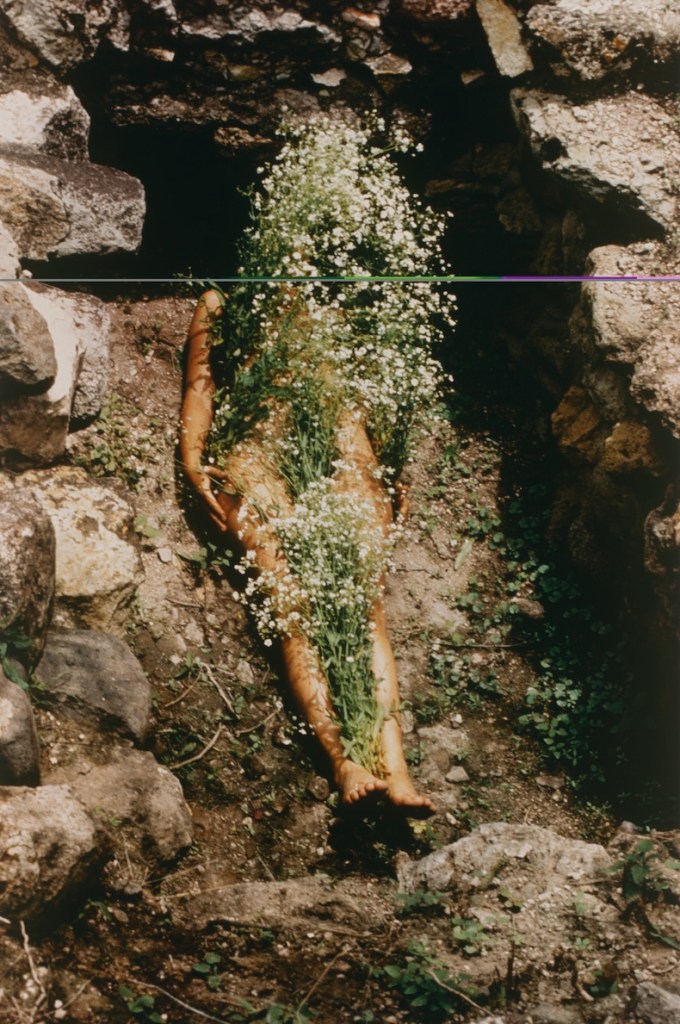
Ana Mendieta was always staging her own disappearance. In Energy Charge, a 49-second film from 1975, we see her dark outline approach the foot of a tall tree. Standing in front of its trunk with arms outstretched, her silhouette suddenly flashes bright red, as if she were a burning bush or atomic pile, blazing with wild energy but destined to burn out. She would shroud herself in flowers (Imágen de Yágul, 1973), conceal herself under turf (Grass Breathing, c. 1974), inhume herself in the earth (Burial Pyramid, 1974). Even her own hair (Untitled, 1972) – or, for that matter, someone else’s (Untitled (Facial Hair Transplants), 1972) – could provide the means of self-concealment.
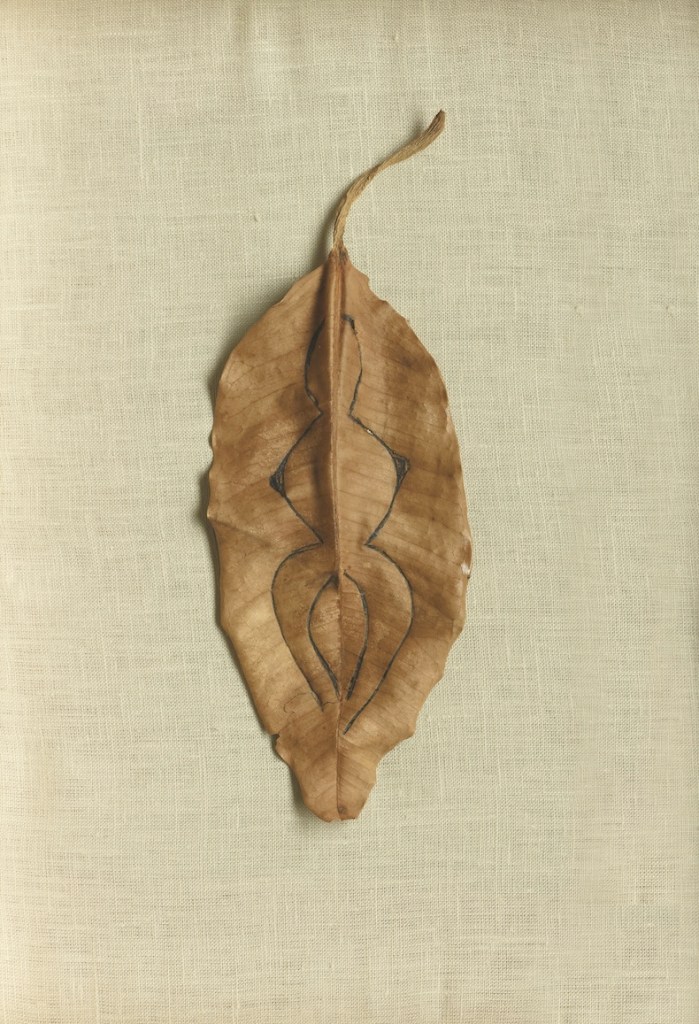
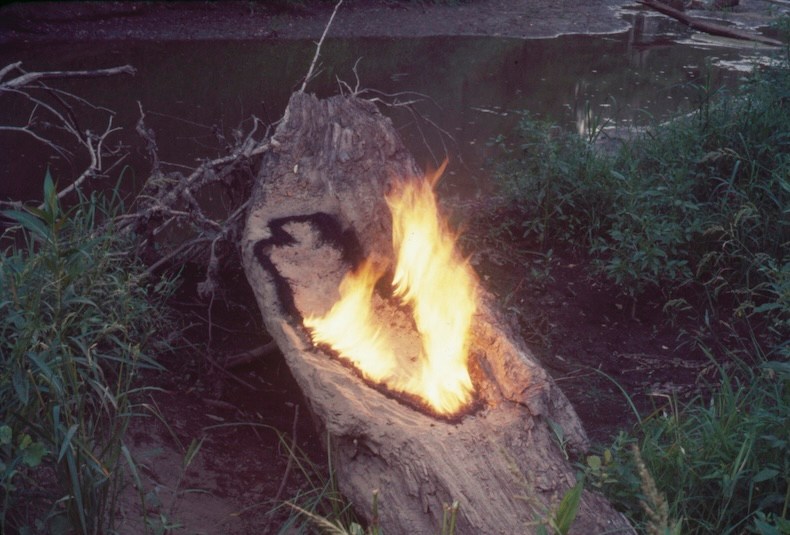
The work she produced, over a decade and a half, from the earliest paintings in her catalogue to her untimely death in 1985, could be equally evanescent. She made drawings on dried leaves (Untitled, 1982), made sculptures out of snow (Untitled: Silueta Series, 1977) and carved shapes out of sand on the sea shore, doomed to wash away with the tide (Untitled: Silueta Series, 1976).
It is as if her whole art were an attempt to affirm the fragility of existence and the futility of human works in the face of an all-powerful nature. And yet the work abides – burning perhaps even more brightly today than when it was originally made.
Born in Havana in 1948, Mendieta was sent by her parents to Dubuque, Iowa, at the age of 12, with only her older sister for company. Their journey was part of an exodus, dubbed Operation Peter Pan, of some 14,000 unaccompanied minors organised by the US government and the Catholic Welfare Bureau. Throughout her career the work she made betrayed a longing to return.
One of her last films, and one of very few to contain synchronised sound, Ochún (1981) centres on two squiggles of built-up sand in the shallows of Key Biscayne, Florida, an almost abstract shape, just sufficient to suggest the outline of a woman’s body. But from the opening shot, it’s not clear what’s going on. For the first two minutes the camera approaches Mendieta’s temporary sculpture tentatively, from oblique angles. The artist seems less interested in her own work than in the movement of water – and its sound – as it rushes through the strait towards Cuba, teasing at the edges of her increasingly weathered-looking sand-body and dragging tiny fragments of it away as it goes.
The body was Mendieta’s principal subject and source of inspiration. The earliest works in the exhibition – a quartet of paintings from 1969–70 when Mendieta was a student at the University of Iowa and one even earlier wooden sculpture dated to c. 1965 when she was still a teenager attending a Catholic school – are all figurative. The sculpture, roughly hewn, depicts the partially abstracted form of a mother and child in a close embrace, looking like an Easter Island head with a conjoined twin.
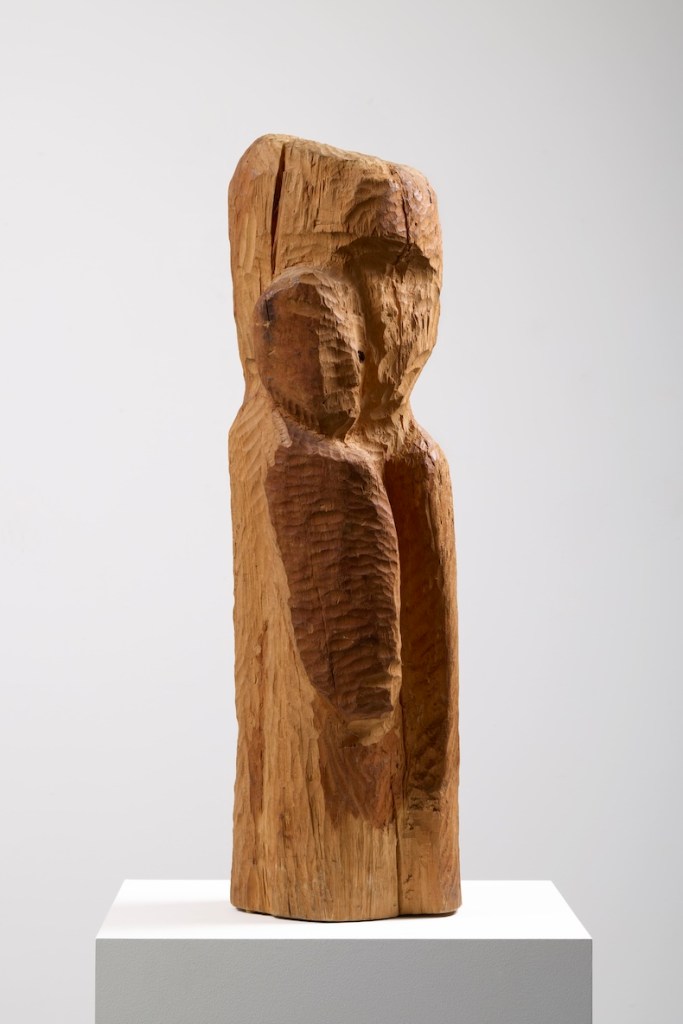
In its unvarnished use of natural materials, its peculiar sense of being possibly a ceremonial object torn from the grip of some tribal shaman, it resembles Mendieta’s mature output far more than the four paintings, which are vivid – almost Fauvist – in colour. All of them depict women in portrait orientation, in most cases framed head-on, meeting the viewer’s gaze. Only one points decisively towards her later work: De película (c. 1969) presents its subject sideways on, hemmed in vertical bars resembling the sprocket holes on a strip of film. The title means ‘like a movie’, but the word itself derives from the Latin for ‘skin’.
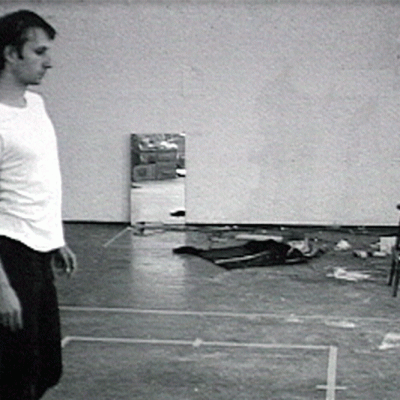
Mendieta is rarely thought of as a ‘media artist’, in the mould of Nam June Paik or Trevor Paglen, but whether drawing on paper made of tree bark or shooting on 16mm film, the specific physicality of different materials is at the forefront of her work. Her choice of media is never neutral, always self-conscious. One early film, Parachute (1973), made during her first semester as an art teacher at Henry Sabin Elementary School in Iowa City, documents what looks like a children’s game: a couple of dozen of her own pupils spreading out a vast circular canvas in the playground. But it’s clearly shot from a first- or second-floor window, with the lower edge of the window frame deliberately left in shot and a star-shaped lens flare in the lower left of the screen for good measure. Together, they function like a nod and a wink – a little Verfremdungseffekt with your socialising rituals, as a treat. It forces us to confront our own position as spectators to what is unfolding.
Over three minutes and 17 seconds, in the film Blood Writing (1974), we see Mendieta from behind, dipping her bare hands into what may or may not be red paint. On a set of garage doors in dropping block capitals, she scrawls: ‘she got love.’ In another context the words might suggest romance, but here it feels more like a threat, the index of some dreadful act of violence. It also marks one more instance in Mendieta’s art in which the body (or its fluids) becomes itself a sort of medium.
As far as I’m aware, it’s her only work to feature any recognisable text or alphabetic characters. But much of what she did can be regarded as an enquiry into the nature of writing. Linguists have long denied the Aztec script of pre-Columbian Mexico the status of ‘complete writing’ because it does not directly reflect a language as spoken. But Mendieta, who spent considerable time in Oaxaca in the 1970s, makes the case for a more inclusive definition. Across photography, drawing, sculpture, installation, painting and film, her work looks directly at the way meaning is made, at the many ways that a mark left by a body upon a landscape can say both ‘I was here’ and also ‘I no longer am’.
‘Ana Mendieta’ is at Tate Modern, London, until 17 January 2027.
From the September 2026 issue of Apollo.