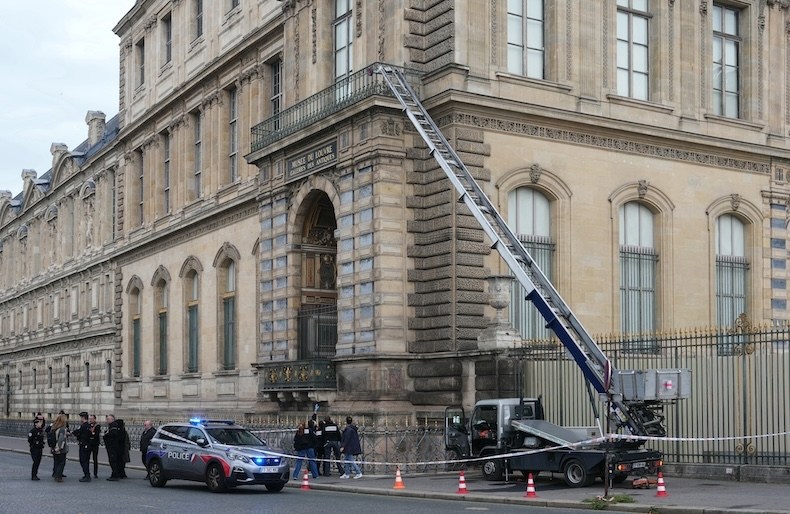
From the theft of French crown jewels from the Louvre last October to the heist of two paintings by Renoir from his house museum near Nice just this week, museum robberies have kept hitting the headlines in the past year. Many of the stolen works remain missing, with investigators, governments, museum professionals and the public left puzzling over their fate – and what might have motivated the crime in the first place. Supervisory Special Agent Jake Archer from the FBI’s Art Crime team talks to Apollo about why criminals steal art, what they do with stolen objects that are often difficult – if not impossible – to sell, and what museums can do to protect themselves from future attacks.
Has there been an increase in museum heists in recent months?
There’s no single world database that captures this data. There certainly has been a lot of reporting on museum heists, particularly in Europe, and I’m glad that were able to bring this important crime threat to the public’s attention.
Why do thieves commit these sorts of crimes?
People have been stealing each other’s cultural property for thousands of years, and they steal something because they want it. For some, the reason is financial gain, but as it relates to art and cultural property crime, the aperture expands. Unhealthy passions for history, culture and notoriety bleed into criminal action.
How do they decide their targets?
A thief has to get through the physical barriers, and that’s one aspect of picking the target: analysing and determining if they can do that. But it begins with the object selection. The suspect pool extends beyond those who commit other major theft crimes like cargo, retail, vehicle theft – straightforward commodities. Museums, cultural institutions and archaeological sites incorporate objects made from just about anything on planet Earth and pieces of history and culture that can evoke a sense of passion in individuals that you wouldn’t put in the traditional bucket of people committing a major theft. This is, a lot of the time, a crime of passion.
Are there things that are easier to shift?
We can describe cultural items as ‘pièces uniques’, which makes them more difficult to sell. If the object that the thief has taken is well known, that brings a lot of requisite danger to them being caught, and to finding someone willing to risk buying it. Items either of lesser value or what we call ‘break-down’ value, which we see more in the gem and jewel arena, present slightly easier opportunities than a one-of-a-kind painting that is known worldwide. Regardless, these objects are a lot more difficult to unload than cash from a bank or commodities stolen from a big box retailer or a vehicle stolen from the street.
How do people make money out of this?
I’ve found trying to get into the mind of museum thieves can be a fruitless exercise – some of these are lower-level criminals, many are unsophisticated in the ways necessary to profit off their looting. It’s easier to steal something, in this scenario, than it is to profit. That’s why some of this material we’ll see go to ground for generations: it’s just too hot to unload. This presents another problem for law enforcement. These objects are inanimate: they don’t require food, shelter, air or water and can be tucked away anywhere, in an environment that is incredibly difficult for anybody to find.
At the FBI Art Crime unit, we have our methods, but we can also tap into the resources from the FBI at large and law enforcement agencies around the country. If you steal from a bank or a big box retailer, it’s unacceptable, but when people steal from cultural institutions, the effects can be devastating to a community and they linger. Having that void, that loss, is a great motivator in finding these items and bringing perpetrators to justice.
When does the FBI get involved?
We have a statute that was passed in 1995 in response to the heist at the Isabella Stewart Gardner Museum in Boston in March 1990. That statute makes it a federal violation to steal items that fit a certain description from a museum. We also have existing federal violations for transportation of stolen property that we will utilise in these investigations. So should material be stolen from a museum or private residency, if it fits a certain threshold and crosses state or international lines, coming or going from the United States, we’re able to work with our local and international partners. But we require that US federal nexus to engage in particular cases.
When these objects are stolen, if they are moved or criminals try to place them back into the marketplace – we see a lot of this with looted antiquities – they’ll often provide a false provenance. So then not only do we have stolen objects crossing state or international boundaries, but we also have federal violations potentially involving wire or mail fraud.
Where does the FBI get involved?
The FBI Art Crime cases extend around the world. Objects that are stolen can leave the United States or are illegally trafficked here for sale. We have a robust legal art market here; that inevitably will incentivise criminals to try and bring this material into our borders, so we’ll engage with FBI law enforcement attachés that are embedded in embassies around the world.
You often hear of a ‘mastermind’ behind museum heists. Have you often come across this in your career?
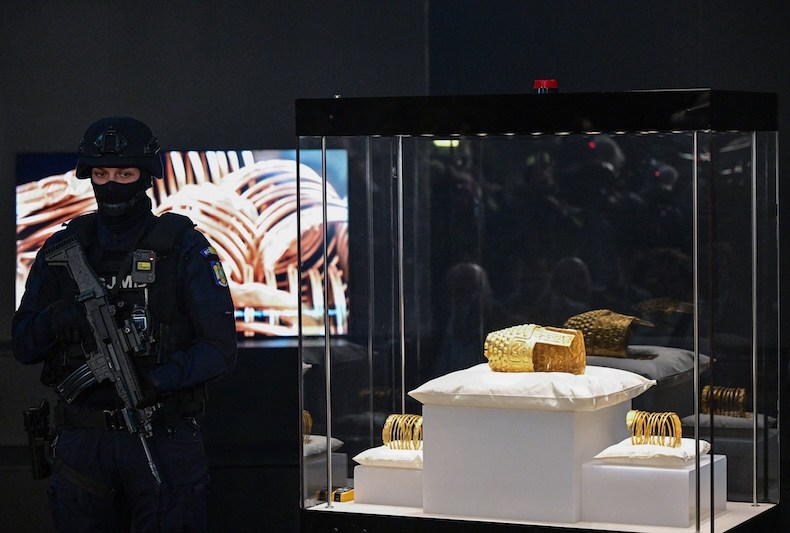
There is a spectrum, but that very high end is in short supply. From experience, it is skewed more towards the other end, but for some of the thefts we absolutely see sophisticated trafficking networks, especially when it comes to looted antiquities. In the end, loss is loss.
When you have managed to capture criminals, what is it that has given them away?
When it comes to museum thefts, we look at everything from planning and execution through concealment to look for any clues. It’s also important to engage the public – we have been so successful with getting leads and solving cases through the public’s help. It’s worth mentioning here our National Stolen Art File: its publicly accessible and searchable, and it’s a vetted law enforcement database. If something is stolen here, you can search that – there are about 5,000 entries in there, with each having a report detailing that theft.
We also rely on our museum experts, who can explain as much as possible about the object stolen. Some of the team may have art history backgrounds, some are great on material science – but ultimately there is that expert who knows that material better than anyone in the world, so to dig into that and understand its properties – material, cultural, financial – all of that helps us as we begin our investigation.
Is there a case that has really stood out to you in your career?
The Isabella Stewart Gardner Museum. That is an active case, and we will not stop until we recover those artworks. Period. Here in the United States, there are plenty of cases we’re still looking into, but that one is top.
Are there any cases that you’ve really enjoyed cracking?
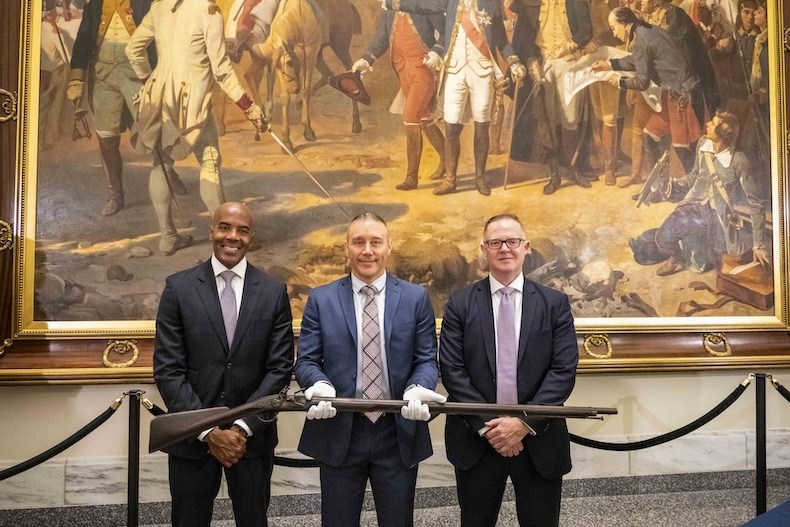
Working with local detectives and prosecutors in Philadelphia on a case to recover the John Christian Oerter rifle, which is probably the most important stolen gun in American history. Dated to 1775, this is one of the first distinctly American rifles. There’s only about a dozen stamped with the year of manufacturer, the location made – in this case Christian Springs in Pennsylvania – and the name of the maker: Oerter. This was stolen [from the Valley Forge Museum of American History in Pennsylvania] in October 1971. A member of the public acquired it and handed it in to us. It was a unique case where we had the solution and then had to work back to figure everything else out, which led to a successful prosecution.
How can museums protect themselves from these sorts of attacks?
Some of the general concepts involve having an approach that brings process and procedure with your staff in line with available technology, staying up to date with both as best you can, and having clear communication with local law enforcement should anything happen. Vigilance is incredibly demanding: physical security anywhere is expensive, labour-intensive and requires a process that must be checked, maintained and practised.
You have to be specific to the nature of what you’re guarding in your museum, to create those methods of protection. When we talk about museums, people think four walls, but there’s interpretative centres, outdoor spaces; in the United States there are Native American and Native Hawaiian tribes that have a lot of material looted from their sites. There’s also underwater cultural heritage – we have underwater sites around the United States that are protected and people will loot there. A museum is front and centre, but the Art Crime team deals with matters that extend beyond those four walls.