Detail of a photograph of Louis Armstrong (c. 1930) by Stuart Lynn. New Orleans Jazz Museum, Louisiana State Museums

‘Four things to see’ is sponsored by Bloomberg Connects, a free arts and culture platform that provides access to museums, galleries and cultural spaces around the world on demand. Explore now.
Each week we bring you four of the most interesting objects from the world’s museums, galleries and art institutions, hand-picked to mark significant moments in the calendar.
On 24 September 1896, 130 years ago this week, F. Scott Fitzgerald was born in St Paul, Minnesota. It was Fitzgerald, with the title of his short-story collection Tales of the Jazz Age (1922), who gave the 1920s the epithet by which many still know it. In 1931 he wrote an essay pronouncing the era ‘dead’, dating its demise to the stock market crash of October 1929.
Jazz had travelled out of New Orleans in the preceding decades, carried north to Chicago and New York by musicians in search of work and new audiences. Prohibition, in force from January 1920, gave the music somewhere to play: the speakeasy replaced the licensed bar and brought a dance floor with it. The Charleston soon took off, popularised by the Broadway musical Runnin’ Wild (1923), and evening dress was cut short and straight and heavily beaded to move with it. Such dresses were soon seen in all kinds of places, from Hollywood movies to ocean liners, and were on show in Paris in 1925 at the Exposition Internationale des Arts Décoratifs et Industriels Modernes – the fair that would go on to give art deco its name. This week we look at four works that capture the Jazz Age.
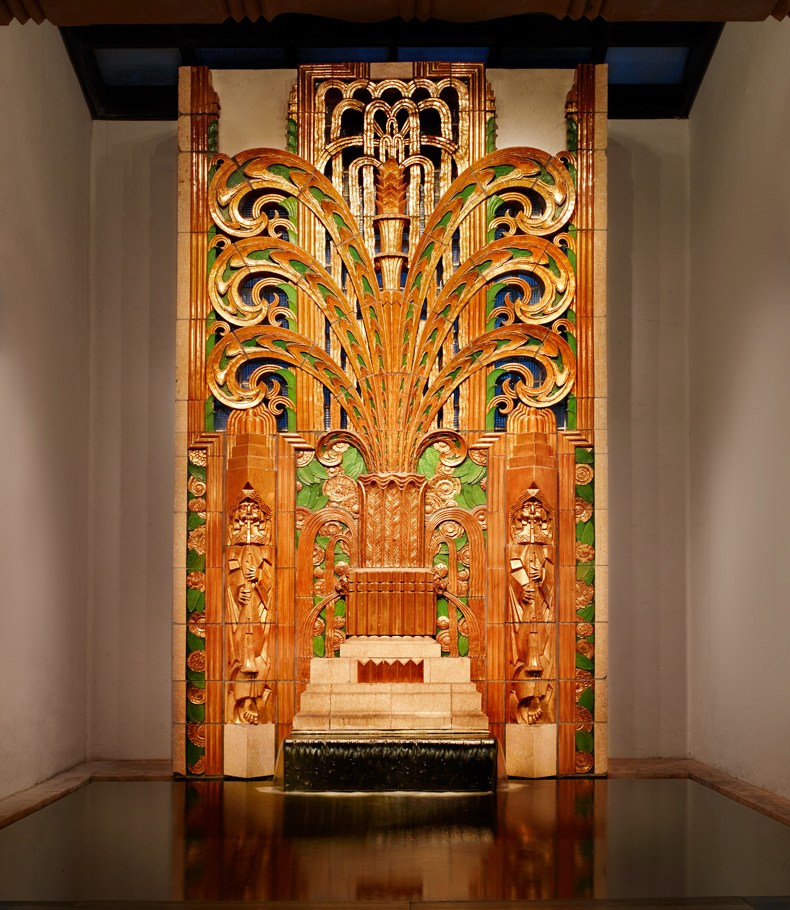
‘Frozen Fountain’ window grille (1929) designed by William Harold Lee and Armand Carroll and manufactured by Conkling Armstrong
The Wolfsonian, Miami Beach
Water seems to rise and break apart in mid air across this window grille, assembled from more than 100 tiles of glazed terracotta – a prime example of the frozen fountain, one of the more popular motifs in art deco design. Architects William Harold Lee and Armand de Courtieux Carroll drew it up in 1929 for the three-storey entrance of the Norris Theatre, a cinema in Norristown, Pennsylvania. Cinemas had grown palatial by then: weekly attendance in the United States climbed from 60 million in 1927, the year The Jazz Singer introduced synchronised sound, to 110 million by 1929. Demolished in 1983, the Norris survives chiefly through this ornate grille, now a centrepiece of the Wolfsonian’s lobby. Click here to read more.
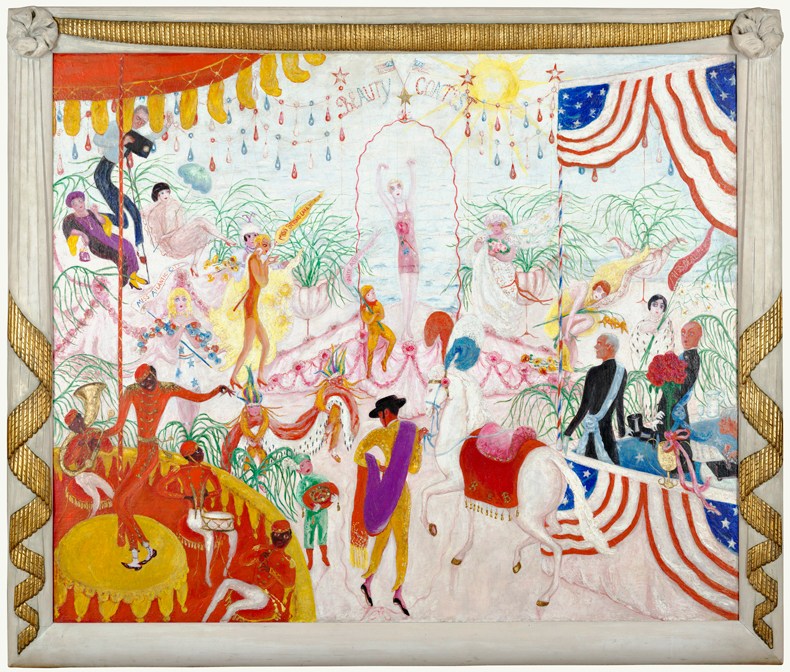
Beauty Contest: To the Memory of P. T. Barnum (1924), Florine Stettheimer
Wadsworth Atheneum, Hartford
Beneath bright banners and tasselled curtains a beauty pageant unfolds on the New Jersey shore: ‘Miss Asbury Park’, in rose-coloured bathing attire, poses under the central arch, while the showman P.T. Barnum presides from the judges’ box, summoned as the guiding spirit of American publicity. The Atlantic City contest that grew into Miss America had been devised only three years earlier by hotel owners hoping to keep visitors on the boardwalk past Labor Day. A fixture of New York society, Florine Stettheimer satirised its entertainments and excesses from within. Her handling here is as ostentatious as her subject, with paint piped on like icing, jewels fixed to the surface and a carved frame that draws back like a stage curtain. She appears at upper left, watching from beneath a parasol beside her friend the photographer Edward Steichen. Click here to find out more.
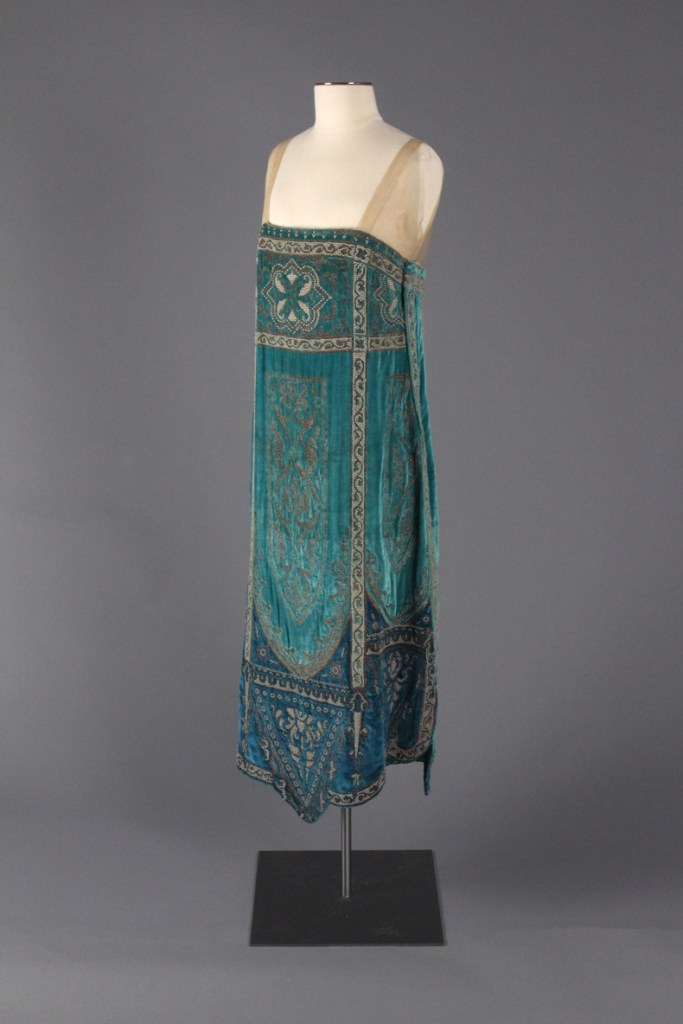
Evening gown (c. 1926), Callot Soeurs
Fox Historic Costume Collection, Drexel University, Philadelphia
Bronze embroidery and hundreds of pearl beads cover this turquoise velvet gown, worked into panels of chevrons, arabesques and lozenges. Callot Soeurs had opened in Paris in 1895 with a reputation for lace and antique textiles, and the house kept its footing in the 1920s by applying decorative ornament to tubular silhouettes. Beaded dresses of this sort were designed to swing – made to be seen from across a room, in motion. Click here to learn more.
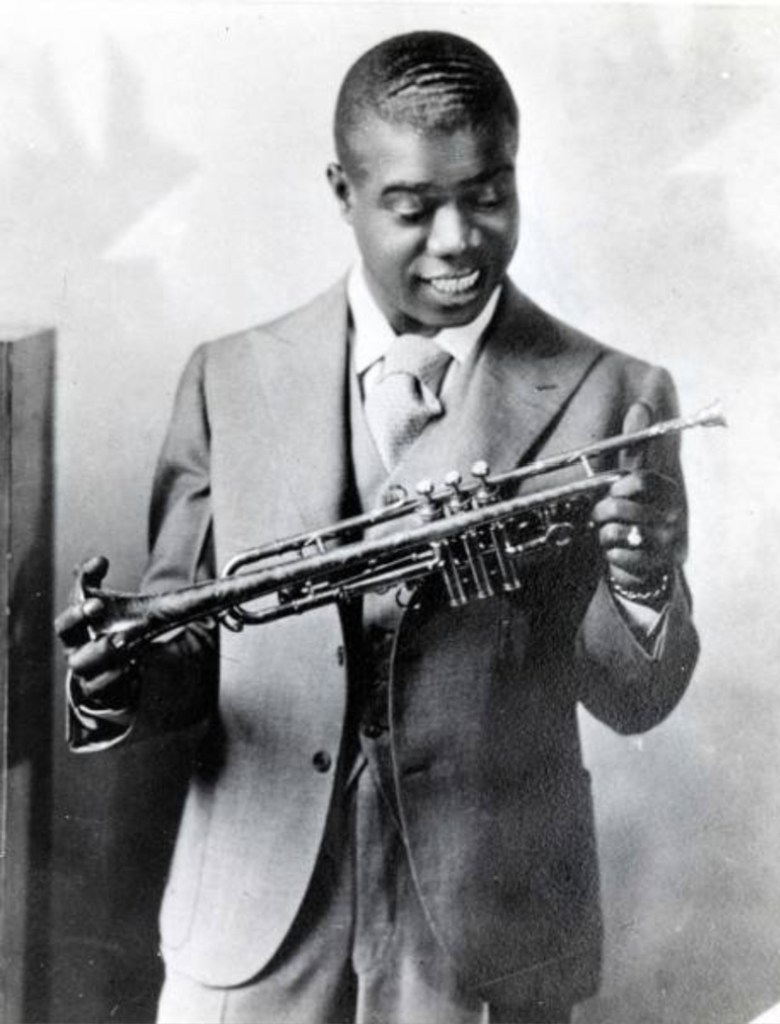
Publicity photo of Louis Armstrong (c. 1930), Stuart Lynn
New Orleans Jazz Museum
In a three-piece suit, head bowed and grinning, Louis Armstrong holds his trumpet in both hands. Stuart Lynn, who documented many of the leading musical figures of the early jazz era, made the photograph around 1930, by which point Armstrong’s Hot Five and Hot Seven sessions had shifted the music’s centre of gravity from the ensemble to the soloist. The museum also holds the cornet Armstrong learnt on as a boy, during his time at the Municipal Waif’s Home in 1913–14, where he had been sent for firing a pistol in the street on New Year’s Eve. Its mouthpiece is notched with cuts made by Armstrong himself, as a strategy to improve his technique. Click here to discover more.

‘Four things to see’ is sponsored by Bloomberg Connects, a free arts and culture platform that provides access to museums, galleries and cultural spaces around the world on demand. Explore now.