From the October 2026 issue of Apollo.
More than 200 years before the release of Christopher Nolan’s film The Odyssey, a very different version of the Homeric epic became an unexpected cultural sensation. In 1793, John Flaxman’s radically minimalist outline illustrations of scenes from the Iliad and the Odyssey had just been published in Rome and were already causing a stir among Grand Tourists, artists and connoisseurs. Unlike Nolan, Flaxman was an artist whose career was not yet established, and who needed money and patronage. His illustrations were commissions that commanded a relatively meagre fee and he never saw royalties from their publication. He worked on the drawings alone, at night, while his days were devoted to the monumental sculptural commission that he hoped would make his name. The resulting prints (initially etched by Tommaso Piroli after Flaxman’s designs) were modest in size and consisted only of lines on a white page, with no colour and very little suggestion of volume. But viewers were captivated by Flaxman’s simplified language of line, which seemed to combine narrative immediacy with a sense of deep, authentic antiquity. By the early 19th century, Flaxman’s illustrations to Homer, as well as Dante, Hesiod and Aeschylus, had been published in multiple editions across Europe, making an impression on artists as various as Jacques-Louis David, Jean-Auguste-Dominique Ingres, Eugène Delacroix and Francisco Goya.
While Flaxman’s fame was secured by his outlines, his work in three dimensions would go on to earn him ample accolades: Samuel Taylor Coleridge called him the ‘First […] of all modern sculptors’. By the time of his death in 1826, he had been institutionally canonised as the Royal Academy’s first professor of sculpture and his tomb monuments could be found in cathedrals and churches across England. Flaxman was compared in his lifetime to his contemporary Antonio Canova and was later seen as a forerunner of Bertel Thorvaldsen. But posterity has been less kind to him than to either Canova or Thorvaldsen: while they remain widely recognised as giants of neoclassical sculpture, Flaxman has been the subject of far fewer museum exhibitions and column inches. The comparison between Flaxman and his friend William Blake is even starker. At his death, Blake was a little-known engraver and eccentric visionary, while Flaxman was an internationally celebrated artist. As well as his profound influence on those working in the classical tradition, Flaxman also played a role in raising the reputation of medieval and early Renaissance art across Europe, influencing both the Nazarenes in Germany and, like Blake, the Pre-Raphaelites in Britain. But today, the artistic fortunes of Blake and Flaxman have almost entirely reversed. The last major monographic show on Flaxman (which travelled from the Hamburger Kunsthalle to the Thorvaldsen Museum in Copenhagen and the Royal Academy in London) took place in 1979, and more recent shows have been small, with a focus on his drawings or outlines rather than sculpture. A few dedicated art historians, chief among them the late David Bindman, have done much to bring Flaxman to critical notice, but detailed scholarly interest has remained a relatively niche affair.
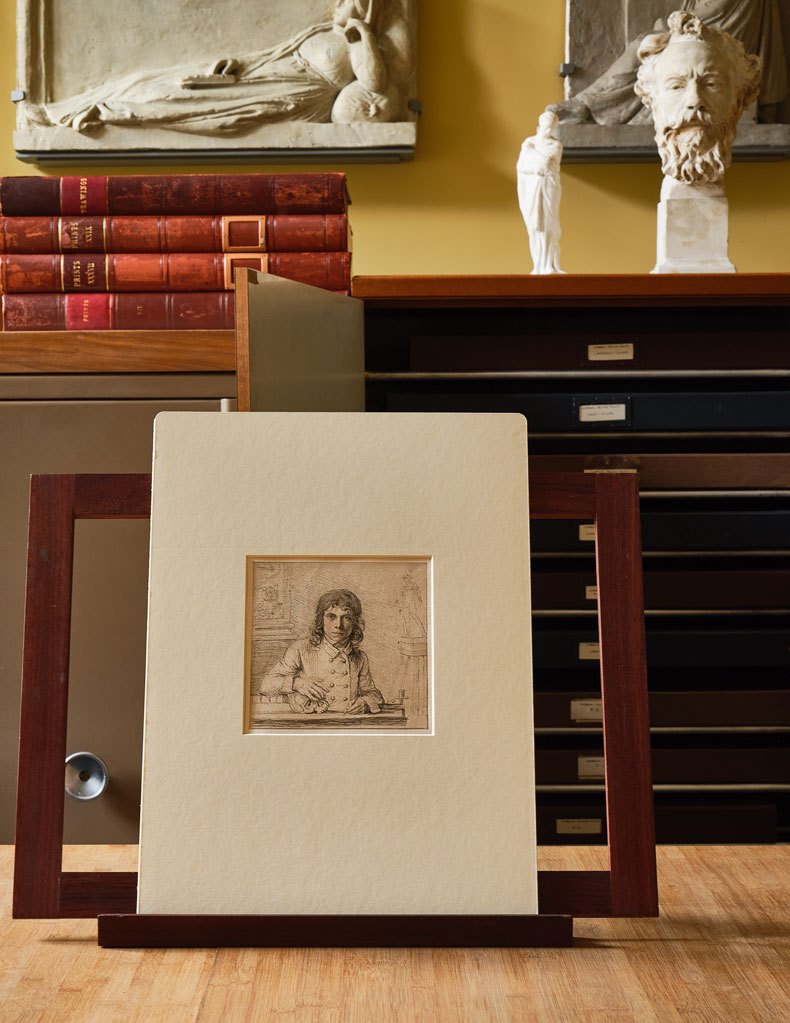
The bicentenary of Flaxman’s death provides an opportunity to reassess his legacy. In York, the city of his birth, he is the focus of a significant new exhibition at York Art Gallery: ‘Turner, Wedgwood & Beyond: Inspired by Flaxman’, curated by Beatrice Bertram and Richard Johns (until 17 January 2027). As the title suggests, the names of more familiar artists are necessary to make Flaxman marketable to a wide audience in the 21st century. But the show also aims to examine the broader communities of which Flaxman formed a part, not only as an artist but also as a colleague, collaborator, correspondent, teacher and friend. Particular attention is given to Flaxman’s relationship to British painting, with his sculpture, designs and drawings appearing alongside works by Blake, Angelica Kauffman, Benjamin West, J.M.W. Turner and William Etty. For these artists and many more, Flaxman was a touchstone, even when he did not exert a direct influence.
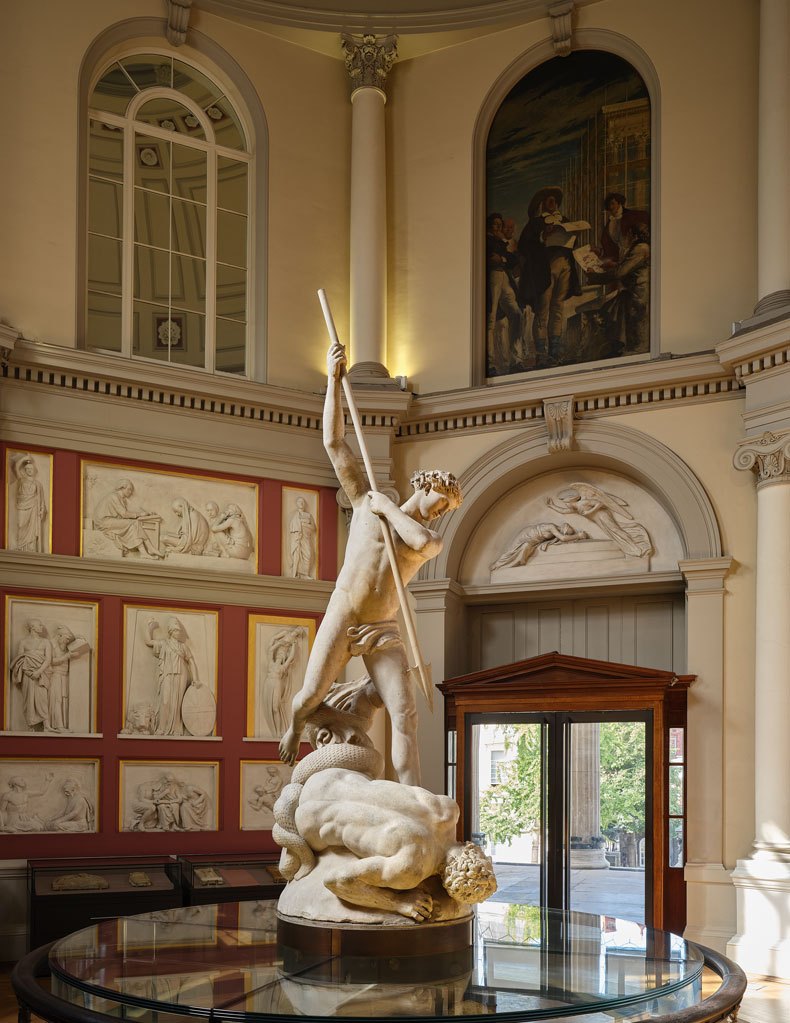
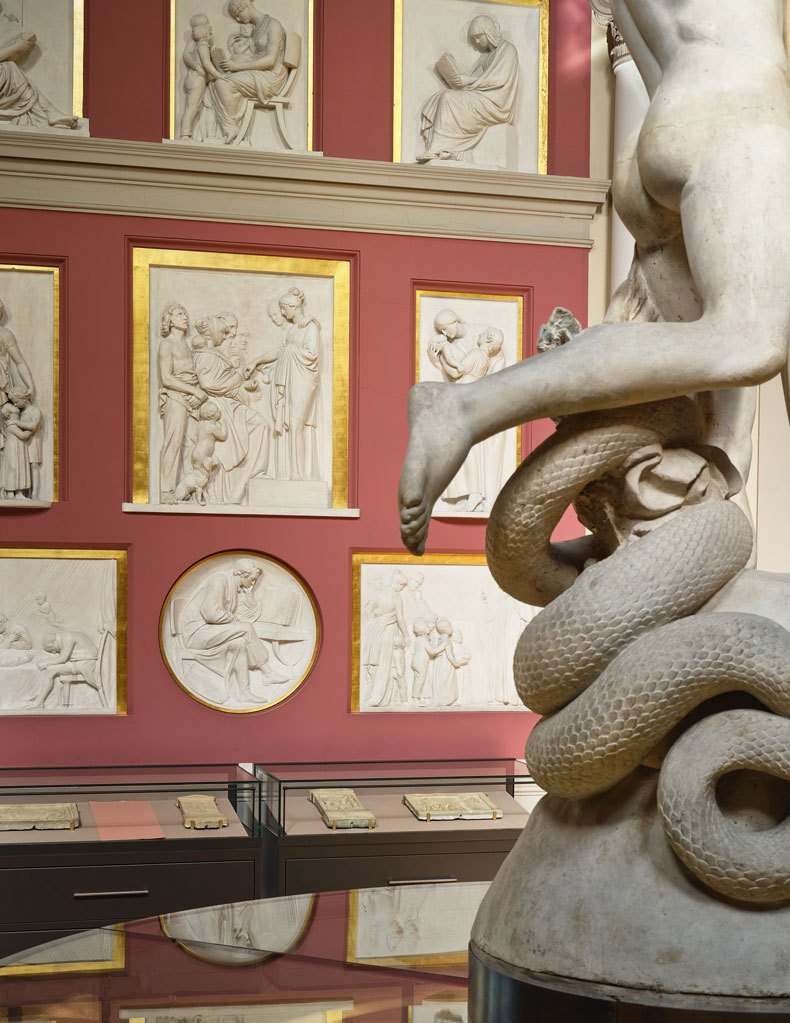
Although Flaxman was born in York and lived in Rome for seven years in his thirties, he spent most of his life in London, where the largest repository of his works can be found at UCL. To mark the artist’s bicentenary, UCL Art Museum has undertaken a programme of conservation and expanded the number of works on display, adding fresh interpretation with input from the Flaxman scholars Eckart Marchand and Michael Adam Smith. At the core of the collection is a remarkable group of preparatory studio models in plaster, which were first put on display in 1851 in the dedicated Flaxman Gallery. The space has the feeling of a chapel or shrine to Flaxman’s work: the pale plasters are framed by gilding against deep pink walls, giving them a gravity that belies their humble medium. (This decorative scheme dates back to 1872 and was recreated during restorations in the late 20th century.) The gallery’s prominent position, under the architect William Wilkins’s classical dome, indicates the reverence that Flaxman commanded in the years after his death, and students still pass regularly through the gallery to reach the library today.
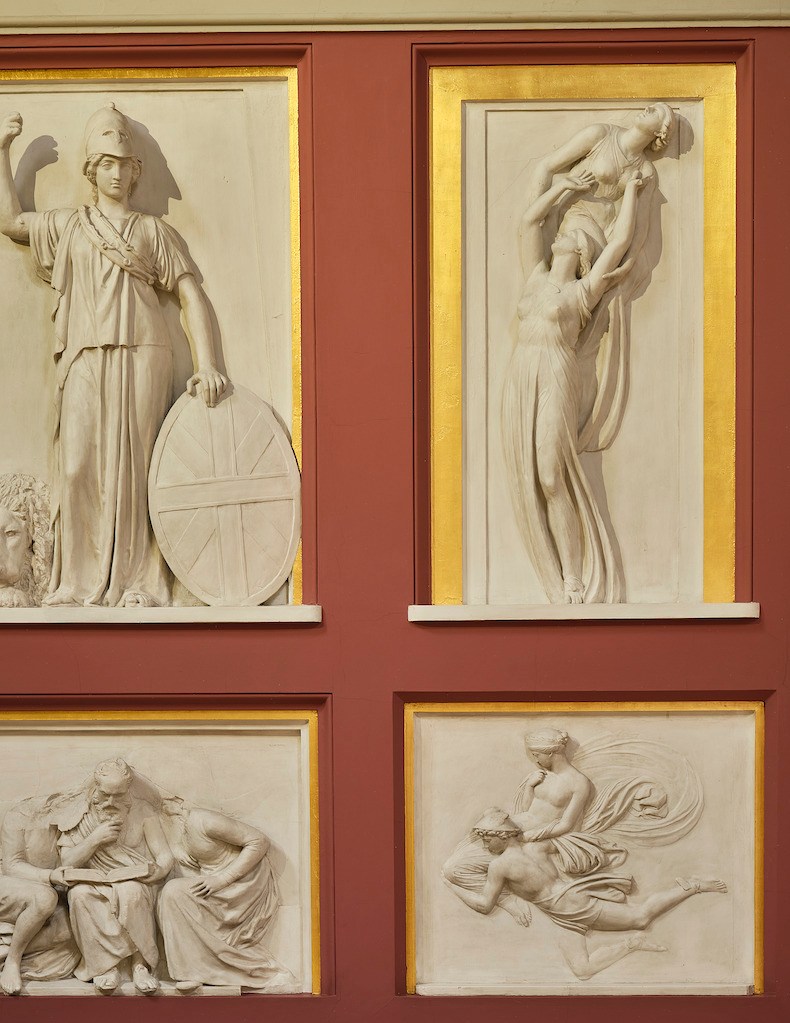
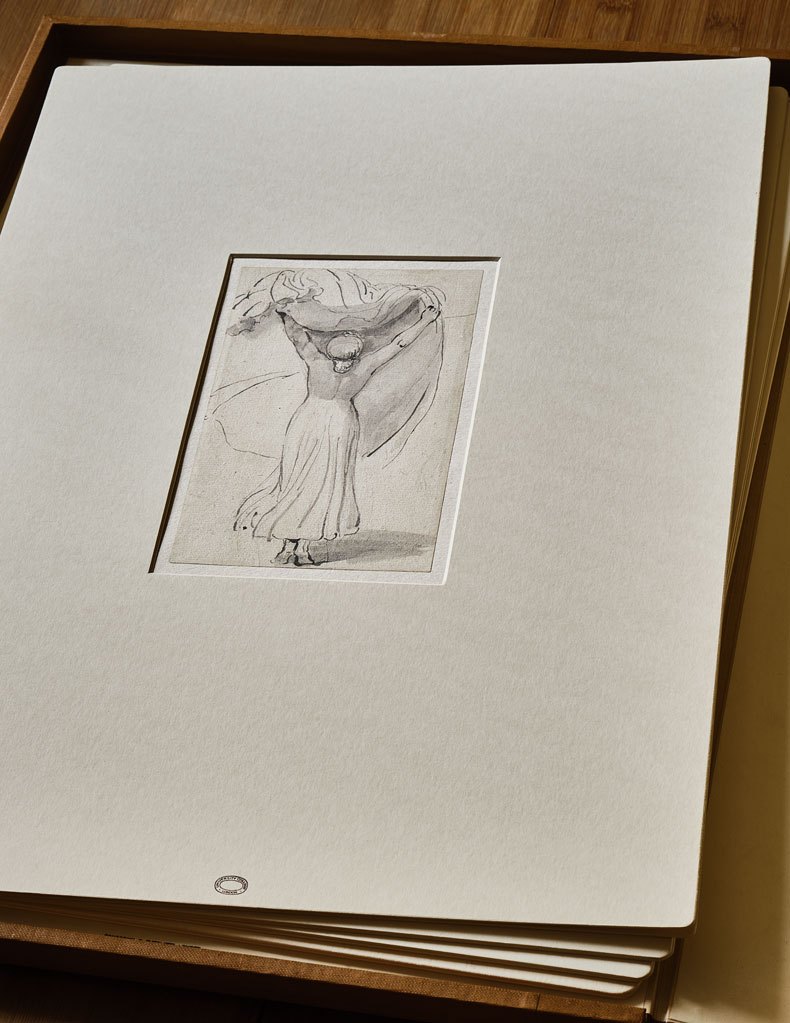
The UCL collection allows us to see the close relationship between Flaxman’s classical and Christian works: his funerary monument to Elizabeth Knight from c. 1806–09 and his relief of Pandora Brought to Earth by Mercury from 1805 (which appear together in the Flaxman Gallery) both deal with the transition between earthly and spiritual states. While an angel gently conveys Knight’s soul up to heaven, Mercury is carrying Pandora down from Mount Olympus, from immortality to mortality. The collection also includes a trove of Flaxman’s drawings, which reveal his obsessive exploration of the ways in which human actions and emotions could be evoked by lines on a page. He often started from direct observation of a striking movement or an affecting scene – a woman shaking a sheet, or a mother comforting a group of children. Repeatedly returning to such motifs, Flaxman distilled them into simplified, almost emblematic forms, just as he did in his outline illustrations. UCL’s holdings, including drawings and plaster models in low and high relief, provide a unique opportunity to understand Flaxman’s processes of design and his constant translations between two and three dimensions, from line into volume and back again.
Flaxman’s interest in translating between forms and media helps to explain why he became a pioneer of what we now call ‘industrial design’, making models for works that were executed by other manufacturers. Chief among these was Josiah Wedgwood, who employed Flaxman after he graduated from the Royal Academy Schools. For Wedgwood, Flaxman made low-relief models that were applied to a range of objects, from small, easily reproducible medallions to large-scale vases produced in tiny editions. Working on a piece-by-piece basis in London, he sent his reliefs – modelled in wax on slate backings – to Wedgwood’s factory in Staffordshire, where they were transformed into plaster moulds and put into manufacture. Wedgwood’s signature ‘jasperware’, only recently perfected, allowed Flaxman’s models to be reproduced with unprecedented crispness in white relief on a coloured background, with finishing touches added by craftsmen in the factory. The sculptural quality of Flaxman’s reliefs meant that Wedgwood could market the resulting objects as works of art in their own right (although he never mentioned the sculptor’s name in his catalogues). When Wedgwood presented the British Museum with a jasperware vase – the so-called Pegasus vase, the first item of modern manufacture to be accepted into the collection – he chose one that bore Flaxman’s designs.
Flaxman’s models for Wedgwood have sometimes been seen as ‘hack work’, since they were undertaken to supplement his income while he attempted to kickstart his career as a sculptor. He certainly needed the money and his financial needs only grew when he married his wife, Ann Denman, in 1781. Yet his Wedgwood designs are quite unlike the engraving work that William Blake undertook, begrudgingly, to make ends meet. They reflect a profound interest in recasting forms between different media and dimensions, from initial design to finished ceramic piece. Flaxman had grown up in the studio of his father, John Flaxman Senior, who was a maker of models and casts, many of which derived from pre-existing sculptures by other artists. He was thus intimately familiar with collaborative processes of art-making that both separated out and blurred the lines between design and execution. Indeed, some of Flaxman’s most innovative work was made in partnership with other makers, as various objects in the York exhibition show.
Reproductive technologies were embedded in Flaxman’s sculptural practice as much as in his work for manufacturers. His UCL studio models were in the medium of plaster, an intermediate stage between clay model and final marble that allowed the artist to work out his ideas and transmit them to studio assistants and patrons. Flaxman’s friend, the scholar and diarist Henry Crabb Robinson, believed that Flaxman’s plasters were superior to his finished marbles, since ‘the models which come from the hand of a great sculptor are more truly his works than the marble afterwards executed’. Since the 19th century, plaster has suffered by association with unfashionable reproductive and pedagogical casts (so much so that many models in UCL’s collection were lost after bombing in the Second World War, perhaps because they were not valued to the same degree as marbles). But Flaxman’s work shows how subtle it can be: many of his plasters preserve a physical record of his hands and tools on a soft, impressionable surface as he refined his ideas in three dimensions.
Flaxman may have had physical reasons for favouring design and model-making over the more strenuous work of execution in marble, which was often done by assistants: several sources suggest that he used crutches as a child and had a spinal condition that affected his posture, although its later impact is unclear. The York exhibition is the first to begin to explore what it meant for Flaxman to live and work with a disability, and this remains an important line of enquiry for future scholarship. Flaxman’s preoccupation with the human body – as a subject for anatomical study, as a vehicle for ideal beauty and emotional expression, and as clothing for the soul – may relate to his own experience of corporeality as well as to his religious convictions. He was devoted to the teachings of Emanuel Swedenborg, the unorthodox Swedish theologian and mystic who believed that the soul was not a disembodied spirit that awaited later reunion with the body in resurrection. Instead, a person continued after death in a spiritual body that was fully human in form. The Swedenborgian concern with the relationship between inner essences and outward forms helped to shape Flaxman’s funerary monuments and may even be related to his translations of artistic ideas between media.
The importance of Flaxman’s plaster models was recognised soon after his death by his heir and sister-in-law Maria Denman and by Crabb Robinson, who believed that they would eventually be ‘considered as the greatest treasure of national art we have to exhibit’. After the failure of several attempts to place them in a national collection, Crabb Robinson, by then a prominent figure at UCL, persuaded the college to provide suitable space for Flaxman’s work. After Denman donated the sculptures, Crabb Robinson raised funds from subscribers to pay for their restoration and installation. He framed this as an act of preservation in the national interest and was rewarded with the support of Prince Albert, one of the first visitors to the finished gallery.
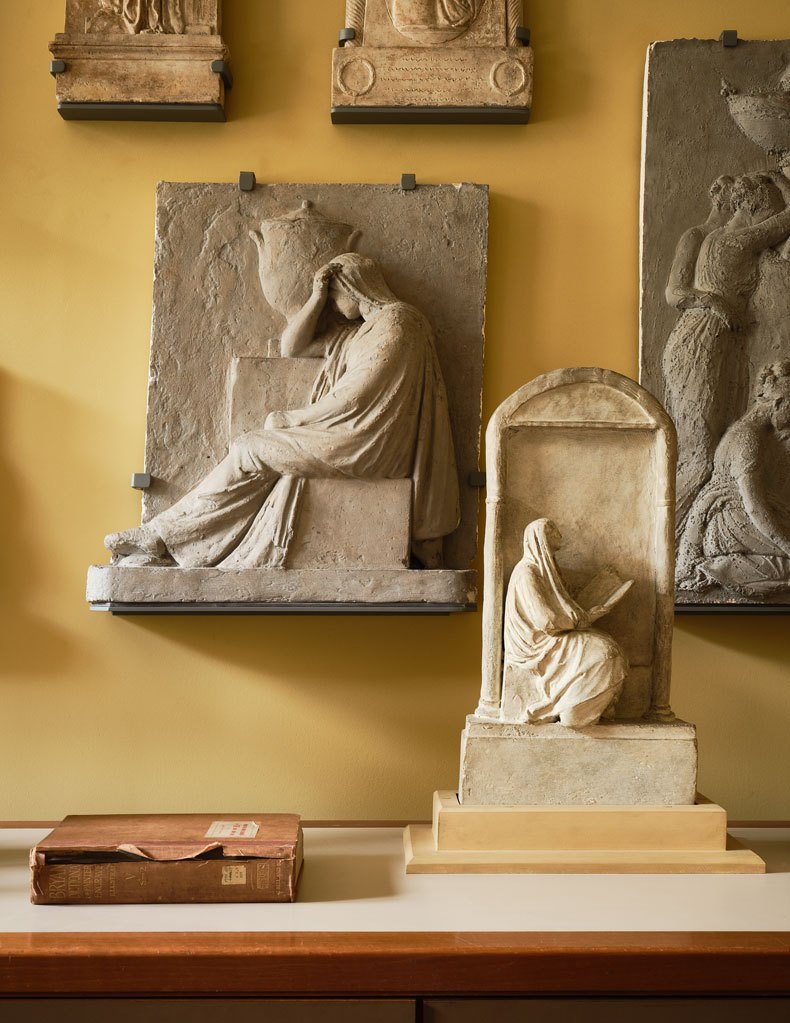
Most of Flaxman’s marble reliefs are embedded in church architecture and can never be brought together, but thanks to Crabb Robinson and Denman’s efforts, his compositions can be appreciated as a group at UCL. At first glance, his funerary monuments might look like variations on a predictable theme: portraits of the deceased jostle with mourning women, angels and allegorical figures. But on closer inspection, the care and sentiment that Flaxman invested in each commission becomes clear. Although he is sometimes accused of a dry and academic classicism, these monuments show moments of intimate emotion: the quiet affection between mothers and children, between families surrounding a dying loved one, and between teachers and pupils. Even the relationship between the human soul and the angels that convey it to heaven is depicted as one of tender physical touch. By contrast, the gallery’s centrepiece – the monumental plaster sculpture of Saint Michael Overcoming Satan (made in preparation for the marble at Petworth House, 1817–26) – portrays the Christian struggle between good and evil in almost Homeric terms, as a nude, muscular hero battles a mythological monster, half-man and half-serpent.
As a fiercely ambitious youth, Flaxman dreamed of making heroic monumental sculptures of ancient mythology, following in the footsteps of Phidias and Michelangelo. But the market for this sort of work was limited: Grand Tourists were unreliable patrons, apt to make promises on which they never delivered. Similarly, the production of national monuments might have been prestigious, but it involved competitions, committees and delays, with uncertain financial reward. This helps to explain why Flaxman focused on design and later on funeral monuments, which was less glamorous work but which provided a steadier income. He also embraced unusual commissions: at the request of Raja Serfoji II, nominal ruler of the Thanjavur Maratha kingdom, Flaxman created a life-size portrait sculpture of the raja himself, which incorporated elements drawn from Indian sculptural traditions to create a hybrid composition still on display in Thanjavur today. This episode is the subject of new research by Smith (whose PhD forms part of the York exhibition project), examining Flaxman’s entanglements with British imperialism alongside his keen interest in Indian, Chinese and even Native American art.
Flaxman’s Swedenborgian beliefs offer one way to make sense of both his professional flexibility and his openness to different artistic traditions. They informed his conception of art as a kind of moral vocation, not simply because it could communicate spiritual truths and cultivate virtue in its viewers, but also because it made the artist useful in the world, and this was a way of serving God. Yet much of the energy in Flaxman’s work emerges precisely from its contradictory aspects: the pagan and the Christian, the heroic and the decorative, the idealistic and the pragmatic. Ironically, these contradictions may also account for Flaxman’s loss of reputation in the two centuries since his death. Flaxman is perhaps the only sculptor who is best known for his reproductive works on paper and his plaster models, rather than his unique marbles. The sheer variety of his work – in tone, medium and intended audience – put him at odds with the emerging model of the ‘Romantic’ artist who worked with a singular vision, uncontaminated by the preferences of the market. Nonetheless, it is Flaxman’s resistance to categorisation, his embrace of reproduction and his mastery of translating between different media that make him strikingly modern. His work simultaneously marks the decline of academic classicism and points in the direction of the commercialised domains of much later graphic illustration, industrial design and translations between the material and the digital. Today, when authorship is in unprecedented crisis, images move between formats with dizzying speed, and Homer is once again in the headlines, Flaxman’s work is ripe for rediscovery.
‘Turner, Wedgwood & Beyond: Inspired by Flaxman’ is at York Art Gallery until 17 January 2027.
From the October 2026 issue of Apollo.