From the December 2026 issue of Apollo.
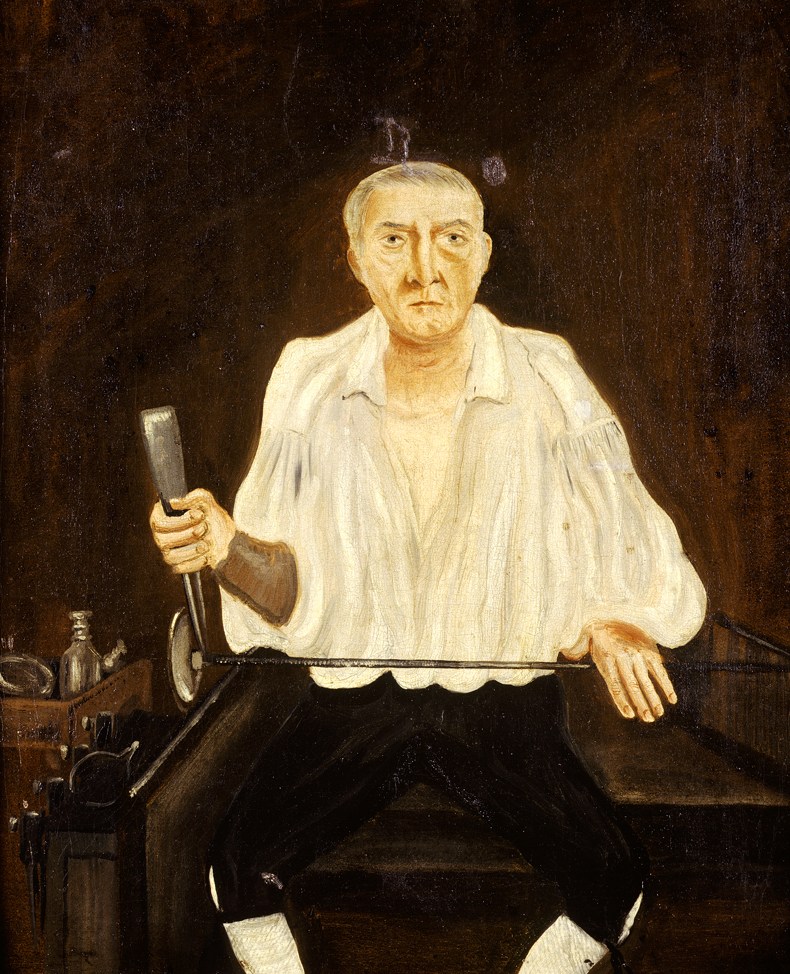
The wine glass in the portrait of a craftsman in Glassblower (1810–30) held in the London Museum is still being made. Often portraits incorporating wine glasses are of known personages, toasting or sipping. In this picture, an anonymous tradesman is shaping the foot of the glass with his tongs, his wrist protected by a leather cuff. An assortment of calipers and finished work sits next to him, along with two ring decanters; the museum considers it the earliest British painting of a glassblower. Here, the glass is seen not in a dining room or banqueting hall but instead in a hot, uncomfortable workshop at the Whitefriars glassworks, between Fleet Street and the Thames. In 1834 the wine merchant James Powell purchased the firm, which became known for its stained glass and hand-blown tableware – and later for its association with the Arts and Crafts movement.
There are a great many examples of Whitefriars wine glasses in the collection of the London Museum, which has just opened its impressive new building at Smithfield Market, and their evolving design can help us to understand economic and cultural change. The glass tax, introduced in 1746, raised costs and hampered experimentation with, for example, coloured glass; in 1845 Robert Peel, an admirer of Bohemian coloured glass, complained that the duty had doubled since 1815 and had subjected manufacturers to ‘perpetual and vexatious interference’. His government repealed the levy that year.
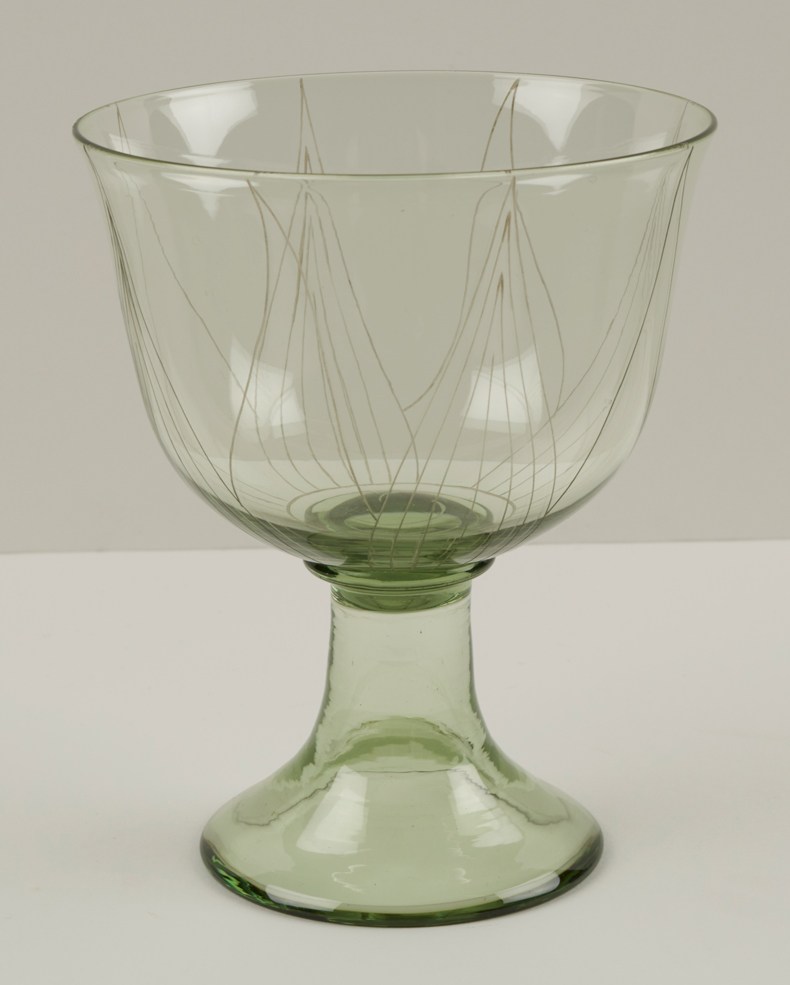
Taxation also changed drinking habits: until 1860 port and sherry – fortified wines well suited to storage and shipment – made up roughly three-quarters of British wine imports. But Gladstone’s budget of 1860 cut wine duties by between 60 and 90 per cent and the Single Bottle Act of 1861 allowed wine shops to sell for domestic consumption. France’s share of imports rose from eight per cent in the early 1850s to 40 per cent by the 1880s. In 1891 the Reform Club offered 37 champagnes, 35 Bordeaux reds, 14 ports and 14 sherries, alongside Greek, Hungarian and even Australian wines. A household manual of 1907 laid down the rules for wine at dinner, such as pairing Marsala with soup, Sauternes or hock with fish, claret with entrées, port at dessert, champagne always. Glassmakers could exploit the new demands of dining that required a specific glass for each type of wine served.
Whitefriars compiled a design book that eventually ran to 495 pages, its drawings annotated with prices and customers’ names. The London Museum’s collection charts the development of designs from relatively simple claret glasses at the beginning; by the 1860s thinner, Venetian-inspired blown glasses had emerged, as well as stained glass, some designed by Edward Burne-Jones and Henry Holiday. Whitefriars also made wine glasses that were used at William Morris’s Red House in early 1860. These, including the Red House goblet, designed by Philip Webb, were subsequently among the first products sold by Morris, Marshall, Faulkner & Co.
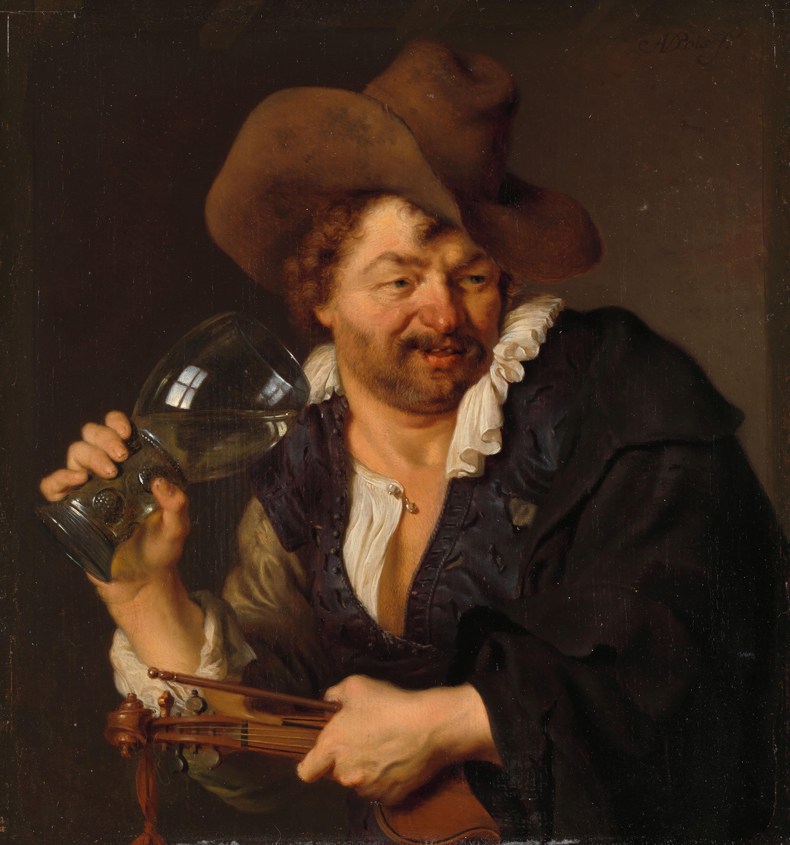
From the 1870s James Powell’s grandson Harry ran the firm. He looked to Old Masters, Dutch painters in particular, for design inspiration, as recorded in his notebooks, which he called ‘Glasses with Histories’. He records sources such as the glass vessel holding flowers in the foreground of the central Adoration panel of Hugo van der Goes’s Portinari Triptych, which inspired the ‘Tear’ glasses (1899), embellished with elongated green tears down their bowls. He improved on the Rhineland römers (wide-based, heavily decorated wine glasses) his grandfather had produced in the 1850s. Glasses in compositions painted by Hubert van Ravesteyn and Nicolaes Berchem also influenced the firm’s designs.
Other historical periods of art were also of interest to Whitefriars: a decanter in the London Museum has cuttings based on a Roman bowl excavated at Leuna in Saxony-Anhalt, and a gold vessel found at Bubastis said to have belonged to Queen Tausret (c. 1200 BC) became a sea-green lotus-engraved cup. A sherry glass for an Edwardian drinker was based on an Egyptian blue-glazed cup and constellations gave their names to the glasses Stella Draconis and Stella Navis.
The firm moved to Wealdstone in north-west London in 1923, where it survived until the 1980s. In the 1960s and 1970s it introduced zany, sculptural innovations with coloured ‘Knobbly’ glass. The Museum has more than 40 archive design boxes, with sketches, registers, production and sales figures. Behind the named designers remains the anonymous man with his tongs, overheated, cranky, but necessary.
From the December 2026 issue of Apollo.