Royal Ontario Museum, Toronto
600 Arab textiles, fabrics and other objects
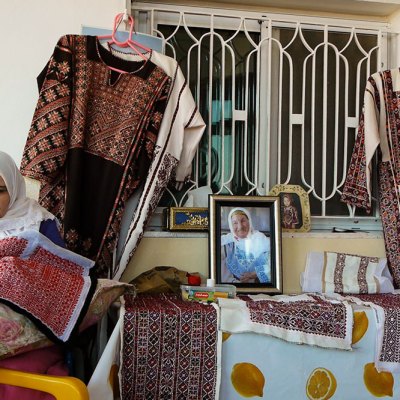
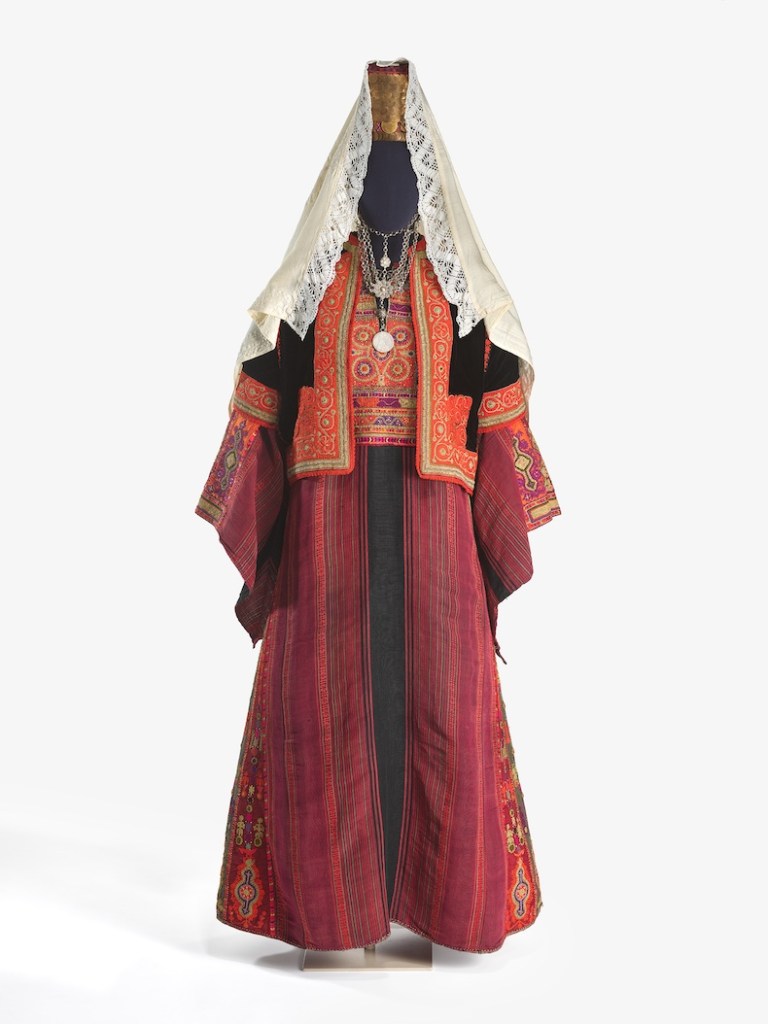
In 1967, when she was in her thirties, the Palestinian art historian and collector Widad Kamel Kawar witnessed the occupation of her home city, Tulkarem, by the Israeli military – an occupation that has remained in place for almost 60 years. Since then she has dedicated her life to studying, preserving and promoting Palestinian cultural heritage by collecting examples of clothing from each region – and from the Middle East more broadly – along with objects such as pots, jewellery and textiles. Now in her nineties, Kawar lives in Amman, Jordan, in a house that in 2014 she partially turned into a museum, though for several years she has been looking for a more permanent home for her collection. In the Royal Ontario Museum she has found that home: the Canadian museum, which already has a strong collection of Palestinian dresses dating back to the 19th century, has purchased almost 600 objects – from clogs to embroidered dresses – from the collection. ‘I visited ROM many years ago […] and witnessed how wonderfully the dresses have been carefully stored, conserved and exhibited,’ Kawar says. ‘I am confident that ROM will take care of my collection in the same way and share it widely.’
Flemish Government/Plantin-Moretus Museum, Antwerp
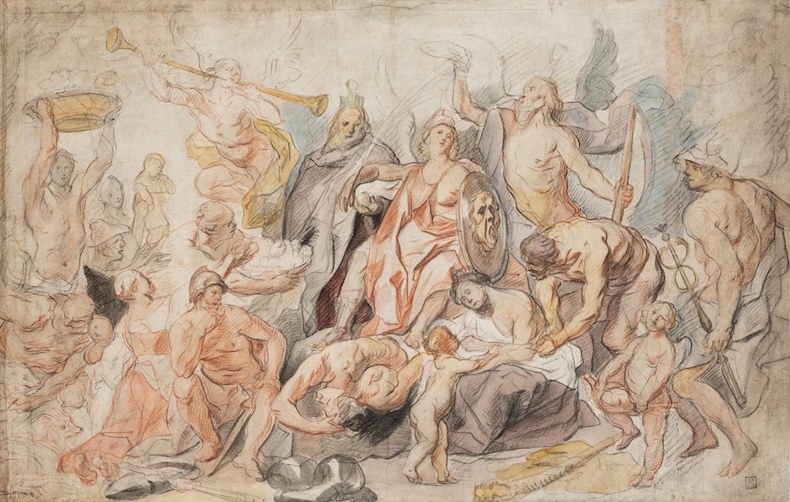
The Triumph of Minerva (c. 1660–1665), Jacob Jordaens
The Plantin-Moretus Museum has one of the most significant collections of works on paper by the Antwerpian Jacob Jordaens and has added to it with a drawing from the latter years of his career. The Triumph of Minerva (c. 1660–65) has been in private hands and was recently put up for sale, at which point the Flemish government invoked the Masterpieces Decree – which aims to prevent Flemish masterpieces leaving Belgium – and bought the work, giving it to the Plantin-Moretus on long-term loan. The drawing depicts the victory of Minerva, Roman goddess of wisdom and peace, over Mars, the god of war, and is thought to have been drawn by Jordaens as a response to the Peace of Münster, which brought an end to the Eighty Years’ War between the Netherlands and the Spanish Empire. According to Virginie D’haene, curator at the Plantin-Moretus, many of Jordaens’s late works on paper are of poorer quality than those he produced in his prime, but this work stands out in its technical accomplishment and its large size – as well as its illustrious history, having been owned for a time by Joshua Reynolds. It is currently on display but will soon be returned to storage because of its fragility and will be available to view only on request.
Art Institute of Chicago
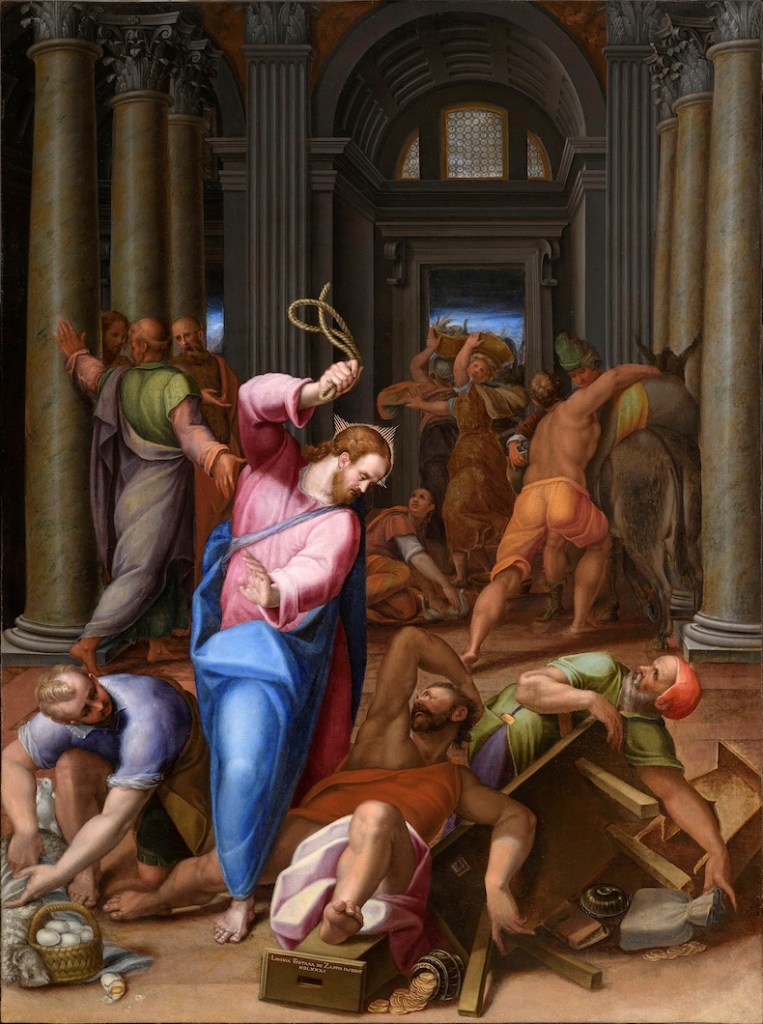
Christ Driving the Traders from the Temple (1580), Lavinia Fontana
Lavinia Fontana was born in Bologna in 1552, studied under her father, Prospero Fontana, and was a studio assistant to Giorgio Vasari, before embarking on a full-time career as a painter and becoming possibly the first professional woman artist in western Europe. Interest in her work has been growing in recent years and museums have been buying it. The Art Institute of Chicago is the latest institution to get on board by acquiring its first work by Fontana. Christ Driving the Traders from the Temple (1580), which was recently restored and presented by Trinity Fine Art at TEFAF Maastricht, was painted when Fontana was in her twenties. As such, it offers an insight into her early development as an artist. It is one of the few extant works by Fontana to show the influence of Michelangelo – specifically the drawings produced by the master in the 1540s on the same subject, now lost but known through a painted copy by Marcello Venusti, now in the National Gallery in London.
Museum de Lakenhal, Leiden
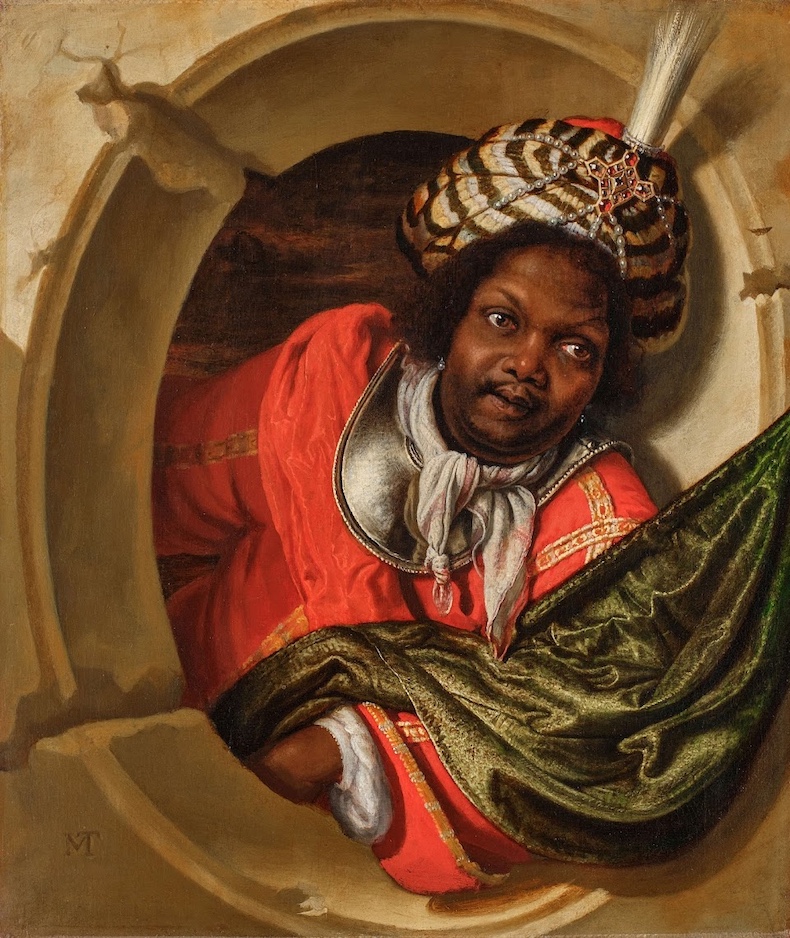
Standard-Bearer (c. 1675), Bartholomeus Maton
The Museum de Lakenhal is Leiden’s main museum of art and history, with a strong collection of 17th-century art by Leideners including Rembrandt, Jan Steen, Gerrit Dou and others. It has recently acquired an intriguing work by a lesser-known artist of the Dutch city, Bartholomeus Maton, about whom not much is known, except that he was a pupil of Dou’s and lived in Sweden towards the end of his life. The work is a tronie – a depiction of a stock character or archetype popular in Dutch art of the period – and depicts a Black standard-bearer emerging through an oval window, dressed in an elaborate turban, a bright-red jacket and carrying a green banner. The meticulous detail in the depiction of fabrics bears the imprint of Dou’s teaching and marks the work out as one of Maton’s finest paintings. Tronies were typically not based on real people, but a figure with a similar face appears in another of Maton’s paintings, meaning that the artist may well have based his standard-bearer on someone he knew.
Art Gallery of South Australia, Adelaide
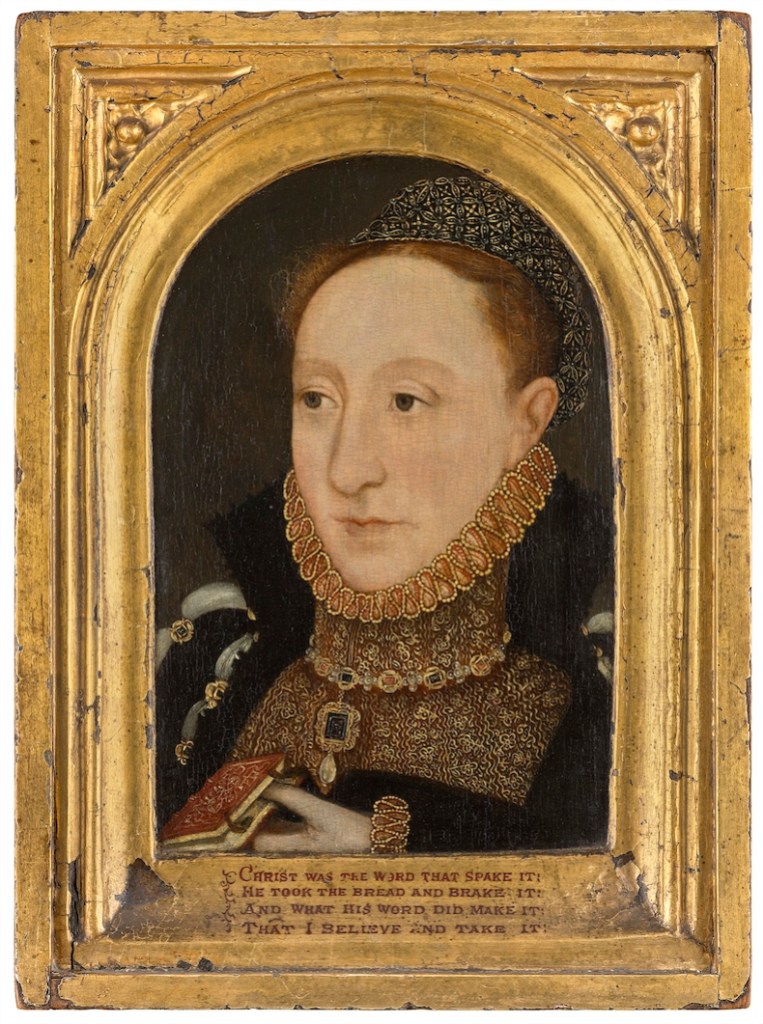
Elizabeth I with prayer book (c. 1565), unknown artist, British school
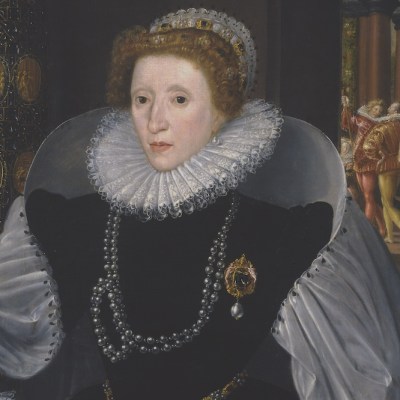
The Art Gallery of South Australia has acquired a small portrait of Elizabeth I, the first depiction of the queen to enter an Australian museum. The most famous paintings of Elizabeth are from later in her reign and tend to show her in elaborate royal dress, surrounded with symbolism – pearls representing chastity, a pelican pendant reminding us of her selfless love for her subjects, or a globe to trumpet Britain’s imperial might, for example. This earlier portrait, painted in the first few years of her 44-year reign, is a less stagey depiction. The bottom edge of the frame is inscribed with a verse attributed to Elizabeth herself, thought to have been written while she was under house arrest at Woodstock Palace in 1554, four years before she ascended the throne.
Achenbach Foundation, Fine Arts Museums of San Francisco
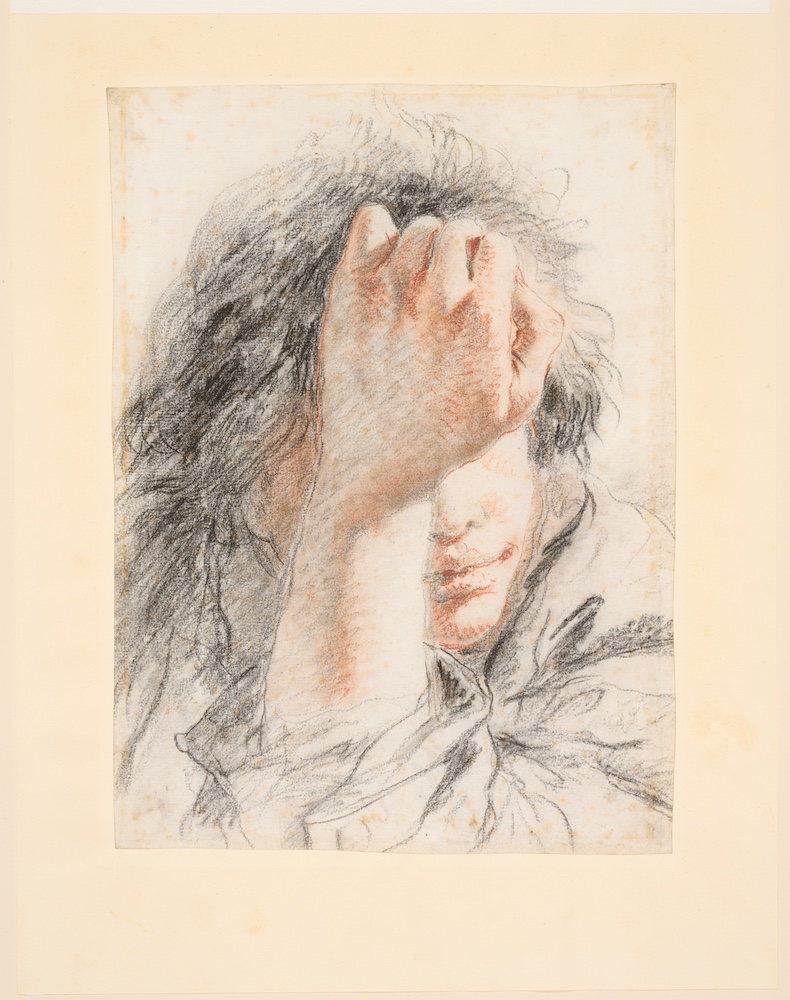
Head of a Youth with His Hand Covering His Face (c. 1760), Lorenzo Tiepolo
Lorenzo Tiepolo is much less well known than his father, Giovanni Battista, and his brother Giovanni Domenico, though as a young man he worked alongside them on a series of frescoes for the Residenz Würzburg. In 1762 he travelled to Spain, where he absorbed the influence of his peers – most of all Anton Raphael Mengs – and painted a series of pastels depicting contemporary Spanish characters. Tiepolo’s death at the age of 39 partly explains the lack of works securely attributed to him, but this chalk drawing, acquired by the Achenbach Foundation for Graphic Arts, the drawings department of the Fine Arts Museums of San Francisco, shows off the immediacy and liveliness he was able to capture on paper – something that also characterises the pastels he produced in Spain. It is currently on display in the exhibition ‘Drawn to Venice’ at the Legion of Honor (until 16 August).
National Library of Naples
Manuscript (1776) by Michele Vargas y Machuca, Duke of Salerno
The National Library of Naples has acquired a rare manuscript written and illustrated in 1776 by Michele Vargas y Machuca, Duke of Salerno, for Charles III of Spain. A collection of essays on natural history, the work numbers 91 pages and includes observations by the author on various phenomena: the origins of coral, for instance, or the physical properties of fossils. It is exceptionally well-preserved and includes five watercolours including sketches of insects and red coral, as well as parchment binding with the coat of arms of Charles III and a contemporary letter from a professor, Crescenzo Morelli, praising the scientific and literary qualities of the manuscript. As such, it gives an insight into scientific thinking of the period, as well as art, literature and the nature of bookbinding.