Metropolitan Museum of Art, New York
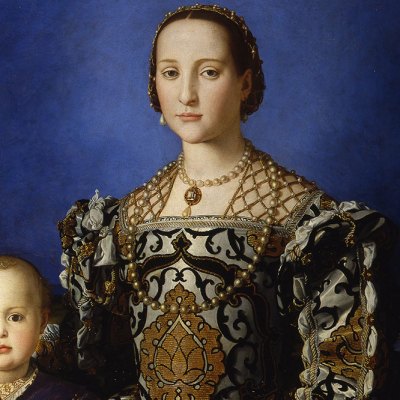
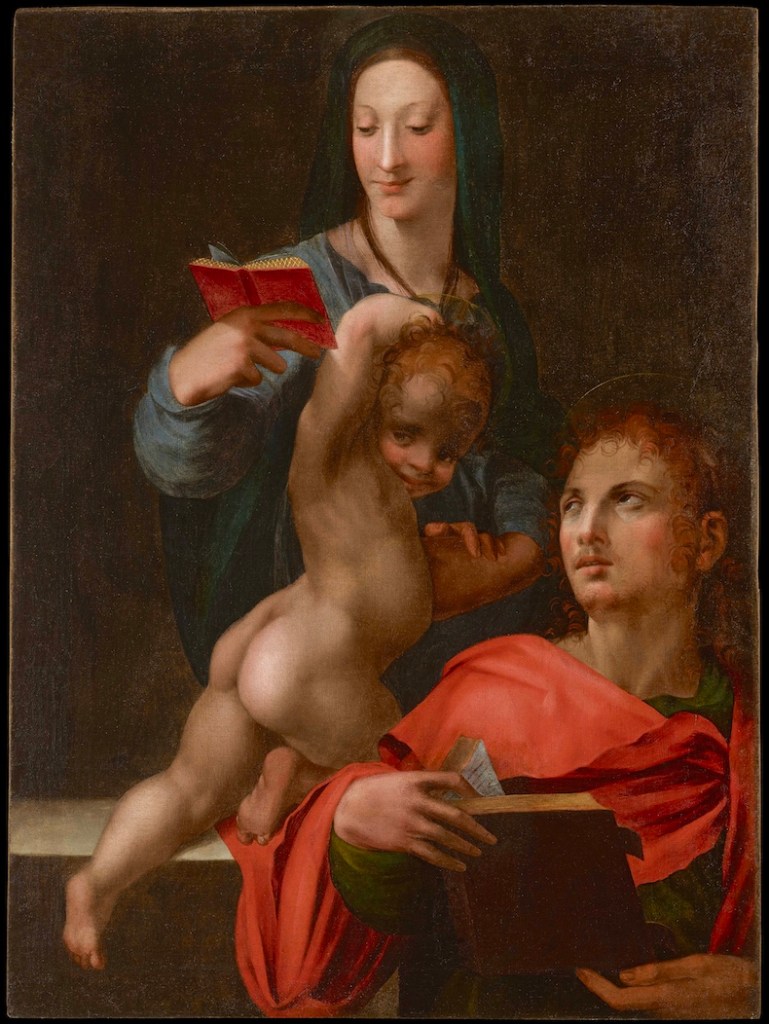
Madonna and Child with Saint John the Evangelist (c. 1512/13), Rosso Fiorentino
In his Lives of the Artists, Vasari documented Rosso Fiorentino’s first major commission, a fresco of the Assumption of the Virgin in the courtyard of the Basilica of the Santissima Annunziata in Florence. It was ‘a painting of the Madonna and Child with a half-length figure of Saint John the Evangelist’, Vasari wrote, that helped the mannerist painter secure the commission. It has long been thought to have been lost or destroyed, until recent restoration work by a conservator in London on a painting depicting the Madonna and Childrevealed the figure of Saint John the Evangelist on the right of the canvas, which had for centuries been obscured by overpainting. Until now, the work has been dated to around 1520, but this new discovery confirms the painting as the same one Vasari described, and can be dated to c. 1512 or 1513, before the creation of the Annunziata fresco. The Met is currently finalising the purchase of what is now the earliest work securely attributed to Rosso.
Italian Ministry of Culture
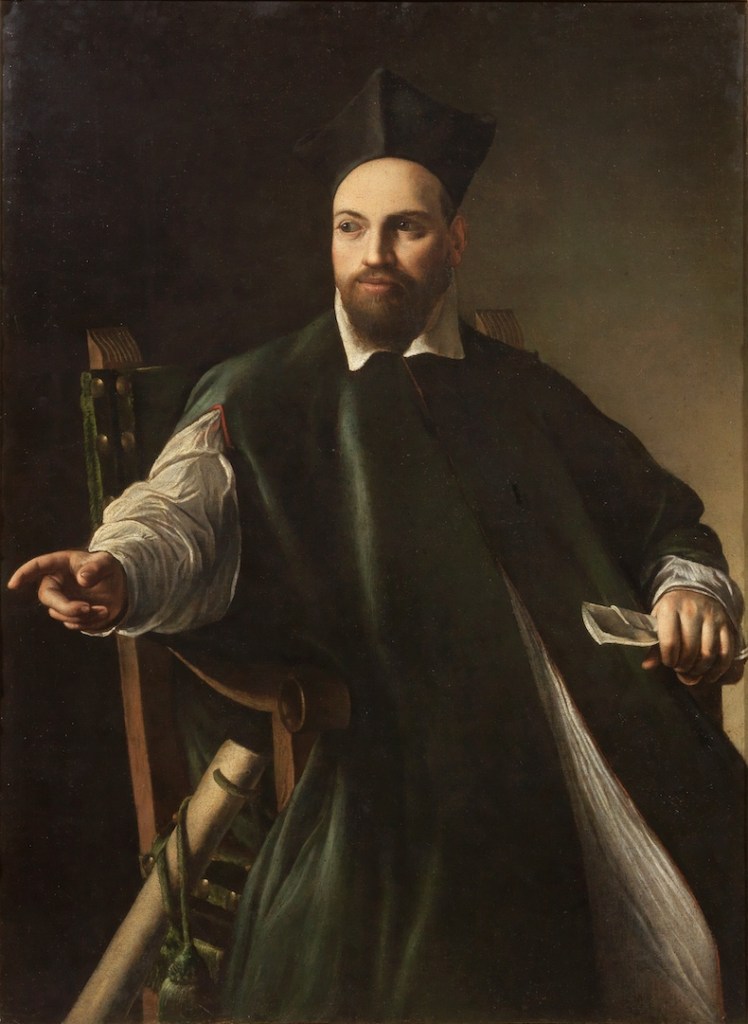
Portrait of Monsignor Maffeo Barberini (c. 1598–99), Caravaggio; Ecce Homo (c. 1445), Antonello da Messina
The Italian ministry of culture has acquired a portrait by Caravaggio for €30m – one of the largest sums it has ever spent on a work of art. The work – one of only three known portraits by the painter still in existence – depicts Maffeo Barberini, later Pope Urban VIII, at the age of around 30, and was identified as a Caravaggio by the art historian Roberto Longhi in the 1960s. It reportedly took more than a year of negotiations to prise the work from the private collection in which it had been held for decades. Naturally, the painting has been assigned to the Palazzo Barberini, which was commissioned by Maffeo Barberini in the 1620s and today holds several of the artist’s most celebrated works. The move is part of a concerted campaign to buy masterpieces of Italian art for the nation. ‘There is a policy to step up these acquisitions,’ Alessandro Giuli, the Italian culture minister, told the Associated Press in late March, at the unveiling of another artwork recently purchased by the government, Ecce Homo (c. 1470) by the Sicilian painter Antonello da Messina. That work, which was bought for $14.9m, is now in the collection of the National Museum of Abruzzo in L’Aquila, despite calls from some politicians and art historians to give the work to a public collection in Sicily.
Smithsonian Museum of American History
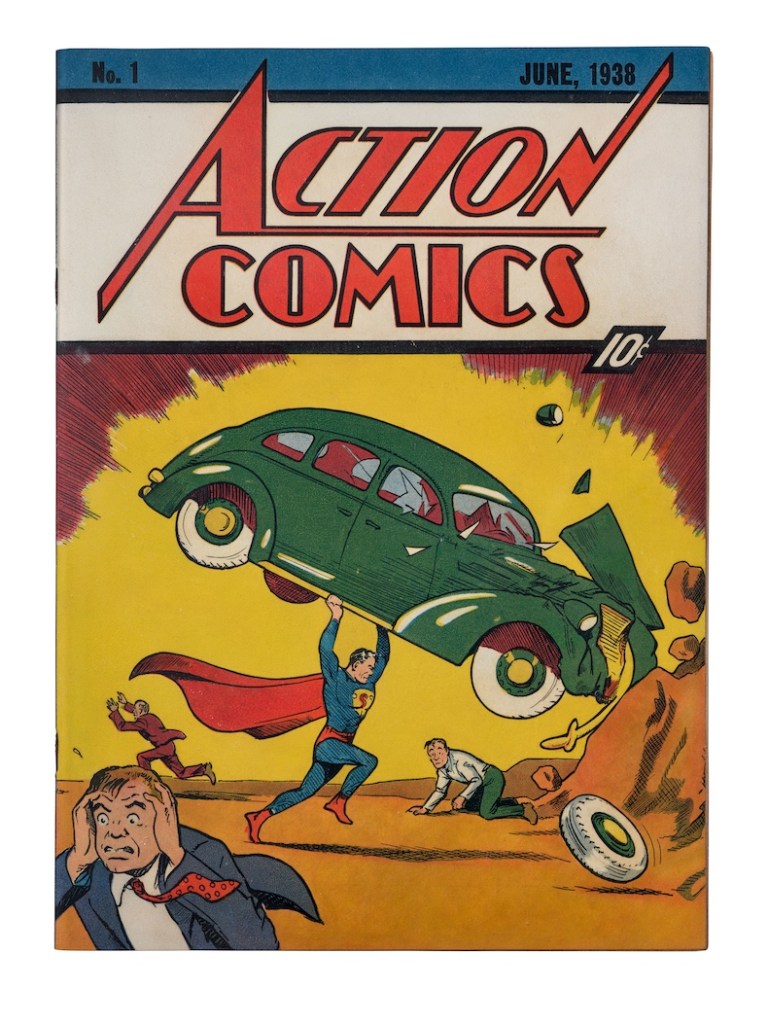
Action Comics No. 1 (1938); Captain America Comics No. 1 (1940)
The so-called golden age of comic books ran from the late 1930s to the late ’50s, the period in which Superman, Batman, Captain America, Wonder Woman and many others burst on to the scene. The starting point was Action Comics No. 1 (1938) – produced by writer Jerry Siegel and artist Joe Shuster – in which Superman, widely considered the first superhero, made his first appearance. The Smithsonian Museum of American History has announced the acquisition of a first edition of Action Comics No. 1, as well as a first edition of Captain America Comics No. 1 (1940), by writer Joe Simon and artist Jack Kirby, in which Captain America made his debut. The comics were donated by Brandon Beck, co-founder of the video game developer Riot Games, and are now on display in the museum’s long-term display ‘Entertainment Nation’, which opened in 2022 and contains some 200 objects of film, television, theatre, music, sport and literary history.
National Gallery of Canada, Ottawa
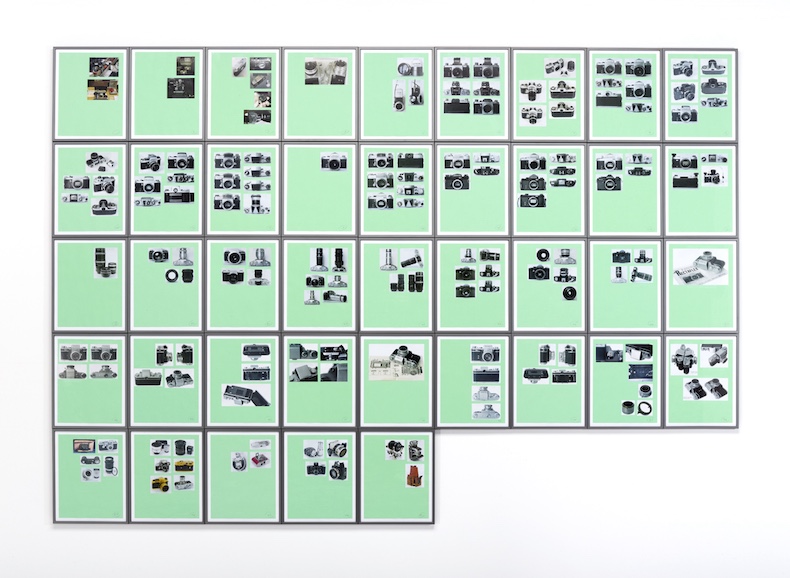
Twenty-four works from the collection of Bob Rennie by contemporary artists
The Vancouver-based real-estate developer and philanthropist Bob Rennie has since the 1970s built up one of the largest private collections of modern and contemporary art in Canada. He regularly lends his works to museums around the world, is a board member of the Art Institute of Chicago and a former chair of Tate’s North America Acquisitions Committee and, since 2012, has donated almost 300 works to the National Gallery of Canada in Ottawa. The museum has now announced another donation from Rennie and his family, made up of 24 works, 17 of which are by the photographer and conceptual artist Christopher Williams. Two of the remaining works are by Kerry James Marshall, including Wake (2003), an installation that features a model of a sailing boat with plastic medallions strewn around its base, each one decorated with a portrait of a Black figure, while the other five are by the contemporary Canadian artists Jin-me Yoon and Brian Jungen.
Van Gogh Museum, Amsterdam
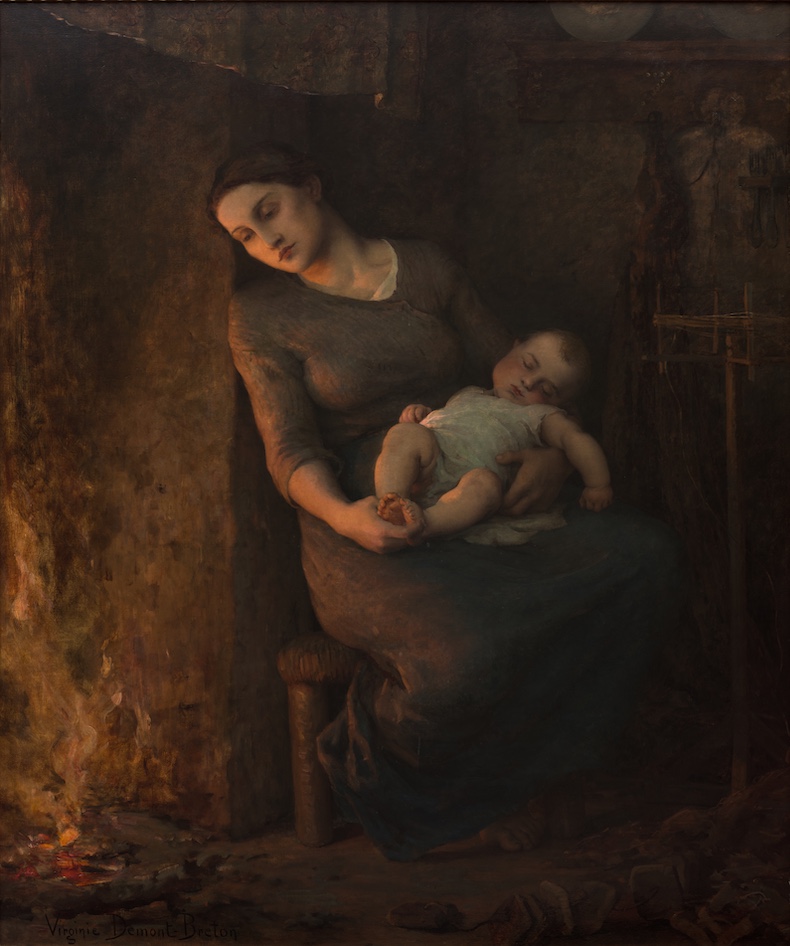
L’homme est en mer (1887–88), Virginie Demont-Breton
One of the first major works sold to a museum at this year’s TEFAF Maastricht was L’homme est en mer by the French realist painter Virginie Demont-Breton, whose work has fallen out of fashion in recent decades despite her being celebrated in the late 19th and early 20th centuries. The work depicts a young woman cradling her baby and staring wistfully into a fire – the work’s title, and the fact that there is fish netting visible in the background, suggests that she is lamenting the absence of her husband at sea. The was of interest to the Van Gogh Museum, which bought it from Gallery 19C on the opening day of the fair, because in 1889 Van Gogh produced a loose, impressionistic copy of the work, also owned by the museum today.
Hirshhorn Museum and Sculpture Garden, Washington, D.C.
Eight sculptural works by contemporary artists
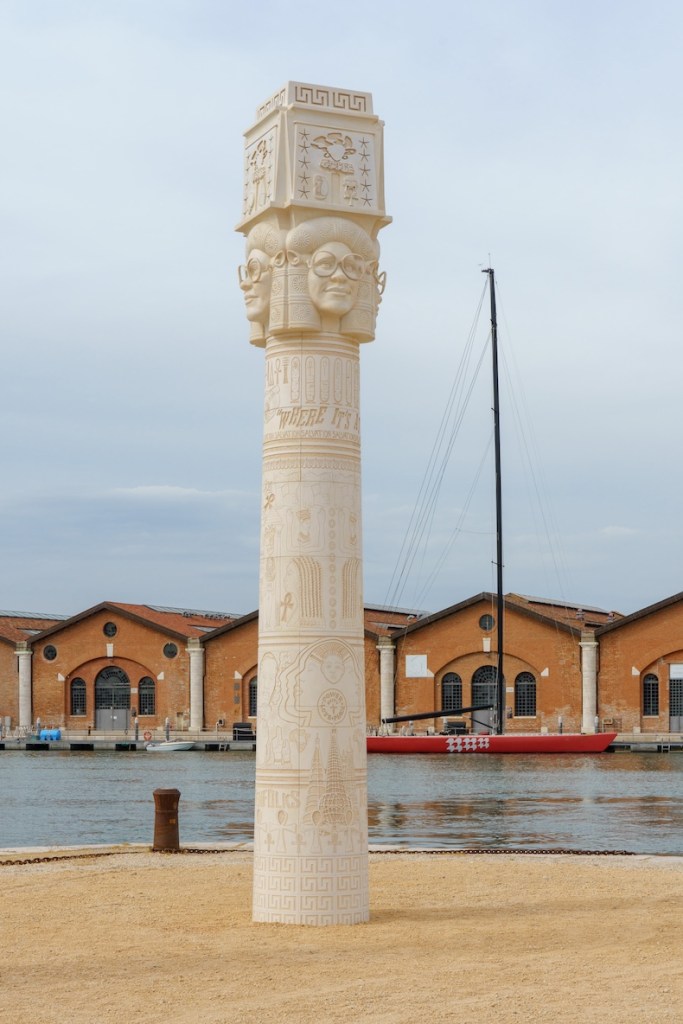
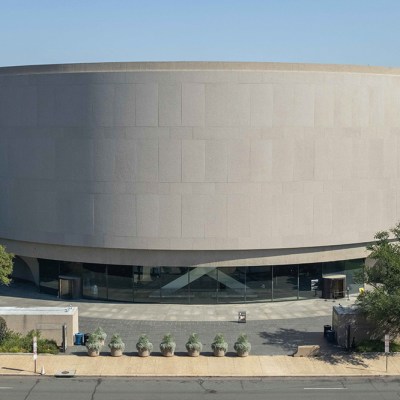
Ahead of the Hirshhorn’s sculpture park reopening in October, the museum has announced the first eight sculptural acquisitions to be installed on its grounds. The works, some of which are gifts, some purchases, include a recent piece by the American artist Mark Grotjahn, one of his ‘masks’ made from cardboard boxes that he then cast in bronze; a large concrete column by Lauren Halsey adorned with drawings inspired by signs and advertisements the artist came across in her home city of Los Angeles; and a carved stone figure by Raven Halfmoon that features vertically stacked faces and a headpiece that references the ornamental regalia worn by female dancers of the Caddo nation of Oklahoma, where Halfmoon is from. These will join works by Woody de Othello, Chatchai Puipia and others in the sculpture garden, which has been redesigned by the Japanese artist Hiroshi Sugimoto.