From the September 2026 issue of Apollo.
Update, 8 October 2026: after a public consultation, the Bank of England has selected the four animals that will appear on its banknotes: the Atlantic puffin, the European hedgehog, the barn owl and the buff-tailed bumblebee.
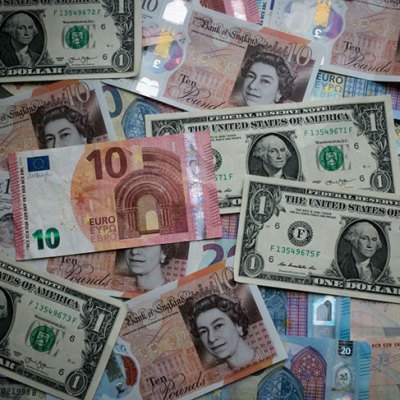
‘One of the strangest moments of my career was throwing about 250 million pounds into a machine to be shredded,’ says Victoria Cleland, the chief cashier at the Bank of England. Ever since the bank started issuing notes, people have tried to counterfeit them, she tells me, so they are periodically withdrawn, destroyed and then replaced. Doing so presents an opportunity not just to upgrade their security features but also to replace the imagery on these miniature pieces of art that we carry around in our pockets. ‘It’s a lot more complex than people realise,’ says Cleland, who is overseeing the redesign currently under way – a multi-year process conducted in collaboration with printer De La Rue. The world over, the design of banknotes must balance aesthetics and security, while evoking the identity of a nation.
So what best symbolises Britain? The Bank of England’s answer in 2026 is, apparently, a frog. Or rather, subject to a public vote, it could be a frog, hedgehog, seal, woodpecker, salmon or any of a range of 18 creatures native to the UK. The list was drawn up by a panel of wildlife experts and the governor of the Bank of England, Andrew Bailey, will consider the results of the vote when deciding which four animals will appear on the £5, £10, £20 and £50 notes.
These animal motifs will replace great individuals from Britain’s history who have appeared on the notes since 1970, when William Shakespeare became the first person other than the monarch to feature on a Bank of England note. Currently, in ascending financial value, they feature Winston Churchill, Jane Austen, J.M.W. Turner and Alan Turing. The theme of nature was also decided by a public consultation, in which people were asked whether they’d like to retain ‘notable historical figures’ or choose something different. Out of more than 44,000 responses, nature was the overwhelming favourite, receiving 60 per cent of the vote, followed by architecture and landmarks on 56 per cent. Historical figures placed third, with 38 per cent, suggesting that Britons are less attached to their history than one might assume.
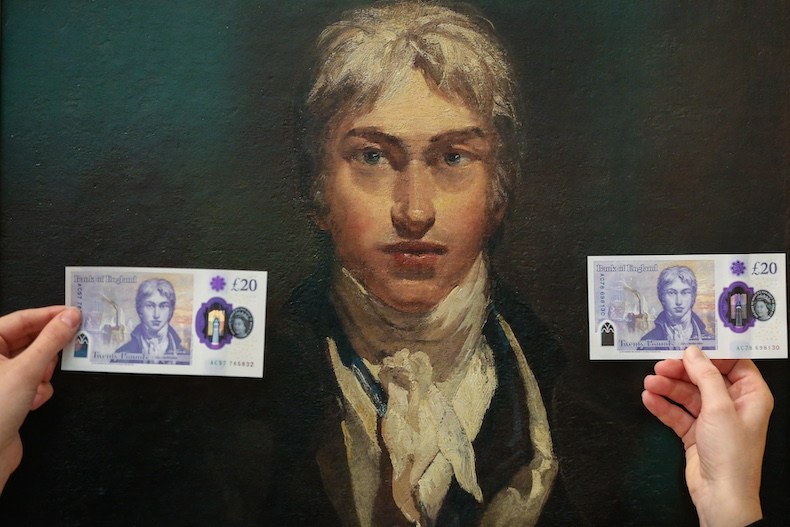
In an apparent break with the will of the people, the leaders of the Conservative, Liberal Democrat and Reform parties were quick to criticise the removal of Churchill. Kemi Badenoch called the move ‘erasing our history’ and Ed Davey of the Lib Dems said: ‘I can’t think of a worse time to do this with a war waging in Europe.’ This isn’t the first time the bank has had to address the difficult question of who or what represents Britain in a changing world. Austen was only the third woman to feature on a Bank of England note, following a public campaign after the bank announced that Elizabeth Fry would be dropped in favour of Churchill – which left the Queen as the only woman on a UK banknote. Cleland says that there are plenty of British historical figures to choose from and, if the public had wanted that, they would have chosen accordingly. But the choice of wildlife – and the very act of putting the matter to a public vote – allows them to sidestep the culture wars that now ensue around discussions about who and what represents Britishness. The final four animals may not please all 70 million of us, but it’s a lesser headache.
Britain isn’t alone in thinking this. ‘The trend is clearly towards less individually portrait-driven designs; landscapes, wildlife and national symbols increasingly take the place a single historical figure used to hold, partly because a portrait can be more divisive across a diverse population than a shared piece of nature or heritage,’ says Marc Mittelstaedt, head of banknote design at Giesecke+Devrient Currency Technology, which has designed currency for more than 140 central banks. ‘We’re also seeing far more public consultation before a theme is finalised than we used to – citizens and behavioural input shaping the brief early on, rather than a design simply being presented as a finished result.’
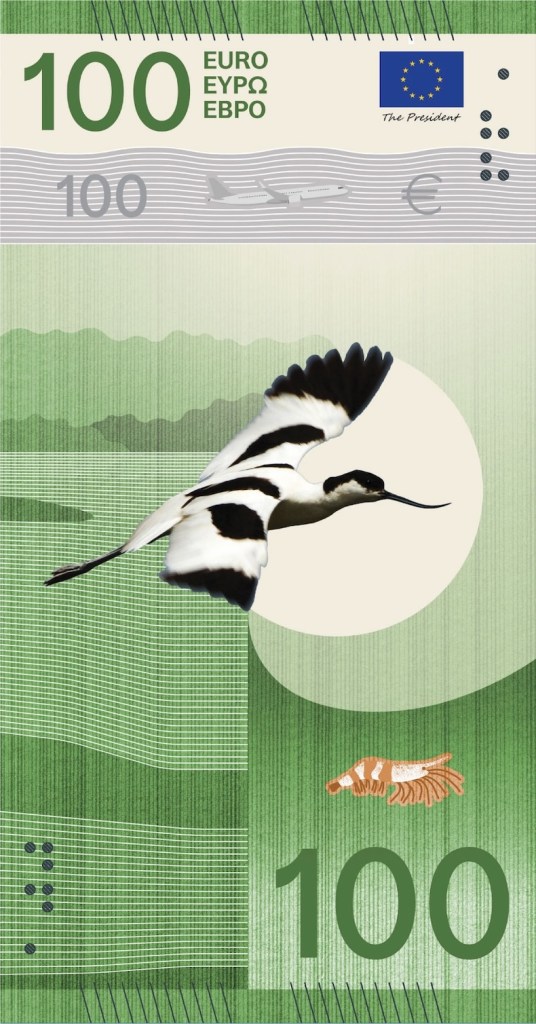
The European Central Bank (ECB) is redesigning the euro for the first time since the introduction of the currency in 2002 and replacing the present architectural motifs. ‘The current euro banknotes are not providing a strong sense of identification or emotional connection,’ says an ECB spokesperson – referring to research carried out in 2021–22 at the start of the redesign process, which found that people wanted the designs to avoid ‘potentially controversial, divisive or offensive motifs’, such as ones that were ‘religious, political or ideological’. How to please all 21 eurozone nations? The ECB also opted to ask the audience – this time via an open call for designs, which attracted 1,200 proposals. Europeans will now be asked to choose between designs that cluster around two final themes: ‘European culture’ (comprising the faces of luminaries such as Maria Callas, Beethoven, Marie Curie and Leonardo) and ‘rivers and birds’, whose ‘national neutrality makes them accessible and relevant for Europeans at large’, the spokesperson says. The choice, again, is between history or the natural world.
Nature has always been a popular choice, partly because the complexity of its subjects makes it hard to forge – the same reason bushy beards, moustaches and frilly, ruffly costumes have been so popular until now. ‘In the 1990s in India, the only person everybody agreed should be on the notes was Mahatma Gandhi, but unfortunately, he has no hair so they came up with a picture of him smiling, which gave him lots of wrinkles,’ says Shailendra Bhandare, curator of South Asian and Far-Eastern Coins and Paper Money at the Ashmolean Museum in Oxford, who curated its exhibition ‘Money Talks: Art, Society and Power’ in 2024. Banknote design, Bhandare says, is often propelled by ‘a constant dynamic between crime and security’. For example, Britain was jolted into featuring figurative depictions in the 20th century partly by Operation Bernhard, an exercise by Nazi Germany to forge British notes – later dramatised in the film The Counterfeiters (2007).
There’s little evidence that imagery itself drives confidence in a currency: Zimbabwe’s recent rebrand to also feature the Big Five animals (lion, leopard, buffalo, elephant and rhino), for example, did little to counter the distrust created by years of hyperinflation. Nonetheless, the choice of imagery on a note is inevitably tied to projecting ideas of nationhood, both at home and abroad. ‘When people arrive in the country we want them to think, “Oh, I’m in the UK,”’ Cleland says. The role of currency art in the national imagination is reflected too in how newly independent nations issued banknotes that replaced racist ethnographic imagery with liberation heroes.
It’s notable that there is far less debate about coins. Is that because they are more durable and tend to be replaced less frequently, or simply because they are too small for the artwork to really grab attention? Clearly, notes are much more of a canvas for creativity. Traditionally they have tended to draw on monarchs, monuments, landscapes and political and cultural leaders – a habit that is hard to shift. In the late 19th century, for example, Gustav Klimt proposed avant-garde designs for the Austro-Hungarian imperial bank, which were rejected for having ‘little appeal’ – at a time when a rococo look of plump cherubim, muscular men, languid women in long robes and florid decoration were more in fashion.
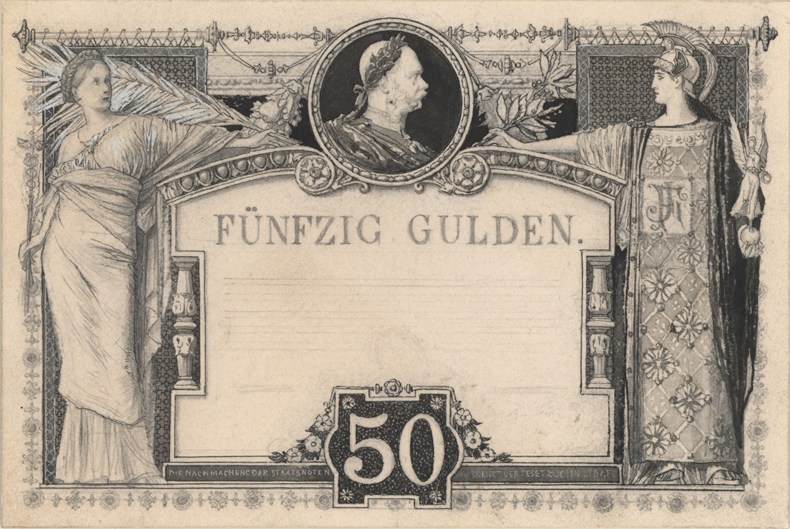
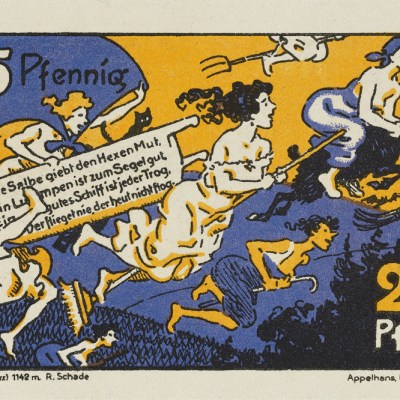
Nonetheless, banknotes have traced trends in art and design history. The most distinctive examples of art nouveau and art deco banknote design emerged in the 1920s and ’30s when hyperinflation hit Germany’s central banking system and various towns developed their own money. There’s a national distinctiveness too: the recognisable style of French banknotes – which comprised human allegorical depictions and a pastel colour palette – was set in the early 20th century by the likes of artists Luc-Olivier Merson and Sébastien Laurent.
At the same time, banknotes remain relatively traditional. Few have been as brave as Norway, which commissioned the studio Snøhetta to create distinctive abstract designs. Mittelstaedt explains that today, while intricate etched details are created digitally, ‘It’s still its own craft, refined over years of training, and the results carry that same fine, engraved character people associate with a banknote.’
Part of the conservatism is because this artwork is functional as well as decorative. It needs to be readable by ATMs, usable by people with visual impairments and recognisable from all angles. Security and aesthetic features are interrelated: inks, threads, foils and holograms creating motion, colour and light are hard to replicate. On Giesecke+Devrient’s 50-rial note for Oman a transparent window inspired by Omani architecture shifts from gold to blue and is verifiable from both sides. Elements engineered for security, says Mittelstaedt, also carry ‘strong emotional charge’ and ‘shine reads as value almost instinctively’.
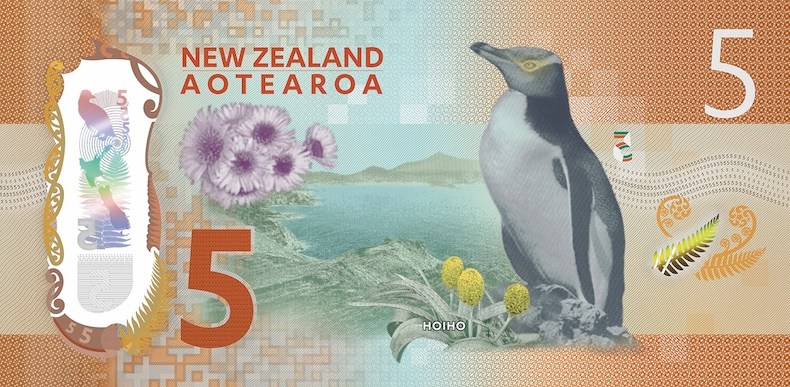
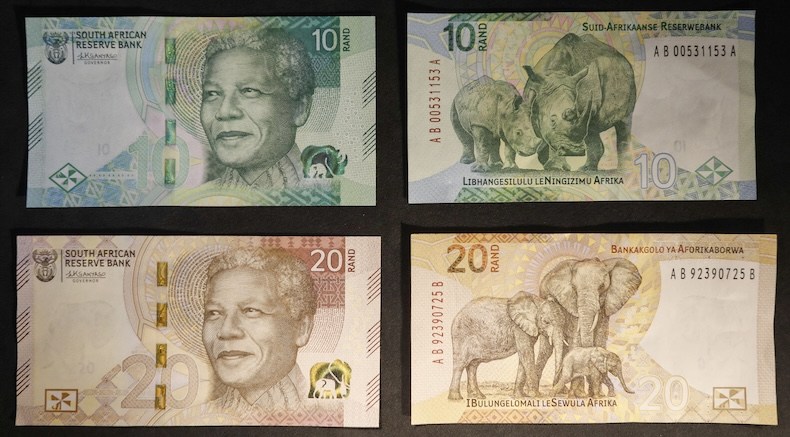
Nature isn’t a new theme: according to the British Ecological Society, almost one in six of the world’s banknotes feature wildlife, from the kiwi bird in New Zealand to South Africa’s (and now Zimbabwe’s) Big Five. Switzerland’s upcoming series will feature the country’s landscape, while Taiwan is set to feature bamboo, orchids, plums, mountains and deer, alongside architectural landmarks, sporting figures and notable individuals, on its new notes.
In 2015, Glasgow-based graphic design studio O Street designed polymer notes for the Royal Bank of Scotland, which featured a mix of mackerel, otters, red squirrels, osprey and midges. Once again, the subjects emerged through a public consultation by the bank, which – perhaps still smarting from the reputational damage of its near-collapse in the 2008 financial crisis – wanted its latest notes to reflect the wishes of the Scottish people. ‘People didn’t want shortbread tins, bridges and castles, or old men with white beards – they wanted the real Scotland,’ says David Freer, partner at O Street. Each note they designed includes layered narratives: animals, a backdrop of tweed designed by craftspeople and the natural materials used to dye the fabric for the textiles. On the other side are notable women from Scottish history, recognised as the world’s first all-female series.
Why nature? Beyond being an antidote to flawed historical figures, it makes sense that at a moment of digital saturation we might yearn for the outdoors. It also feels meaningful in the face of a climate crisis and it’s poignant that we should choose to memorialise it in a form that so often depicts a lost reality. Notes themselves sometimes feel like a dwindling remnant of the past: in 2023, De La Rue reported that demand for paper money had fallen to its lowest level in 20 years.
Ultimately, though, what may ensure the longevity of banknotes is their symbolic status. For as long as that remains the case, great (or just powerful) men are going nowhere. In May it was reported that the Trump administration was pushing for a new $250 bill bearing a portrait of the current US president. Such is the power of this, the world’s most accessible, ubiquitous and universal piece of art.
From the September 2026 issue of Apollo.