John Constable
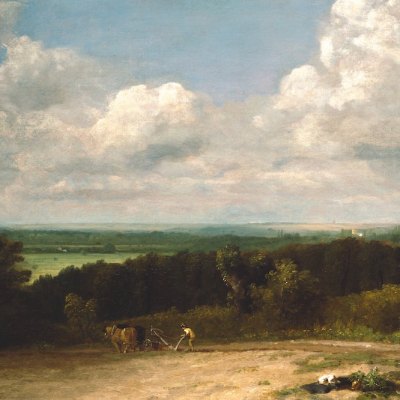
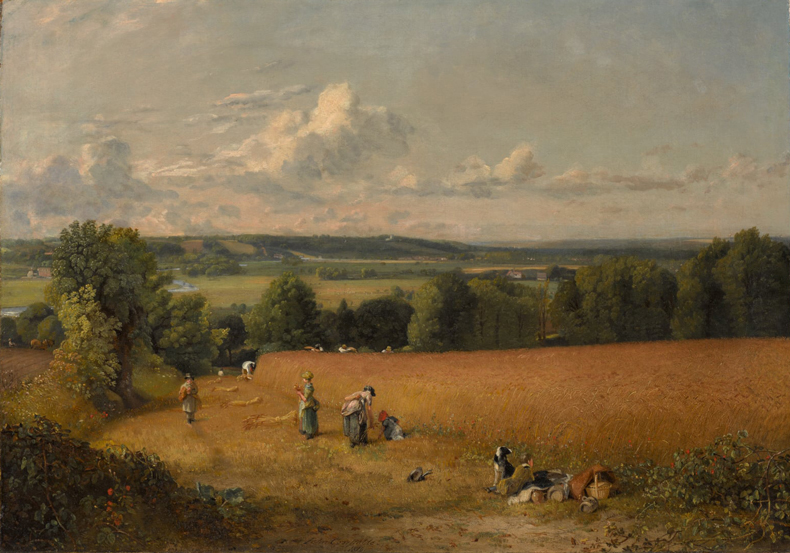
After a glut of exhibitions marking the 250th anniversary of J.M.W. Turner’s birth in 2025, this year it’s Constable’s turn. The two great rivals for the soul of the English landscape tradition were born just a year apart – a fact not lost upon Tate Britain, whose expansive survey ‘Turner and Constable: Rivals and Originals’, weaving together the divergent trajectories of these painters whom contemporary critics likened to ‘fire and water’, runs in London until 12 April. Fittingly, the Constable 250 celebrations are otherwise principally a local affair. A trio of exhibitions at Christchurch Mansion in Ipswich, organised by Colchester and Ipswich Museums, reveals how Constable’s vision was shaped by his deep engagement with the Suffolk landscape – and how, in turn, his paintings have transformed the way we see this region of rolling heath and farmland, winding rivers, ancient woods and massive skies. The most significant coup sees The Hay Wain (1821) travel to Suffolk from the National Gallery for the first time as part of ‘Constable: Walking the Landscape’ (11 July–4 October). ‘Constable: A Cast of Characters’ (28 March–14 June) places the artist in his historical milieu, with paintings and drawings by Constable and his contemporaries alongside personal letters, period costumes and other artefacts, while ‘Constable to Contemporary’ (24 October–28 February 2027) features responses to Constable’s work by local artists and community groups.
Constantin Brâncuși
The coincidence of the 150th anniversary of Brâncuși’s birth with the five-year closure of the Centre Pompidou has made this a bumper year for exhibitions on the Romanian sculptor. The biggest is in Berlin, where the Neue Nationalgalerie (in collaboration with the Pompidou) is hosting what is billed as the largest survey of Brâncuși’s work to date. More than 150 works on display include The Kiss (1907–08), Sleeping Muse (1910), Endless Column (1918) and Bird in Space (1923) – in and of themselves, a succession of landmarks mapping Brâncuși’s reduction of organic forms to their abstract essence. Endless Column famously grew out of the double pyramid that Brâncuși had used as a base for his earlier sculptures – and the exhibition considers in detail how Brâncuși’s experimentation with pedestals, lighting, photography and film to stage his works went hand in glove with his sculptural practice. A partial reconstruction of Brâncuși’s studio has also travelled to Berlin – the first time it has left Paris since he bequeathed it to the French state in 1957. Elsewhere, 31 sculptural works from the Pompidou form the basis of ‘Brâncuși: The Birth of Modern Sculpture’ (until 18 January) at the H’Art Museum in Amsterdam, while the Romanian president Nicușor Dan has enshrined 2026 in law as the ‘Year of Brâncuși’. Details of any nationwide programme remain forthcoming, though Art Safari, a kind of travelling museum that organises temporary exhibitions in Romania, is planning a show dedicated to the sculptor sometime later this year.
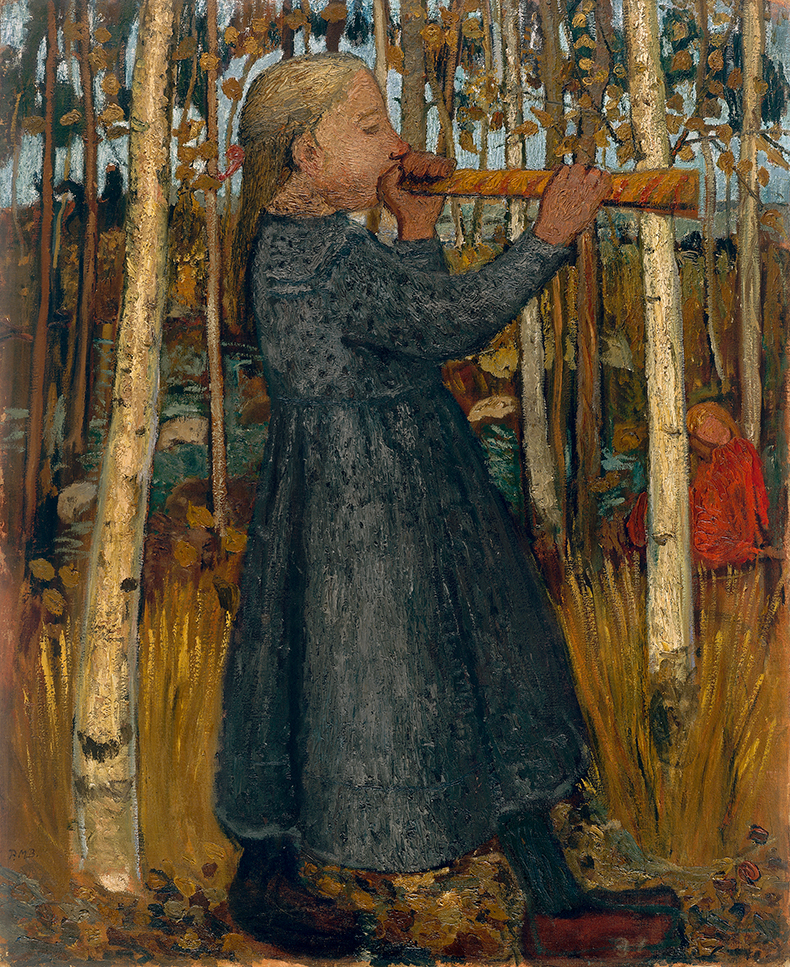
Paula Modersohn-Becker
In 1898, 22-year-old Paula Becker arrived in the small village of Worpswede, north-east of Bremen, to join the artists’ colony that had been founded there by Fritz Mackensen. She formed important connections with the sculptor Clara Westhoff, the poet Rainer Maria Rilke and the painter Otto Modersohn, whom she married in 1901. Apart from a year’s sojourn in Paris, prompted by her chafing against Mackensen’s romanticism and Modersohn’s stifling influence, it was in Worpswede that Modersohn-Becker saw out the remainder of her brief life – and here that she painted many of her definitive self-portraits. Marking 150 years since her birth, four museums in Worpswede – the Barkenhoff, Grosse Kunstschau, Haus im Schluh and Worpsweder Kunsthalle – are combining forces to present ‘Paula Modersohn-Becker and her Companions: The Indivisible Sky’, a multifaceted view of the artist’s time in the town and her engagements with her contemporaries (until 18 January). In Dresden, meanwhile, the Albertinum pits Modersohn-Becker against another giant of Expressionism in ‘Paula Modersohn-Becker and Edvard Munch: The Big Questions of Life’ (8 February–31 May).
Royal Scottish Academy
On 27 May 1826, 13 artists gathered in Edinburgh to establish the Scottish Academy of Painting, Sculpture and Architecture. Their aims were to present an annual exhibition ‘open to all artists of merit’, to create an academy of fine art, to form a library and collection, and to create a charitable fund to support less fortunate artists. Two hundred years later, you would be hard-pushed to find an arts institution anywhere in Scotland that isn’t marking in some way the impact that this organisation – granted its royal charter by Queen Victoria in 1838 – continues to have. Highlights among the events by more than 100 partners include a survey of paintings, prints and textiles by Elizabeth Blackadder at Dovecot Studios (from 20 June), with whom the artist collaborated on more than 30 tapestries and hand-tufted rugs across five decades; there are also displays of Joan Eardley at the National Galleries (2 April–28 June) and the architecture of Kathryn Findlay at the V&A Dundee (March–May). Meanwhile, on the Mound – where the RSA has been based since the 1850s – there is a year-long programme of bicentenary exhibitions, ranging from surveys such as ‘200 Years’ (17 October–15 November) to more focused explorations of artists including Joyce W. Cairns (1 August–2 September) and Barbara Rae (21 November–24 January 2027). The 200th edition of the RSA Annual Exhibition takes place from 9 May–14 June, offering the usual potpourri of fine art and architecture by current Academicians and those selected through open submission.
Marilyn Monroe
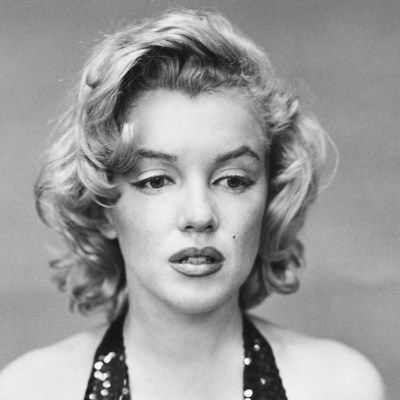
A hundred years since her birth and more than half a century after her death, there remain few faces in popular culture as instantly recognisable as Marilyn Monroe’s. The story of her vertiginous rise, from pin-up modelling (as Norma Jeane) in the 1940s to taking Hollywood by storm – as well as her well-documented battles with movie studios – is retold in London by the National Portrait Gallery, which presents a major centenary exhibition in collaboration with her estate. ‘Marilyn Monroe: A Portrait’ (4 June–6 September) focuses on the close relationships Monroe forged with photographers such as Cecil Beaton, Milton Greene and Richard Avedon to define her public persona, as well as the influence her image has exerted on artists including Pauline Boty, Marlene Dumas and, of course, Andy Warhol.
Other anniversaries to watch out for…
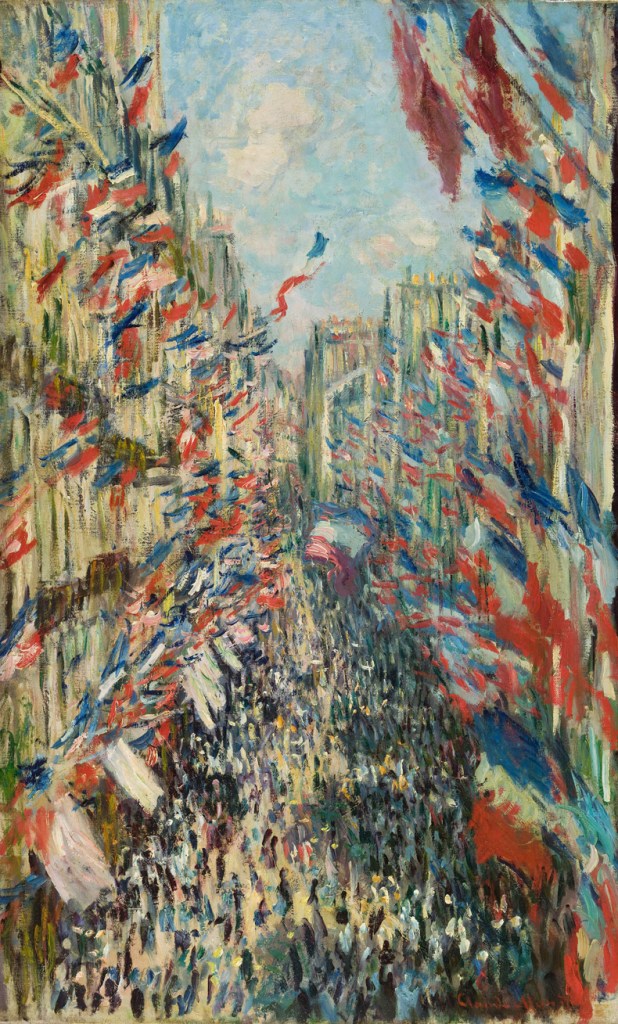
It’s 100 years since Claude Monet died, aged 86, at his beloved home in Giverny. Though there are surprisingly few signs of Monetmania among major Western museums, a large survey is taking place in Tokyo at the Artizon Museum (7 February–24 May), while the tourist boards of Normandy and Paris are hosting a year-long programme (including tours, concerts and ‘open-air culinary events’). MK Gallery in Milton Keynes hosts the first major survey in more than a decade of L.S. Lowry, who died in 1976 (24 October–28 February 2027), while at the British Library, one of Agatha Christie’s typewriters is among the highlights of an exhibition marking 50 years since the crime writer’s passing (30 October–20 June 2027). Lastly, in Greece, the Culture Ministry has declared 2026 the ‘Year of the Exodus of Missolonghi’. The desperate attempt by the inhabitants of Missolonghi in 1826 to break through the Ottoman siege has come to be seen as perhaps the defining moment in the War of Independence – thanks in no small part to Eugène Delacroix, whose Greece on the Ruins of Missolonghi (1826) goes on display at the city’s Xenokrateion Archaeological Museum in March: the first time in history it has been loaned from Bordeaux.