From the June 2026 issue of Apollo.
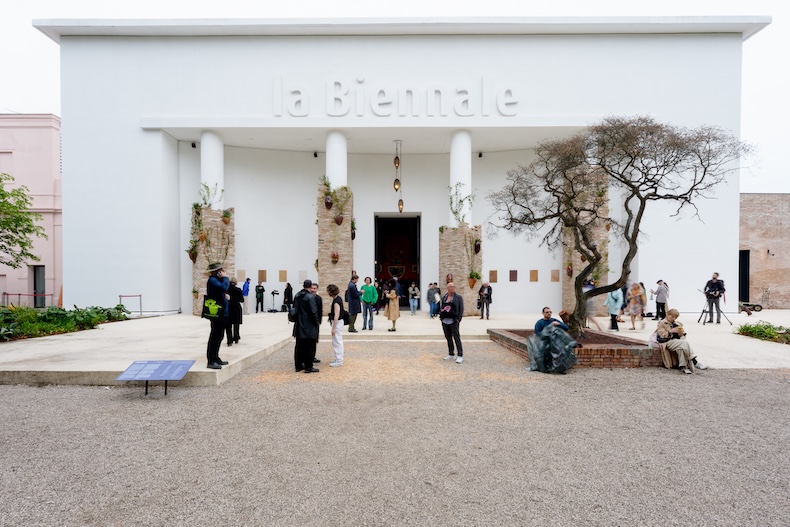
The death of Koyo Kouoh, the artistic director of the Venice Biennale, in May 2025 – a year before the exhibition’s opening last month – raised many questions about how the show, ‘In Minor Keys’, would be realised. But one thing was certain: it was not going be a survey of the titans or fast-rising stars who power the contemporary art market. The last time that happened at Venice was in 2007, when Robert Storr, the dean of Yale School of Art, included Gerhard Richter, Sigmar Polke and Bruce Nauman alongside Pierre Huyghe, El Anatsui and Kara Walker in his show ‘Think with the Senses – Feel with the Mind’.
Kouoh, the director of the Zeitz Museum of Contemporary Art Africa in Cape Town, was a champion of contemporary African and diaspora artists. She did not refer directly to the art market in her description of ‘In Minor Keys’, which was released in February, but the team she appointed to continue the project – curators Gabe Beckhurst Feijoo, Marie Hélène Pereira and Rasha Salti, writer Siddhartha Mitter and researcher Rory Tsapayi – were more explicit. One of the central themes, Pereira said at the official press conference, was ‘local and transnational […] ecosystems and networks built and sustained by artists’ that ‘convene, share knowledge […] and build centres that proliferate without the intervention of commercial markets’.
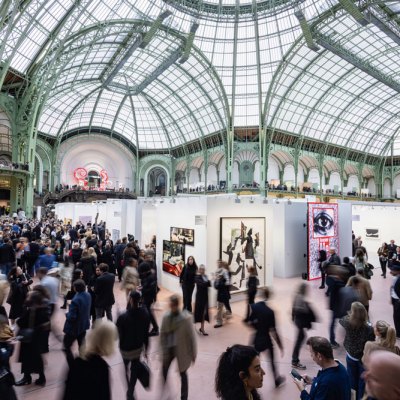
But what does it mean to create a biennial that is somehow separate from the art market? The Venice Biennale is, theoretically, a non-profit event. But its role as a meeting point for the art world, especially during the preview week, and the fact that galleries and collectors are routinely asked to stump up funds to support it, makes it an integral part of the art world’s commercial infrastructure.
This clearly irks some curators. ‘I’ve never been interested in using my curatorial work as a reaction to or a comparison with the art market: my responsibility is to the artists,’ says Cecilia Alemani. In 2022 she curated ‘The Milk of Dreams’ in Venice, which foregrounded the work of contemporary and early 20th-century women artists. Then there was the still much discussed but ill-fated Documenta 14 of 2017. Director Adam Szymczyk decided not to seek additional funding from commercial galleries for his huge – and hugely over budget – show.
At the same time, more and more biennials are focusing on artists that their curators say have been marginalised from the market and the wider art world on grounds of geography, race, gender, sexual orientation, because they are self-taught or because their artistic practices are considered traditional, folkloric or artisanal. These are the artists, they argue, driving innovation forward.
In Kouoh’s case, the focus is largely on artists from the Global South and its diasporas in the West. Of the 111 participants, including duos and collectives, 92 were born in Africa, Asia (excluding Japan and South Korea) and the Middle East, or were descended from people from these regions. A few are famous names, especially on the biennial circuit, such as Kader Attia, Wangechi Mutu and Walid Raad. A small number have had rapidly rising markets as well as museum recognition: Tammy Nguyen, Torkwase Dyson and Alvaro Barrington. The vast majority are well known only in their local art scenes and some barely at all.
Then there are the media they work in. The art market, as visitors to fairs such as Frieze or Art Basel will attest, essentially sells paintings (it is tempting to think that sculptures are presented mainly to create visual interest in the centre of a stand). In recent years video, one of the early 21st century’s most dynamic media and a biennial staple, has all but disappeared. Kouoh said she wanted ‘In Minor Keys’ to present art that was ‘emotional, visual, sensory, affective [and] subjective’.
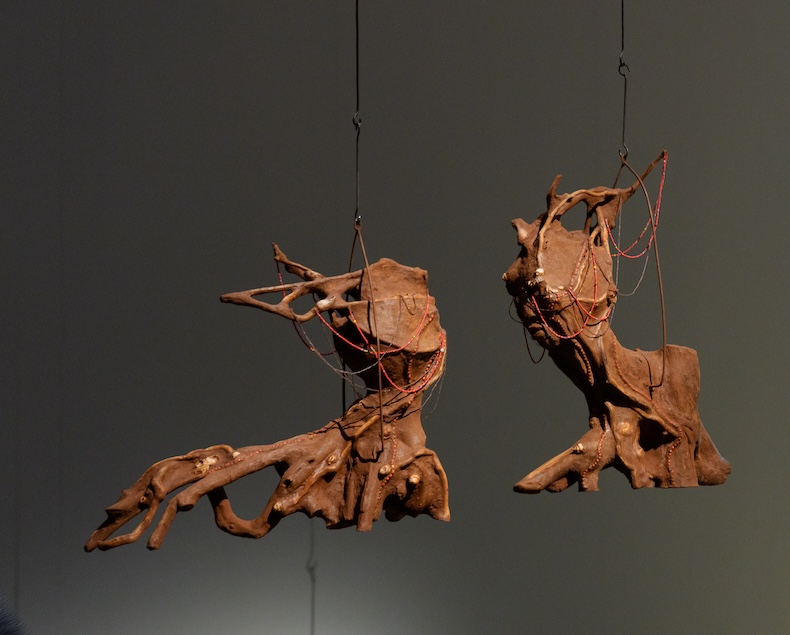
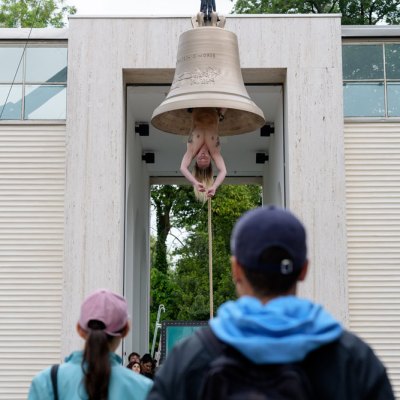
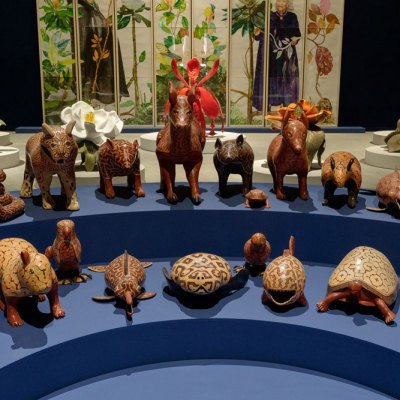
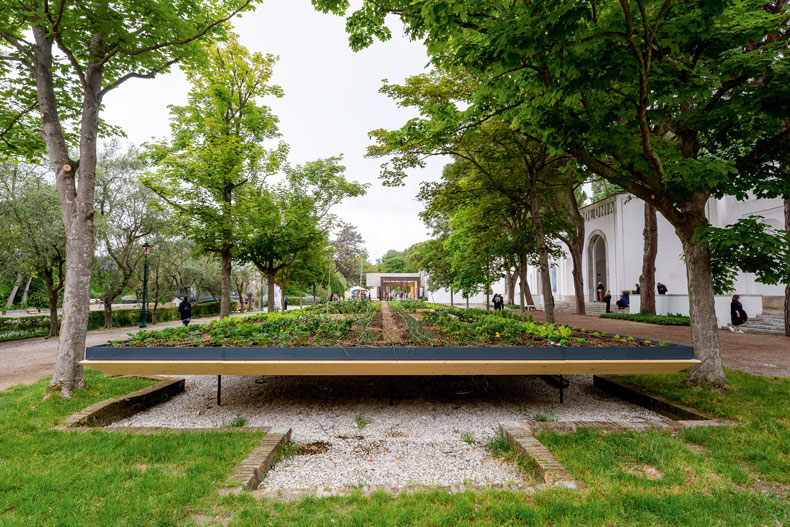
There is an overwhelming array of colour, materials and textures – besides paintings, there are enormous sculptures made of hair, cast metal and polyurethane sheets, silk embroideries, rambunctious clay, fabric hangings, multiscreen films and a huge, raised vegetable garden in the Giardini. But the subject matter of many of the works – however superficially attractive – is often dark or elegiac.
Kouoh said that ‘In Minor Keys’ would acknowledge the way ‘capital and empire have maligned local, indigenous and terrestrial knowledge’ and that ‘entire societies and ecologies are [now] regarded as collateral damage in the headstrong pursuit of growth supported by ruthlessness and greed’. Other big ‘perennials’ have focused on the long shadow of colonialism and corporate exploitation, not least Okwui Enwezor’s 2015 Venice Biennale ‘All the World’s Futures’. It is not hard to guess how many Wall Street bankers or residents of South Kensington want art tackling these subjects hanging on their walls.
The difficulty for artists is that they need some kind of market exposure to survive, even if it is only part of a patchwork of teaching, writing fees, institutional commissions and grants. There were claims that almost half the artists in this year’s Whitney Biennial did not have a gallery. In fact, most (44 of the 54 living artists) did, but many of them were younger, emerging galleries like April April in Pittsburgh, Molitor in Berlin and Elizabeth Xi Bauer in London.
The same is true of the artists in ‘In Minor Keys’. A few – Attia, Barrington, Zoe Leonard, Dyson and Mutu for example – are represented by major galleries such as Lehmann Maupin, Thaddaeus Ropac, Hauser & Wirth, Pace and Victoria Miro. But most are represented by the sort of small or medium-sized galleries that keep the contemporary art world alive, but which in many ways share their artists’ mostly precarious existences.
Phillida Reid, which originally started as a gallery as Southard Reid in London in 2012, is well established. It represents the youngest artist in Kouoh’s exhibition, 28-year-old British-Bengali self-taught artist Mohammed Z. Rahman. He describes his work as addressing ‘personal, social and folk histories of migration, labour, queerness, family and class’.
Reid says that ‘everyone does their best for Venice: there is no comparable platform in reach and visibility’. That means the artists’ galleries and supporters as well as the artist themself. ‘Biennials don’t have big budgets for production and shipping, so we [the galleries] have a lot to do.’
Rahman’s work, from a collecting point of view, is more practical than some artists – some installations are sold as a complete work, but paintings can be bought individually too. Reid represents a number of artists who work in diverse media: installation artist/sculptor Prem Sahib, performance artist Edward Thomasson, film-maker/sculptor Lea Cetera as well as painters Ann Craven and Bedwyr Williams. ‘I always wanted the gallery to be sustainable, mixing artists of different ages, who work in different ways and media,’ she says. ‘You also have to be realistic, programming different practices and artists with an awareness of balancing the financial responsibilities of the gallery as a whole.’ She says it is important to hold on to varied programming. ‘Being sustainable for galleries and artists has always been hard and gets more so. Many successful artists teach and look for complementary work at times, and [this] now seems to be more so.’ But, she adds, ‘this is also because there are more career artists than there have ever been.’
This was the subject of a recent article by artist Josh Kline for October magazine, ‘New York Real Estate and the Ruin of American Art’. Kline, 47, is a star, making film, sculpture, installations and photography about the impact of emerging technology on society. But, he wrote, ‘Only three years after being the subject of a well-received mid-career survey exhibition at the Whitney Museum, I can only describe living and working as an artist in New York City as completely unsustainable.’ His essay is long and addresses what he sees as the failings of museums, galleries, art schools and collectors. But its main argument is that artists who make more challenging, politically oriented or conceptual work, particularly sculpture, video and installation, are being driven out of the art world.
‘The result is a tidal wave of art whose primary function as decorative speculative financial instruments eclipses any possibility of inquiry, experimentation, or real meaning,’ he wrote.
‘Lots of artists are talking about that essay,’ says Louise Hayward, a partner at Lisson Gallery, which represents Kline with 47 Canal in New York. Another of the gallery’s artists, Otobong Nkanga, has work featured prominently in this year’s Venice Biennale. ‘The situation for many artists is becoming more and more urgent,’ Hayward says. Like Reid, she says the gallery has to balance its more profitable activities with helping artists develop riskier works. ‘Otobong’s Venice installation is not a commercial project, it is site-specific and arises out of the materials of the city, which can be recycled and reused when it is finished,’ she says.
‘As a gallery we’re a business, but we are also in culture,’ Hayward says. ‘And as a cultural business, there is a moral imperative to support the creative ecosystem and help our artists reach the next stage of innovation.’ But, she says, the collectors who support this kind of work are relatively rare. ‘We need many more people who will [buy this kind of art] – biennials like Venice are a great advertisement to support deeply creative art at a high level.’
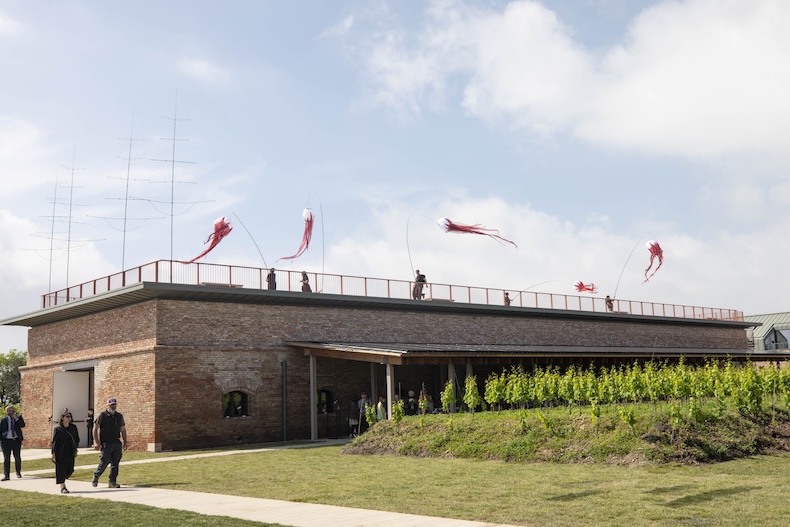
Many galleries and institutions choose the Venice Biennale to launch new projects and shows. The biggest this year was the opening of the Fondazione Sandretto Re Rebaudengo on the formerly deserted island of San Giacomo, between Murano and Burano. An art and ecology project (one of the family’s business interests is the Asja renewable energy company), it is a publicly accessible art centre and sculpture park.
Patrizia Sandretto Re Rebaudengo has been a major supporter of artists working across more experimental media, including Doug Aitken, Ragnar Kjartansson, Goshka Macuga and Rachel Rose, and has paid for many biennial installations. The new centre opened with work by painters Lucas Arruda and Toyin Ojih Odutola, sculptures by Adrián Villar Rojas and Kline, an entire building devoted to light installations by Matt Copson, and a wonky church by Hugh Hayden, mimicking the island’s long-demolished bell tower.
‘I believe the role of art is more than to decorate a home,’ Sandretto Re Rebaudengo says. ‘The role of a collector today is not only to buy work, but to be close to the art and artist, to support the production of their work and to help get it exhibited.’
In the late 1990s and early 2000s there was a generation of collectors – Sandretto Re Rebaudengo, Bob Rennie, Francesca von Habsburg, Maja Hoffmann, the Rubells, the Poddars, Jochen Zeitz (founder of the Zeitz Museum), even Charles Saatchi – who were passionate about promoting challenging art. They often bought work that was shown at biennials: huge photographic series by Cindy Sherman, leather and rubber tyre sculptures by Nicholas Hlobo, figurative installations with broken glass by David Altmejd.
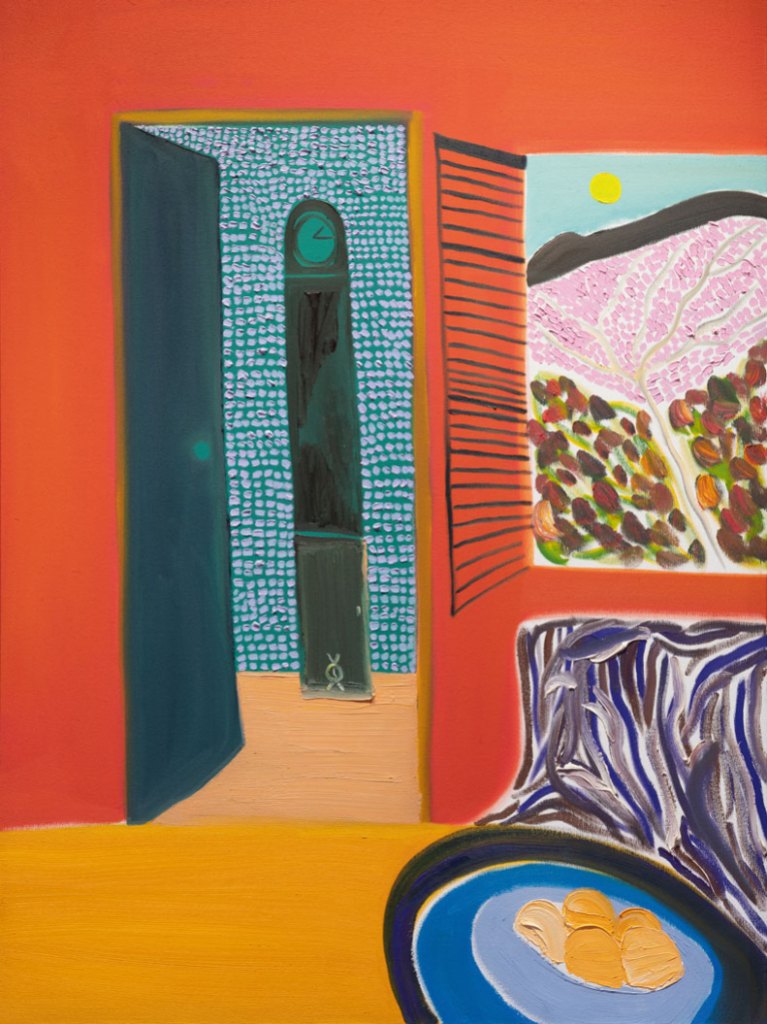
But tastes and times have changed. Now the most commercially successful younger artists make colourful, mid-scale, mostly figurative paintings, such as Michael Armitage, Nicolas Party, Flora Yukhnovich and the late Matthew Wong. And since few famous artists were included in ‘In Minor Keys’, their galleries, supporters and institutions simply mounted their own exhibitions. There was Arthur Jafa and Richard Prince at the Fondazione Prada, Armitage at the Palazzo Grassi, David Salle and Georg Baselitz at the Foundation Cini, Wong at the Palazzo Tiepolo Passi and Jenny Saville at the Ca’ Pesaro, all put on by a mix of institutional, gallery and collector funding.
Major biennials, and Venice in particular, are often criticised for being too close to the art market, though it is not always clear what that means. Some suggest that the dense network of contacts, collaborations and friendships between curators, galleries, collectors, museums and of course the artists themselves leads to ‘groupthink’, focusing attention on a narrow group of artists. Others see more sinister motives: since most biennials’ ambitions are bigger than their funds, curators are tempted to include artists from the richest and more powerful galleries at least in part to balance the books.
This was clearly not the case in Koyo Kouoh’s exhibition. This year’s Venice Biennale has given an international platform to many lesser-known artists. The problem is that most of today’s collectors do not appear to be paying much attention.
From the June 2026 issue of Apollo.