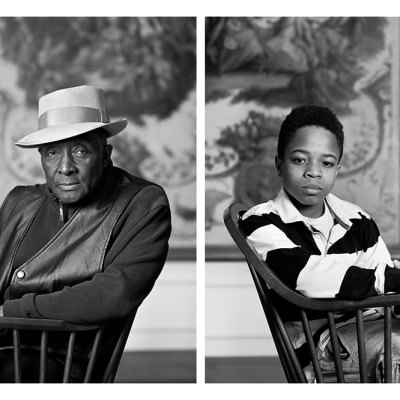
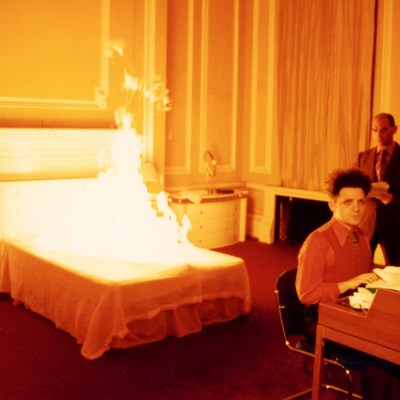
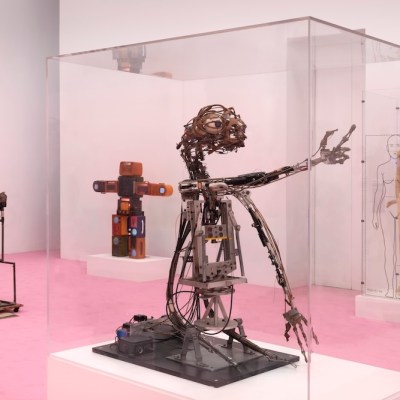
Not so long ago, Arthur Jafa was an artist with a great future behind him. Born in Tupelo, Mississippi – the birthplace of Elvis Presley – in 1960, he served as cinematographer on Julie Dash’s Daughters of the Dust (1991), the first feature film by a black American woman to receive a theatrical release in the United States. He worked on Spike Lee’s Crooklyn (1994) and Stanley Kubrick’s Eyes Wide Shut (1999), but never got the chance to make his own movies. Pop videos and commercials paid his rent for a while and some of his sculptures and art pieces appeared in galleries, but his home life was a mess.
These days, Jafa is represented by the powerhouse Gladstone Gallery and his films are screened internationally. What turned his life and reputation around was Love is the Message, The Message is Death (2016), a seven-and-a-half-minute montage in the tradition of Bruce Conner’s A Movie (1958) and Mark Leckey’s Fiorucci Made Me Hardcore (1999). To the accompaniment of Kanye West’s song ‘Ultralight Beam’, it assembled and dizzyingly edited more than 150 pieces of found footage, many of them taken from online sources, to present a vision of black life in modern America: battered, chaotic, joyful.
‘I Am Tony’, the largest presentation of Jafa’s work to date, is also the first solo exhibition at the freshly expanded New Museum in downtown Manhattan. Named after the jazz drummer Tony Williams (d. 1997), a musical reference that recalls the artist’s often-quoted dictum – ‘I want to make black cinema with the power, beauty, and alienation of black music’– its opening image is an out-of-focus still of a black man with his arms outstretched. His eyes are manic: is he scared? Asking for help? Or (given he has a joint in his mouth) off his head? His white T-shirt bears a tag, ‘Negro’, that appears to be a commercial brand. There are all sorts of life here: kinetic, possibly abject. The print itself – Drapeta 2.0 (2026) – gets its name from a mental illness ascribed in the 19th-cenutry to black people who sought to flee captivity.
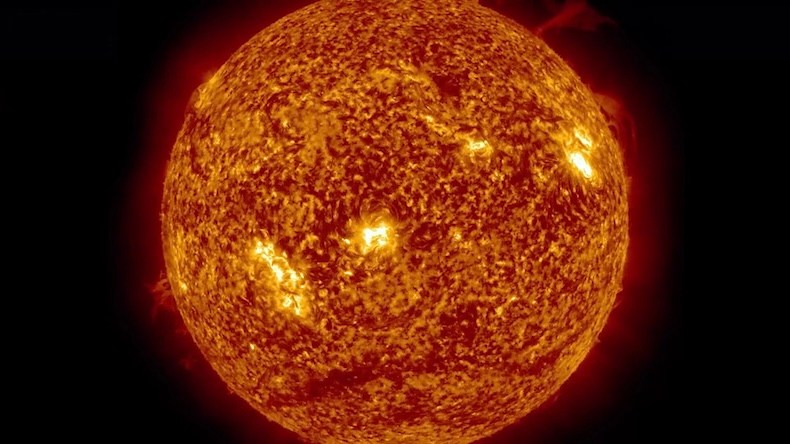
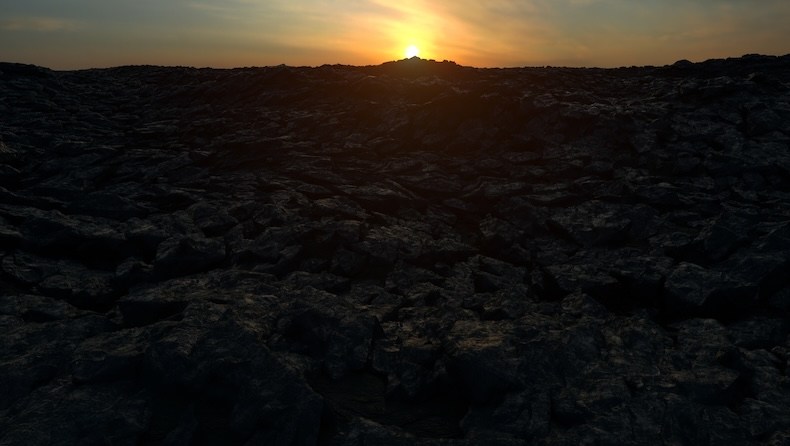
On the wall opposite, reaching almost 20 feet in height, is AGHRDA (2021) in which almost chthonically black digital waves rise and fall for over an hour. Sometimes they blot out the sun. Often they look vengeful, like a looming insurrection. Godzilla maybe? They’re more geological than liquid. Is this an ecological vision, a glimpse into a post-apocalyptic universe? Many are the black intellectuals who argue enslaved Africans experienced exactly that. AGHDRA makes especially telling use of drones, bowel-quaking bass and etiolated versions of soul classics (Rose Royce’s ‘Love Don’t Live Here Anymore’ becomes a mere ghost of a song).
Deeper inside the show is The White Album (2018), winner of the Golden Lion at the 2019 Venice Biennale, a work that turns its gaze on white (mostly) Americans. Like Love is the Message, it’s a work of appropriation, deep diving into the ghastly depths of the Internet to come up with clips that are by turns disorientating, cringeworthy and funny. A video of a CGI-rendered Iggy Pop singing in a street, a group of cyber goths dancing in a ‘Mask Off’ challenge, a blonde woman claiming, ‘White people have the hardest time nowadays because we try so hard. Have some respect for white people, okay?’ There are specially-filmed close-ups of Jafa’s former gallerist Gavin Brown. Footage of helicopter attacks on Middle Eastern cities. Is there a thesis here? Need there be?
BEN GAZARRA (2024) is a single-screen piece that remakes the final scenes of Martin Scorsese’s Taxi Driver (1976) in which Robert De Niro’s Travis Bickle enters a brothel in New York’s East Village and guns down the pimps lording it over a child prostitute (played by Jodie Foster). The film’s screenwriter, Paul Schrader, had intended the brothel mafia to be black but backed off out of fear that that would be too incendiary. Jafa, influenced in part by the real-life mass shooting of black worshippers by a white supremacist at a Charleston church in 2015 uses actors, multiple takes (each subtly different) and digital trickery to make the story’s subtext – its political unconscious – visible.
The New Museum has always been an unforgiving place to display art. In ‘I Am Tony’ problems arise often: the doors of a wide lift open up to puncture the darkness of a gallery showing MBD_Trans Am (2026) in which a partially crushed car is suspended above the ground. The ballistic soundtrack of BEN GAZARRA spills over into the room featuring a moody, meditative film work about Pete Townshend of The Who. Time and again the lack of seating feels like a form of hostile architecture.
At this scale, Jafa’s art isn’t as thermo-voltaic as his admirers would have us believe. The much-fabled binders in which, pre-Internet, he amassed images from magazines and photo books are hard to distinguish from Pinterest boards. Many of the diptychs have little to say to each other (Robert Johnson and Miles Davis are connected by… a cigarette). A gallery featuring cardboard cutouts of figures such as Michel Foucault, The Sex Pistols and James Baldwin resembles nothing more than the storage closet of an aging otaku.
What was thrilling about Love is the Message – its understanding of the velocities and dramas of screen culture, its indifference to notions of high and low art – feels less startling in 2026. AI has turned the flow of images into a tsunami; Jafa’s aesthetic, a kind of visual ADHD, mirrors the malaise.
‘Arthur Jafa: I Am Tony’ is at the New Museum, New York, until 4 January 2027.