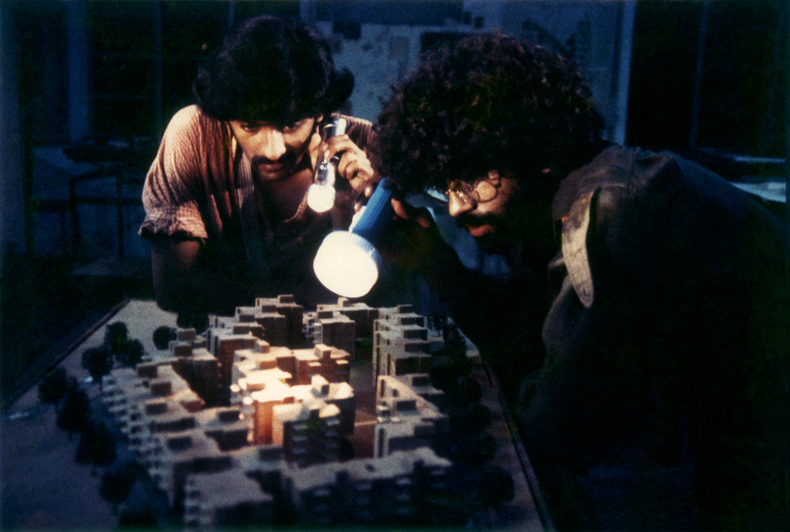
It’s 1973 in New Delhi. The setting is the fictional National Institute of Architecture. Flares, tie-dye and a soundtrack of the Beatles, the Stones and the Doors act as clear timestamps. The scenario, however, is timeless: the grubbiness of shared accommodation and the insomniac habits of the young, who scramble at all hours to meet deadlines and wander the halls gossiping, teasing, pontificating, playing pool and smoking.
This is the setting of In Which Annie Gives It Those Ones, a film written by Arundhati Roy and directed by her then husband Pradip Krishen. The Booker Prize-winning author and activist, who studied architecture in the Indian capital, also plays one of the lead roles. It has rarely been seen since it was originally screened in 1989 by Doordarshan, India’s public broadcaster, but a new restoration premiered at the Berlinale earlier this year and will be shown at BFI Southbank in London on 15 July.
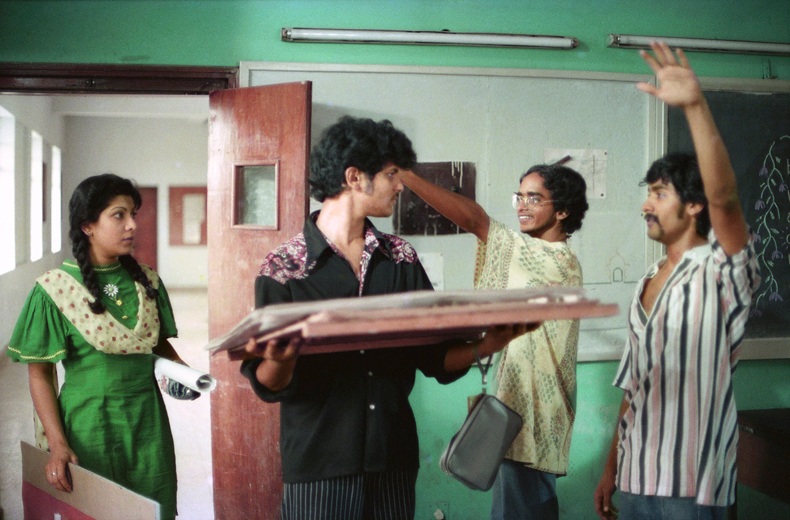
Amid the opening nocturnal student-scape we meet the title character Anand Grover, known as Annie – a student repeating his fifth and final year for the fourth time because of a grudge held by the principal, upon whom he once played a prank. While his fellow students are fascinated by his predicament, Annie seems at peace – or at least in denial. A mildly sloppy dreamer, he keeps chickens in his room and sells eggs to make a quick buck. His latest idea is to plant fruit trees along 60,000km of India’s railway lines, in ground fertilised by defecation from passing trains and watered by spray-cans installed on carriages – an effort to curb migration to India’s cities by providing a new cash crop for the rural population. His peers dismiss the scheme as Annie ‘giving it those ones’ again – their slang for someone up to their usual tricks.
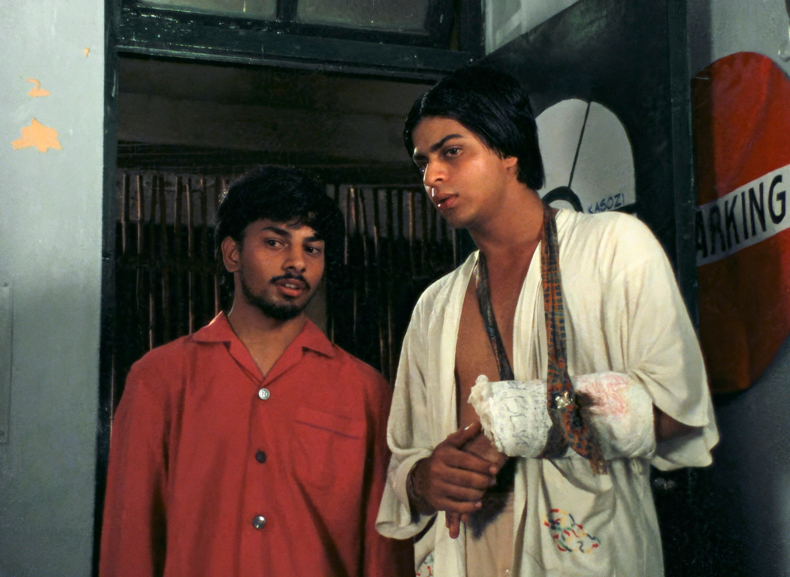
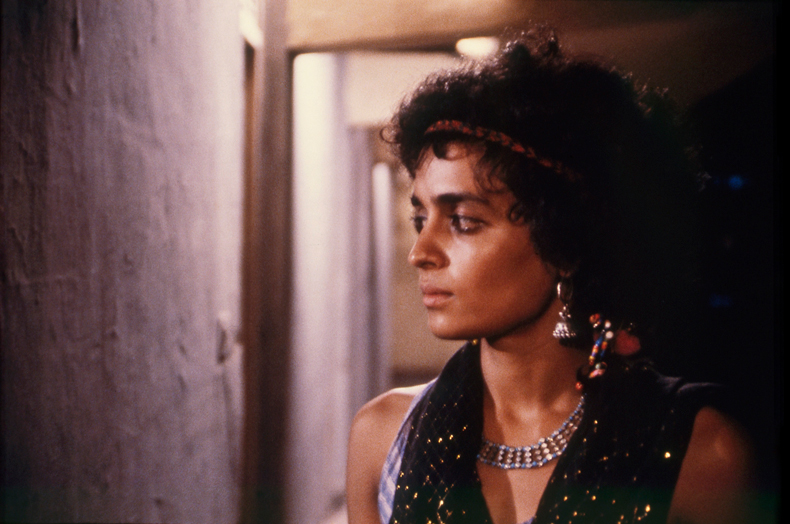
Most of the characters who surround Annie are archetypes: stoner slackers and uptight overachievers. One is played by Bollywood superstar Shah Rukh Khan in one of his earliest on-screen roles – arm in a sling for unexplained reasons, he lurks near the action providing unsolicited commentary. Then there is rebellious Radha (Roy), who writes jokes on the classroom blackboard and laughingly sprays paint at a sex pest lurking near the campus. Unfazed by jibes about a girl’s ‘reputation’, she sleeps over at her boyfriend’s off-campus pad. When one teacher asks the female students to list the design requirements of a kitchen, she calls out his casual sexism with an amusement that feels entirely Roy’s.
Her thesis project is, in effect, anti-architecture: an indictment of the economic logic that underpins so much urban development. She points out the wage disparity between designer and construction worker and the ways in which architecture separates and excludes – comparing its creation of the ‘city and non-city’, the formal and informal, to animals marking their territory. Under the prevailing model of development, she argues, buildings are mere piggy banks; she implores her tutors to question the underlying mechanisms.
The faculty in general seem more interested in the lavish meals they consume while students present their final projects than in engaging with what they say. When they do listen, they’re largely in agreement that the architect’s job is to satisfy the client. To do that, one must hone practical design skills, not critical ones: know where to place staircases, waste disposal, laundry facilities. This is enough for Roy to wonder, mid-exam, whether she wants to be an architect after all.
Seen with the hindsight of four decades, the film feels like the Arundhati Roy origin story. It is hard not to read the cynicism of the character she plays – and her uncertainty about what she might do after graduating, if not architecture – as an early articulation of her own disillusionment with the profession’s narrow notions of progress and subsequent discovery of her political voice. But it’s also the origin story of modern India – the accelerating pace of development and the shifting relationship between urban and rural – and a prescient glimpse of some of the social inequalities that the construction and real estate industries would entrench across the world over the coming decades.
For all his faults, the principal accurately identifies the middle-class guilt that underpins Radha’s resistance – something she mulls over near the film’s end: the privilege of being fed and clothed when you’re surrounded by poverty, and of conversing in ‘a language that 90 per cent of your country doesn’t understand’. If that’s what architecture represents, she says, ‘I don’t want to talk about it, I don’t want to write about it, and I definitely don’t want to build it. So what the hell do I do?’
In the epilogue, we learn that Radha tried to become a writer but drowned before she could publish her first novel. Roy, of course, has met no such end. She has gone on to write and speak extensively about precisely the injustices her character cares so much about. Meanwhile, from the microcosm of this fictional school of architecture in India to the luxury towers reshaping skylines across the world, the realities that Radha critiques have deepened over time – and her lessons continue to be ignored.
In Which Annie Gives It Those Ones is screening at BFI Southbank, London, on 15 July as part of the London Indian Film Festival.